
Inside Yeshiva University’s MSW Program
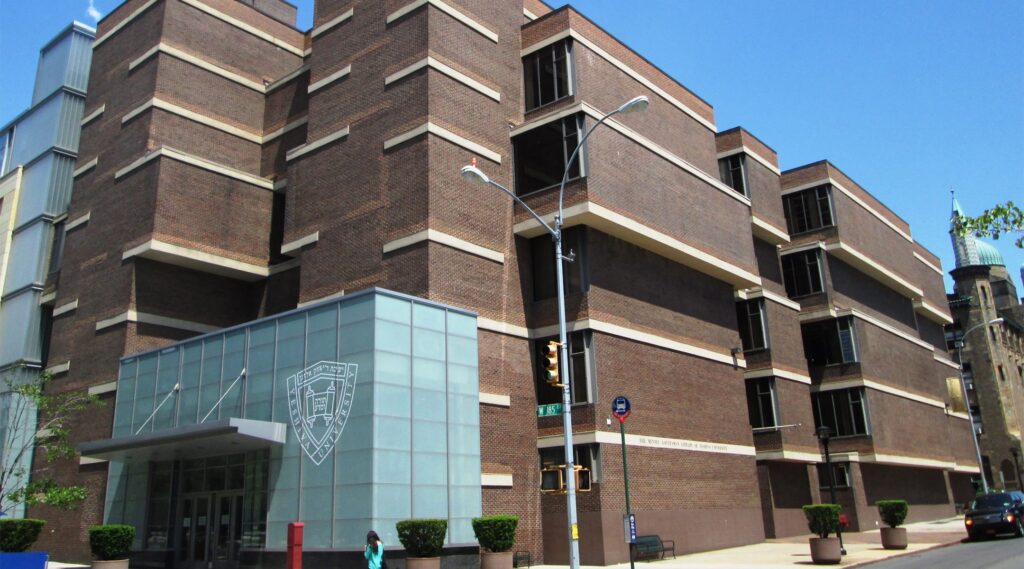
Yeshiva University’s Wurzweiler School of Social Work has been a cornerstone of social work education since it opened in 1957. This 66-year-old institution started as America’s only graduate social work school with Jewish roots in a university setting. Over the last several years, it has grown by a lot while staying true to its original mission. Students worldwide choose Wurzweiler because it ranks among the top MSW programs in the country.
Students get individual attention thanks to the school’s 15:1 student-to-teacher ratio. This close-knit learning setup has helped build the school’s stellar reputation as it trained top-tier social workers for more than six decades.
Wurzweiler’s story shows how well it adapts to change. The school first trained group workers for Jewish communal agencies. It soon added detailed casework programs to its curriculum. The school launched its community social work program in 1974 with help from the Federation of Jewish Philanthropies of New York. This program became crucial to the school’s offerings and featured specialized courses in administration and research.
The school’s drive for academic excellence shows in its doctoral program too. Doctoral studies began in 1966 with a Doctor of Social Welfare (DSW) degree. The New York State Department of Education approved the switch to a PhD in Social Welfare in April 2000.
Wurzweiler marked its 50th year with a major academic conference in New York City back in 2007. The Commission on Accreditation of the Council on Social Work Education has renewed the school’s accreditation through June 2033. This renewal proves the program’s excellence and shows how well it meets professional standards.
Deep respect for individual beliefs and Jewish social philosophy sits at Wurzweiler’s core. The school encourages tolerance and teaches social workers to support their clients’ spiritual and emotional needs. The faculty has experts in various fields—practitioners, researchers, and policy makers whose advanced research keeps Wurzweiler at the vanguard of social work education.
The school’s global outlook shines through its varied community of students, faculty, administrators, and alumni who work together for positive change. Wurzweiler connects passion to purpose. The focus stays on cultural responsiveness, social justice, and human transformation as it trains social workers to guide modern challenges and complex systems while helping communities heal.
Programs offered
Wurzweiler’s Master of Social Work (MSW) program offers multiple flexible pathways that fit different student needs. You can choose from three delivery formats: on-campus at the Wilf Campus in uptown New York City, synchronous live virtual classroom sessions, or fully asynchronous online learning. The program works well whatever your location or schedule might be.
Classes run during mornings, afternoons, evenings, and even Sundays to give you maximum flexibility. Starting your studies is possible in fall, spring, or summer terms, and you can choose full-time or part-time enrollment based on your situation. Students who want to move quickly can complete the traditional 60-credit program in as little as 16 months.
The program becomes even shorter if you have a Bachelor’s in Social Work from an accredited institution. The Advanced Standing option lets you finish your MSW in about one year with just 30 credit hours. This simplified path keeps all the program’s core strengths while building on your existing social work knowledge.
The Wurzweiler MSW stands out with three advanced practice methods:
- Clinical practice for one-on-one work with individuals and families
- Group work (Yeshiva is the only U.S. social work school offering this as a distinct practice method)
- Community practice developing advanced skills for advocacy, policy, and leadership
You can add specialized tracks to your credentials. The joint MSW/CASAC (Credentialed Alcoholism and Substance Abuse Counselor) program prepares you for substance abuse counseling—ranked #14 among the 2025 Best Jobs by U.S. News—at no extra cost. Another option is the Gerontology and Palliative Care certification that helps you care for aging adults and those with serious illness.
The program offers unique opportunities like the MSW Israel Block program, which lets graduates get licensure in both the United States and Israel. Current Yeshiva University undergraduates can join the Pathways BA/MSW program. Eligible juniors with a minimum 3.0 GPA can take up to 30 graduate credits that count toward both degrees, finishing their MSW just one year after their bachelor’s.
Faculty advisors guide your academic progress and professional development with individual attention. Small class sizes help you build close relationships with faculty and peers.
About the online program
Yeshiva University’s online MSW program transforms social work education with cutting-edge technology and exceptional flexibility. This digital format stands apart from traditional programs by blending rigorous academic training with a student experience that working professionals need.
The Heights, Wurzweiler’s groundbreaking virtual learning environment, stands at the program’s core. Students can directly interact with authentic case scenarios that mirror ground practice in this interactive platform. You’ll actively guide yourself through various neighborhoods—from urban centers to rural communities—while applying classroom theory to practical situations instead of just reading about social work principles. The Heights lets you:
- Toggle between demographic perspectives
- Explore community resources
- Make professional decisions with varying outcomes
- Practice client interactions in a supportive space
- Develop critical decision-making skills through simulation
New online MSW students receive a degree completion scholarship—now up to 10%. This scholarship helps reduce educational expenses while you retain access to the same high-quality curriculum as on-campus students.
Students enjoy remarkable scheduling flexibility to study anytime and anywhere. The program offers both full-time and part-time course loads based on individual needs. Traditional 60-credit program completion takes about 2 years for full-time students, while part-time students who take one course per term finish in roughly 5 years. Advanced Standing students with relevant undergraduate degrees can earn their MSW in just 1½ years.
Field experience remains essential in the online format. Professional standards require two practicum placements in your specialization area (one placement for Advanced Standing students). The University helps secure these valuable field experiences.
The curriculum builds your professional identity and gives you a comprehensive theoretical understanding of social work practice. Beyond the general MSW track, specialized credentials include the Gerontology and Palliative Care Embedded Certification or the Credentialed Alcoholism and Substance Abuse Counselor (CASAC) Credential.
Small class sizes, individual advisement, and direct field supervision from dedicated faculty advisors enhance your learning experience. This customized approach will give a solid foundation to excel in both coursework and practical training.
Accreditation
Quality credentials are the foundations of any reputable social work program. Your MSW program choice should prioritize accreditation status. The Wurzweiler School of Social Work has earned accreditation from the Council on Social Work Education (CSWE). This ensures your degree meets nationally recognized excellence standards.
CSWE accreditation brings real benefits to your career path. You’ll become eligible to take your state licensing exam after graduation. This credential proves vital to professional practice in social work. Your path to licensure might face roadblocks without this accreditation, whatever the program quality.
CSWE is recognized as the only national accrediting body that the Council for Higher Education Accreditation (CHEA) recognizes for social work education in the United States. Wurzweiler must maintain high standards to keep its accredited status. CSWE represents more than 2,500 members and programs nationwide. These guidelines shape social work education throughout the country.
The CSWE directory confirms that accreditation covers all approved program locations and delivery methods. Your Wurzweiler MSW degree carries equal accreditation weight whether you study on-campus, synchronously online, or asynchronously online.
Yeshiva University’s institutional accreditation comes through the Middle States Commission on Higher Education (MSCHE). YU’s accreditation status shows Non-Compliance Warning as of November 2024. The university must submit a monitoring report by August 2025 to show compliance with Standard V (Educational Effectiveness Assessment). All the same, this status doesn’t affect the social work program’s CSWE accreditation.
Yeshiva University has specialized accreditations for many professional programs. CSWE accreditation confirms that Wurzweiler meets the highest academic quality and professional preparation standards.
Regular reviews ensure programs follow established standards. Programs can be fully accredited, conditionally accredited, or accredited with planned closure. Wurzweiler’s MSW program maintains full accreditation status today. This guarantees your education meets professional standards and prepares you for licensure and practice.
Admission Requirements
Want to join Yeshiva University’s MSW program? You’ll need to meet specific admission criteria that help identify promising candidates. Let’s look at what you need to prepare for a smooth admissions process.
Your academic record plays a crucial role. The program asks for a minimum GPA of 3.0 on a 4.0 scale. Your GPA falls short? Don’t worry – you might still get provisional admission, but you’ll need an interview and extra writing sample.
Here’s what your application package needs:
- A completed application form
- A 500-word personal statement that shows your qualities and skills to succeed in the program and as a social worker
- One letter of recommendation from an academic or professional reference
- Unofficial transcripts from all schools where you earned nine or more credits
- A non-refundable $50.00 application fee (you might qualify for a waiver)
Yeshiva University needs official transcripts only from schools where you earned degrees before classes start. Students who want to transfer from another unfinished MSW program must submit those official transcripts too.
Advanced Standing status comes with extra requirements. You need a minimum 3.0 GPA and a Bachelor of Social Work degree from a CSWE-accredited program. The program also needs your BSW field evaluation with signatures from both agency and program directors. You’ll also need a recommendation from your BSW Program Director, Academic Advisor, field instructor, or professor.
Transfer students can bring up to 12 credits from accredited MSW programs if they earned a B average or better. Each transcript gets individual review to determine credits.
International students have extra steps. All transcripts and recommendations need translation and evaluation by an accredited provider. Students with degrees from outside the United States or non-English speaking Canadian schools must submit a course-by-course NACES transcript evaluation. Of course, you’ll need to prove English proficiency through TOEFL exam scores: 90-91 (internet-based), 233 (computer-based), or 577 (paper test).
University advisors stand ready to help you through each step and answer questions about your situation.
Tuition
Getting your MSW education is a major investment in your career future. Yeshiva University Wurzweiler School of Social Work bases its tuition on credits, so you can pace your enrollment and manage costs effectively.
The online MSW program charges $1,214 per credit hour during the 2024-2025 academic year. You’ll need 60 credit hours to graduate, which determines the total program cost before financial aid. Other costs include a one-time $50 application fee, a $135 program registration fee, and a $150 graduation fee when you finish.
The good news is that Yeshiva University provides several ways to handle these costs. Right now, new online MSW students get an automatic degree completion scholarship of up to 10% without extra paperwork. This scholarship reduces your program cost right away.
Students can also get federal financial aid by submitting the Free Application for Federal Student Aid (FAFSA). Just use Yeshiva University’s federal school code (002903) and campus code (00). The William D. Ford Direct Loan Program lets eligible students borrow Graduate PLUS loans directly from the federal government at fixed interest rates. Unsubsidized federal loans are also available if you qualify.
Many students worry about loan repayment. That’s why Yeshiva helps you explore loan forgiveness programs designed specifically for social workers. These include the Federal Student Loan Repayment Program and National Health Service Corps Loan Repayment Program.
International students might not qualify for U.S. federal aid, but they can access other financial support options. They should fill out the International Graduate Student Financial Aid Application to explore these opportunities.
Tuition rates change each year, so check the official university tuition listing for current costs. These financing options help make Yeshiva University’s MSW program available to more students, even as a private university.
Additional Information
The Yeshiva University MSW program provides great advantages that make your educational experience remarkable. Students see excellent career growth, with 71% of online MSW graduates getting higher salaries after completing their program. Wurzweiler’s vast network across 60 countries plays a key role in this success.
Social workers can look forward to a strong job market. The U.S. Bureau of Labor Statistics expects 6% growth through 2034. Some specialized roles show even better prospects—healthcare social work positions should grow 10%, while substance abuse social worker roles could expand by 10.6%.
At Wurzweiler, you’ll get dedicated attention from faculty advisors. They mentor your career development, supervise your practicum work, and help build your professional confidence. You’ll also connect with a second-year student through the peer mentorship program who will help you adjust to MSW life.
Students can access a free on-site writing center. Small class sizes let you work closely with faculty, guest speakers, and fellow students.
Wurzweiler’s ethical principles rest on deep respect for individual beliefs and Jewish social philosophy. Students learn tolerance and develop skills to support their clients’ spiritual and emotional needs. This values-driven education prepares graduates for roles across all social services sectors—from local community agencies to federal government positions.