
Westfield State University MSW
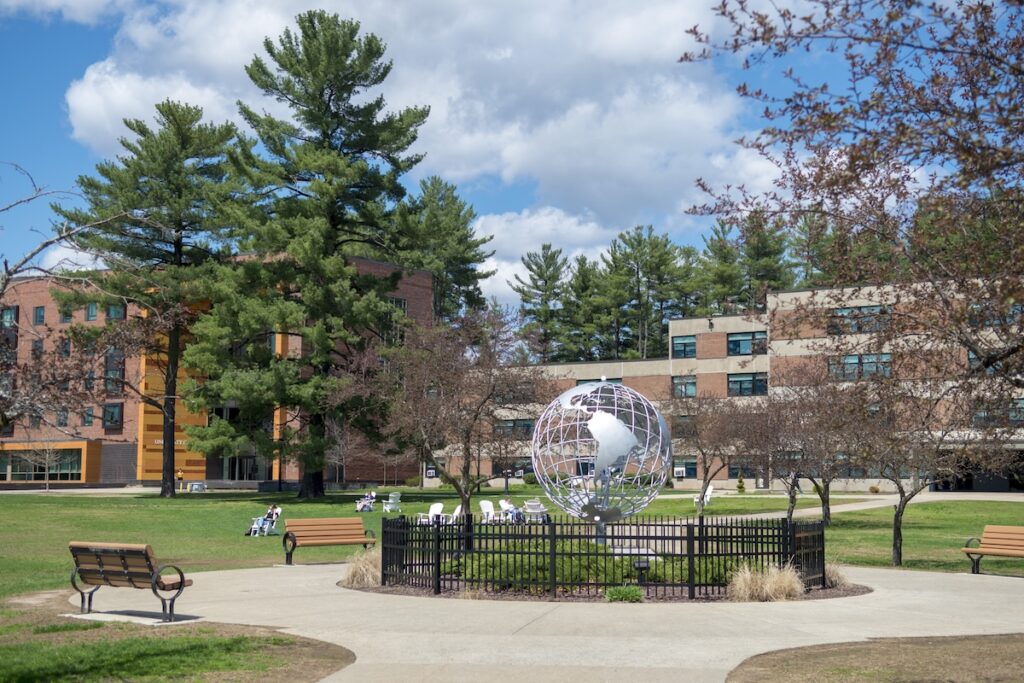
Westfield State University, 184 years old, is an innovative institution in American higher education, thanks to Horace Mann’s vision in 1839. The university became America’s first co-educational college that offered education to all, regardless of race, gender, or economic status. This progressive legacy lives on today and forms the foundation of the university’s Master of Social Work program, which prepares students for advanced professional practice.
The university’s MSW program holds full accreditation from the Council on Social Work Education (CSWE). This ensures your degree meets national standards for social work education. The Westfield, Massachusetts campus creates a supportive environment where students develop specialized knowledge and clinical practice skills.
The program excels with its single concentration in clinical social work practice. Students build on a strong generalist foundation rooted in biological, psychological, and social theoretical frameworks. This focused approach helps students become skilled at developing and using evidence-based practice modalities that help vulnerable populations.
A team of 24 dedicated professionals (8 full-time, 16 part-time) brings real-world experience to the classroom. These accomplished educators (18 female, 6 male) mentor students in a variety of specializations such as child welfare, mental health, substance use, integrative behavioral health, immigration, and aging.
The MSW program boasts impressive results – over 95% of graduates find employment within a year of graduation. The program also prepares students for immediate licensure as a social worker at the graduate level (LCSW in Massachusetts) and the advanced clinical license (LICSW in Massachusetts).
Students become practitioners who uphold ethical standards and lead their communities as collaborative professionals. They work to address social, racial, and economic injustice. Strategic collaborations with more than 150 agencies across Massachusetts and neighboring states give students practical experience in dynamic government and non-profit organizations.
Westfield State University’s MSW program blends academic excellence with hands-on learning. Students make meaningful contributions to social work while carrying forward the university’s steadfast dedication to educational access and social responsibility.
Programs offered
Westfield State University’s MSW program delivers a strong clinical curriculum that prepares you for excellence in social work. The program centers on a single concentration in Clinical Social Work Practice and builds on a solid generalist foundation.
Your educational background and career goals determine which of the two program paths suits you best. Students can complete the Traditional Program with 66 credits divided between foundation and advanced curricula. Students with a BSW from a CSWE-accredited institution can choose the accelerated 37-credit Advanced Standing Program.
The program lets you specialize in four key areas:
- Child, Youth, and Family: You’ll develop advanced competencies to work with children and families while you learn about relevant policies and systemic factors
- Health Social Work: You’ll acquire specialized skills for integrated behavioral healthcare settings that emphasize interprofessional collaboration and health equity
- Substance Use and Addictions: You’ll become skilled at clinical approaches that help individuals and families affected by addiction throughout treatment and recovery
- Latinx Community Health: You’ll address structural inequities and their connection to social determinants of health in the Latinx community (courses delivered in English/Spanish bilingual format)
Real-world experience combines smoothly with classroom learning. Traditional program students complete a 400-hour generalist practicum and a 500-hour advanced clinical practicum, giving them 900 hours of supervised field experience. Advanced standing students focus on the 500-hour advanced clinical practicum.
Classes meet on Monday and Thursday evenings from 5:15 p.m. to 9 p.m., making the program ideal for working professionals. Students can finish the Traditional Program in two years full-time or three to four years part-time. The Advanced Standing Program takes just one year full-time or two years part-time.
The program’s partnerships with more than 150 agencies throughout Massachusetts and neighboring states are a great way to get networking and professional development opportunities. These connections prepare you for diverse roles like clinical social worker, therapist, substance abuse counselor, juvenile court liaison, school social worker, or community outreach specialist.
Graduates can immediately apply for licensure as a social worker at the graduate level (LCSW in Massachusetts) and ended up qualifying for the advanced clinical license (LICSW in Massachusetts), setting them up for career growth in their chosen specialty.
Field education
A Westfield State University MSW degree helps you achieve success with its innovative curriculum and flexible learning options. The program combines academic excellence with practical experience and gives you the clinical skills needed to tackle complex social challenges.
Field education is the substance of your learning experience at Westfield State. Mutually beneficial alliances with over 150 agencies in Massachusetts and neighboring states let you practice hands-on in a variety of settings. Students in the traditional program complete 900 hours of supervised field experience through two placements. They start with a 400-hour generalist practicum and move on to a 500-hour advanced clinical practicum. Advanced standing students concentrate on the 500-hour advanced clinical placement to strengthen their specialized skills.
The program’s coursework progresses naturally from foundational knowledge to advanced clinical applications. Traditional program students build core competencies in their first year through courses in human behavior, social welfare policy, research methods, and generalist practice. Second-year students and advanced standing participants take specialized clinical coursework arranged for their chosen focus area. Evidence-based practice and addressing social, racial, and economic injustice remain central themes throughout the curriculum.
Students benefit from these additional advantages:
- Expert faculty specializing in child welfare, mental health, substance use, integrative behavioral health, immigration, and aging
- Small classes that promote meaningful connections with instructors and peers
- Evening classes (Mondays and Thursdays from 5:15-9:00 p.m.) suited for working professionals
- Field education coordinators who match you with placement sites that fit your career goals
The clinical focus prepares students for immediate licensure after graduation. The program also maintains affordable tuition rates compared to many competitors, making advanced social work education accessible to more students.
Students choosing full-time or part-time study receive the knowledge, skills, and professional network needed to succeed in today’s complex social service world through the Westfield State University MSW program.
About the online program
Westfield State University’s online MSW program blends flexibility with academic excellence through a smart hybrid delivery model. You can earn your degree completely online while getting the same quality education as campus-based students.
The program gives you two options: a 66-credit Traditional program or a 37-credit Advanced Standing track. The Traditional program lets you choose your pace – full-time (2 years), accelerated part-time (3 years), or part-time (4 years). Advanced Standing students can pick either full-time (1 year) or part-time (2 years) options.
Your online courses include weekly Zoom meetings at 5:15 p.m. or 7:15 p.m. on Monday and Thursday evenings. These virtual classrooms let you connect with professors and classmates directly. Some courses run asynchronously so you can complete work at your own pace without scheduled meetings. This smart schedule limits the number of evenings you spend in live sessions.
A virtual orientation via Zoom kicks off your journey, usually in early summer. You’ll connect with MSW faculty and staff, learn about program requirements, and get crucial details about Westfield State University[73].
The program offers the same strong curriculum and field placement opportunities as the on-campus version. The results speak for themselves – all but one of these graduates find jobs within a year of finishing. This success rate holds true whatever the delivery format.
This online option works great especially when you have work commitments. Field education remains vital, and the program helps set up placements at agencies near you. These experiences build your practical skills and professional network locally.
Your online degree opens doors immediately. You’ll qualify for licensure as a social worker at the graduate level (LCSW in Massachusetts) and can progress toward the advanced clinical license (LICSW in Massachusetts). The online degree carries the same value as its on-campus version.
Accreditation
Your social work program’s accreditation status will affect your career opportunities and professional credibility. Westfield State University’s Master of Social Work Program has earned full accreditation from the Council on Social Work Education (CSWE). CSWE is the leading accrediting body for social work education in the United States.
CSWE accreditation means the Westfield State University MSW program meets strict national standards for social work education. The program offers a single concentration in clinical practice. This focused approach lets you build specialized expertise instead of spreading yourself thin across multiple areas.
Once you complete your MSW degree, you can apply for licensure as a social worker at the graduate level (LCSW in Massachusetts). You can later pursue the advanced clinical license (LICSW in Massachusetts). This path gives you access to clinical positions that need advanced credentials.
Westfield State University’s accredited programs offer more than just credentials. Statistics website College Factual ranks the university’s graduate programs in social work #1 for best value. On top of that, it ranks #8 out of 1,301 schools in the “Best Master’s Degree College for the Money” category. This puts it in the top 1% nationwide.
Students looking at the undergraduate-to-graduate path should note that Westfield State’s Bachelor of Social Work program has received Reaffirmation of Accredited Status from CSWE’s Board of Accreditation. The BSW program’s next review comes up in June 2031. This shows the school’s steadfast dedication to maintaining high standards.
Accreditation must be your top priority while choosing MSW programs. Westfield State’s CSWE-accredited program meets professional standards and qualifies you for licensure exams. You can transfer your credentials between states easily, which will boost your marketability as a social work professional.
Admission Requirements
The Westfield State University MSW program has specific requirements and deadlines you need to know. You must have a bachelor’s degree from an accredited college or university to apply. Traditional applicants should have a minimum 2.8 overall undergraduate GPA. Advanced Standing candidates need a 3.0 social work GPA and a BSW from a CSWE-accredited program.
Your bachelor’s degree should have a strong liberal arts background with courses in social sciences, American national government, and human biology. You don’t need these prerequisites when you apply, but you’ll have to finish them before starting the program if accepted.
Here’s what you need to submit:
- Completed MSW application form (choose Traditional or Advanced Standing, full-time or part-time)
- Non-refundable application fee ($50.00)
- Official transcripts from all colleges/universities attended
- Current resume or curriculum vitae
- Three letters of recommendation with accompanying forms
- At least one academic reference
- Advanced Standing applicants must include a letter from their BSW Program Director
- A recommendation from a field placement supervisor is highly recommended
- Professional statement that covers:
- Your reasons to enter social work
- Personal strengths and limitations
- Relevant life experiences and career motivations
- How your values match social work ethics
The admissions team uses your professional statement to evaluate your writing skills and understanding of social work values.
Remember these deadlines: Early decision applications are due December 1 with notifications in mid-February. The traditional deadline falls on February 1 with decisions coming in late March. Once accepted, you have 10 days to confirm enrollment and pay a $150 non-refundable deposit.
International students have extra requirements. They need to prove English proficiency through tests (TOEFL: 79, IELTS: 6.5, or Duolingo: 110) and get their transcripts evaluated.
Field placement agencies usually require CORI background checks. These checks can affect your placement options and future licensure if they show positive results.
Tuition
Westfield State University’s MSW program provides great value for your money without breaking the bank. The program stands out because no difference in tuition exists for in-state and out-of-state students pursuing master’s degrees. This makes the MSW program a smart choice for students from any location.
The university’s undergraduate tuition rates beat national averages. In-state students pay $11,882 while out-of-state students pay $17,962, compared to national averages of $12,422 and $29,767. College Affordability Guide 2024 ranks Westfield State among Massachusetts’ Most Affordable Colleges.
Financial support comes in many forms. Qualified students can apply for graduate assistantships. Students need to submit their FAFSA by March 1 to be eligible for financial awards. The university’s dedication to affordable education shows in its numbers – 87% of full-time undergraduate students get some type of financial aid.
Students heading into behavioral health careers have access to substantial support. The Behavioral Health Workforce Scholarship Program offers up to $12,500 per academic year for tuition, fees, and stipends. Students can receive a maximum of $25,000 over two academic years. This scholarship helps graduate students who plan to work in Massachusetts’ high-need behavioral health settings.
Your total costs will include direct expenses like tuition and fees, plus indirect costs such as housing, books, transportation, and other expenses. Smart budgeting means looking at both tuition and these extra costs as you invest in your future career.
Additional Information
Westfield State University offers much more than just classroom learning for MSW students. You’ll find plenty of career opportunities through the university’s strong employer network, with regular job postings for social workers across New England. Massachusetts stands out as one of the top-paying states for social workers. Practitioners here earn a mean annual salary of $74,220, while top earners can make up to $103,730.
Students get complete support through the Center for Student Success. This center helps students explore academic options and create strategies for continuous growth. The TRIO Student Support Services Program provides integrated support to first-generation students, those needing financial help, and students with disabilities.
Military-connected students have their own space at the Military Excellence Community Center in Scanlon Hall. This center provides resources, study areas, and hosts the Westfield State Veterans Alliance club meetings. The university’s commitment to military students has earned it Gold Status as a 2025–2026 Military Friendly School.
Licensed social workers and mental health counselors at the Counseling Center help students with self-discovery and personal development. The Writing Center helps all students express their ideas clearly.
The university works with over 150 agencies in Massachusetts and nearby states. These strategic collaborations give students professional development opportunities that prepare them for success in this ever-changing field.