
MSW Programs at Virginia State University
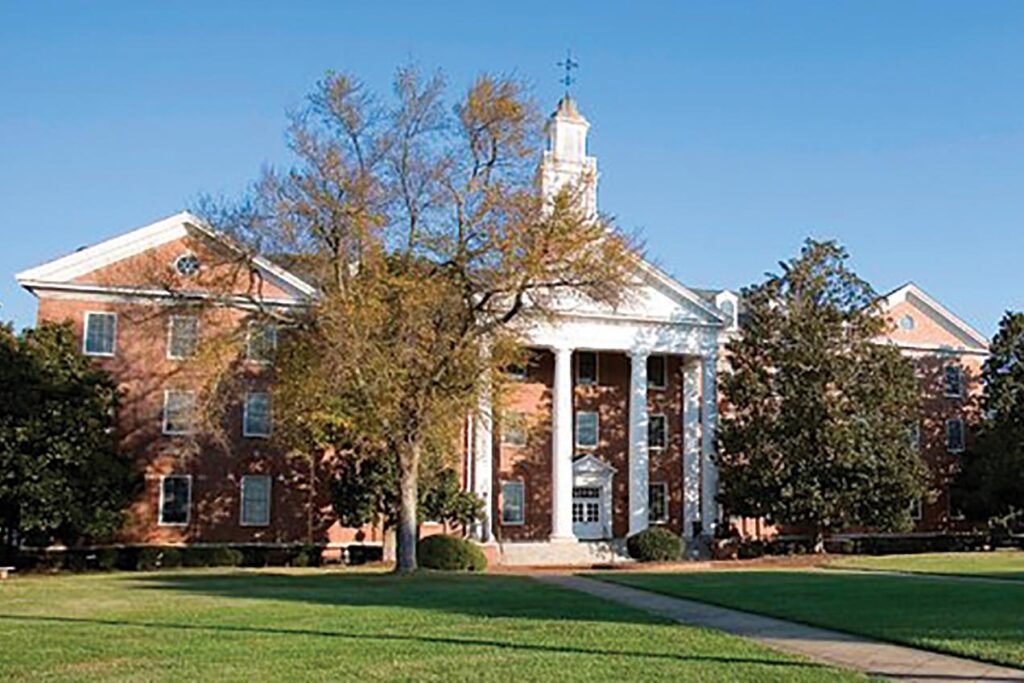
Founded on March 6, 1882, Virginia State University started as the Virginia Normal and Collegiate Institute. A Black attorney from Petersburg, Delegate Alfred W. Harris, who represented Dinwiddie County in the General Assembly, sponsored the founding bill. The institution faced early obstacles, including a hostile lawsuit that pushed its opening to October 1, 1883. Despite these challenges, it has grown by a lot over the decades.
The university’s name evolved with its mission over time. It became Virginia Normal and Industrial Institute in 1902, Virginia State College for Negroes in 1930, Virginia State College in 1946, and finally Virginia State University in 1979.
VSU’s growth tells an impressive story. The university’s first academic year (1883-84) began with 126 students and seven Black faculty members. They had one building, 33 acres of land, a small 200-book library, and a $20,000 budget. By 1982, its centennial year, VSU had become a fully integrated university. It boasted nearly 5,000 students, about 250 full-time faculty members, and a library with 200,000 books and 360,000 microform items. The campus expanded to 236 acres plus a 416-acre farm, with more than 50 buildings including 15 dormitories and 16 classroom buildings. The university’s biennial budget grew to $31,000,000.
VSU’s location in Chesterfield County at Ettrick offers great advantages. The campus sits on a bluff across from Petersburg, overlooking the Appomattox River. Students can easily reach campus from Interstate Highways 95 and 85, which meet in Petersburg. The university sits just two and a half hours from Washington, D.C. to the north, the Raleigh-Durham-Chapel Hill area to the southwest, and Charlottesville to the northwest.
The university’s social work department has built its own remarkable legacy. The Bachelor of Social Work (BSW) Program came back to life in fall 2008 with full approval from the Virginia State Department of Education. The VSU Board of Visitors made the Social Work Program a stand-alone department in November 2014.
The social work program earned its first accreditation from the Council on Social Work Education (CSWE) in 2013. The BSW program has graduated more than 400 students in ten years and maintains the university’s highest student retention rate.
The VSU Board of Visitors approved the Master of Social Work program in 2019. The Virginia State Council on Higher Education (SCHEV) and the Southern Association of Colleges and Schools Commission on Colleges (SACSCOC) followed with their approvals in 2020. VSU made history as the first Historically Black College or University (HBCU) in the nation to offer a CSWE-accredited MSW program focusing on trauma-informed care. This accreditation applies from Fall 2022 through 2032.
Programs offered
Virginia State University (VSU) has a great selection of social work programs. The Master of Social Work program stands out as their premier offering. VSU made history by becoming the first Historically Black College or University in the nation with a CSWE-accredited MSW program that specializes in trauma-informed care.
VSU’s MSW program has seen incredible success in just two years. Starting with just 10 students, the program now has 68 active learners. The numbers keep growing, and they expect about 100 students by Summer and Spring 2025. This growth shows both the program’s quality and how many qualified social workers we need today.
The program’s credit requirements are straightforward. Students need at least 45 credit hours. Those with non-social work bachelor’s degrees must complete 60 credits. Students who already have a social work bachelor’s degree can take the advanced-standing path with just 45 credits. Every student needs to finish a research project and clinical field practicum.
The MSW degree really pays off in today’s job market. ZipRecruiter reports that MSW graduates in Virginia earn around $78,213 yearly.
VSU’s social work department has several other excellent programs:
- Bachelor of Social Work (BSW) – A CSWE-accredited program that gets students ready for entry-level work or graduate school
- Undergraduate Certificate in Homefront Readjustment for the Armed Forces – Virginia’s only undergraduate military cultural competency certificate program approved by SCHEV and SACSCOC. Students learn to work with military service members, veterans, and their families with respect for military culture.
- Social Work Minor – This program works well with other majors like sociology, criminal justice, psychology, education, and political science
These programs help students work effectively with people from many backgrounds. They put special focus on helping underserved communities.
About the online program
Virginia State University’s MSW program uses an innovative hybrid learning model that combines online coursework with targeted in-person sessions. Students complete most work online and attend five intensive weekend sessions each semester during fall and spring terms. Weekend sessions run from Friday afternoons at 5:00 pm through Saturday evenings. These face-to-face sessions provide a significant learning opportunity.
Students work online between campus visits. This mix of online and in-person learning works great for students who have full-time jobs or live far from campus. The program groups students into cohorts to build a supportive learning community even as they study remotely.
The MSW program gives students several scheduling choices to fit their needs:
- A two-year full-time format
- A three-year part-time format
- An Advanced Standing (one-year) option for qualified BSW graduates
BSW graduates from a CSWE-accredited program can finish their MSW in just one year through the Advanced Standing program if they graduated within the last five years.
Field education plays a vital role in the program. Students get hands-on experience through practicum courses and seminars. These real-life experiences must be completed to earn the degree and match what students learn in class.
The program teaches students to handle trauma systematically. It promotes human rights and pushes for social and economic justice through community work. Faculty teach classes both in person and online. All courses meet the professional standards of the Council on Social Work Education and Virginia Board of Social Work licensure requirements.
The program has grown remarkably. It started with 10 students in its first cohort and now serves 68 active students. Enrollment should reach about 100 students by Summer and Spring 2025. The VSU Board of Visitors (2019), Virginia State Council on Higher Education (2020), and Southern Association of Colleges and Schools Commission on Colleges (2020) approved the program for both face-to-face and online teaching.
This hybrid format combines online flexibility with valuable in-person sessions. Students get quality advanced social work education that fits their schedule while supporting their professional growth.
Accreditation
Virginia State University’s Master of Social Work program has achieved full accreditation from the Council on Social Work Education (CSWE). This milestone makes VSU the first Historically Black College or University in the nation to offer a CSWE-accredited MSW program that specializes in trauma-informed care.
The program’s accreditation spans from Fall 2022 through 2032, with room for extension[112]. Students who enrolled since Fall 2022 will benefit from this prestigious recognition.
VSU’s MSW program evolved through several stages to reach full accreditation. The program started with Pre-Candidacy status after submitting its application and getting its original Benchmark I approved in draft form. The program then prepared to undergo Candidacy review within a year.
Students choosing between online and campus MSW programs need to understand CSWE accreditation. The Council on Social Work Education acts as the main accrediting body for social work education in the United States. Their directory lists programs with different statuses based on periodic reviews:
- Fully Accredited: Meeting all standards and requirements
- Accredited (Conditional): Addressing documented noncompliance with specific standards
- Accredited (Withdrawal in Progress): Programs with planned closure dates
- Candidacy: Programs that have completed at least one year of the Candidacy process
- Pre-Candidacy: Programs with standards approved in draft form
CSWE accreditation brings great value to students and graduates. The accreditation confirms that your degree meets national quality standards. Many states require it for social work licensure examinations. Employers also trust graduates from accredited programs more.
Dr. Jimmie Fedrick, Chair of the Department of Social Work, calls this “a tremendous honor and a ground-breaking achievement” that shows students receive education meeting the highest standards. Graduates leave fully prepared to make meaningful contributions to social work practice.
Admission Requirements
The Master of Social Work program at Virginia State University has several significant admission criteria. Both online and campus MSW programs maintain similar admission requirements to ensure consistent standards across all programs.
Your application journey starts with a simple electronic submission through the Graduate Admission Office. The next step requires you to request official transcripts from your previous colleges and a Confidential Report Form from your most recent school.
Academic excellence matters greatly in the admissions process. You need a cumulative grade point average of 3.0 on a 4.0 scale and must be in good standing at your previous schools. VSU’s MSW program doesn’t require GRE scores, unlike many other graduate programs.
Your application packet should include these vital components:
- Three letters of recommendation from employers, faculty, or other professionals who can vouch for your abilities
- A Professional Statement of Intent that shows your understanding of social work
- A complete resume
- Results from criminal background and drug tests
Your educational background determines which program path suits you best. Students with non-social work bachelor’s degrees enter the traditional two-year MSW track. BSW degree holders might qualify for the Advanced Standing pathway.
Advanced Standing candidates must meet specific requirements. Your BSW should come from a CSWE-accredited program in the last five years with a 3.5 GPA. You must have grades higher than “C” in all practice classes and “B” or better in field practicums. The program needs recommendations from your undergraduate department chair and agency field placement supervisor, along with all undergraduate Field Evaluations.
International students have extra requirements to fulfill. Students from non-English speaking countries must submit TOEFL scores with at least 88 points total and 20 points in each section for internet-based testing. They also need to provide proof of financial resources that cover their entire study period.
Tuition
The choice between online and campus MSW programs at Virginia State University depends heavily on your financial planning. Your residency status and enrollment type will determine the tuition costs.
Full-time graduate students at Virginia State University pay tuition of $9,593.00 per semester or $19,186.00 annually during the 2023-2024 academic year. Students need to account for additional mandatory fees that include the Technology and Infrastructure Fee, a complete Fee ($729.00 annually), Campus Improvement Fee ($2,986.00 annually), and State Capital Outlay Fee ($500.00 annually).
Students enrolled part-time pay by credit hour. Virginia residents pay $583.00 per credit hour plus a $10.00 complete fee, which adds up to $593.00 per credit hour. Out-of-state students pay $1,112.00 per credit hour plus the same fee, totaling $1,122.00 per credit hour.
Graduate tuition and fees for the 2024-2025 academic year show a slight increase. Virginia residents will pay $13,218.00 while out-of-state students will pay $24,860.00. Credit hour rates will be $610.00 for in-state and $1,155.00 for out-of-state students.
Your total expenses go beyond just tuition. Books and supplies cost around $1,300.00. On-campus housing and meal plans add significant expenses. The estimated total cost per semester comes to:
- In-state on-campus: $31,513.00
- Out-of-state on-campus: $43,155.00
MSW program tuition costs at Virginia universities typically range from $26,808.00 to $38,040.00 total for resident students. VSU’s program fits well within these competitive market ranges.
Admitted students can check their individual-specific Cost of Attendance through the VSU Trojan Link portal after getting their Banner PIN number. Note that this amount represents your budget for the academic year, not the actual amount due.
Additional Information
VSU’s support services improve your educational experience beyond academic programs. The University College serves as the primary academic resource for VSU students. Students can get writing help at the Writing/ePortfolio Studio in Harris Hall through one-on-one sessions, walk-ins, round-the-clock online support, and a free computer lab.
MSW graduates from VSU have promising career prospects. Virginia’s MSW graduates earn an average annual salary of $78,213, which shows this degree’s value in the job market.
These social work career paths await MSW graduates:
- Healthcare settings where social workers evaluate patient needs and help with discharge planning
- Family support services that provide counseling and family therapy
- School environments that need collaboration with teachers and administrators
- Employment assistance programs within corporations
- Services for older adults that help maintain independence
- Clinical practice as licensed mental health providers
- Public welfare administration
- Criminal justice system that needs court recommendations
The National Association of Social Workers (NASW) membership is a great way to get professional benefits. Members get reduced conference rates, liability insurance options, and continuing education opportunities. Students who join early can take advantage of discounted membership rates while in school.