
Virginia Commonwealth University MSW
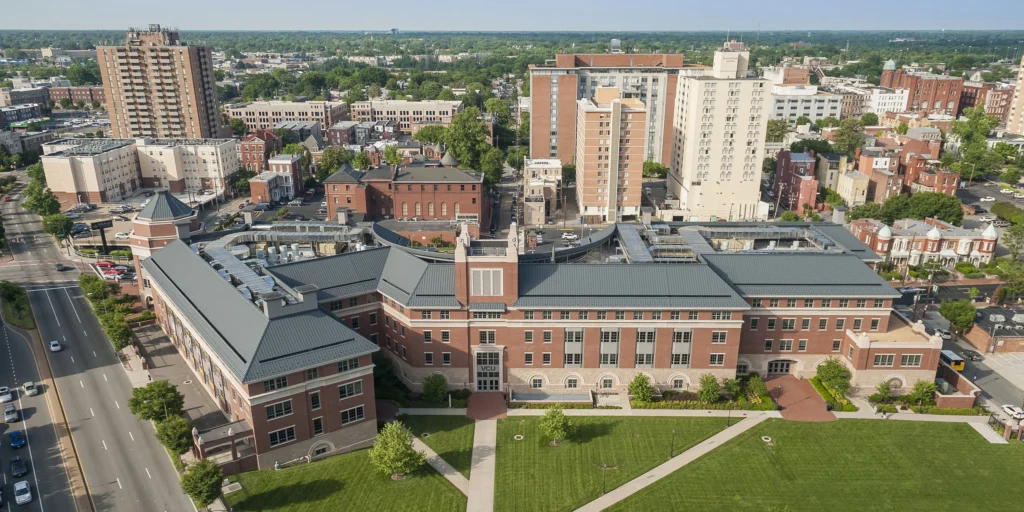
Virginia Commonwealth University’s School of Social Work is a leading institution that helps professionals advance their careers in social services. The school’s Master of Social Work program equips students with professional skills through comprehensive academic coursework and hands-on field experience.
VCU’s MSW program prepares students to excel in clinical social work or social work administration, planning and policy practice. The program’s foundation rests on creating a more just society with a steadfast dedication to diversity, ethics, and competent social work practice in a multicultural environment. On top of that, it embraces the social work profession’s core values by recognizing individual dignity and strengthening communities.
The curriculum at VCU’s social work program takes a closer look at human rights. Students learn to tackle poverty and improve quality of life. The program strengthens human and community well-being through courses that help people who face oppression due to poor resource distribution. This viewpoint shapes every aspect of the curriculum.
Social work practice involves applying professional knowledge, skills, and values in a variety of settings to help prevent and improve personal and social problems. The curriculum also builds scientific inquiry skills. Students learn practice knowledge based on critical analysis of qualitative and quantitative research.
VCU’s social work programs have prestigious accreditation from the Council on Social Work Education (CSWE), which accredits all social work schools at undergraduate and graduate levels. The Master of Social Work program creates graduates who line up with core practice standards of the VCU School of Social Work, National Association of Social Workers (NASW), and CSWE’s Educational Policy and Accreditation standards.
Social work careers continue to grow rapidly. Experts expect a 6% increase in social work jobs through 2034. The field stands out as one of the few that grew during the pandemic and managed to keep this momentum afterward.
Programs offered
VCU’s Master of Social Work program provides flexible pathways that fit different student needs and career goals. Students can choose between two main concentrations: Clinical Social Work Practice and Macro Practice to align their education with their professional goals.
The MSW program comes with several format options based on your previous education and schedule. Regular standing students need to complete 60 credits – 30 generalist credits and 30 concentration credits. Students with a Bachelor’s in Social Work from a CSWE-accredited program earned in the last five years can take the advanced standing route. This path needs only 42 credits: 12 bridge credits and 30 concentration credits.
VCU gives you five different learning paths to choose from:
- Part-time (four years)
- Accelerated part-time (three years)
- Full-time (two years)
- Accelerated full-time (16 months)
- Advanced standing (12 months)
The online MSW option lets students complete their coursework remotely while working with faculty and peers. This works great when you have other commitments to juggle. Field education requirements are the substance of social work education, and all students must complete them, whatever path they choose.
Students can boost their degrees through specialized certificates. The program offers certificates in Aging Studies, Child Welfare, Gender Violence Intervention or Nonprofit Management. Clinical MSW students can also get School Social Work Certification through the Virginia Department of Education.
The program’s dual-degree option lets students combine their MSW with degrees in law or public health. This flexibility helps graduates succeed in a variety of career paths within social work.
An MSW degree brings real financial benefits. The National Association of Social Workers reports that MSW holders earn over $13,000 more annually than those with just a BSW. Many specialized roles in social work, including clinical positions and supervisory roles, require an MSW degree.
VCU’s School of Social Work shows its steadfast dedication to creating world-class practitioners, scholars, and leaders who make real changes in their communities.
About the online program
VCU’s online Master of Social Work program provides a rich educational experience through a well-planned mix of live and self-paced coursework. Students can study according to their schedule while building strong relationships with faculty members and classmates.
The program’s curriculum gives you the tools and critical thinking skills needed to adapt to work in a variety of settings. You’ll learn social work frameworks and the person-in-environment model to provide personalized care whatever the circumstances.
Students can choose from five distinct learning paths:
- Part-time (four years): Perfect for students with major work commitments
- Accelerated part-time (three years): A quicker timeline that keeps flexibility
- Full-time (two years): Standard graduate program pace
- Accelerated full-time (16 months): An intensive study option
- Advanced standing (12 months): Available to recent BSW graduates with excellent academic records
VCU emphasizes real-life application beyond theory. Students complete field placements in community-based agencies and organizations during business hours alongside their online coursework. The time commitment ranges from 14-16 weekly hours during generalist placement to 21-22 hours weekly during specialization placement.
Students work with the fictional Commonwealth Health and Human Services (CHHS) agency as part of an innovative learning approach. This simulation helps tackle social work challenges hands-on, moving beyond concepts into practical problem-solving.
Each course features three live online classes per semester, which creates space for direct discussion and group work. Students typically spend six to eight hours on independent weekly work. Core required classes meet weekdays from 6-8 p.m. ET, while elective courses run Saturdays from either 9-11 a.m. ET or 1-3 p.m. ET.
Student success advisors, support coaches, and field education coordinators help secure local field placements and guide you through the program. Canvas learning management system serves as your hub to access course materials and connect with instructors and fellow students.
The Council on Social Work Education’s Commission on Accreditation has accredited the program, which confirms it meets high quality standards in social work education.
Accreditation
Quality assurance is a vital indicator for any graduate program, particularly in professional fields like social work. The Virginia Commonwealth University MSW program has earned prestigious recognition from leading accrediting bodies that proves its academic excellence and professional relevance right.
The MSW program at VCU is fully accredited by the Council on Social Work Education’s Commission on Accreditation (CSWE). This accreditation represents the gold standard for social work education and will give a program that meets rigorous standards for curriculum quality, faculty qualifications, and student learning outcomes. This accreditation isn’t just a formality—you need it to get professional licensure in Virginia.
CSWE accreditation brings several clear benefits. Students qualify for federal financial aid programs. The accreditation helps with credit transfers between accredited institutions. It also meets the educational requirements for clinical licensure prerequisites. These benefits make CSWE accreditation essential to think about when choosing a social work program.
Virginia Commonwealth University has earned accreditation from the Southern Association of Colleges and Schools Commission on Colleges (SACSCOC) to award associate, baccalaureate, master’s, and doctoral degrees. This regional accreditation shows the university’s academic credibility and ensures all VCU credentials meet high educational standards.
VCU’s MSW program ranks among the nation’s elite. The School of Social Work is one of the largest accredited, detailed social work programs in the United States. The school, 106 years old, has the difference of being the South’s first school of its kind. It’s one of only 53 programs nationwide that offers bachelor’s, master’s, and doctoral degrees in social work.
The accreditation process uses a thorough peer-review method. It balances similar outcome requirements while allowing programs to differentiate based on their context. CSWE makes sure accredited programs prepare students to become respectful, responsible social workers who can serve communities of all backgrounds.
VCU communicates openly about its accreditation status and gives clear information to future students and stakeholders. The VCU Bulletin provides authoritative details about accreditation status and requirements as the official source for academic course and program information.
Admission Requirements
The Virginia Commonwealth University MSW program takes a close look at candidates through multiple factors. The admissions team reviews educational background, work experience, professional statements, and recommendations.
Students need a four-year undergraduate degree in any field to join the regular standing program. The program recommends a 3.0 undergraduate GPA. Students with lower GPAs can still apply, but other application materials carry more weight. Each student must pass one three-credit behavioral sciences class and one three-credit social sciences class with a grade of “C” or higher before starting the program.
BSW degree holders might qualify for advanced standing if they meet these requirements:
- BSW from a CSWE-accredited institution earned in the last five years
- Undergraduate GPA of 3.0 (strictly required for advanced standing)
- Minimum grade of “B” or “pass” in senior field placement
The Virginia Commonwealth University MSW program requires these application materials:
- Completed online application through the VCU Grad portal
- Three 500-word statements of intent addressing:
- One value from the NASW code of ethics and its relation to your MSW goals
- Your social work career goals
- Your viewpoint on the school’s commitment to social and racial justice
- Evidence of social and human services-related work/volunteer experience
- Official academic transcripts from all undergraduate and graduate institutions attended
- Three letters of recommendation from employers, faculty, or others who can assess your abilities
International students must also submit TOEFL scores (minimum 600 paper/100 internet-based).
Students who don’t fully meet prerequisites might receive provisional admission. This allows time to finish required coursework before the program starts or during first-semester MSW courses. The school may cancel admission if prerequisites remain incomplete by the class start date.
The School of Social Work requires complete applications by the deadline. Students must submit all supplemental documents within one week after the deadline. The school won’t review late or incomplete applications. The program welcomes career-changers with different educational backgrounds since it doesn’t require specific undergraduate majors or prior social work experience.
Tuition
Students need to plan their finances carefully for VCU’s MSW program. The program charges tuition per credit, with different rates for in-state and out-of-state students.
In-state students pay $634 per credit hour while out-of-state students pay $750 per credit hour for the 2025-2026 academic year. A program fee of $100 per credit hour applies to all students. Your total tuition cost changes based on your program track and residency status. Regular standing students need 60 credits, and advanced standing students need 42 credits.
VCU’s billing system works differently based on how many credits you take. Students who take eight or fewer credits pay the per-credit-hour rate. A flat tuition rate applies to full-time students taking nine to fifteen credits. Students who take more than fifteen credits pay an extra overload fee.
VCU gives you tools to plan your finances:
- A post-undergraduate tuition calculator shows your semester costs
- Cost of attendance estimates help determine your aid eligibility
Your budget should include other costs too. Field placement courses need instructional fees, and online students pay a special program fee. Books and course materials are needed throughout your studies.
The good news is that financial help is available. MSW students at VCU receive $10,540 on average in financial aid. Online MSW students often qualify for some type of financial support. They get access to the same aid packages, grants, scholarships, and loans as campus students. VCU also offers special MSW scholarships and a Child Welfare Stipend Program with post-graduation work requirements.
Graduate students can find many funding opportunities at the university. Your academic performance and financial needs determine your eligibility for aid.
VCU’s Board of Trustees sets official fees each year in June/July. They can adjust tuition costs and change fee rules when needed.
Additional Information
VCU’s School of Social Work provides many resources that help students succeed during their studies and after they graduate. The school keeps track of graduate outcomes through the VCU First Destination Survey. This survey captures key information about post-graduation experiences from students across programs and degree levels. The data helps improve career advising, academic planning, and resource allocation based on student needs.
VCU’s LCSW exam preparation shows excellent results. Their 2021 School of Social Work LCSW exam first-time test takers scored higher than the North American average of 75.8%. These results show how well the program prepares students to get their license.
The school’s outstanding faculty brings ground experience to their teaching:
- Lynn Anderson, a military veteran, served ten years in the U.S. Air Force before getting her MSW from VCU in 1999. She now specializes in trauma and veteran services
- Gary S. Cuddeback became dean in October 2024. His research focuses on people with severe mental illnesses and how mental health intersects with criminal legal systems
Students receive substantial financial support through school-specific scholarships and financial aid. MSW students get an average financial aid award of $10,540. They can also apply for the Child Welfare Stipend Program and Project PIRR.
The mix of strong academics, experienced faculty, and solid support systems helps VCU MSW graduates succeed in social work settings of all types. They can make meaningful changes in both individual lives and communities.