
University of Oklahoma MSW
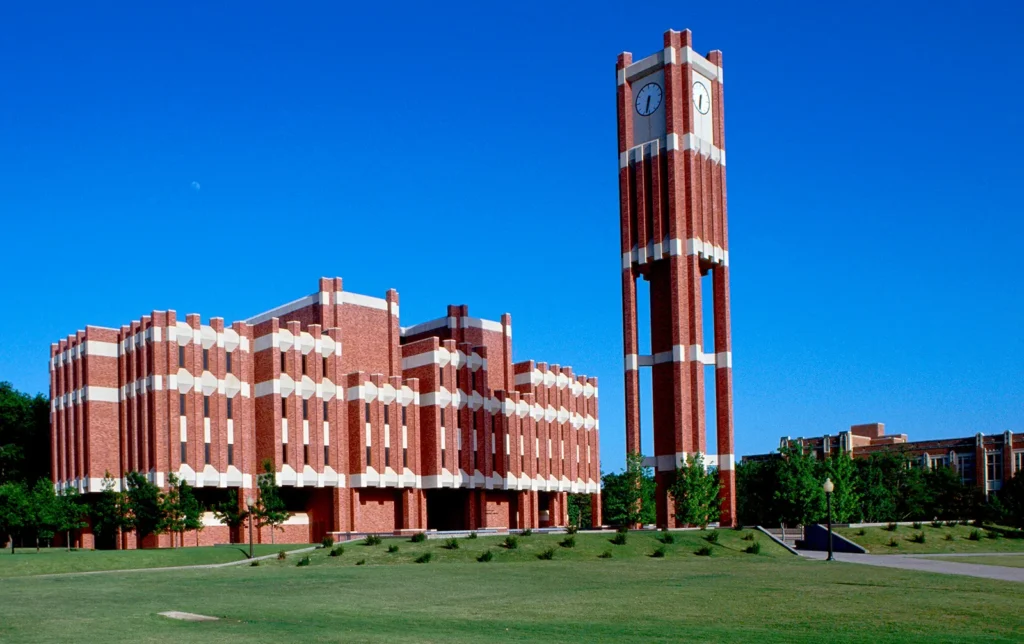
The Anne and Henry Zarrow School of Social Work at the University of Oklahoma is a testament to over 100 years of excellence in social work education. Established in 1935 as a separate School of Social Work, the program traces its roots to 1917 when social work education became part of the university’s curriculum. The graduate program earned full accreditation in 1957 and has managed to keep it since then. The school received its current name in 2009 and moved to its modern facility, Anne and Henry Zarrow Hall, in 2011.
Dr. David McLeod leads the school with campuses in Norman, Tulsa, and online. Students throughout Oklahoma and beyond can access education through multiple locations. The school takes pride in offering in-person, hybrid, and online learning paths that adapt to students’ diverse needs.
The Anne and Henry Zarrow School of Social Work envisions “a world of shared power with equitable and inclusive communities committed to access, opportunity, and well-being”. The school’s mission aims at “nurturing the growth of social workers, advancing the profession through innovative and collaborative research, and fostering intentional partnerships in the community”.
Social work is a profession dedicated to enhancing human well-being and easing poverty and oppression. Social workers educated at the University of Oklahoma work to promote empowerment and well-being if you have families, communities, and organizations in our global society.
The program’s success shows in its numbers – 90% of students recommend it to others. The school runs three international programs that give students global views on social work practice.
Students learn through an integrated mix of theories, conceptual knowledge, values, and skills to serve clients and communities of all types. The curriculum emphasizes a generalist model at undergraduate and foundation graduate levels, providing skills essential to all social work practice.
Students gain real-world experience through the field education program. This practical approach, combined with various funding options, creates a detailed educational journey that prepares students effectively for professional social work practice in different settings and populations.
Programs offered
The University of Oklahoma’s Master of Social Work degree comes with several flexible options. Students can choose full-time or part-time study at Norman or Tulsa campuses. A fully online program is also available.
The standard MSW program has 60 credit hours split between foundation and concentration courses. Foundation courses build core knowledge through Social Work Research Methods, Policy Practice, Theory and Practice with various client systems, and Human Lifespan Development. Students then apply what they’ve learned during two supervised practicum placements in ground settings.
Students move to concentration courses in integrative practice after finishing foundation requirements. These 21 credit hours include Client-Centered Direct Practice, Macro Systems in Practice, Advanced Integrative Seminar, and two practicum placements worth 12 credit hours. Students also pick 9 credit hours of electives that match their career interests.
Students with a BSW from an accredited program can take the Advanced Standing option. This path needs fewer credit hours and leads to faster completion. Students can choose this accelerated option at both campuses or online.
The school provides additional specialized paths beyond the standard MSW:
- Dual Degrees: Students can pair their MSW with a Master of Arts in International Studies or a Master of Public Health. The International Studies path gives tools to tackle global social, political, and economic justice issues. The Public Health option prepares students to improve community health and reduce health gaps.
- Certificate in Social Work with American Indians: This 15-hour certificate program comes from collaboration between the School of Social Work and Native American Studies. Students learn culturally relevant skills through courses like American Indian Behavioral Health and Tribal Child and Family Policy. This preparation helps them work effectively with tribal nations.
The MSW curriculum focuses on integrative practice in service settings of all types. Graduates can pursue various careers including clinical social work, client advocacy, community participation, program administration, school-based support, and specialized work with tribal communities. The program’s ethical foundation and emphasis on social determinants of health prepare graduates to address gaps in opportunity, access, and wellbeing.
Every program option maintains high academic standards. The Tulsa program’s small class sizes offer individual attention, and advanced simulation facilities enhance the learning experience.
About the online program
Launched in 2019, the University of Oklahoma MSW online program serves students in rural areas, other states, and working adults who need fully online education. The program delivers the same rigorous academic standards as its campus-based counterpart through a balanced mix of synchronous and asynchronous learning methods.
The online MSW program expands the school’s broader goals with a unique mission. It addresses the need for quality social work services in rural and underpopulated areas where social work programs are scarce. Students who can’t attend traditional on-campus programs find this accessibility valuable.
The University of Oklahoma MSW online program runs as a part-time, cohort-based system with two tracks. Students with any undergraduate degree can take the 60-credit hour traditional track. Those with a BSW from an accredited program earned within the last five years can opt for the 33-credit hour advanced standing track. Students need a minimum undergraduate GPA of 3.0 for unconditional admission to the advanced standing track.
The curriculum builds complete skills through both pathways. Traditional students complete 30 credit hours of Foundation Social Work Practice and 30 hours of Advanced Integrative Practice. A foundational seminar helps advanced standing students boost their previous social work education.
Field education plays a crucial role for all online students. Traditional program students complete 1,010 total hours of site-based field experience. The advanced standing track students need 550 hours. Both tracks let students specialize in Direct Practice (clinical) social work or Administration and Community Practice (macro) social work.
The program has highly engaging content beyond regular coursework through:
- Virtual simulation labs with trained actors
- Synchronous sessions for discussion and interaction
- Extensive on-the-job training through field placements
Self-motivated, well-organized students who actively create connections with peers and faculty thrive in this program. The part-time structure works best for working professionals who can apply concepts in their jobs. Students must manage their time effectively to succeed.
Accreditation
CSWE accreditation is a vital standard of program quality and professional viability for students considering social work. The University of Oklahoma’s MSW program has full accreditation from the Council on Social Work Education (CSWE), which oversees social work education programs in the United States. This recognition shows the program meets top standards in social work education.
The University’s dedication to excellence shines through its accreditation history. Social work has been part of Oklahoma University’s curriculum since 1917. The School of Social Work opened its doors in 1935. The graduate program received its first accreditation in 1957 and has managed to keep it for over 65 years. This makes it the oldest accredited MSW program in Oklahoma.
The University of Oklahoma stands out as one of the few institutions offering a CSWE-accredited Master of Social Work degree in the state. Oklahoma currently has all but one of these programs at the University of Oklahoma, making it the most established option.
Students can earn their fully accredited degree at the Norman campus, Tulsa campus, or through the online program. The program’s accreditation matters because:
- All five types of Oklahoma social work licenses require CSWE accreditation
- Most employers look for degrees from CSWE-accredited programs
- The curriculum stays aligned with professional practice standards
- Graduates can qualify for licenses across different states
The University of Oklahoma also has institutional accreditation from the Higher Learning Commission (HLC), which the U.S. Department of Education recognizes. HLC, previously called the North Central Association, reviews entire institutions and has given accreditation to about 950 higher education institutions.
CSWE’s accreditation process thoroughly reviews program quality. This includes curriculum design, faculty qualifications, student outcomes, and resources. Programs can receive Full Accreditation, Conditional Accreditation, or Candidacy status. The University’s MSW program holds Full Accreditation status, showing it meets all CSWE standards completely.
Your MSW degree from the University of Oklahoma will give you recognition from licensing boards and employers throughout the United States. This provides strong groundwork for your professional social work career.
Admission Requirements
Getting into the University of Oklahoma MSW program starts with meeting admission requirements. The program offers multiple ways to get admitted while maintaining high standards that help students succeed.
You need a bachelor’s degree from an accredited college or university to apply. Your degree must include liberal arts courses in natural sciences, social sciences, arts, and humanities. Standard admission requires a 3.0 or higher GPA from your last completed degree. Students with GPAs between 2.75-2.99 can receive conditional admission but must maintain a 3.0 GPA during their first 12 credit hours.
Students who want Advanced Standing must have earned their BSW from a CSWE-accredited program in the last seven years. This faster-paced option needs a minimum 3.0 cumulative GPA. BSW students currently finishing their degree with a GPA below 3.0 can note this on their application and work to raise their GPA through final semester courses.
Here’s what you need to complete your application:
- Fill out the University of Oklahoma Graduate College application and pay the fee ($50 for U.S. citizens, $100 for international students)
- Include your resume, transcript copy, three recommender contacts, and essay responses
- International students must show English proficiency through TOEFL scores (minimum 550 paper-based/213 computer-based/79 IBT) or IELTS (minimum 6.5)
Deadlines depend on your program and semester choice. Submit by April 1 for fall admission and October 1 for spring admission to receive priority consideration. Advanced Standing programs close applications on April 1 for summer admission.
After acceptance, you must give your final undergraduate transcripts to the Graduate College before classes begin. Master’s students have five years from their first admission to finish their degree requirements. A break in enrollment lasting one year or more means you’ll need readmission under current regulations.
Graduation requires a 3.0 or higher GPA in both your program coursework and all resident graduate courses. Your master’s degree must include graduate-level courses, with non-thesis master’s programs needing at least 30 credit hours.
Tuition
Your MSW education at the University of Oklahoma is one of the most important investments you’ll make in your career. The university has several funding options to help you manage the costs.
The online MSW program costs $645 per credit hour, which brings the total to $38,700 for the complete 60-credit hour program. You’ll need to pay a $350 non-refundable deposit when accepted, but this amount applies to your tuition later. The program takes about 30+ months to complete, so you can spread the costs over time.
On-campus graduate students pay differently. Oklahoma residents pay $393.75 per credit hour plus $7.45 in mandatory hourly fees. Non-resident students pay an extra $719 per credit hour.
The Anne and Henry Zarrow School of Social Work helps students with these financial options:
- Stipend Programs – Students can choose from several options. These include the Child Welfare Professional Enhancement Program (CWPEP) for child welfare interests, Zarrow Mental Health Stipends for Tulsa-based practica, healthcare stipends, and the Leadership Education in Neuro-developmental and Related Disabilities (LEND) program.
- Graduate Research Assistantships – These roles are a great way to get benefits. Students who work 20 hours weekly can receive tuition waivers, stipends, and student insurance while working with faculty.
- Scholarships and Grants – Students can access scholarships through the Centralized Academic Scholarship Hub (CASH). Federal and state grants based on financial need are also available.
Yes, it is encouraging that almost 70% of OU students who asked for financial aid in 2024-2025 received help. Social work graduates might qualify for loan forgiveness through the Public Service Loan Forgiveness Program or the National Health Service Corps Loan Repayment Program.
The Free Application for Federal Student Aid (FAFSA) is your key to accessing federal grants, work-study opportunities, and various loan options.
Additional Information
The University of Oklahoma MSW program opens doors to excellent job opportunities for its graduates. A newer study from the Higher Education Statistics Agency shows that 76% of OU graduates found jobs or did voluntary work within a year after graduation. Their 2% unemployment rate was nowhere near the sector average of 5%. Most graduates (83%) found their post-graduation activities meaningful, and 75% said their current work matched their future plans.
OU MSW graduates typically work as clinical social workers, client supporters, community specialists, program administrators, and school-based support professionals. These professionals get hired by organizations like Family and Children’s Services, Oklahoma DHS, Grand Mental Health, and Tulsa Public Schools.
The University provides comprehensive career support through:
- OU Online TalentConnect—featuring virtual career fairs with organizations including Deloitte and IBM
- OpportunityHub—an online platform with job opportunities and employment resources
- Mock interviews and resume critique services
The MSW program thrives on its strong employer connections and wide alumni network. Many graduates hold leadership roles in the National Association of Social Workers Oklahoma Chapter. Alumni success stories like Meghan Mueller’s represent the program’s positive effect. Mueller now serves as President and CEO of Oklahoma City’s Homeless Alliance. “Working in homeless services was not my original career plan, but now I cannot imagine doing anything different,” she reflects, having started as an intern at the organization during her MSW program.