
University of Minnesota – Duluth MSW
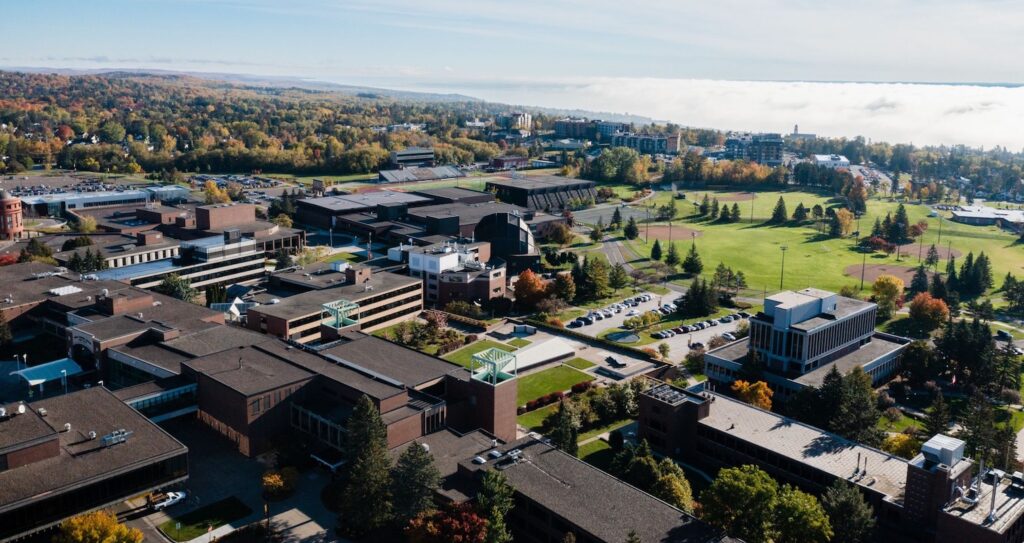
The University of Minnesota – Duluth’s Department of Social Work puts students first. Their program prepares social work professionals to work in a variety of practice settings. You’ll get the skills you need for social work roles in both urban and rural areas through their Advanced Generalist and Generalist programs. The program stands out with its unique focus on American Indian social services, making it one of the few MSW programs nationwide with this specialty.
Students who join UMD’s social work community can shape their education around their interests. You can choose from three main areas based on your career goals:
- Child welfare
- Mental health/clinical social work
- Macro/community-based social work practice
The school knows how busy their students’ lives can be. That’s why they’ve created a hybrid learning model where most students come to campus just one day each week. This setup lets you enjoy online learning while you get to know your professors and classmates in person.
UMD’s MSW program really shines because of its personal touch. The program’s small size means you’ll get individual attention from faculty – something that’s hard to find at bigger schools. The faculty team brings different perspectives and backgrounds, with extensive experience helping diverse populations. This enriches your learning experience.
Money shouldn’t stop you from pursuing your dreams. UMD helps make that possible – about 60% of their MSW students get scholarships.
The program’s strong ties to the American Indian community create unique learning opportunities. UMD’s Center for Regional and Tribal Child Welfare offers stipends, special courses, and hands-on learning experiences in child welfare.
The program’s graduates thrive in many roles. They become therapists, case managers, community organizers, and administrators. Your coursework prepares you for both clinical and community work, and meets the educational requirements to become a licensed clinical social worker in Minnesota and many other states.
The program has earned full accreditation from the Council on Social Work Education (CSWE) for over 25 years. This means you’ll be ready for licensure anywhere in the United States or its territories.
Programs offered
The Master of Social Work (MSW) program at the University of Minnesota – Duluth gives you exceptional flexibility. Its Advanced Generalist curriculum prepares you for professional roles of all types—from therapist and case manager to community organizer and administrator.
You can earn your MSW degree through two different paths based on your educational background. The Advanced Standing Program (34 credits) works best for students with a BSW from an accredited undergraduate institution. You can finish your master’s in just twelve months of full-time study through this simplified option. Starting in summer or fall semester, you can also switch to part-time if needed. The program has a detailed 500-hour practicum experience where an MSW professional supervises you directly in the field.
The Foundation Program (51 credits) welcomes students with bachelor’s degrees from any discipline. You’ll need two years of full-time coursework and field experience. Foundation students begin in fall and complete two practicum placements—420 hours for the first and 500 hours for the second—under MSW-qualified supervisors.
UMD’s MSW program stands out with its flexible delivery format. Core classes in both programs meet once a week for two hours, plus some online work. Advanced standing students can choose between a fully online program or a hybrid approach. Foundation students get the same choice in their second year.
A great feature of the program lets you attend all in-person classes on the same day, so you only need to come to campus once a week. Many electives are available online during regular terms and summer.
The program doesn’t have specific tracks, which gives you more freedom to pick courses that match your interests. You can choose from three main study areas:
- Child welfare
- Mental health/clinical social work
- Macro/community-based social work practice
American Indian communities get special attention in the curriculum. Every student takes required courses on American Indians and Social Policy, plus either Working with American Indian Families or Health in American Indian Communities. Students wanting specialized knowledge can focus on child welfare practice or clinical social work.
The program meets most or all clinical content requirements for professional licensing, so you’ll be ready for licensure in any state after graduation.
About the online program
The University of Minnesota – Duluth MSW program puts flexibility at the heart of its online learning model. The department knows students need to balance work and personal life. They’ve created a hybrid program that’s easy to access without compromising on quality.
The program blends online and in-person learning thoughtfully. Classes run on Thursdays and Fridays, which lets you keep your job or complete practicum work on other days. Most students only need to come to campus once a week. This makes the program work well even if you live far from campus.
Advanced Standing students can choose between two paths: a one-year fully online program or a hybrid option. Foundation students get similar choices in their second year—they can stick with the hybrid model or switch to fully online classes. This setup recognizes that your needs might change as you progress through your studies.
Students can take many elective courses completely online during regular terms and summer. You’ll have more ways to build expertise in your areas of interest without extra trips to campus.
The University’s new credit payment system helps part-time students who now pay the same rates as full-time students. Working professionals and people with family commitments can take fewer classes without paying more per credit.
The program stays personal even with its online elements. Full-time faculty teach most courses, which means consistent quality and mentorship throughout your studies. This gives UMD’s program an edge over others that rely heavily on adjunct instructors.
The hybrid model strikes the right balance between convenience and connection. Students get the benefits of online learning and valuable face-to-face time with professors and classmates. UMD’s MSW program helps you move forward in your social work career while keeping your current commitments.
Accreditation
Accreditation is a vital marker of educational quality and professional preparation in social work education. The University of Minnesota – Duluth MSW program has managed to keep full accreditation from the Council on Social Work Education (CSWE) for over 30 years. This three-decade-old recognition shows the program’s steadfast dedication to excellence in social work education.
UMD’s undergraduate (BSW) and graduate (MSW) social work programs have earned this prestigious designation. Each program emphasizes social justice and culturally responsive practice at its core. This accreditation status goes beyond mere formality and becomes a remarkable achievement that directly affects your career potential and professional mobility.
CSWE accreditation involves a rigorous peer-review process. The process balances standardized outcomes while giving institutions enough flexibility to develop their unique strengths. Students can feel confident knowing their education meets established national standards for social work practice. The accrediting body makes sure programs have clear missions and objectives that match contemporary social work practice expectations.
CSWE accreditation helps create quality education that prepares social workers to build and maintain healthy communities. Programs must show they can effectively prepare students to become respectful and responsible social workers who serve diverse cultures and communities. The accreditation process looks at how well programs teach core social work values including justice, dignity, worth of each person, human relationships, integrity, and competence.
The CSWE’s Board of Accreditation has recognition from the Council on Higher Education Accreditation (CHEA). This additional oversight helps students identify legitimate programs and avoid “accreditation mills” that might misrepresent their credentials’ quality or recognition.
Your degree’s accreditation status matters greatly because employers and licensing boards across the country will recognize it. CSWE-accredited programs meet educational requirements for social work licensure in Minnesota and throughout the United States and its territories. This universal recognition gives you professional mobility to pursue career opportunities anywhere without worrying about credential recognition.
CSWE’s accreditation process ensures UMD’s program graduates can think critically, solve problems, and effectively support justice, equity, inclusion, and diversity in their professional practice.
Admission Requirements
The University of Minnesota – Duluth MSW program looks at several qualifications when admitting new students. You’ll need a bachelor’s degree from a regionally accredited college or university with a strong liberal arts background.
Your academic record matters a lot in the admissions process. The program usually wants students with at least a 3.0 undergraduate GPA. The MSW department can make some exceptions for students with lower GPAs who show other strengths or have special circumstances. You should complete at least 6 semester credits (or 10 quarter credits) in two or more social sciences like sociology, psychology, economics, anthropology, or political science before you apply.
You’ll need to submit these documents through the University of Minnesota Graduate School website:
- Three letters of recommendation (one from an academic source and another from an MSW professional or someone who knows social work well)
- A personal statement (3-4 pages, double-spaced)
- A professional resume/CV
- A writing sample that shows graduate-level writing ability
- Transcripts from all schools you’ve attended
Your personal statement is a vital part of your application. This document should tell your life story, why you want to work in social work, your experience (especially with different populations), career plans, and how UMD’s program lines up with your professional goals.
The deadline to apply for the upcoming academic year is January 15. The program might accept more applications later if spaces remain. Students who apply by January usually hear back about admission by late February or early March.
The department takes about 50 new students each year. This includes 25-30 advanced standing spots for BSW holders and 20 foundation positions. At least two full-time faculty members review each application. They use a scoring system that looks at professional experience, academic background, recommendations, and essays.
Students who will work with minors or other vulnerable groups must pass a background check before starting their practicum placements.
Tuition
The cost of your MSW degree at the University of Minnesota – Duluth deserves careful thought. UMD’s tuition rates compete well with other programs across the country. The 2025-2026 academic year costs $15,200.00 for in-state students and $20,950.00 for out-of-state students in tuition and fees. The in-state rate is higher than the national average of $12,422.00. This is a big deal as it means that out-of-state students pay less than the national average of $29,909.00.
Your actual tuition at UMD will depend on these key factors:
- Your degree program registration
- Enrollment level
- Residency status
- Your state’s reciprocity agreements
UMD has long-standing agreements with Wisconsin, North Dakota, and Manitoba, Canada. Residents from these regions might qualify for reduced rates that match resident tuition. Since July 2024, students from the Federated States of Micronesia, the Republic of Palau, and the Republic of the Marshall Islands pay the same rates as Minnesota residents.
The full cost goes beyond tuition. Students need to plan for food, housing, books, supplies, transportation, and personal expenses. The complete cost reaches $30,080.00 for in-state students and $37,490.00 for out-of-state students.
The Department of Social Work helps make education available to more people through different funding options. More than 60% of MSW students get scholarships between $500.00 to $2,000.00. Graduate assistantships are a great way to get extra benefits such as:
- A competitive $27.95/hour minimum wage
- Partial insurance coverage
- Lower tuition costs
Students in the Swenson College of Science & Engineering pay an extra $520.00 yearly for tuition. The Bulldog Bundle helps undergraduate students save money by taking more credits while finishing their degree on schedule.
Additional Information
The University of Minnesota – Duluth MSW program has specific academic policies that will shape your graduate school experience. You’ll need to maintain a 3.0 GPA and earn a “Pass” grade in all field courses to graduate. MSW students must complete their 60-credit degree within four years from their original registration date. Advanced Standing students have two years to finish their program.
The University requires students to complete two consecutive semesters (fall-spring or spring-fall) with at least 9 credits each term to meet residency requirements. Students can take up to 16 credits per semester but must enroll in at least 6 credits during fall or spring terms.
Students need adequate time to complete their practicum requirements. Foundation coursework must be completed before starting advanced field practicum. Most students take their methods courses while doing field practicums.
UMD provides many resources to improve your academic experience. The Writing Center helps with papers, while library workshops and detailed mental health services support your success. Faculty members often include MSW students in their research projects. UMD’s Career Center gives graduate students individual-specific advising and placement support. Students should complete all prerequisite requirements before taking any courses.