
University of Alaska Anchorage MSW Program Guide
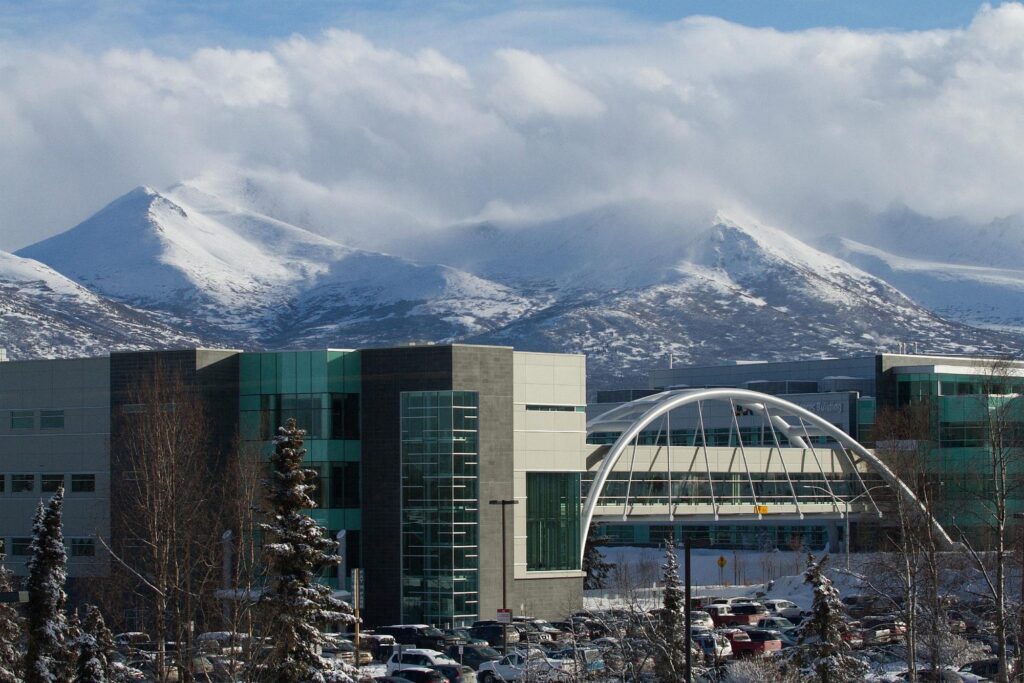
The University of Alaska Anchorage School of Social Work is essential to social work education in Alaska. The school offers both undergraduate and graduate programs that address the state’s unique social service needs. This 45-year-old institution has managed to keep its accreditation from the Council on Social Work Education (CSWE), which shows its dedication to educational excellence.
UAA School of Social Work advances social work practice throughout Alaska through detailed education, innovative research, and community service. The school welcomes a profession that commits to ethical and research-informed practice. Their work helps individuals, families, groups, organizations, and communities in the state’s diverse geographic and cultural world.
The curriculum and approach uniquely equip students to tackle Alaska’s distinct social challenges. The institution makes social justice, economic equality, and environmental advocacy the foundations of its educational philosophy. Students learn to participate effectively in policy practice while serving Alaska’s communities.
MSW alumni from UAA work in service delivery systems of all types:
- Child and adult behavioral health
- Child welfare and gerontology
- Medical social work and school social work
- Juvenile justice and criminal justice
- Military and veterans services
- Tribal social services
- Disability services and policy advocacy
- Organizational leadership
The school’s graduates have achieved remarkable success. UAA MSW graduates who took the Licensed Clinical Social Worker (LCSW) exam for the first time in 2022 achieved a remarkable 96% pass rate. This showcases how well the program prepares qualified professionals.
UAA’s School of Social Work faculty brings extensive experience and expertise in multiple practice areas. Their knowledge spans behavioral health, child welfare, disabilities, criminal justice, veterans services, healthcare, homelessness, food insecurity, community development, senior services, and organizational leadership.
Students who want to explore beyond coursework can join various professional groups and activities. These include the Social Work Student Coalition, the National Association of Social Workers, or the Epsilon Chi chapter of Phi Alpha.
The School puts students first with its educational approach. Students develop knowledge, skills, and values needed through carefully planned experiences. These experiences happen in classrooms, laboratories, volunteer opportunities, small seminars, and selected field work practicum placements. This detailed preparation ensures a successful career in social work.
Programs offered
UAA’s School of Social Work provides several educational paths for students who want to study social work. Students can choose from undergraduate and graduate programs that offer flexible formats to fit their schedules.
The Bachelor of Social Work (BSW) program at UAA has maintained its Council on Social Work Education (CSWE) accreditation since 1978. Students can prepare for entry-level professional careers or graduate school through this program. A broad-based liberal arts education gives students generalist practice skills with structured support, instruction, and advising.
Students from other disciplines can take a Minor in Social Welfare Studies to learn valuable social work knowledge and gain new viewpoints.
The premier Master of Social Work (MSW) program features a 100% online, distance-delivered curriculum accredited by the Council on Social Work Education. Graduates of this advanced generalist MSW program are ready for clinical social work practice, policy advocacy, and leadership roles. Students progress through five structured course sequences: social work practice, policy, human behavior in the social environment, research, and practicum education.
The MSW program lets students choose from several completion paths:
- Traditional Track: 31-61 credits based on prior education
- Full-Time Option: Complete in as little as 12 months
- Part-Time Option: Extended timeline for working professionals
- Advanced Standing: Accelerated path for BSW graduates following a 4+1 program plan
Field practicum placements are vital components of both programs, where students get hands-on experience in community agencies. This practical experience prepares them to work in Alaska’s varied geographic and cultural communities.
The School also offers an Occupational Endorsement Certificate in Interprofessional Child Welfare to meet specific workforce needs in this essential service area.
All admitted MSW students can benefit from discounted resident tuition rates whatever their location. All the same, the online MSW program currently accepts only Alaska residents.
The advanced generalist concentration meets Alaska’s complex workforce needs effectively. MSW alumni work in many settings, including child and adult behavioral health, child welfare, gerontology, medical social work, school social work, juvenile justice, and tribal social services.
About the online program
The University of Alaska Anchorage MSW program offers 100% of its content online, making quality social work education available across Alaska’s big territory. Students can pursue advanced social work education without moving, as the program serves Alaska’s diverse communities.
UAA’s online program combines live and self-paced learning methods. The program stands out from others by offering live weekly sessions that last up to four hours, scheduled in afternoons or evenings. These interactive sessions create a virtual classroom where students connect with instructors and peers, ask questions and join discussions from any location.
The program runs on Blackboard for course management and Zoom for video meetings. While everything happens online, traditional track students must visit the Anchorage campus for orientation and might need one or two brief campus sessions during their studies. Advanced standing students need at least one campus visit.
Right now, the University of Alaska Anchorage online MSW program accepts Alaska residents only. This local focus helps shape the curriculum to Alaska’s unique social service needs and will give students the chance to complete their field work. The good news is that all MSW students pay discounted resident tuition rates once admitted.
Students can choose their pace. The program takes 12 months full-time or extends to two to four years part-time. The shared online learning environment helps students develop advanced generalist social work values, knowledge, and skills in direct practice, leadership, critical inquiry, and policy advocacy.
This program fits perfectly if you live in Alaska, need flexible education while working, want to serve Alaska’s communities, or have interest in rural and remote social work.
Accreditation plays a vital role as you learn about graduate social work programs. It shows the quality you’ll get for your time and money. The University of Alaska Anchorage’s Master of Social Work program holds accreditation from the Council on Social Work Education (CSWE), America’s leading authority in social work education.
The program earned this recognition by meeting strict national standards. UAA’s School of Social Work has maintained CSWE accreditation since 1978. This 45-year track record shows the program’s excellence and reliability.
CSWE accreditation brings real benefits to MSW students. The curriculum meets professional standards through regular evaluations. These reviews look at faculty credentials, course content, and student outcomes to ensure quality.
Your career prospects depend on this accreditation. You’ll need it to become licensed in Alaska and other states. Without it, you might struggle to practice professionally.
The accreditation also helps you:
- Get special scholarships and financial aid for accredited program students
- Transfer credits easily if you move during your studies
- Stand out to employers who value accredited degrees
Students’ success proves the program’s worth. UAA MSW graduates achieved a 96% first-time pass rate on the Licensed Clinical Social Worker exam in 2022.
Social workers who plan to serve Alaska’s communities get unique advantages from this CSWE-accredited program. UAA’s MSW combines national standards with Alaska-focused coursework. This prepares you to work effectively in both city and rural areas across the state.
Accreditation
CSWE Accreditation is central to the University of Alaska Anchorage MSW program’s pursuit of excellence. The BSW and MSW programs at UAA have managed to keep full accreditation by the Council on Social Work Education through 2026. This recognition goes beyond a simple credential and shows the program meets strict national standards for social work education.
The MSW program has proven its quality through continuous accreditation since 1999. The undergraduate program’s track record goes even further back to 1978. This long-standing success shows UAA’s commitment to maintaining high educational standards as social work practices evolve.
You might wonder what CSWE accreditation means for your education. The program goes through a systematic peer review that balances similar outcomes with flexibility based on context. This accreditation shows the university has everything needed to achieve its goals through well-designed educational programs.
Let’s take a closer look at what CSWE’s accreditation process evaluates:
- Faculty qualifications and expertise
- Curriculum design and implementation
- Student learning outcomes
- Program assessment and improvement processes
The benefits of accreditation extend beyond quality assurance. Most states require graduation from a CSWE-accredited program for social work licensure. Your career options and professional credibility will benefit directly from UAA’s accredited status.
CSWE states that accredited programs help graduates “critically think, problem solve, and promote justice, equity, inclusion, and diversity”. The UAA MSW program meets all educational requirements for professional licensure in Alaska, though other states may have different requirements.
CSWE’s Board of Accreditation has recognition from the Council on Higher Education Accreditation (CHEA), which proves your degree’s credibility. The results speak for themselves – UAA MSW graduates consistently achieve excellent outcomes with high licensure exam pass rates.
Admission Requirements
The University of Alaska Anchorage MSW program accepts applications until January 15. The application process has two parts. You must submit an application to UAA’s graduate programs for $75 and another through the Social Work Centralized Application Service (SocialWorkCAS) with a $45 processing fee.
You don’t need GRE scores for this program. The admission requirements include:
- A baccalaureate degree from an institutionally accredited institution
- A cumulative GPA of 3.0 (B average), though the program might make exceptions
- Two prerequisite courses in human biology and statistics where you need at least a C grade or Pass
Students can complete these prerequisites through 3-credit academic courses, approved continuing education certificates, or national exams like AP, CLEP, or IB. You can apply while completing prerequisites, but they must be finished before starting the program.
The application package should include:
- A professional resume that shows your work experience, volunteer activities, and awards
- A personal statement (up to three pages) answering three specific questions
- Three professional references submitted through SocialWorkCAS
- Official transcripts from every college and university you attended
Advanced Standing applicants need these additional qualifications:
- A BSW from a CSWE-accredited program
- A minimum B grade in each practicum placement course
- A reference from a BSW faculty member
Transfer students must show they are in good standing at their current MSW program with a GPA above 3.0. The MSW Admissions Committee takes an integrated approach to review applications. They look at your academic preparation, leadership experience, understanding of social work values, and critical thinking skills.
After review, applicants receive one of four decisions: admitted, admitted with provisions, waitlisted, or denied. Students who get admitted must send back an Intent to Enroll form by the specified date to secure their spot.
Tuition
Getting your graduate education is one of the most important investments you’ll make, and UAA’s MSW program has several cost advantages. The program’s 100% online delivery format means all admitted MSW students qualify for the discounted resident tuition rate whatever their location.
Graduate courses (600-level) at UAA will cost $528 per credit hour for residents during the 2025-2026 academic year. This rate applies to all online MSW students, though the standard non-resident rate would be $1,128 per credit hour. This ended up creating big savings for out-of-state students.
Your entry path determines the total program cost:
- Traditional MSW (62 credits): Approximately $31,806 total
- Advanced Standing MSW (31-35 credits): Approximately $15,903 total
The application process includes a $75 fee for UAA graduate admission and $45 for the Social Work Centralized Application Service.
Students from Arizona, California, Colorado, Hawaii, Idaho, Montana, Nevada, New Mexico, North Dakota, Oregon, South Dakota, Utah, Washington, and Wyoming might qualify for extra tuition benefits through the Western Interstate Commission for Higher Education (WICHE) Western Regional Graduate Program (WRGP).
You’ll find many financial aid options to help with costs:
- University-specific scholarships like the Dove Kull Memorial Scholarship ($500 minimum)
- Social Work Administration Scholarship (variable amount)
- Thorsness Family Scholarship ($1,000)
- External opportunities such as the Consuelo W. Gosnell Memorial MSW Scholarships (up to $4,000)
Degree-seeking students should submit a Free Application for Federal Student Aid (FAFSA) each year to qualify for various scholarships and aid options.
Additional Information
The field practicum is the foundation of the University of Alaska Anchorage MSW education. Students must complete 960 total hours of supervised experience. The generalist curriculum students spend 480 hours spread across fall and spring semesters. They complete another 480 hours during the advanced curriculum. Advanced standing students need to complete the 480 advanced hours only. This hands-on training happens at long-standing Alaska organizations that serve populations at risk.
Students go through a well-laid-out field placement process. They submit applications and interview at potential sites. The MSW Practicum Education Coordinator then arranges placements based on mutual agreement between the student and agency. Several agencies need special background checks or immunizations. Students should start these requirements early to avoid any delays.
UAA’s MSW alumni have shown remarkable results. Their first-time LCSW exam takers achieved a 96% pass rate in 2022. Graduates can qualify for Master Social Worker (LMSW) or Clinical Social Worker (LCSW) licensure through Alaska’s Board of Social Work Examiners. Alaska’s social workers earn approximately $64,360 annually ($30.94/hour), which reflects the high need for services across the state.
The program focuses on advancing human rights through anti-racist and anti-oppressive practice. It pursues justice, equity, and inclusion that perfectly serves Alaska’s diverse communities. UAA proudly acknowledges its location on the ancestral homelands of the Dena’ina, Ahtna, Alutiiq/Sugpiak and Eyak/dAXunhyuu Peoples.