
University of Alabama MSW
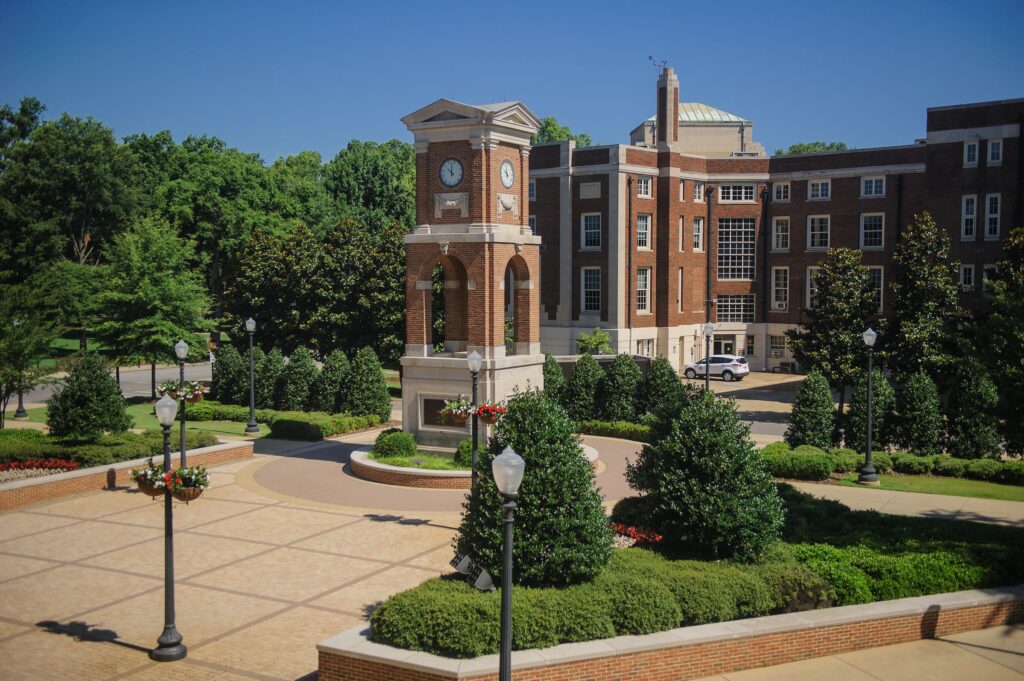
The University of Alabama’s School of Social Work has been a cornerstone of social work education since 1965 when the Alabama Legislature established it. The School quickly built its graduate program after appointing its first dean in 1966. The MSW program earned its original accreditation in 1969. The School has managed to keep its high standards and moved up 16 places in U.S. News & World Report rankings. It now ranks as the 28th best graduate school for social work nationally.
The School stands out as Alabama’s only institution offering BSW, MSW, DSW, and PhD degrees in social work. Students at all levels can find complete educational pathways here. The MSW program helps students become evidence-informed advanced practitioners and leaders across social service settings.
The University of Alabama MSW program aims to create advanced scholar-practitioners. These professionals improve individual and family lives while promoting community well-being. They also work toward policies that support systemic change. This vision shapes an engaging curriculum that gives graduates advanced knowledge and skills. They learn to tackle complex social issues at state, national, and global levels.
The program takes an Advanced Generalist Practice approach with five key themes:
- Life Course Perspective – How psychological, social, historical, political, and economic factors shape development
- Valuing Diversity – Working with people from different backgrounds respectfully
- Critical and Reflective Thinking – Using evidence to challenge assumptions
- Evidence-Based Practice – Choosing interventions that showed results
- Services to the Poor and Underserved – Focusing on people who use public and non-profit agencies
The School weaves social justice principles throughout its curriculum. This reflects its steadfast dedication to ethical practice as outlined in the NASW Code of Ethics. Students learn to improve general welfare from local to global levels, fight social injustice, and practice cultural humility.
Students can choose between traditional on-campus classes and a mostly online MSW program. Working professionals can advance their careers without moving thanks to the flexible online MSW option. BestColleges.com recognizes this program’s quality, ranking it among the Top 25 Best Online Master’s Programs.
The School calls the newly renovated Little Hall home after a $9.6 million makeover in 2017. This modern facility gives students and faculty a state-of-the-art space to collaborate, teach, and conduct research.
Programs offered
The University of Alabama’s MSW program tracks are created for students from different education levels and work situations. The School of Social Work gives you several ways to get your degree based on your previous education and schedule.
The Advanced Standing Program is perfect for students who have a Bachelor of Social Work degree from a CSWE-accredited institution. This fast-paced one-year, full-time program needs 42 credit hours and 500 clock hours of field experience. Students can pick between on-campus or online formats, but both need a face-to-face orientation. The program kicks off in summer, with application deadlines set for November 1 (priority) and February 1 (final). Students who study full-time can finish in just three semesters.
Students without a BSW can choose the Traditional 60-Credit Hour Program for a detailed social work education. This two-year program welcomes students with any bachelor’s degree from a regionally accredited university. The program covers 60 credit hours of coursework and two field internships that add up to 1,000 hours of hands-on experience. Just like the Advanced Standing option, you can study on-campus or online. The program starts in fall with a required in-person orientation in July. Students should apply by December 1 (priority) or April 1 (final).
The School also offers a Part-Time Program option for Advanced Standing and Traditional program students that takes about 3-4 years to finish. This setup helps you balance your studies with your other commitments.
Alabama’s MSW curriculum focuses on five core areas:
- Social Work Practice
- Human Behavior and the Social Environment
- Social Welfare Policy and Services
- Research Methods
- Practicum Education
Both programs let you choose between two concentrations: Children, Adolescents, and their Families (CAF) or Adults and their Families (AF).
The University offers two combined degree options. The MSW/JD program partners with UA’s School of Law to teach students about forensic social work, the justice system, and human rights issues. The MSW/MPH program teams up with UAB’s School of Public Health to focus on community health services.
Your chosen track will prepare you for advanced social work practice and leadership roles in settings of all types. Each program emphasizes social work values and ethics at every practice level.
About the online program
The University of Alabama MSW online program gives working professionals a perfect way to advance their careers without moving. This flexible program has gained national recognition.
Students progress through their coursework together in cohorts, with classes designed to fit different schedules. Most learning happens online, but students attend hands-on skills labs on Saturdays at convenient locations across Alabama, Jackson, MS and Atlanta, GA. These labs meet four times each semester for half a day and help students build practical clinical skills along with their theoretical knowledge.
Field education plays a vital role in the program. Most students complete their placements in Alabama. All the same, students in neighboring states can sometimes arrange local placements that fit their location. This blend of online learning and real-world experience prepares graduates to become licensed social workers (LMSW and later LCSW).
The online program matches the high standards of campus classes. Students with a BSW can complete the 42-credit Advanced Standing track, while those new to social work take the 60-credit program. Students learn advanced generalist practice and social justice principles through virtual coursework that gives them advanced skills.
The program offers quality education at $440 per credit hour. This competitive price makes social work education accessible to many future professionals.
The online MSW program has become a game-changer for students in rural Alabama. It meets the state’s growing demand for skilled social workers and lets students keep their current jobs. Students from Birmingham, Montgomery, Mobile and beyond can now access top-quality social work education regardless of where they live.
Accreditation
The University of Alabama’s MSW program’s CSWE accreditation is a vital quality marker. The program has full accreditation from the Council on Social Work Education (CSWE). This national recognition covers both traditional campus-based and online program options. Your education will meet professional standards no matter which format you choose.
CSWE uses a robust peer-review system that balances outcome requirements while giving institutions room to differentiate their programs. The University of Alabama MSW program meets national standards and prepares graduates for state licensure examinations.
A CSWE accredited degree offers several advantages to you:
- Licensure Eligibility – Graduates can apply for social work licensure in all 50 states
- Quality Assurance – The program meets or exceeds national social work education standards
- Educational Integrity – The curriculum follows CSWE’s curriculum policy requirements
- Professional Recognition – Employers recognize the legitimacy of your degree
The University’s steadfast dedication shows through its continued accreditation status. The MSW curriculum strictly follows CSWE policy requirements. Your education will match current professional field expectations.
CSWE focuses on delivering quality education and preparing social workers who build and maintain healthy communities while contributing to public good. Social work education builds on justice, dignity, human relations, integrity, and competence—values that shape the University of Alabama’s program.
The University of Alabama is one of nine institutions in Alabama with CSWE-accredited MSW programs. This without doubt shows Alabama’s dedication to quality social work education. CSWE’s accreditation involves detailed evaluation, site visits and comprehensive self-studies that verify program quality.
The University’s PhD Program partners with the Group for the Advancement of Doctoral Education (GADE) in Social Work. This partnership shows excellence in all levels of social work education.
Your investment in a University of Alabama MSW will give you a nationally recognized credential for professional practice. Unlike unaccredited “degree mills” whose credentials employers or licensing boards might reject, a CSWE-accredited degree from the University of Alabama holds real value in the professional world.
Admission Requirements
The University of Alabama MSW program and Graduate School have specific admission criteria that applicants must meet. Students start their journey through the UA Graduate Admission portal. The School of Social Work reviews applications after they clear the university’s screening process.
To qualify for standard admission, applicants need to provide:
- Three letters of recommendation
- A professional resume
- A complete 5-6 page Statement of Purpose
Regular admission typically needs at least a 3.0 GPA (on a 4.0 scale), matching Graduate School standards. Students with GPAs between 2.5 and 3.0 might qualify for “Admission with Permission to Continue” status if they enroll part-time. The program maintains a strict policy that no academic credit, course waivers, or field practicum credit can be granted for previous work experience or life experience.
Different program tracks have varying application deadlines. The Advanced Standing Program’s deadlines are November 1, 2025 (priority) and February 1, 2026 (final). Students can apply to the Traditional Program until December 1, 2025 (priority) and April 1, 2026 (final). Meeting priority deadlines is vital for scholarship consideration.
Current University of Alabama students might qualify for application fee waivers. Application fees are $65 for domestic applicants and $80 for international students.
International students must meet extra requirements. They need to verify English proficiency through TOEFL (minimum 550 paper/79 IBT) or IELTS (minimum 6.5) scores.
Recent statistics show the program’s selective nature. Out of 497 applications, 246 received acceptance offers, and 152 ended up enrolling.
Joint degree seekers (MSW/JD or MSW/MPH) need to apply separately to each program. Each program evaluates applications independently before joint program status consideration.
Students must choose between on-campus or online format in their Graduate School application. All supporting documents should be uploaded through the Manage Document tab.
Tuition
The financial investment needed for the University of Alabama MSW program is vital for students to understand. Graduate students pay $480 per credit hour during the 2025-2026 academic year. A typical 3-credit course costs $1,440.
Program costs change by a lot based on your track choice:
- 42-credit Advanced Standing Program: About $20,160 for tuition only
- 60-credit Traditional Program: About $28,800 for tuition only
U.S. students in the online MSW program pay $597 per credit hour. The total investment comes to $36,417 for the Traditional Program (61 credits) and $23,283 for the Advanced Standing track (39 credits).
Students need to plan for these extra costs:
- Application fee: $65 for U.S. citizens, $80 for international applicants
- Technology/infrastructure fee: $29 per hour for main campus courses
- College-specific fees: $15 per hour for College of Arts and Sciences distance courses
- Books: About $700 yearly
- Housing and living expenses (varies by location)
The University of Alabama provides several ways to make education more affordable. The School of Social Work gives scholarships, grants, loans, and work-study opportunities to help with costs. Some students might qualify for special funding through the Washington D.C. Internship or international practicum experiences.
Other Alabama MSW programs charge $495 per credit hour at the University of North Alabama to $938 per credit hour at UAB’s School of Public Health. These rates make the University of Alabama’s program competitive in the state.
On-campus students’ yearly costs range from $34,608 (in-state) to $58,530 (out-of-state). Off-campus students pay more: $36,232 (in-state) to $60,154 (out-of-state).
Your final investment depends on where you live, which program format you choose, and your financial aid eligibility. International students with F-1 or J-1 visas must also pay for medical health insurance and an international student fee of $100 each semester.
Additional Information
The University of Alabama’s School of Social Work goes beyond classroom teaching to support MSW students. Students can get one-on-one Career Conversations and licensure exam training. The school provides helpful resources like resume templates, interview checklists, and guidance for salary negotiations.
Research opportunities await students through the Office of Social Work Research (OSWR). The office helps students get funding for their projects and supports doctoral research. Many MSW students showcase their work at the University’s Undergraduate Research and Creative Activity Conference each year.
The school makes social work education accessible to students from all financial backgrounds. Students can get scholarships, grants, loans, and work-study options to fund their education.
Title IX protections are a key part of the university’s commitment to equality. These rules prevent gender-based discrimination in educational programs. Students facing pregnancy, childbirth, or related conditions receive protection under these guidelines. The university also bans harassment based on race, color, religion, ethnicity, national origin, age, disability, or veteran status.
The School helps students navigate admissions and academic policies. Students can reach out directly with specific questions about their applications.