
Springfield College MSW
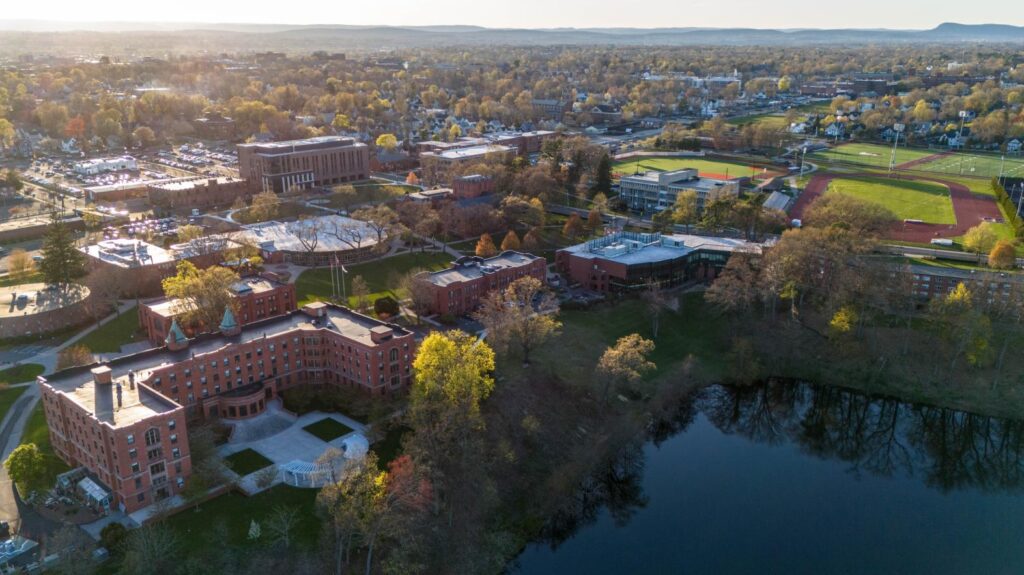
Springfield College, located at 263 Alden Street in Springfield, Massachusetts, has built a strong reputation in social work education. MSW graduates have achieved a remarkable 93% job placement rate within six months after graduation. This statistic shows how well the program prepares students for their social work careers.
Students at Springfield College’s Master of Social Work program become skilled at advanced generalist practice. The program gives graduates the tools to work with individuals, families, groups, organizations, and communities. Evidence-based and knowledge-guided practice helps graduates address universal human needs.
Springfield College MSW graduates earn a median salary of $57,311. This is a big deal as it means that the national median of $51,347 for social work master’s graduates. These numbers reflect the program’s quality and student preparation.
The college shines with its student success rates:
- 85% student retention rate (top 25% nationally)
- 73% overall graduation rate (top 25% nationally)
- 69% four-year graduation rate (top 15% nationally)
Most Springfield College graduates stay close to home. New England keeps 81% of graduates, while others move to the Mid-Atlantic (10%), South Atlantic (3%), Midwest (2%), and other regions including international locations (1%).
Recent academic year statistics paint a picture of diversity in the MSW program. Degree recipients included:
- 34 White students
- 35 Black or African American students
- 26 Hispanic or Latino students
- 1 Asian student
- 1 Non-Resident Alien
- 11 students of other racial backgrounds
Women make up the majority of the program’s graduates, with 93% of social work master’s degrees awarded to women and 7% to men.
The New England Commission of Higher Education (NECHE) accredits Springfield College. The MSW program also holds accreditation from the Council on Social Work Education (CSWE). These credentials ensure high educational standards and professional preparation.
The college’s Social Work Department features a strong team with a department chair, professors, and directors of practicum education. The Career Center supports students’ professional growth through career counseling, job fairs, and placement assistance.
Programs offered
Springfield College’s Master of Social Work (MSW) program specializes in advanced generalist practice. Students learn to work with individual clients, families, groups, organizations, and communities using proven methods.
The college makes its MSW degree available through six different paths to match student needs:
- Weekday Program (full-time, two years): Classes meet Tuesdays and Thursdays. Students complete field practica each semester and join foundational and specialization seminars.
- Weekday Evening Hybrid Program (full-time, two years): Evening classes run from 5:15-8:30 p.m. Students learn both in-person and through Brightspace online platform.
- 100% Online Program (part-time, three years): Students join live Zoom sessions and learn at their own pace through the Electronic Learning System. Classes happen Monday evenings, Wednesday evenings, and Saturdays.
- Weekend Program (part-time, three years): Students meet seven times each semester on weekends. Field practica starts in the fourth semester.
- Advanced Standing Program: This program suits BSW graduates from CSWE-accredited programs who finished within five years. Students need only 33 credits instead of the usual 60 credits.
- Dual Degree Programs: Students can choose between the MSW/JD dual degree with Western New England University School of Law (four years) or the BS/MSW dual degree for Springfield College undergraduate sociology majors.
Field practica are a vital part of every program option. Most field work happens during regular business hours. The college also offers evening/weekend placements and work-based practica to help working professionals.
BSW graduates should take a closer look at the Advanced Standing Program. This option recognizes their first-year skills and waives basic courses from the standard MSW curriculum. The degree holds the same value as the standard program under CSWE standards and policies.
The Advanced Standing path needs 33 credits compared to the standard 60-credit program. Summer courses cover Human Behavior in the Social Environment (3 and 4) and Social Work Practice 5. Students take Research, Social Practice, Field Practicum, and electives during fall and spring semesters.
Springfield College delivers the same high-quality education across all program formats. The MSW program works well for both traditional students and working professionals looking to grow their careers, thanks to its flexible scheduling options.
About the online program
Springfield College offers a 100% online MSW Program that gives you a flexible yet structured educational experience. This part-time program spans three years and matches the quality and content of campus-based options while letting you study from anywhere.
You’ll learn through a smart combination of live and self-paced instruction. Live classes happen on Zoom where you can interact with your professors and classmates in real time. The college’s Electronic Learning System (ELS) Brightspace platform lets you study course materials whenever it suits your schedule.
Classes fit perfectly around a working professional’s schedule. Sessions run Monday and Wednesday evenings, with Saturdays from 9 a.m. to 4 p.m. Saturday classes follow a clear structure. Morning sessions run from 9 a.m. to noon, and afternoon sessions from 1 p.m. to 4 p.m. Each class splits into 90 minutes of live Zoom learning and 90 minutes of independent work.
Springfield College makes sure online students get plenty of support. Students move through the program as a group, which helps build lasting friendships and professional connections. Faculty advisors stay with you throughout your studies to provide guidance. The college also provides dedicated tech support to help with any computer-related issues.
Your field experience starts in the second year. The Practicum Department works hard to find opportunities near your home. Most practicums happen during regular business hours, but you can also choose evening, weekend, or work-based placements for extra flexibility.
Your courses spread across fall, spring, and summer semesters, just like the part-time weekend program. The program prepares you for advanced generalist practice. You’ll learn evidence-based approaches that help you work effectively with individuals, families, groups, organizations, and communities.
When you graduate from this online program, you’ll have the same credentials as students from other Springfield College MSW paths. You’ll be ready to make a real difference in social work with all the knowledge and skills you need.
Accreditation
Quality standards at Springfield College’s MSW program are backed by solid accreditation that proves its educational excellence and professional standing. The Master of Social Work program has managed to keep its accreditation from the Council on Social Work Education (CSWE) since 1989. The program earned full reaccreditation in June 2013 for eight more years, which shows its steadfast dedication to high academic standards.
CSWE is the national accrediting body for social work education programs. It sets the standards that measure social work education quality across the United States. This credential matters greatly to graduates because it lets them take professional social work licensure exams in all fifty states. Yes, it is particularly valuable when professionals want to work across state lines without educational hurdles.
Springfield College has also earned institutional recognition from the New England Commission of Higher Education (NECHE). This broader accreditation covers educational institutions in all six New England states. It shows that qualified educators have really assessed the college and found it meets their standards.
Students who want to think over dual degree options should know that Western New England University School of Law partners with Springfield College for the MSW/JD program. The law school has earned accreditation from the American Bar Association (ABA) and holds membership in the Association of American Law Schools (AALS). Both institutions’ recognition will give a quality guarantee for this combined degree.
These accreditations mean much more than just prestige. CSWE accreditation ensures your social work education meets national professional standards. This credential helps new graduates move into their careers smoothly, especially with licensing requirements. Employers value degrees from accredited programs, which can give graduates an advantage in competitive job markets.
Future students should know that accreditation involves ongoing rigorous evaluation. Programs must keep showing they can prepare competent social work practitioners who serve people of all backgrounds well.
Admission Requirements
Students who want to join Springfield College’s MSW program must meet specific academic and professional standards that are 34 years old. A bachelor’s degree from an accredited college or university with a broad liberal arts background is essential.
The program needs students to complete at least twenty semester hours in social, behavioral, and biological sciences. Students must focus on human biology. Social science requirements include courses in anthropology, economics, education, history, political science, psychology, and sociology. The biological science part needs botany, biology, physiology, and zoology. The program also values students who have taken writing and research methods or statistics courses.
Students need a minimum GPA of 2.5 from their undergraduate work and 3.0 for their last two years. The program might accept some students with lower GPAs if they show other signs of success in graduate social work studies. Space permitting, some candidates might start on probation.
Students must submit these items:
- Completed online application with a $50.00 application fee
- Professional statement about career goals, reasons for wanting an MSW degree, and qualifications
- Current resume with relevant experience
- Three professional, supervisory, or academic references that speak to the student’s potential in graduate education and professional social work
- Official transcripts from all undergraduate and graduate schools
Social work experience matters too – whether from a job, volunteer work, or undergraduate field practicum. Students should know how to work well with people to build professional relationships.
The Advanced Standing program only accepts graduates from CSWE-accredited BSW programs. Their BSW must be less than five years old when they enroll. These candidates need to fill out an extra application.
International students have extra steps. They must pay a $100.00 non-refundable application fee and prove their English skills through TOEFL or IELTS scores. Students with non-English transcripts must get them evaluated by members of the National Association of Credential Evaluation Services.
March 15 is the priority admission deadline for all programs. The college looks at later applications if spots remain open.
Tuition
The MSW education at Springfield College comes with unique financial aspects that students need to understand. The Social Work program’s tuition rates stand apart from other graduate programs at the institution.
Students in the MSW program pay $818 per credit hour, which costs nowhere near the standard graduate rate of $1,212 per credit. This makes Springfield College’s MSW program more available than similar options. Students attending on-campus classes pay additional fees of $406 and a technology fee of $592. The technology fee drops to $195 for online learners.
The part-time program provides the best financial aid benefits. Students in the full-time program take 30 credits each year. The fellowship covers 6 credits ($12,204), leaving $18,306 to pay. A three-year part-time program with fellowship totals $19,508, while the two-year full-time option with fellowship costs $35,012.
Living expenses add approximately $12,000 yearly to the budget. Springfield College helps make education more affordable through financial aid opportunities. The college meets 76% of students’ financial aid needs.
Students can handle payments in these ways:
- Pay the full balance by the due date
- Sign up for the Monthly Payment Plan
- Get alternative or Grad Plus loans for remaining costs
Payment due dates match academic terms. Fall payments are due August 1, Intersession and Spring by December 31, and Summer by May 1. A $75 monthly late fee applies to payments received after these dates.
Springfield College’s partnership with GradGuard provides tuition insurance through Allianz Global Assistance. This optional coverage enhances the standard refund policy by covering tuition, fees, room, and board for approved withdrawals during the semester. Students must apply for tuition insurance one day before classes start each semester.
It’s worth mentioning that social work practica courses (SWRK 584, 585, 686, and 687) have non-refundable fees of $180 each. Students can only get refunds if they withdraw before classes begin.
Additional Information
Springfield College’s MSW program delivers outstanding career results that go well beyond classroom learning. 95% of recent graduates find jobs or continue their education within six months after graduating. Graduates work in a variety of settings such as elementary schools, mental health clinics, hospitals, and government agencies.
The Department of Social Work has built strong partnerships with more than 300 agencies throughout New England and New York State. These field placements need students during weekday hours – something working professionals should think about when planning their work and study schedule. Students should note that most agencies run background checks, and some might not accept those with criminal records.
Social work students have access to specialized library resources including Academic Search Premier, ERIC, PsycInfo, and SocINDEX databases. The Critical Appraisal Skills Program’s checklists help students assess research quality, which is crucial for evidence-based practice.
Many students ask how GPA calculations work and when to submit transcripts. The college calculates undergraduate GPA by dividing total quality points by total credits from all attended institutions. Students should submit their transcripts right after mid-semester grades are posted instead of waiting until the semester ends. International students from non-English speaking countries might not need TOEFL scores if they have earned a bachelor’s degree in English or received a B or higher in English 101 and 102.
Springfield College hosts regular virtual information sessions that focus on their Master’s Degrees in Social Work. The Career Center helps students during their studies and after graduation with career guidance and job placement support.