
Samford University MSW Program
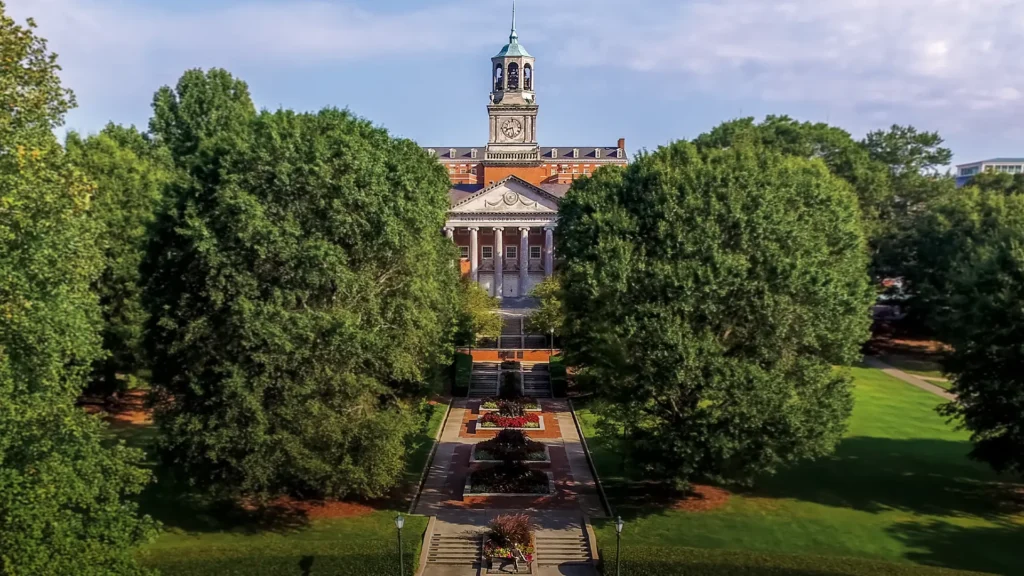
Samford University began its journey as Howard College in Marion, Alabama in 1842, making it the 87th oldest university in the United States. The university moved to Birmingham in 1887 and took its current name in 1965. This rich heritage shapes Samford’s dedication to academic excellence and service.
The university’s beautiful 180-acre campus sits in Homewood, Alabama, just minutes away from downtown Birmingham. More than 50 Georgian Colonial buildings grace the grounds, which has earned Samford recognition as one of America’s most beautiful college campuses. This stunning setting creates an ideal environment for learning and growth.
Students benefit from Birmingham’s vibrant metropolitan area of nearly one million people. The city features major engineering firms, a top-ranked medical center, the Birmingham Civil Rights Institute, a symphony orchestra, and a Triple A baseball team. These local resources give students excellent opportunities to learn and network.
The Samford University Board of Trustees made a significant decision on December 3, 2013. They approved creating the Department of Social Work within the School of Public Health and College of Health Sciences. The Master of Social Work (MSW) Program became the department’s first academic offering. This program lines up with Samford’s mission to help students develop their intellect, creativity, faith, and personhood.
Fall 2016 marked the dedication of the College of Health Sciences’ impressive facilities. Two buildings on the east side of campus span more than 223,000 square feet. These modern facilities house the School of Public Health, School of Health Professions, Moffett & Sanders School of Nursing, and McWhorter School of Pharmacy. Students and faculty work together in this integrated space that promotes collaboration.
The Southern Association of Colleges and Schools Commission on Colleges (SACS-COC) has accredited Samford University to award bachelor’s, master’s, educational specialist, and doctoral degrees. The university received its most recent accreditation renewal in 2007. The Council on Social Work Education (CSWE) granted full accreditation to the Master of Social Work program in June 2017.
Samford’s MSW program’s mission stands out as “a distinctively Christian learning community that prepares graduates for lives of service as advanced social workers who promote healing, wholeness, and reconciliation”. This mission shows how the program combines faith with professional practice.
Programs offered
Samford University’s Master of Social Work (MSW) program helps students become advanced social work practitioners. Students can choose between online classes and in-person learning at the Birmingham campus, which fits different schedules and priorities.
The program offers two main concentrations that line up with career goals. The Advanced Clinical Social Work concentration teaches graduates to work directly with individuals, families, and small groups. Students learn evidence-informed interventions while respecting practitioner flexibility and client self-determination. They develop skills to assess, diagnose, and help diverse populations. This prepares them to work in counseling centers, mental health facilities, hospitals, schools, and child welfare agencies.
The Community and Global Engagement concentration prepares students to work in domestic and international community settings. Students learn to help vulnerable populations with pressing issues. A newer study, published by the program shows that currently, only the advanced clinical practice concentration is available.
Students can accelerate their education through Samford’s Fast-Track MSW option. This path lets undergraduate students earn both their bachelor’s degree and MSW in five years. They spend three years on undergraduate courses before starting the MSW program in their senior year. This option works for undergraduates studying Biblical Studies, Christian and Religious Studies, Culinary and Wellness Nutrition Management, Global Studies, Health Sciences, Human Development and Family Science, Psychology, Public Health, and Sociology.
Samford’s joint degree programs give students interdisciplinary education options:
- MSW/Master of Public Health: Blends social work and public health expertise to boost community well-being
- MSW/Master of Divinity: Readies students for traditional ministry work and program development
- MSW/Master of Arts in Theological Studies: Combines core theological understanding with social work training
The MSW curriculum has two parts: a Foundation Sequence teaching advanced generalist social work knowledge, and a Concentration Sequence focusing on specialized skills. Full-time students finish in two years, while part-time students take three or four years. BSW graduates can complete the program in one year full-time or two years part-time through the advanced standing option.
Samford shows its steadfast dedication to academic excellence, human rights promotion, collaborative work, and faith integration in social work practice.
About the online program
Samford University’s online MSW program delivers excellent education that matches its in-person counterpart while giving working professionals more scheduling options. Students can choose a completely online path with no on-campus requirements. This setup lets you keep your current job as you pursue higher education.
The program’s quality matches the on-campus version perfectly. World-class faculty members design and teach both versions. Students complete their weekly coursework at their own pace through asynchronous delivery. This balance of structure and flexibility works well with various work and life commitments.
Samford’s online MSW program blends the university’s Christian viewpoint with professional social work training. Students learn to consider faith’s role in social work while respecting cultural differences and diversity. This approach helps you build skills that promote human rights and social justice based on Christian values.
Field education remains a vital part of all accredited MSW programs. Samford’s distance field placement options include both domestic and international settings that aid skill development. Students typically complete 500 hours of field experience in their final semester. The specialized coursework complements field placements while most required courses use online learning technology.
The program teaches evidence-based practices with a Christ-centered focus. Students take core courses in Human Behavior in the Social Environment, Social Work Practice with Individuals and Families, Social Welfare Policy, and specialized research methods. Faculty members who value human diversity as the global community’s strength guide you through your studies.
Samford’s online MSW program combines rigorous academics with hands-on experience. Full-time students finish in 2 years, while part-time students may need 3-4 years. This complete approach readies you to serve people of all backgrounds in various settings.
Accreditation
Getting accreditation marks a crucial milestone for social work education programs, especially when it comes to job prospects and professional recognition. The Samford University Master of Social Work program earned full accreditation from the Council on Social Work Education (CSWE) in June 2017. This achievement came after a thorough evaluation that lasted three and a half years. The process included three site visits and an extensive 855-page self-study.
The program started its accreditation journey as a 4-year old program in 2013. Samford first got candidacy status from CSWE in June 2015. Alabama rules allowed graduates to get social work licenses within the state during this period. However, they faced restrictions when practicing in other states. The full accreditation opened up career opportunities for all graduates—past and future.
The biggest advantage of accreditation lets Samford’s MSW graduates qualify for social work licenses across all 50 states and DC. This nationwide recognition matters because almost every state needs CSWE accreditation before granting professional licenses. Students who invest in their education can be confident their degree holds value whatever state they end up practicing in.
The program renewed its accreditation in 2021, showing it still meets national standards. As an accredited program, the Department of Social Work follows core competencies from the CSWE 2022 Educational Policy and Accreditation Standards. These standards give students quality education and prepare them for their profession.
Samford University also has institutional accreditation through the Southern Association of Colleges and Schools Commission on Colleges (SACS-COC). This allows them to award bachelor’s, master’s, educational specialist, and doctoral degrees. SACS-COC last reaffirmed Samford’s accreditation in 2007.
Alabama offers social work licenses at three levels: Bachelor’s (LBSW), Master’s (LMSW), and Independent Clinical (LICSW). Students who graduate from Samford’s accredited MSW program can take the Master’s level licensing exam right away. This licensing system helps maintain professional standards. It makes sure practicing social workers have the training they need to serve clients ethically and competently.
The program’s accreditation means more than just paperwork—it proves educational quality and unlocks professional opportunities across the United States.
Admission Requirements
Samford University’s MSW program has specific admission criteria that change based on your educational background. The program assesses your academic preparation, professional potential, and alignment with their goals.
Students without a Bachelor’s degree in Social Work need an earned bachelor’s degree from an institutionally accredited college or university. Your academic record should show a cumulative GPA of at least 3.0 on a 4.0 scale or a 3.2 GPA in your final 60 credit hours. Students with GPAs between 2.8 and 3.0 can submit MAT or GRE scores to consider, with acceptable scores being 402 for MAT or Verbal: 153, Quantitative: 144, and Analytical: 4.0 for GRE.
Advanced Standing applicants with BSW degrees can finish the program in just one year of full-time study or two years part-time. These applicants must meet the GPA requirements above, hold a baccalaureate social work degree from a CSWE-accredited program, and earn grades of B- or higher in all required undergraduate social work courses.
The program requires all applicants, whatever their background, to submit:
- Three reference letters from a professor, work supervisor, and professional colleague
- Evidence of completing an undergraduate statistics class with at least a C grade
- An academic writing sample that shows research and synthesis abilities
- A personal statement (3-5 pages) about your interest in social work and career goals
Advanced Standing applicants need to provide their final undergraduate field placement evaluation. Samford clearly states they don’t award academic credit for life experience or previous work experience.
International students or those who learned English as a second language must achieve a minimum score of 550 (paper), 213 (computer), or 80 (internet) on the TOEFL or 6.5 on the IELTS Academic test.
Accepted students must pay a non-refundable $200 fee to secure their place, which counts toward first semester’s tuition. The program reviews exceptions individually, offering flexibility to qualified applicants with unique circumstances.
Tuition
Samford University’s MSW program provides clear tuition details to help you plan your educational investment. Students pay $382.00 per credit hour, which adds up to about $22,920.00 for the complete 60-credit curriculum. The cost might look high at first glance. All the same, many students see it as a smart investment given the career growth opportunities that come with an MSW degree.
Most students take 2-4 years to finish the program. This timeline lets them spread the total cost of nearly $23,000 across several semesters, making it easier to handle financially.
Samford MSW students have several financial aid options beyond regular tuition costs. The first step is to fill out the Free Application for Federal Student Aid (FAFSA). This helps determine if you qualify for Federal Direct Unsubsidized and Grad PLUS Loans. The School of Public Health also offers merit and need-based aid to students who qualify.
Students should know about minimum enrollment rules when seeking federal aid. The School of Public Health requires students to take at least 3 credit hours in fall, spring, and summer terms to keep their aid eligibility. This rule helps students stay on track while maximizing their financial support.
Federal Direct Unsubsidized Loans can provide up to $20,500.00 yearly. Grad PLUS Loans give extra funding options, with limits based on your current aid package and credit score.
Tuition rates and aid options might change over time. The quickest way to get accurate, customized information about financing your MSW education is to contact Samford’s financial aid office. Their financial counselors will help you find payment plans and scholarship opportunities that match your needs.
Additional Information
Samford University offers MSW students outstanding support throughout their educational experience. The program takes a faith-based approach that encourages Christian values in discussions about clinical practice, mental health, and social inequality. The faculty’s diverse expertise helps them build mentoring relationships with students that continue after graduation. Students gain practical experience through field internships that line up with their interests and span multiple semesters. Students can choose distance field placements in domestic or international settings during their final semester. Career advancement services help students with goal setting, vocational exploration, and professional development. These services have maintained high satisfaction rates—98% of students recommend them to their peers. Student resources also include counseling services, health services, and academic support programs. Students can access counseling appointments without extra cost as part of their fees. MSW students should quickly apply to departmental scholarships, which are typically awarded in the first fall semester. Federal aid options combine with these resources to create an environment that supports your professional growth.