
Rutgers University MSW Program
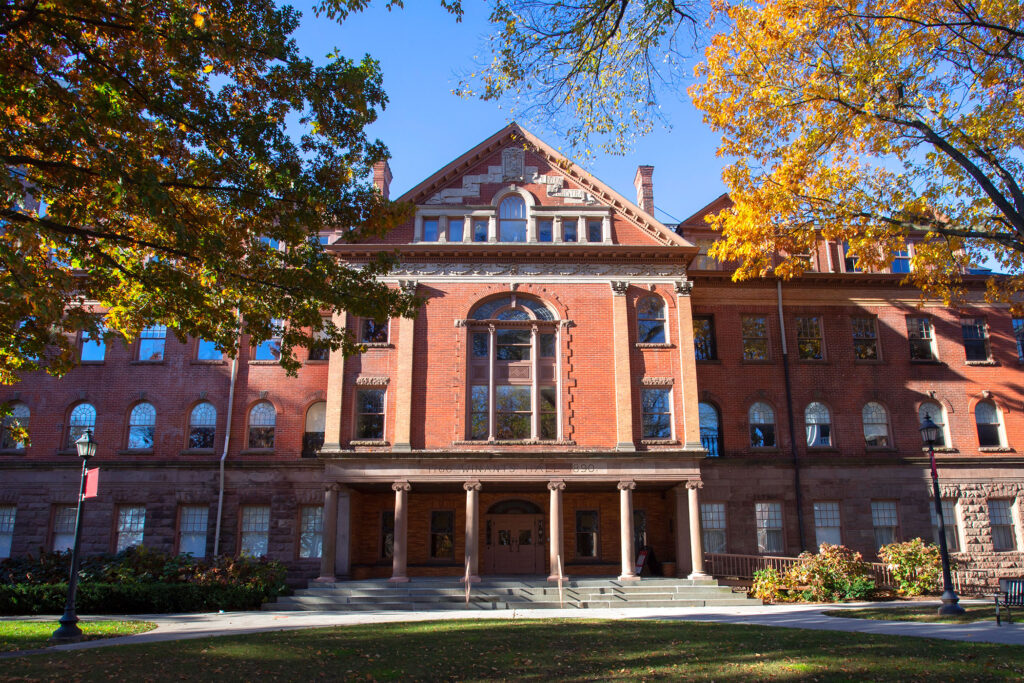
The Rutgers School of Social Work, 69 years old, ranks among the best social work education institutions in the United States. U.S. News & World Report places it 12th out of 319 programs nationwide. The school leads New Jersey as the #1 social work program, ranks #2 among Big Ten schools, and holds the #2 spot in the competitive New York market.
Students can take classes at all three Rutgers locations: New Brunswick, Newark, and Camden. This makes the program easily accessible to students across New Jersey. The school has managed to keep a strong academic community with over 50 full-time faculty members and about 150 part-time lecturers who teach around 1,000 students.
The academic structure builds on proven, evidence-based practices. The Direct Practice Immersion Sequence forms the heart of the Rutgers University MSW program. This sequence has four complete courses: Practice with Individuals, Families, and Groups; Practice with Communities and Organizations; Practicum Learning Seminar; and Reflective Practice Seminar. Barbara Love’s liberatory consciousness framework guides this sequence to boost students’ interpersonal and listening skills through a social justice perspective.
The School of Social Work has five distinguished research centers:
- Center for Gambling Studies
- Center for International Social Work
- Center for Nonprofit Management and Governance
- Center on Violence Against Women and Children
- Institute for Families
These centers give students opportunities to participate in state-of-the-art research and practical applications of social work principles.
A Rutgers University MSW proves valuable in the job market. The school’s social work graduates earn a median salary of $54,225, which is a big deal as it means that it’s higher than the national median of $51,347 for similar credentials. Rutgers graduates’ overall median starting salary reaches $63,000, showing strong earning potential.
The Council on Social Work Education (CSWE) fully accredits the Rutgers School of Social Work. This accreditation ensures your degree meets professional standards and satisfies New Jersey’s licensure requirements, though requirements differ by state.
The school’s strong industry partnerships include Rutgers University itself, RWJBarnabas Health, and Robert Wood Johnson University Hospital. These relationships aid in creating valuable practicum learning experiences and job opportunities for graduates.
Programs offered
Rutgers University’s MSW program gives you amazing flexibility with multiple ways to get your master’s degree. You can choose what works best for you – full-time or part-time on-campus studies, a fully online program, a mix of online and in-person learning, or weekend options that fit your schedule.
The MSW program has a well-laid-out structure with two main parts: professional foundation (30 credits) and advanced curriculum (30 credits), which add up to 60 credits. You’ll need to complete the professional foundation before moving to specialized studies. This approach will give you both basic skills and expert knowledge.
Your first year focuses on the Direct Practice Immersion Sequence, which includes four key courses:
- Practice with Individuals, Families, and Groups – uses a generalist viewpoint with ecological and human rights frameworks
- Practice with Communities and Organizations – teaches basic skills in macro social work practice
- Practicum Learning Seminar – introduces ways to communicate and participate with clients
- Reflective Practice Seminar – combines real-world experience with classroom learning
After finishing the foundation courses, you’ll pick one of two specializations:
Clinical Social Work Specialization teaches you to envision, deliver, and oversee social work services for individuals, couples, families, and small groups. You’ll learn to help prevent problems and improve social functioning.
Management and Policy Specialization gives you the skills to handle administrative tasks or plan, organize, and create policies for organizations, communities, and society. This path prepares you to lead in social service settings of all types.
Each specialization needs two advanced practice methods courses (six credits) and at least six credits of advanced field education. Your total field education will be 1,125 hours split between basic and specialized practicums.
You can make your MSW unique by adding one of five embedded certificate programs. The school also offers special emphasis programs that show up on your transcript – you’ll take specific electives and work at matching agencies. If you want to branch out, you can combine your MSW with other degrees.
The online MSW program offers the same strong curriculum as on-campus options. You can complete coursework on your schedule. This means you can earn your degree from anywhere while keeping your job.
About the online program
Rutgers University’s 100% online Master of Social Work program gives busy professionals the freedom to advance their careers. Students can earn their degree from anywhere in the country while balancing their personal and professional lives.
The online MSW program matches its campus counterpart in content and curriculum. The same accomplished faculty teach both versions. The main difference shows up in how students engage with course materials through virtual discussions, interactive quizzes, modules, readings, and web-based technologies.
The program’s asynchronous format makes it highly adaptable to different schedules. Students complete assignments at their own pace within scheduled due dates. Third-year students in advanced clinical courses can choose between asynchronous learning or live sessions with instructors and classmates.
Students can pick from two timeline options:
- Two-year full-time option: Features an intensive course load and practicum learning starts in the first semester (10 hours/week generalist, 16.75 hours/week advanced)
- Three-year part-time option: Practicum learning begins in the third semester (10 hours/week generalist, 12.5 hours/week advanced)
Both paths require completion of 60 total credits. Students with qualifying BSW degrees might qualify for Advanced Standing. This option needs just 39 credits over four consecutive semesters with 12.5 hours per week of field education in the first through third semesters.
Field education is a crucial part of the online MSW. Traditional students must complete 1,125 hours of field placement. Advanced Standing students need 885 hours. Rutgers works with agencies across the country to find appropriate placements near students. The Office of Field Education helps match students with suitable sites.
The online program focuses on Clinical Social Work concentration. Students join a cohort where they build lasting relationships in a supportive, shared environment. This setup lets students learn new points of view from peers with various professional backgrounds while tailoring their education to personal goals.
The program holds full accreditation from the Council on Social Work Education (CSWE). This meets licensure requirements in New Jersey, though requirements differ by state. Rutgers welcomes online MSW applications during summer, fall, and spring semesters. Advanced standing enrollment opens only in fall.
Accreditation
Rutgers University MSW program’s accreditation credentials are the foundation of its educational value and professional recognition. The Master of Social Work programs at Rutgers have full accreditation from the Council on Social Work Education (CSWE). CSWE is the only accrediting agency for social work education that the Council for Higher Education Accreditation recognizes in the United States.
Your student experience benefits from CSWE accreditation in several important ways. This mark of excellence will give a degree that meets New Jersey’s licensure requirements. The credential also verifies that your education meets national social work practice standards. State requirements for licensure differ, so you should check with the licensing agency in your intended state of practice.
Rutgers University has managed to keep its accreditation from the Middle States Commission on Higher Education (MSCHE) since 1921. A reaccreditation happened in 2018, and the next site visit is set for early spring 2027. This broader institutional recognition proves your Rutgers education’s quality and makes shared educational funding available through scholarships, grants, and loans.
The MSW program’s curriculum and educational goals line up with the 2022 Educational Policy and Accreditation Standards (EPAS) from CSWE. Students learn about multiple dimensions through the program:
- Knowledge
- Values
- Skills
- Cognitive and affective processes
- Behaviors
The program follows nine CSWE Social Work Competencies from EPAS, plus a tenth competency specific to the School of Social Work as program-level learning goals. These competencies include vital areas like ethical behavior, human rights advancement, anti-racism practices, research participation, policy practice, and effective work with individuals, families, groups, organizations, and communities.
The Rutgers MSW program stands among just eight fully CSWE-accredited MSW programs in New Jersey. This detailed accreditation applies to every program format – whether you study on campus or choose the 100% online MSW option. The consistent accreditation across all program formats means that whatever way you get your Rutgers MSW degree, you’ll receive an education meeting the highest professional standards in social work education.
Admission Requirements
Getting into Rutgers University’s MSW program means meeting specific requirements that help identify promising candidates for graduate-level social work education. A bachelor’s degree from an accredited undergraduate institution serves as the basic requirement. The admissions team takes an all-encompassing approach to assess applications by looking at your academic performance, work experience, and your steadfast dedication to social justice principles.
Students applying to the traditional MSW program should aim for a 3.0 or higher undergraduate GPA. Your candidacy can get a boost through Professional Credit Courses (PCC) at Rutgers if your GPA falls short. The application package must include:
- Two letters of recommendation from academic or professional references (three for dual degree applicants)
- Official transcripts from all post-secondary institutions attended
- A personal statement (750-1,000 words) that outlines your goals and experiences
- Current professional resume
BSW graduates from CSWE-accredited programs can join the Advanced Standing program by submitting their undergraduate practicum evaluation. Traditional format students start this accelerated program in summer, while Intensive Weekend and 100% Online students begin in fall.
Each program format has its own application timeline. The 100% Online MSW welcomes applications for spring, summer, and fall semesters. Students who complete their applications by priority deadlines receive first consideration for review and scholarships.
Students can transfer up to 18 credits of graduate coursework completed in the last six years with B grades or better toward their Rutgers MSW. International students need additional documentation, including transcript evaluation from a NACES-accredited organization and proof of English proficiency through TOEFL, IELTS, or DET tests.
Working professionals in human services can benefit from the Intensive Weekend program. This format lets you advance your education while keeping your career on track. Students should know that MSW program field practicums might require criminal background checks and drug screening at placement sites.
Tuition
Getting your MSW at Rutgers University requires a clear picture of costs and returns. The 2025-2026 academic year comes with different tuition rates that depend on where you live and how you want to study.
Tuition Breakdown by Program Type:
| Student Category | Part-Time Rate | Full-Time Rate (12+ credits) |
| NJ Residents | $880 per credit | $10,560 per semester |
| Non-Residents | $1,511 per credit | $18,132 per semester |
| 100% Online MSW | $1,099 per credit for all students | $6,500-$11,900 per semester |
The 100% Online MSW program charges the same rate to everyone. This works great for students from other states who want to know their exact costs. Your semester expenses will range from $4,711 to $11,517 based on how many credits you take.
Your total investment goes beyond just tuition. Rutgers sends out an online bill each semester that shows all your charges. This bill lists your tuition, fees, and takes off any financial aid like scholarships, grants, and loans.
You’ll need to pay a $200 tuition deposit once you’re accepted to hold your spot in the program. Of course, this deposit shows you’re ready to start your journey.
Rutgers makes paying for your education easier with several options. You can spread out your payments with an interest-free plan. Many students use different funding sources, and Rutgers’s Cost of Attendance Estimator helps you figure out what you’ll pay each semester.
You’ll find plenty of ways to get financial help. The school looks at everyone for merit scholarships during admissions. Rutgers School of Social Work gives out both merit and need-based scholarships. They also offer research assistant jobs that take about 6 hours each week and pay around $17 per hour.
Submit your FAFSA by March 1 for fall entry or October 1 for spring entry with Rutgers Federal Student Code 002629 to get the most financial aid.
Additional Information
The Rutgers University MSW alumni network empowers graduates to advance their careers well beyond graduation. The Alumni Council has connected the school with thousands of graduates and the social work community for over a decade. Council members enhance the school’s reputation among stakeholders and guide leadership with field trend insights.
A Rutgers MSW degree leads to significant career success. Students achieve an impressive median starting salary of $63,000. The program boasts strong outcomes with 81% of graduates finding employment and 56% pursuing additional education within six months of completing their degree. Leading employers like Rutgers University, RWJBarnabas Health, and prestigious healthcare institutions actively recruit these graduates.
Rutgers promotes continuous professional growth through its Industry Connect Series. This platform offers a user-friendly environment to network with professionals from all sectors compared to traditional career fairs. Alumni gain exclusive access to valuable resources including the Student-Alumni Career Connections database, BlueSteps Global School Alliance Program, and NextUp recruitment portal.
Success stories of alumni highlight the program’s impact. Clinical supervisors who overcame personal challenges and professionals who switched from journalism to social work demonstrate how a Rutgers MSW creates a foundation for meaningful careers.