
Palo Alto University MSW
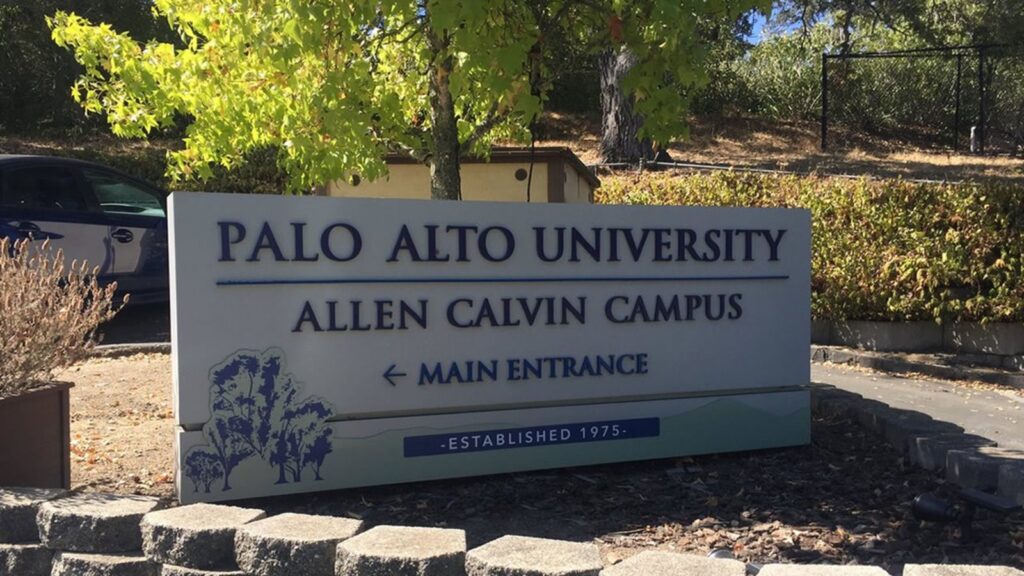
Palo Alto University (PAU) is a private institution in Palo Alto, California that focuses on behavioral health disciplines like psychology, counseling, and social work. The school started in 1975 as the Pacific Graduate School of Psychology and became Palo Alto University in 2009. The main campus sits at 1791 Arastradero Road, Palo Alto, CA 94304.
PAU’s unique connection with Stanford University and the Stanford University School of Medicine makes it special. Students benefit a lot from this partnership. PAU runs its doctoral program with Stanford, places students in Stanford research labs, and shares faculty members who teach at both schools. The bond grows stronger as Stanford Health Care’s Chief Facilities and Sustainability Officer serves on PAU’s board of trustees.
The university follows a practitioner-scientist training model that blends clinical practice with scientific training. This works especially well for Master of Social Work students who prepare for clinical practice and leadership roles in various settings.
The social work department aims to create skilled clinical social workers and leaders in behavioral health. They work to improve behavioral health and wellness for everyone while adding culturally aware professionals to California’s behavioral health workforce. Dr. Rose Wong leads the department as Chair, working alongside Field Education Director Hanna Bales and Department Manager Tyler Takata to train ethical advanced clinical practitioners.
The social work program supports these core professional values:
- Eliminate poverty
- Improve quality of life for all persons
- Prevent conditions that limit human rights
- Support social, racial, economic, and environmental justice
PAU stays current with changing behavioral health needs in California’s urban and rural areas by updating its curriculum and teaching methods with new technologies and practices.
The university offers undergraduate, master’s, and doctoral degree programs with a strong focus on behavioral health education. Students can complete their bachelor’s degrees through partnerships with Silicon Valley area community colleges. PAU excels as an economical choice among Bay Area private universities.
The social work curriculum shines through its ground clinical practice connections and Stanford partnership. Small class sizes let students get personal attention from faculty who still work as practitioners.
Programs offered
PAU’s Master of Social Work (MSW) program provides a specialized curriculum in Culturally Informed Behavioral Health Practice. The program prepares graduates for clinical practice and leadership roles in California’s public behavioral health system. Students can complete this full-time program in two calendar years, with a specific focus on serving California’s diverse and underserved populations.
The MSW curriculum offers two distinct tracks that let students specialize further:
- Children and Youth Track (CY): You’ll learn to provide clinical care to children, youth, and their families in schools and public/non-profit organizations. Career paths include school social work, community-based outpatient care, residential treatment, crisis response, juvenile justice, child welfare, and foster care services.
- Adults in Public Behavioral Health Track (PBH): This track gives you the skills to deliver clinical care to adults and older adults in publicly funded behavioral health systems. Career opportunities include county and non-profit behavioral health services, veterans services, programs for the unhoused, correctional facilities, psychiatric hospitals, community health centers, and substance abuse programs.
The program also offers a Leadership & Management Certificate to boost your professional credentials.
Students attend synchronous online classes on Tuesday/Thursday late afternoons/evenings and select Saturdays. Three-day in-person immersion residencies happen three times per year, which creates an ideal balance between online convenience and face-to-face learning experiences. Working professionals can keep their current jobs while advancing their education.
The program helps students become Licensed Clinical Social Workers (LCSW) in California. Graduates can register as Associate Clinical Social Workers (ASW) with the California Board of Behavioral Sciences right after completion. Students start gaining practical experience through clinical placements and community partnerships from their first day.
PAU offers many more behavioral health degree programs alongside the MSW. These include Bachelor’s degrees in Psychology and Business Psychology, Master’s degrees in Psychology and Clinical Mental Health Counseling, and Doctoral programs in Clinical Psychology, Counselor Education & Supervision, and a PsyD in partnership with Stanford.
PAU’s steadfast dedication shows in the MSW program’s continuous curriculum updates. The program incorporates new technologies and emerging practices to meet California’s evolving behavioral health needs.
About the online program
PAU’s MSW program takes a unique approach to learning by blending online technology with carefully planned in-person sessions. Students connect with faculty and peers in real-time through synchronized Zoom classes. This digital classroom keeps the interactive feel of traditional education even when students are miles apart.
The class schedule works well for professionals. Sessions run during late afternoons and evenings on Tuesdays and Thursdays, plus some Saturdays. This setup lets you keep your job while advancing your education. You can easily manage your studies alongside work and family life.
One standout feature includes three Friday-through-Sunday on-campus residencies each year. These three-day in-person gatherings happen throughout both academic years. Students get valuable face-time with faculty and classmates to build strong professional networks and deepen their learning experience.
Canvas serves as the digital home base for all course materials. Students find their readings, PowerPoint presentations, notes, and key resources here. The platform’s discussion forums let everyone join conversations about course content between live sessions.
Students complete their field education at locations in their local California communities. These internships give you hands-on practice without moving away from home. You’ll start gaining practical experience through these placements and community partnerships right from the beginning.
Each instructor chooses different ways to evaluate student progress. Some prefer papers and projects, while others opt for proctored exams. This mix of assessment methods gives a full picture of your growing expertise.
The program stands out with several benefits:
- Small classes for individual attention
- Teaching from experienced practitioners
- A format that fits your schedule
While most learning happens online, everyone must join both the immersion residencies and in-person field training. This mix strikes the right balance between convenience and essential practical learning.
New students begin their journey in fall for the full two-year program spanning eight quarters. Students with BSW degrees can take the Advanced Standing route, starting in summer for a shorter five-quarter program. Whatever your starting point, you’ll experience the same blend of online learning and in-person components.
The BA-to-MSW path opens another door for students who finished 12 MSW courses during their undergraduate years at partner schools. These graduates still need to apply like everyone else, but their preparation through existing pathway agreements helps them transition smoothly into the program.
Accreditation
Accreditation is the most important marker of program quality and institutional credibility in higher education. Palo Alto University holds institutional accreditation from the Western Association of Schools and Colleges Senior College and University Commission (WASC). This regional accreditation validates PAU’s academic quality and institutional effectiveness.
Accreditation status remains a vital factor prospective students should think about when choosing the Master of Social Work program. The MSW program has reached pre-candidacy status for accreditation by the Council on Social Work Education’s (CSWE) Board of Accreditation. PAU has received approval of Benchmark 1 from CSWE accreditation staff and awaits its first candidacy review.
CSWE has assigned the MSW program to its June 2025-June 2027 accreditation timeline. The program should receive its original full accreditation at the June 2027 meeting of CSWE’s Board of Accreditation. This well-laid-out timeline typically takes three years and reflects the detailed evaluation process.
Students who enroll during pre-candidacy get a valuable benefit: CSWE-BOA will retroactively recognize them as graduates from an accredited program once the program achieves initial accreditation. Students starting in Fall 2025 will earn degrees from a CSWE-accredited program after securing accreditation.
Accreditation status determines professional licensure eligibility. The MSW program meets State of California requirements to become a Licensed Clinical Social Worker (LCSW) after receiving initial full CSWE accreditation. Graduates can register as Associate Clinical Social Workers (ASW) with the California Board of Behavioral Sciences (BBS).
California LCSW status requires graduates to:
- Complete 3,000 supervised clinical hours
- Pass the California law and ethics exam
- Fulfill other state-specific requirements
- Successfully complete the licensing examination
Students aiming for licensure outside California should research their region’s laws and regulations before enrolling. Requirements vary by state. The program’s steadfast dedication to CSWE standards deepens graduates’ professional credentials and nationwide job prospects.
PAU’s commitment to rigorous educational standards shows in the accreditation process as it prepares culturally competent clinical social workers for the behavioral health workforce.
Admission Requirements
Palo Alto University’s MSW program looks for candidates who are ready to take on advanced studies in clinical social work. The admissions team reviews applications through an integrated process that looks at your academic history, work experience, and personal qualities.
You need a bachelor’s degree from a regionally accredited institution or international equivalent to be eligible. The program accepts degrees from any field of study, but you should aim for a minimum 2.75 GPA. Your application might still succeed with a lower GPA if you have relevant work experience and other strong qualifications.
The program has three different ways to get admitted:
- Standard Admission: This path welcomes applicants with bachelor’s degrees in any field. The program values work or volunteer experience in mental health, behavioral health, or social services but doesn’t require it.
- Advanced Standing: This option is only for applicants who earned their BSW from a CSWE-accredited program in the last 10 years. You must have earned at least a B or Pass in all your BSW courses.
- BA-to-MSW Pathway: This works for graduates from PAU’s partner institutions who finished 21.5 generalist units (12 MSW courses) during their bachelor’s studies with B grades or higher in each course.
The program uses rolling admissions. You’ll likely have an interview within three weeks after completing your application. The admission decision comes about two weeks after your interview.
Here’s what you need in your application package:
- Online application through PSYCAS
- $75 non-refundable application fee
- Official transcripts from all colleges/universities attended
- Current resume showing your education, work, and volunteer experiences
- Three letters of recommendation from professional or academic references
- Statement of purpose (maximum two 1.5-line-spaced pages)
Advanced Standing applicants might want to include a recommendation letter from their BSW program field instructor, though it’s optional. The program doesn’t accept personal references from family, friends, or counselors for any application type.
Accepted students become part of a vibrant cohort of future social work professionals who will serve in behavioral health settings across California.
Tuition
A Palo Alto University MSW degree makes financial sense for future social workers. Students pay a competitive per-unit tuition rate of $652 plus a $65 per-unit fee, which adds up to $717 per unit. This clear pricing helps students calculate their exact program costs based on their academic plans.
PAU prioritizes making education affordable. More than 70% of students get some type of financial aid. The university gives personal guidance and offers various funding options like scholarships, grants, and loans to make your education costs manageable. PAU’s Tuition Net Price Calculator helps you estimate your actual education expenses accurately.
Your total costs will include both direct and indirect expenses. The Cost of Attendance (COA) covers tuition and fees as direct costs, plus books, supplies, transportation, and housing as indirect costs. This complete cost breakdown helps you create a realistic budget beyond just tuition.
PAU has a clear refund policy if your plans change mid-quarter. Students can get full or partial tuition refunds by submitting a “Drop Form” through the Registrar’s portal. Your refund amount depends on your official withdrawal date, which you can find in the Academic Calendar.
The university awards institutional aid based on two main factors. Program evaluation counts for 60% while documented financial need makes up 40% of the decision. You should submit your Free Application for Federal Student Aid (FAFSA) by March 2nd to get the best shot at financial support.
Financial aid payments start at the beginning of each quarter once you’re enrolled. These payments first cover your tuition and fees, then any leftover money goes directly to you. Graduate students need to keep a minimum 3.0 GPA to continue receiving aid.
Additional Information
MSW graduates from Palo Alto University have a clear edge in their careers. Their starting salaries are higher and job prospects look great in all specializations. Licensed Clinical Social Workers (LCSWs) earn median salaries around $75,000 per year, with private practice bringing in even more money. Your location plays a big role in what you can earn, especially if you work in the public sector.
The job outlook couldn’t be better for MSW graduates. Clinical social work jobs should grow 7-9% by 2032, outpacing most other jobs. Mental health counseling positions, which MSW graduates can take with the right credentials, should grow even faster at 18-20% through 2032.
Getting licensed makes a huge difference in what you can earn. Licensed social workers typically make $50,000-$70,000 each year, while those without licenses earn nowhere near as much ($30,000-$45,000). These numbers show why completing your license requirements after graduation matters so much.
Career paths for PAU MSW graduates include:
- Healthcare social workers ($57,630 median salary)
- Child and family social workers ($48,430 annually)
- Community organizers ($42,000 average, ranging from $30,000-$60,000)
- Program managers ($78,000-$110,000, depending on organization)
PAU’s connection with Stanford University and Stanford University School of Medicine helps graduates stand out. Students get unique chances to network and learn advanced research methods that employers really value.
The university trains students to work with California’s diverse communities. This training becomes even more valuable as mental health awareness grows and an aging population creates more need for qualified behavioral health professionals.