Northern Michigan University MSW
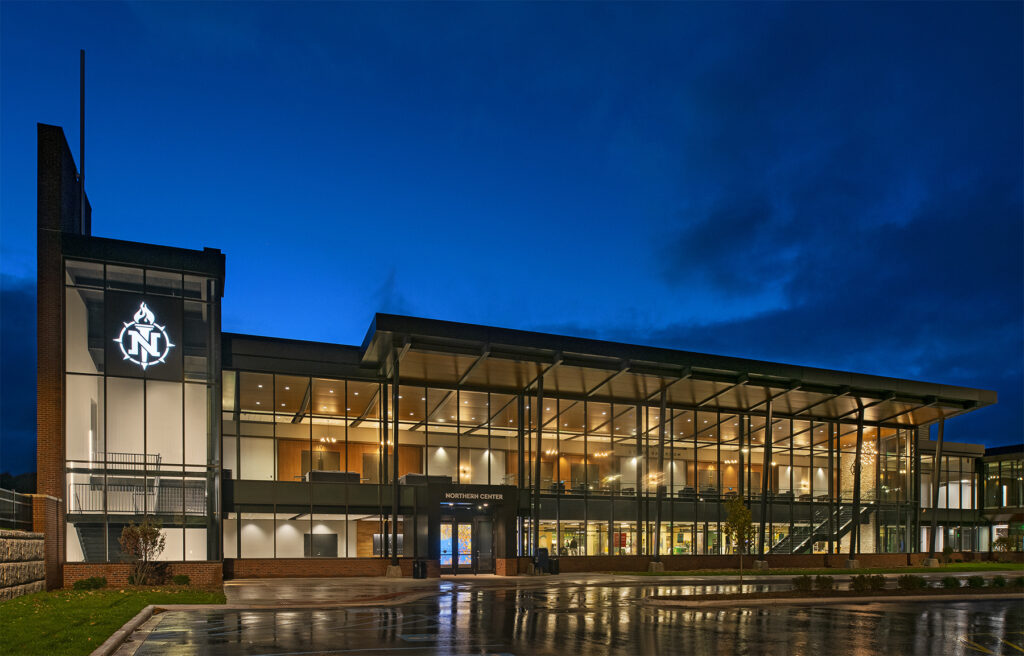
Dating back to 1899, Northern Michigan University (NMU) thrives as a lively educational institution in Marquette, Michigan. The campus sits along the stunning shores of Lake Superior in Michigan’s Upper Peninsula. This four-year public university has built its reputation through award-winning leadership programs, advanced technology initiatives, and nationally recognized academic programs.
The student community includes over 7,000 learners in undergraduate and graduate programs. The enrollment numbers show 7,409 students, with 6,684 undergraduates and 725 postgraduates. The university welcomes students with an 84% acceptance rate and maintains a graduation rate of 53%.
The 350-acre campus in a small city setting houses modern facilities. Students benefit from award-winning laboratories, a newly renovated University Center, and the iconic Superior Dome. The dome is the world’s largest wooden structure and hosts Northern’s athletic events and teams. This setup creates a perfect mix of close-knit community feel and top-tier educational resources.
The university’s backbone is its dedicated faculty. Over 75% of NMU’s 300+ full-time professors hold doctorates or the highest degrees in their fields. These professors teach at every level – from freshman courses to graduate programs. The university employs about 1,200 people who share a common goal: helping students succeed.
Students can choose from more than 170 degree programs, including 25 at the graduate level. The Master of Social Work (MSW) program helps human services professionals advance their careers. Dr. LaMart Hightower leads the Department of Social Work, while Sarah Carlson directs the MSW Program. Students get specialized education in clinical or advanced generalist practice.
A strong financial foundation supports NMU’s dedication to quality education, with an endowment of USD 159 million as of 2023. The green and gold colors and “Wildcats” nickname shine across campus and athletic events.
NMU stands out for making belonging a core part of the Northern experience. The mid-sized campus creates an intimate atmosphere where students receive personal attention and care. The university also gives students a chance to gain field experience in an urbanized rural setting. Regional options are available for those studying through the Global Campus option.
Programs offered
Northern Michigan University has a unique Master of Social Work (MSW) program that offers multiple paths based on students’ educational backgrounds and career goals. The program’s detailed curriculum prepares graduates for advanced generalist social work practice by combining theoretical knowledge with practical application.
Students can choose between two enrollment tracks in the MSW program. The Regular Standing track needs 50 total credits and suits students with undergraduate degrees in fields other than social work. Students with a Bachelor of Social Work degree from a CSWE-accredited program can take the Advanced Standing track. This track requires just 36 credits and allows faster completion.
The program offers two specialized concentrations:
- Clinical Concentration: This builds core competencies to prepare social workers who practice in clinical settings with individuals, families, and groups.
- Advanced Generalist Concentration: Students learn multidimensional problem-solving skills, self-reflective leadership, and ethical advocacy to intervene at all population levels.
NMU stands out by giving students flexible program delivery options. Students can choose the Traditional Campus format with in-person classes in Marquette or the Global Campus option. The Global Campus lets students complete their entire program online through synchronous learning. This setup is especially helpful for students in rural and remote areas of the Midwest.
The program’s structure changes based on track and concentration choice. Advanced Standing students start with 10 credits of foundation courses in summer, followed by 13 credits each in fall and winter semesters. Regular Standing students need four semesters: 12 credits of foundation courses in both fall and winter of year one, then 13 credits per semester in year two.
Field placement plays a vital role in the MSW program. Advanced Standing students complete two concentration field placements that total 8 credits. Regular Standing students need four field placements across foundation and concentration levels, totaling 14 credits.
Students must also complete 6 credits of electives. They can choose from options in library resources, child development, learning disabilities, Native American studies, public administration, psychology, and specialized social work topics.
The program creates a unique learning experience with small class sizes and individual learning opportunities. Faculty members give personal attention and show genuine care for each student’s success and wellbeing throughout their academic path and beyond.
About the online program
NMU’s Global Campus offers the Master of Social Work program fully online, synchronous format that keeps you connected with professors and peers from any location. You’ll attend classes through Zoom and other online platforms at specific scheduled times, often with traditional on-campus students. This modern setup creates a unified learning community that combines remote education benefits with live interaction.
The online MSW program takes an integrated approach to prepare graduates for successful social work careers. The curriculum goes beyond technical skills to emphasize core social work principles—service to others, social justice, human rights, and every person’s dignity and worth, including families, organizations, and communities. This complete foundation helps you build practical skills and the ethical framework you need to practice effectively.
Online students take charge of their field placements. As a Global Campus student, you’ll find and apply for placement opportunities in your area. Your Field Coordinator will help screen potential sites to meet all program requirements. This shared process lets you complete required field hours locally while keeping your personal and work commitments.
The program’s admission process has geographic priorities. Students get preference for Global Campus admission if they live in:
- The Upper Peninsula (outside Marquette County)
- Northern Lower Michigan
- Northern Wisconsin
Applications from other regions are welcome. The program reserves spots for students in rural, remote areas of the Midwest where campus commutes aren’t practical.
Your academic trip includes dedicated support services. A personal major advisor helps with course registration and connects you to university resources. This complete support system helps guide you through online learning, which really helps if you’re returning to school after a long break.
Online students can choose between Clinical and Advanced Generalist concentrations. You can shape your education to match your career goals while learning remotely. The program carries the same CSWE accreditation as on-campus studies, so your online degree meets top professional standards.
Accreditation
Northern Michigan University’s Master of Social Work program earned full CSWE accreditation in 2022 after going through three years of candidacy status. This achievement marks a major milestone for the Social Work Department and shows their dedication to keeping high educational standards. The university’s Bachelor’s degree in Social Work (BSW) program has kept its CSWE accreditation since 1974, and they got another eight-year reaffirmation recently.
CSWE accreditation is the benchmark for social work education in the United States. CSWE is the only national organization that accredits social work programs, and the Council on Higher Education Accreditation (CHEA) recognizes its accreditation process. Students can be confident that their program goes through a detailed peer-review process that balances similar outcomes while adapting to each program’s unique context.
Here’s what CSWE accreditation means if you’re pursuing an MSW at Northern Michigan University:
- Licensure Eligibility: You need a degree from a CSWE-accredited institution to get licensed in social work
- Better Job Prospects: Employers look for candidates from accredited programs, especially for roles that deal with insurance payments
- Quality Guarantee: Accreditation shows the program’s quality and student competence
- Wide Recognition: Your degree will be valid at institutions, employers, and licensing boards nationwide
NMU went through a detailed evaluation of how well it supports CSWE’s core social work competencies during the accreditation process. These competencies include ethical and professional behavior, human rights advancement, social justice, economic justice, environmental justice, work with diverse populations, practice-informed research, policy practice understanding, and effective work with individuals, families, groups, organizations, and communities.
The three-year-old MSW program spent its first three years as an accreditation candidate before getting full accreditation. Students who joined during the candidacy period became graduates of a CSWE-accredited program once the school got its initial accreditation.
Department Head Abigail Wyche credits this success to the hard work of all faculty members, particularly Sarah Carlson from the MSW program and Ann Crandell-Williams from the BSW program. This dedication to meeting accreditation standards helps Northern Michigan University produce skilled, ethical social work professionals who can serve communities of all types effectively.
Admission Requirements
Northern Michigan University’s MSW program has specific academic and documentation requirements. Your educational background determines which track you’ll follow – Regular Standing or Advanced Standing.
Regular Standing admission works for non-BSW degree holders. You need:
- A four-year undergraduate degree from an accredited college or university
- A minimum 3.0 cumulative GPA based on your last 60 credits
- These prerequisite courses:
- SW 100 Learning Social Work (or equivalent)
- SW 230 Human Behavior in the Social Environment I (or equivalent)
- At least 10 credits that combine lifespan development, psychology, sociology, or social work
Advanced Standing fits BSW degree holders who meet these criteria:
- A BSW from a CSWE-accredited program earned within five years of application
- A 3.0 cumulative GPA with BSW course grades no lower than B
The program needs these materials from all students:
- Graduate admission application and $50 fee
- Official transcripts from every post-secondary school you attended
- A personal statement that shows your interest in social work, career goals, and dedication to professional values
- Two academic or professional recommendation letters (no personal letters)
- Current resume
International students must also prove English proficiency with these scores:
- IELTS: 6+
- TOEFL iBT: 80+
- TOEFL PBT: 570+
Key application dates you should know:
- Priority Admission Deadline: December 1 (best for early-decision makers committed to NMU)
- Regular Admission Deadline: February 28 (final date for everyone)
The graduate admissions committee takes an integrated look at applications and reviews all materials together. Students who show promise but don’t quite meet regular admission requirements might qualify for conditional admission.
The program accepts a limited number of students each year, with spots split evenly between Regular and Advanced Standing students. Your commitment to social work, GPA, experience, graduate-level skills, and other factors determine admission. Applications for Fall 2025 admissions are now closed.
Tuition
NMU ranks as Michigan’s second most affordable university, which makes its Master of Social Work program an excellent value for students. The 50-credit regular standing program and 36-credit advanced standing program offer some of the most economical routes to an MSW degree statewide.
Michigan residents will pay tuition and fees of $8,970 for six credit hours during the 2025-2026 academic year. Non-Michigan residents’ costs will reach $11,562 for the same credits. Michigan resident graduate students’ total estimated costs reach $25,734 when including living expenses, books, transportation, and other educational expenses. Non-residents should expect approximately $28,326 in total costs.
The program’s costs have seen modest increases recently. Michigan resident graduate students paid $8,538 for six credit hours in 2024-2025, while non-residents paid $11,130. The 2023-2024 rates stood at $8,102 and $10,694 respectively.
NMU provides several ways to manage these educational costs. Students can break down their tuition and fees into manageable payments through payment plans. The university accepts federal and state grants through FAFSA applications using school code 002301. Students also have access to institutional and departmental scholarships and work-study opportunities when eligible.
Social work students can access special funding opportunities. Michigan MSW students might qualify for a $30,000 stipend from the state health department. NMU received $90,578 for this program that provides qualifying students $5,000 each semester.
The university’s Tuition Advantage Program covers remaining tuition after Federal, state, and institutional funding for qualifying on-campus students, though this option excludes Global Campus participants.
NMU’s MSW program stands out among Michigan’s best MSW programs as student loan debt continues rising nationwide. The program provides quality education without excessive costs through these comprehensive affordability measures.
Additional Information
NMU offers excellent resources and opportunities to improve your MSW experience and career prospects. The job market looks promising for social work graduates. The U.S. Bureau of Labor Statistics projects a 13% employment growth from 2019 to 2029—significantly higher than other occupations.
Your NMU graduation automatically grants you membership in the NMU Alumni Association without any fees. You’ll join a worldwide network of 75,000 Wildcats. The Wildcats Connect platform makes shared connections possible between alumni and current students through networking, mentoring, and knowledge sharing.
Alumni can support current students in several ways:
- Mock interviews with students
- Resume and cover letter reviews
- Expert presentations and online content creation
- Graduate school application guidance
NMU graduates can connect through Alumni Hubs based on their region, interests, or industry. These hubs help you build personal and professional networks in your post-graduation location.
MSW graduates build successful careers across different settings. They work in healthcare, education, government agencies, non-profits, private practice, corporate environments, criminal justice, mental health facilities, research institutions, and international organizations. Fortune Education describes an MSW as “something of a Swiss Army knife on the career trail”.
NMU partners with local agencies like Child and Family Services of the Upper Peninsula, Lutheran Social Services, and the BEAR Center to provide valuable volunteer and internship opportunities.