
Morgan State University MSW
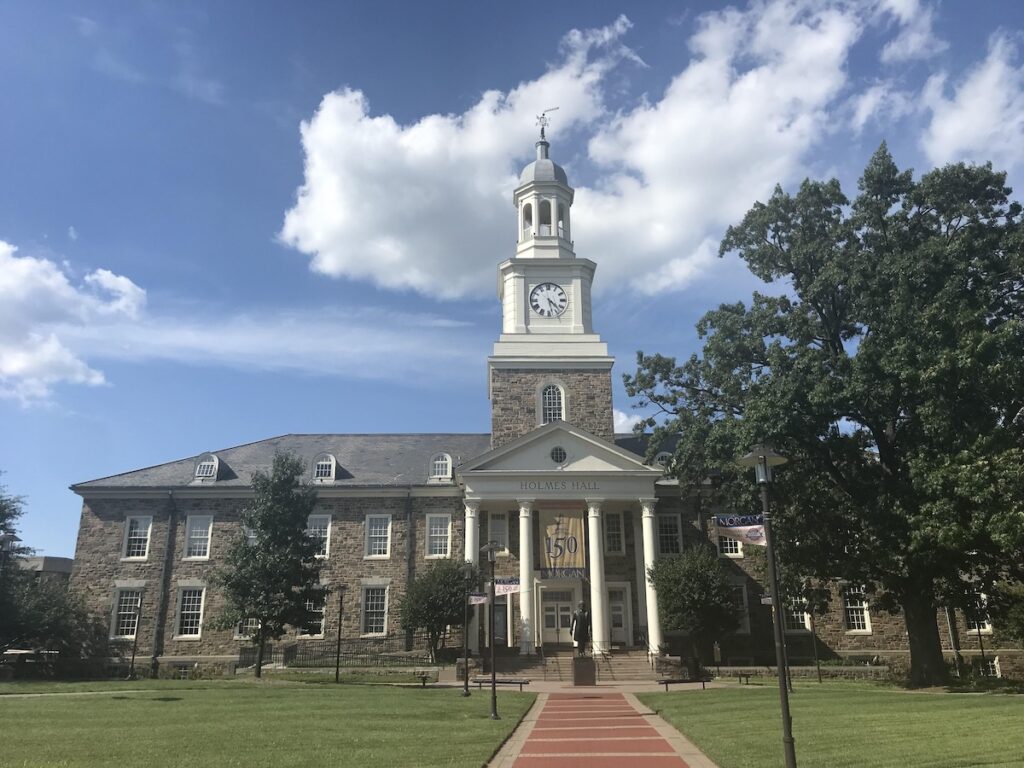
Morgan State University’s School of Social Work has grown by a lot since its modest start in 1969. The school began as the Undergraduate Social Welfare Program within the Department of Sociology, College of Liberal Arts. The program received departmental status in 1975 and became the Department of Social Work. This change showed that a bachelor’s degree in social work served as the first professional degree in this field.
The program grew steadily through the decades. The Council on Social Work Education approved it in 1971. The program became one of the country’s first undergraduate programs to receive accreditation in 1975. The department managed to keep its re-accreditation status since then, showing its steadfast dedication to educational excellence.
The year 2007 marked a turning point when the department added Master’s and Ph.D. programs. These advanced programs built on the rich tradition of expanding future social workers’ knowledge base and leadership skills in America’s urban areas. The Department of Social Work transformed into the School of Social Work on November 16, 2009.
Morgan State University’s MSW program creates skilled generalist and advanced social work practitioners. These professionals work with urban families, groups, organizations, and communities. The program focuses on urban residents’ needs, especially when you have issues facing African Americans who form a large part of the urban population.
Morgan State University sits in a residential area of Baltimore, Maryland, covering more than 143 acres. Students find the university easy to reach from downtown, the Baltimore beltway, and Interstate 95.
The School of Social Work’s students get hands-on experience through placements across Baltimore and Maryland. These internships help them support citizens in various social work settings while building practical skills. Morgan’s social work graduates work in Baltimore-Metropolitan area’s public schools, hospitals, psychiatric facilities, correctional facilities, child welfare agencies, and organizations serving the elderly.
The program’s first B.A. class graduated in 1971, and these alumni now lead distinguished careers in social work and related fields. The program’s success shows in its numbers – about fifty percent of Morgan’s social work bachelor’s degree holders pursue graduate studies within two years.
Programs offered
Morgan State University’s Master of Social Work (MSW) program has multiple pathways that meet different student needs. Students can choose between a standard 60-credit hour curriculum or a 30-credit Advanced Standing option if they qualify.
The MSW program teaches practitioners how to work with urban families, groups, organizations, and communities. Students learn to tackle critical social challenges like poverty, interpersonal violence, substance abuse, mental health problems, social injustice, and discrimination. African Americans make up a large percentage of urban populations that face ongoing socioeconomic challenges. The program helps graduates address these problems systematically and strategically.
Students have two choices – the traditional Campus-Based program or the Online MSW (OMSW) Program. These options follow similar academic standards and curriculum requirements. The program fits various scheduling needs with several completion paths:
- Standard 2-Year Program: Full-time study with foundation courses in year one and advanced courses in year two
- 2-Year Summer Model: Incorporates summer sessions for improved scheduling flexibility
- 3-Year Program: Part-time option for working professionals
- Advanced Standing Program: Accelerated 30-credit option for students with a BSW degree from a CSWE-accredited program earned within the previous five years
The curriculum builds progressively. Students start with generalist foundation courses (21 credits) that cover basic social work concepts. These courses include Social Work Practice, Life Course Development, Urban Organizations, Social Welfare, Chemical Dependency Assessment, and Research methods. Students then complete 12 credits of advanced generalist courses that focus on psychopathology, urban Black families, organizational policy, and evaluation research.
The program lets students pick an area of specialized practice (9 credits). The Online MSW program offers specializations in Urban Children, Youth, and Families and Addictions. Students in the campus-based program can also choose from Gerontology, School Social Work, and Public Health Social Work. The curriculum adds 6 credits of electives and a field practicum component.
The field practicum is the core of the MSW experience. Students spend 24 hours each week during the advanced practicum phase. This hands-on training gives students real-life experience under professional supervision.
Morgan State University’s MSW program gives graduates the knowledge and skills they need to solve complex social challenges in urban environments.
About the online program
Morgan State University’s Online MSW (OMSW) Program delivers the same challenging curriculum as its on-campus version. Students can choose between a complete 60-credit hour program and a faster 30-credit Advanced Standing option. This online path keeps similar educational standards but gives working professionals and remote students more flexibility.
The online program focuses on urban social work. Students learn to work effectively with urban families, groups, organizations, and communities. The curriculum shows a steadfast dedication to easing human suffering and improving urban residents’ quality of life. The program puts special emphasis on problems that affect African American communities more heavily. These include poverty, interpersonal violence, substance abuse, mental health challenges, social injustice, and discrimination.
Students can currently specialize in two practice areas:
- Urban Children, Youth, and Families
- Addictions
Students move through the OMSW program together in cohorts. This approach promotes a supportive learning community. The program delivers all courses online through two learning formats:
- Asynchronous sessions: Students complete learning activities at their convenience within instructor-set timeframes
- Synchronous sessions: Students join required web conferences to interact with faculty in live sessions
Each course runs on a 7-day weekly schedule. Students must finish all assigned activities within this timeframe. The program has strict attendance rules – missing more than one session of an 8-week course leads to class removal. Faculty track weekly participation through various activities. These include discussion board posts, quizzes, short essays, video role-play recordings, and slide shares.
Students must complete at least 900 hours of supervised internship experience under specific guidelines. Morgan has built a well-laid-out field education program. It certifies field settings, assigns student placements, and reviews internship experiences under professional social workers’ guidance.
Full-time faculty with subject expertise developed Morgan’s online MSW curriculum, working alongside university instructional designers. Each course undergoes Quality Matters™ peer review to meet online instructional design best practices. This thorough development ensures online students get the same high-quality education as on-campus students. They achieve similar career outcomes and professional recognition.
Accreditation
Quality assurance through accreditation is a vital marker for any social work program. Morgan State University boasts prestigious recognitions at both institutional and program levels. The university has managed to keep regional accreditation through the Middle States Commission on Higher Education (MSCHE) since January 1, 1925. This recognition confirms Morgan’s compliance with rigorous educational standards acknowledged by the U.S. Secretary of Education and the Council for Higher Education Accreditation.
The School of Social Work’s specialized accreditation comes from the Council on Social Work Education (CSWE), which represents the gold standard for social work education in the United States. The program received CSWE approval in 1971, and by 1975, it became one of the first undergraduate programs nationwide to achieve full accreditation. The department has sustained continuous re-accreditation since that original recognition, deepening their commitment to educational excellence.
CSWE accreditation will give a curriculum that meets established professional standards to MSW degree students at Morgan State. Graduates must show core competencies in professional conduct, ethical practice, critical thinking, diversity participation, human rights advancement, research application, policy practice, and intervention skills. These skills prepare them directly to practice effectively in urban settings.
The online MSW program follows similar accreditation standards as the campus-based option. CSWE guidelines state that “accreditation of a program extends to all approved locations and delivery methods as long as the degree is granted from that program”. Online students earn the same professionally recognized credential as their on-campus peers.
CSWE accreditation holds special significance for Advanced Standing applicants. Students must graduate from a CSWE-accredited BSW program within the last five years to qualify for this accelerated option. This requirement ensures comparable foundational knowledge among all entering students.
Morgan State’s MSW program accreditation reflects the university’s commitment to meeting specialized standards in a variety of disciplines. The university maintains recognized accreditations in many programs, with social work being just one of sixteen specialized accreditations held by academic departments. This dedication to external validation highlights Morgan State University’s quality education.
Admission Requirements
The Morgan State University MSW program accepts students who meet the standards of both the School of Graduate Studies and the School of Social Work. Applications for the MSW program are accepted for fall semester entry only.
Regular standing applicants need to meet these core requirements:
- A bachelor’s degree from a regionally accredited college or university
- A cumulative undergraduate GPA of 3.0 to qualify for regular admission
- Three letters of recommendation from employers, professors, or volunteer/internship supervisors (not colleagues or personal references)
- A personal background/goal statement that outlines your professional and personal goals, career objectives, important social issues, and reasons to pursue an MSW at Morgan State
- A professional resume showing your educational background, work experience, and volunteer activities related to social work
- All unofficial transcripts uploaded with your application (official transcripts needed if accepted)
Students with a GPA between 2.5 and 2.9 might qualify for conditional admission. The MSW Admissions Committee may ask for a personal interview as part of their evaluation.
The Advanced Standing option provides a faster path for students with relevant prior education. You’ll need to:
- Meet all standard MSW program admission criteria
- Have a BSW degree from a CSWE-accredited program earned in the last five years
- Keep a cumulative GPA of at least 3.0 with no grade lower than B in any Social Work course
BSW students can apply after their first senior semester. Final acceptance depends on qualifying grades and degree confirmation.
The Advanced Standing application has these additional steps:
- Submit the general MSW application through the School of Graduate Studies
- Provide two specialized recommendation forms—one from the BSW Chair and another from your BSW Field Education Department
- Complete an Advanced Standing interview
Your application needs all supporting documents by the posted deadline. The MSW Program reviews applications only after receiving all materials, including your resume, personal statements, recommendations, and transcripts from all colleges attended (community college transcripts not required).
Note that meeting minimum requirements doesn’t guarantee admission. The program makes decisions based on a complete review of all application elements and available positions.
Tuition
The MSW degree at Morgan State University comes with specific financial obligations you need to understand. Your tuition costs will vary based on where you live and how you choose to take the program.
The campus-based program has different rates for residents and non-residents. Maryland residents pay $566.50 per credit hour – $485.00 for tuition and $81.50 in fees. Students from other states pay $1,031.50 per credit hour ($950.00 tuition and $81.50 fees). Full-time graduate students from Maryland should expect to pay about $9,981.00 yearly for tuition and fees. Non-Maryland residents’ costs run higher at approximately $18,207.00.
The Online MSW program costs differ from campus options. Students pay a flat rate of $40,000.00 for the entire program, which comes to $667.00 per credit hour. This price stays the same whatever your location, which could save money for out-of-state students.
Morgan State’s tuition rates beat the national average. Maryland residents find the university’s graduate tuition particularly attractive compared to similar schools.
The Cost of Attendance (COA) combines both direct costs and other expenses. This total determines the maximum financial aid you can receive.
Students can access various types of financial support through grants, scholarships, loans, and work-study programs. The first step to get financial aid is completing the Free Application for Federal Student Aid (FAFSA). Submit your FAFSA by Morgan State University’s priority deadline of March 1st to maximize your chances for federal, state, and institutional funding.
Your FAFSA information helps calculate your Expected Family Contribution (EFC). This number determines your financial need by subtracting it from your estimated costs. Early application definitely boosts your chances of getting financial support, though it doesn’t guarantee funding.
Additional Information
Your MSW experience at Morgan State University combines academic excellence with professional growth. Students need 48 academic credit hours and 12 credits of supervised internship. The program expects students to maintain high academic standards and follow the ethical guidelines set by the National Association of Social Workers (NASW) Code of Ethics.
Real-world experience plays a crucial role in your education. Field training lets you put classroom theory into practice while tackling urban challenges like poverty, interpersonal violence, and substance abuse. This hands-on work helps you develop the communication skills needed for professional social work.
Morgan’s graduates make a real difference in communities everywhere. Many find rewarding careers in the Baltimore-Metropolitan area’s public schools, hospitals, psychiatric facilities, child welfare agencies, and organizations that serve elderly populations.
Morgan State’s extensive support network helps you succeed after graduation. Students can access academic tutoring, health and wellness services, counseling, disability support, and career development help. The Center for Career Development gives great advice about creating resumes, preparing for interviews, and finding jobs—everything you need to start your social work career.
The School of Social Work Alumni Chapter helps you stay connected with your university family. Their mission promotes lasting bonds between graduates and current students through networking events, continuing education, and community projects. This active network carries forward Morgan’s tradition of “preparing urban leaders in Social Work”.