
Master of Social Work at Marshall University
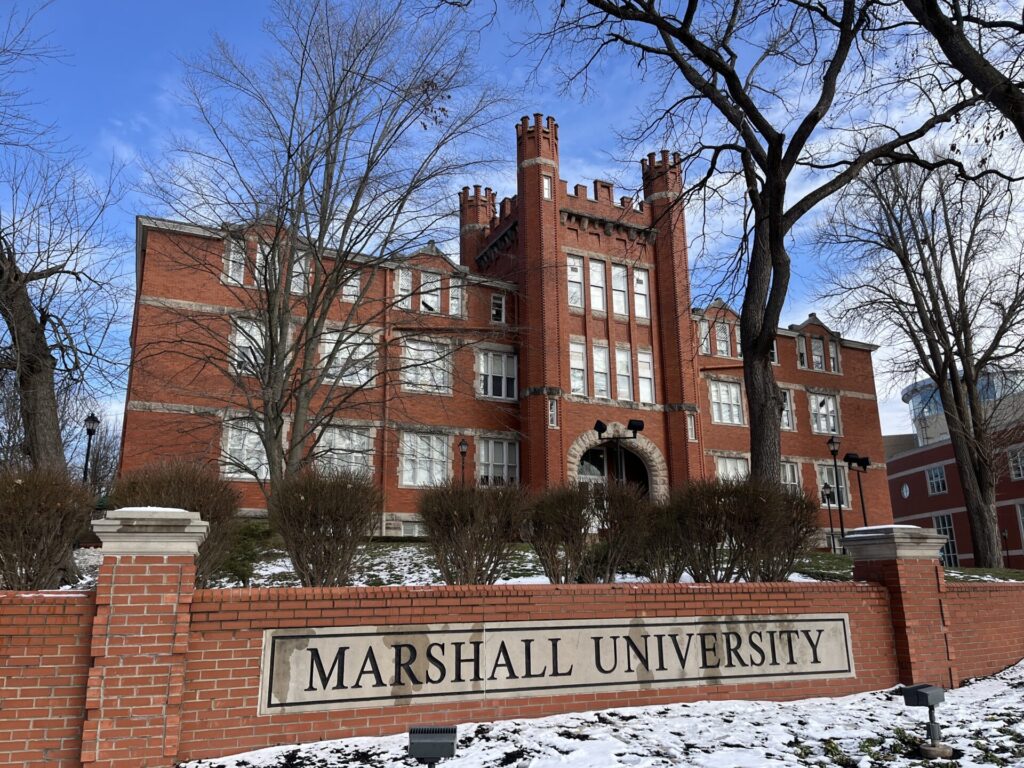
Marshall University’s Master of Social Work (MSW) program builds on human rights and social justice principles. The program shows the university’s dedication to pluralism and inclusive values that make our society stronger. Students can find the MSW program at the main campus in Huntington, West Virginia, where it provides a complete educational experience for future social work professionals.
Marshall offers two distinct tracks that fit different educational backgrounds and career goals. The MSW Generalist Curriculum spans two years and shows how multiple systemic levels affect clients’ lives – from individuals and families to groups, organizations, and communities. The MSW Advanced Curriculum helps students develop critical thinking skills about behavioral health in all practice settings.
Students at Marshall’s MSW program specialize in Behavioral Health. This focus gives them the skills to assess, treat, and evaluate complex relationships between mental health, substance abuse, and physical health in a variety of practice settings. Students learn about factors behind health disparities and how to use best practices that increase health equity, especially when working with marginalized populations.
Faculty members provide individual attention to create a supportive environment where students can excel. Students move through the program in cohorts, which builds strong networks and shared relationships. These professional connections often last well beyond graduation and boost the overall learning experience.
Marshall’s MSW program is fully accredited by the Council on Social Work Education (CSWE). The Council for Higher Education Accreditation recognizes CSWE as the only accrediting agency for social work education in the United States. This accreditation confirms that the program meets national standards for social work education.
Graduates have excellent career prospects. Alumni from Marshall University’s Department of Social Work consistently find jobs in hospitals, mental health centers, shelters for battered women, and many other human service agencies. The demand for social workers keeps growing both in the tri-state area and across the country, making it a great time to pursue an MSW degree at Marshall.
The program works exceptionally well if you have a Bachelor of Social Work (BSW) or a bachelor’s degree in related fields like counseling and psychology. Marshall University combines academic excellence with hands-on experience to prepare MSW students who can tackle complex social challenges effectively.
Programs offered
Marshall University’s MSW program provides multiple paths based on your education and career goals. The program features two main tracks with different focus areas and timelines.
Students can choose the MSW Generalist Curriculum, a complete two-year program. This track analyzes how different system levels—individuals, families, groups, organizations, and communities—affect clients’ lives. The foundation builds on liberal arts principles to promote understanding of society as a complex organization of diverse people and ideas.
You might qualify for the MSW Advanced Standing program if you have a BSW from a CSWE-accredited institution earned within the last seven years. This option requires a cumulative GPA of 3.00 and a social work GPA of 3.25. The accelerated 36-hour curriculum takes just one calendar year to complete, compared to two years for the Generalist program.
Marshall’s MSW program specializes in Behavioral Health, with classes held on the main campus in Huntington. Students learn clinical social work practices to assess, treat, and evaluate mental health, substance abuse, and physical health relationships in various settings. The curriculum emphasizes understanding health disparities and implementing best practices to increase health equity, particularly for marginalized populations.
The university also offers an online MSW option specifically for Advanced Standing students. Note that the face-to-face/hybrid Advanced Standing MSW program focuses on Behavioral Health Practice, while the online version emphasizes Behavioral Health Administration. Both programs need 36 credit hours to graduate.
Students trained in Integrated Behavioral Health can intern at Marshall University School of Medicine’s Rural Health Initiative Programs. This pioneering collaboration with primary care physicians serves populations with multiple chronic conditions. The program includes specialized training in mental health and substance abuse assessment, intervention, social work practice with families, groups, and military families.
Working professionals will find Marshall’s MSW program particularly suitable. Students progress with a peer cohort that builds strong networks and relationships lasting beyond graduation. Faculty members provide individual attention to help maximize your learning experience in this supportive environment.
About the online program
Marshall University introduced a fully online option for their Master of Social Work program in 2022. The program caters exclusively to students with Advanced Standing status and lets social work professionals advance their education remotely.
The online MSW program is different from the traditional face-to-face version. Students focus on Behavioral Health Administration instead of Behavioral Health Practice like the on-campus program. This specialized focus helps graduates stand out in social work administration.
Students can complete this accelerated program in just one calendar year through asynchronous learning. The program needs 36 academic credit hours, with 9 credit hours focused on field education. Students can:
- Learn at their own pace
- Work on assignments whenever it suits them
- Balance work and family life
- Get the same respected degree as campus students
Students need a Bachelor of Social Work degree earned in the last seven years to qualify. The detailed curriculum follows a semester-based structure:
Fall semester has courses in Advanced Human Behavior and Social Environment, Policy Practice in Behavioral Healthcare, Advanced Field Seminar, and Advanced Social Work Research I. Students move on to Integrated Health Policy and Services, Advanced Social Work Research II, Integrated Health Care Models, and more field work in spring. Summer courses wrap up with Family and Community Violence in Rural Areas, Administrative Social Work Practice, and an online elective.
The program stands out because of its cost-effective approach. Marshall University charges a special distance tuition rate that’s lower than regular tuition. Out-of-state online students pay the same as West Virginia residents, which means no extra campus service fees.
Blackboard, an easy-to-use online learning system, delivers all courses. Students just need a desktop or laptop computer with reliable internet, webcam, and microphone. Marshall University brings exceptional online education experience to the table, offering about 300 e-courses each semester and teaching roughly 17,000 students yearly.
The program serves students in the Tri-State region of West Virginia, Ohio, and Kentucky. Working professionals in social services now have a chance to advance their careers without location constraints.
Accreditation
Quality assurance through accreditation is vital for any graduate program. Marshall University’s Master of Social Work program has earned this important recognition. The MSW program received accreditation from the Council on Social Work Education (CSWE) in February 2019, which covers all students from 2016 forward. This milestone shows how far the program has come in its development and standing within the social work education community.
The Council for Higher Education Accreditation (CHEA) recognizes CSWE as the only accrediting agency for social work education in the United States. This exclusive status highlights CSWE accreditation’s authority and value for social work programs nationwide.
What does accreditation mean for your future? The program meets extensive requirements outlined in the 2015 Educational Policy and Accreditation Standards. These standards ensure you get high-quality education through a curriculum that builds core social work competencies.
This accredited program will help you develop several valuable skills:
- Knowing how to apply ethical principles and critical thinking to social work practice
- Knowing how to employ social work research effectively
- Adapting to changing practice contexts
- Engaging with members of diverse populations
- Carrying out appropriate assessments and interventions
Marshall University’s undergraduate and graduate social work programs both have full CSWE accreditation. The Bachelor of Social Work program also holds CSWE accreditation, which ensures consistent quality across all social work education levels at the institution.
Marshall University’s detailed accreditation page shows both BSW and MSW programs under the Council on Social Work Education’s Board of Accreditation. This documentation confirms these programs’ standing within the university’s broader accreditation framework.
An accredited institution provides many benefits and ensures your degree meets industry standards that employers and licensing boards recognize. Many states require accredited program completion for advanced certifications and licensure. Marshall’s social work programs’ CSWE accreditation tells future employers that graduates meet nationally established professional standards.
Admission Requirements
Marshall University’s MSW program has a well-laid-out schedule. All cohorts start in the Fall semester each academic year. The program accepts applications from October of the year before your planned start date, with a priority deadline of January 30th. The program reviews applications after this date, but submitting your application early improves your chances of acceptance by a lot.
The application process needs these key items:
- Completed Graduate Admission application
- Official academic transcripts from all colleges/universities attended
- Two professional recommendation letters (signed originals)
- Resume including employment and volunteer experience
- Personal statement addressing four specific topics
- Graduate Admissions should receive all materials directly
Your personal statement must cover four main topics: a social problem you care about, your dedication to working with social welfare institutions, your plans to stay relevant to disadvantaged groups, and what makes you qualified for social work practice.
A bachelor’s degree from an accredited institution serves as the basic requirement. The program recommends an undergraduate GPA of 3.00. The department looks at applications with lower GPAs case by case, but rarely accepts those below 2.75. Students don’t need to take the GRE or other standardized tests for admission.
Students who want Advanced Standing eligibility (36-hour program) need a BSW from the last seven years. This BSW must come from a CSWE-accredited program with a 3.00 cumulative GPA and a 3.25 social work GPA. Beyond grades, the department looks for students who showed they can work with people, maintain emotional stability, communicate well with others, and excel academically.
New applicants should complete 27 credit hours in social sciences. This includes communications-6, natural sciences-3, humanities-9, and social sciences-9. They also need at least three credit hours each in research methodology and human biology.
The program might grant conditional admission if you’re finishing your undergraduate degree. This depends on completing your bachelor’s degree and getting departmental approval. After receiving everything, Graduate Admissions sends complete applications to the MSW Program Director who makes the final decision.
Tuition
Planning your MSW degree? The cost is a vital part of your graduate education journey. Marshall University keeps its tuition competitive with rates that vary based on where you live and how you take classes.
The Master of Social Work program’s full-time semester rates for West Virginia residents is currently $4,695. Students from metro areas (designated neighboring counties) pay $7,941 per semester. Non-resident students pay $11,036 each semester. These rates include university tuition and standard fees.
The credit hour costs break down this way: West Virginia residents pay $522.25 ($440 tuition plus $82.25 in fees). Metro students pay $882.75 per credit hour, while non-residents pay $1,226.75. The MSW program stands out because it doesn’t charge extra program fees, unlike other Marshall graduate programs.
The online MSW option saves students money. Students pay a flat distance rate of $521.75 per credit hour or $4,695 per semester, whatever their location. This makes the program accessible to more people since out-of-state students don’t pay extra.
Students should know about these additional fees:
- E-Delivery Course Fee: $50 per credit hour for 100% online courses
- Electronic Course Fee: $250 per undergraduate/WVROCKS credit hour
The total program costs look like this: WV residents pay about $18,324 for the 36-hour Advanced Standing Program (at $509 per credit). The 66-hour Generalist/Foundation Program costs around $33,594.
Financial help is accessible to more people at Marshall University. About 96% of students get some type of financial aid. The university gives out over $144 million in financial aid each year, with $23 million going to institutional scholarships and grants. First-year students receive an average aid package of $10,886.
Additional Information
Marshall University offers complete support services that complement your MSW experience. These resources help improve your educational growth and professional development beyond classroom instruction.
Student Support Services (SSS), a federally funded TRiO program, gives great support to eligible students. SSS participants get academic advising, financial aid guidance, unlimited free academic printing, and personal one-on-one support. Students can also attend educational workshops covering everything from interview skills to healthy relationships.
Students must meet at least one requirement to qualify for SSS: first-generation college status, federal income eligibility, or documented disability. The program helps 200 Marshall students each year with impressive results – 96% retention rate, 99% good academic standing, and 76% degree completion rate.
The Trauma-Informed Mindfulness Engagement for Kids (TIME4K) program gives graduate social work students hands-on practical experience. This program started with U.S. Department of Justice grant funding and lets MSW students work directly with elementary school children to teach mindfulness techniques and coping strategies. Graduate students learn specialized training in age-appropriate mindfulness activities and research ethics.
Marshall’s online student services are available to everyone, including online students and those away from the Huntington campus. These resources ensure all students get equal support whatever their location.