
Jackson State University MSW Programs
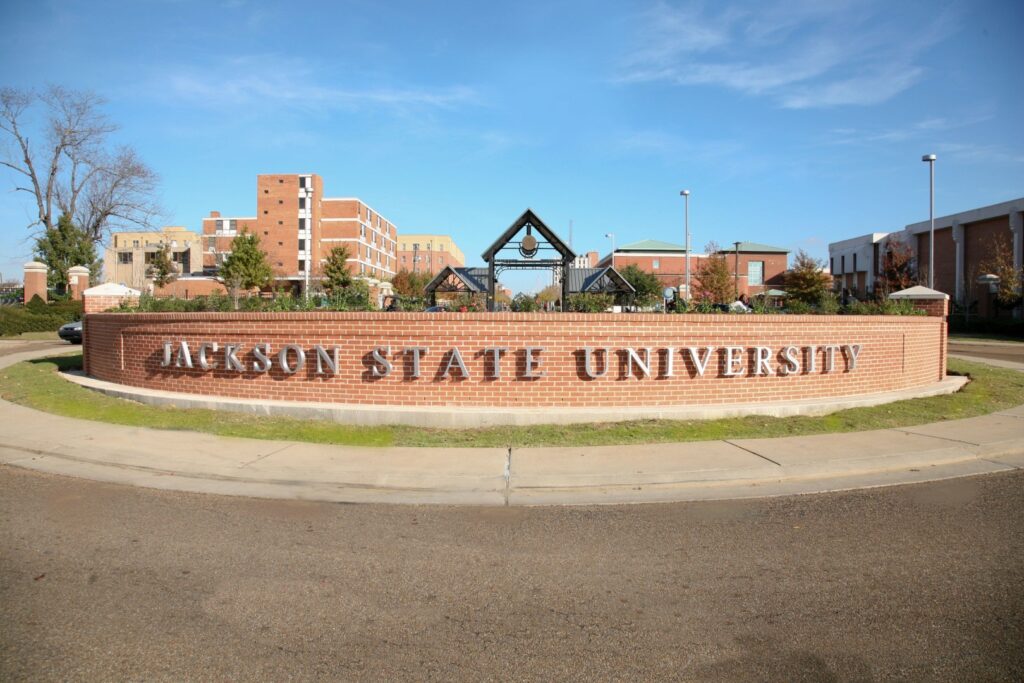
Jackson State University (JSU) began its journey in 1877 as Natchez Seminary, established by the American Baptist Home Mission Society to educate newly freed slaves. This 147-year old institution has evolved significantly through several transformations. The school moved to Jackson in 1882 and became Jackson College in 1899. The state took over support in 1940, and the institution expanded between 1953 and 1956 to include graduate programs and bachelor’s degrees in arts and sciences, becoming Jackson College. JSU achieved university status on March 15, 1974. The state of Mississippi designated it as their Urban University in 1979.
JSU has grown into a public, coeducational institution with an R2 “Doctoral Universities: High Research Activity” status according to the Carnegie Classification of Higher Education. The university reached its highest ranking in nine years, securing No. 15 among Historically Black Colleges and Universities in the U.S. News & World Report 2026 Best Colleges rankings. The university ranks No. 65 in social mobility among national universities, showcasing its success in supporting low-income and first-generation students.
The university’s main campus covers 220 acres in Jackson, Mississippi, featuring over 50 academic and administrative buildings. JSU’s presence extends throughout the Jackson Metropolitan area with satellite locations at the Universities Center, Jackson Medical Mall, Mississippi E-Center, and Downtown campus.
The student community consists of 6,326 learners – 4,650 undergraduates and 1,676 graduate students. A 12:1 student-faculty ratio enables individual-specific educational experiences. The student body is 96% African American, with 36.8% male and 63.2% female students.
JSU is Mississippi’s only urban research university and a top-15 HBCU nationally, offering more than 90 bachelor’s, master’s, and doctoral degree programs through 38 academic departments. The university achieved a significant milestone by becoming Mississippi’s first university to establish a School of Public Health. It remains the only HBCU in the state that supports bachelor’s and master’s level engineering programs.
The university’s student-centered approach and comprehensive curriculum model prepare graduates for success in an increasingly complex world. JSU receives $25.80 million in research funding yearly, which supports various initiatives from health disparities research to innovation and entrepreneurship.
Programs offered
Jackson State University’s School of Social Work has a Master of Social Work (MSW) program that offers multiple study options to meet student needs. Students can submit applications for the academic year on October 1. The deadline for all applications is March 15.
Students can choose from three distinct study paths:
Two-Year Full-Time Program: Students who can focus on their studies will find this option ideal. The first year covers foundation courses, and the second year emphasizes advanced direct practice with children, youth, and families. Students should avoid full-time employment because of this program’s intensive nature.
Three-Year Part-Time Program: Working professionals can maintain their full-time jobs while earning their degree through this option. Evening classes run through six semesters plus three graduate summer terms.
Advanced Standing Program: Students with a bachelor’s degree from a Council on Social Work Education (CSWE) accredited BSW program can complete their MSW in just one year through this accelerated option.
Students can now access all three program options online. Jackson State University is Mississippi’s first institution to provide an online MSW program. The university is also the only Historically Black College or University (HBCU) in the deep south that offers this flexible learning format.
Each program follows a specialized curriculum focus. Students learn advanced direct social work practice with children, youth, and families in urban and rural areas. The detailed preparation builds leadership skills, professional values, ethics, and responsiveness to social justice needs, particularly for communities that face discrimination and oppression.
Field placements are the foundations of the MSW experience. Two block field placements are required for both two-year and part-time programs. The advanced standing curriculum includes field experiences during summer and spring semesters. These supervised practice opportunities give students unmatched ground experience.
Program requirements vary by type. The two-year traditional program needs 60 semester hours, while students in the advanced standing option complete 39 semester hours. Every program format covers vital areas like human behavior, social environment, generalist practice methods, social welfare policies, research methods, and specialized practice with various populations.
About the online program
Jackson State University’s School of Social Work made history in 2020 by launching Mississippi’s first fully online Master of Social Work program. JSU became the only HBCU in the deep south to offer this flexible learning format. Students from all 82 Mississippi counties, spanning from Delta communities to the Gulf Coast region, now have access to this vital educational pathway.
JSU’s academic standards and mission remain unchanged in the online MSW program. Students can choose from three enrollment options in the 100% online format: one-year advanced standing (started June 2020), two-year full-time (started August 2020), and three-year part-time. You can earn your advanced social work degree from anywhere without compromising quality or program rigor.
Field education serves as the substance of the online experience. Students must complete 900 hours of supervised field education at approved sites near their homes. Local organizations like healthcare facilities and government agencies partner with the program to provide practical experience. This approach balances theoretical knowledge with hands-on practice, whatever your location.
Mississippi’s most pressing social needs shape the curriculum through specialized coursework in rural poverty intervention, child welfare, family preservation, healthcare navigation, and trauma-informed practice. Students develop skills specifically relevant to address the complex relationship between economic disadvantage and limited infrastructure across the state’s social service landscape.
Student support services make the online learning experience better. These include:
- Academic advising, transcript evaluation, registration assistance, and mentorship
- Virtual tutoring and technical assistance available weekdays and weekends at selected hours
- Professional staff dedicated to helping students overcome challenges and make informed career decisions
Working professionals will find the program particularly suitable with evening courses that fit around job commitments. Small class sizes help students build strong relationships with professors in the distance learning format. Students get chances to work together with community agencies and professionals through coursework, field experiences, and social work conferences.
Graduates can pursue rewarding careers in community health centers, school districts, child protective services, faith-based organizations, and rural healthcare systems.
Accreditation
Quality assurance is the core of Jackson State University’s Master of Social Work program. The MSW program has kept its prestigious accreditation from the Council on Social Work Education (CSWE) since 1998. This 27-year accreditation history shows the program’s steadfast dedication to professional standards in social work education.
CSWE accreditation verifies that the curriculum meets national standards for social work education. Your degree from JSU’s MSW program then carries recognized professional legitimacy in all 50 states. The program’s field education component follows CSWE core competency standards and assessments. This blend of theoretical classroom knowledge with practical field experience creates well-rounded professionals.
Jackson State University holds accreditation through the Southern Association of Colleges and Schools Commission on Colleges (SACSCOC). This detailed institutional accreditation allows JSU to award bachelor’s, master’s, specialist’s, and doctoral degrees. Students can ask questions about JSU’s accreditation status directly to SACSCOC at their Decatur, Georgia headquarters or through their website (www.sacscoc.org).
The School of Social Work operates within JSU’s College of Health Sciences, which has several other notable accreditations. The College of Health Sciences also holds accreditation from the Council on Education for Public Health (CEPH) for its public health programs, though this doesn’t directly affect the MSW program.
The BSW program leads to the MSW Advanced Standing option and shares the same CSWE accreditation as the graduate program. The Ph.D. in Social Work program partners with the Group for the Advancement of Doctoral Education (GADE), separate from the MSW program’s accreditations.
These credentials ensure your education meets quality standards at both program and institutional levels. MSW students benefit from CSWE accreditation because:
- The curriculum lines up with current professional standards
- Graduates can pursue licenses in all states
- Field experiences fulfill established educational goals
- Regular external quality reviews verify program excellence
The MSW program’s faculty adopts policies and procedures that match these accreditation standards. This creates a well-laid-out framework for educational excellence.
Admission Requirements
Jackson State University’s MSW program has clear admission criteria that help identify students who can succeed academically and professionally. The application window opens on October 1, and students must submit their applications by March 15 for the upcoming academic year.
You’ll need to submit your application materials to two places: Jackson State University Division of Graduate Studies and the School of Social Work. While the MSW program accepts applications until classes fill up, you should apply early.
The Two-Year Full-Time and Three-Year Part-Time Programs have these simple requirements:
- A baccalaureate degree from an accredited college or university (not necessarily in social work)
- Transcripts showing a minimum 2.5 cumulative GPA on a 4.0 scale
- Evidence of volunteer or work experience in social work
- A five-page personal statement that explains your understanding of social work as a profession, reasons to pursue an MSW, and your strengths
- Three reference letters (including one from an instructor)
Advanced Standing candidates face stricter requirements. They just need a BSW from a CSWE-accredited program, a grade of “B” or better in all social work courses, and a minimum 3.0 cumulative GPA. Students must also show their previous field practicum evaluations with successful completion of required hours before enrollment.
Students can gain unconditional admission with a minimum overall undergraduate GPA of 2.5 and at least 3.0 in their last 60 credit hours. The committee might grant conditional admission to students with a minimum 2.25 GPA overall and 2.75 in their last 60 hours. Students can remove their conditional status after completing 12 graduate hours with a 3.0 GPA.
International students must provide satisfactory TOEFL scores. Students born after 1957 must submit immunization records that prove measles and rubella immunization.
The program allows transfer credits up to 30 semester hours from CSWE-accredited programs based on committee review. These courses must be nowhere near five years old at the time of request and completed with a minimum “B” grade.
Jackson State University maintains strict academic standards and with good reason too – the program never awards academic credit for life or work experience.
Tuition
The cost of your education is a key factor when you plan for the Jackson State University MSW program. JSU’s graduate programs are designed to offer quality education at competitive rates compared to similar schools.
The online MSW program’s graduate tuition is $512.00 per credit hour. This rate is different from the traditional on-campus graduate program, which costs $483.00 per credit hour for part-time enrollment. Full-time graduate students pay a flat rate of $4,345.00 per semester. These rates apply to the 2024-2025 academic year as approved by the Mississippi Institutions of Higher Learning.
Students need to budget for several additional fees. A technology fee of $50.00, capital improvement fee of $52.50 per semester, and student activity fees of $85.00 per semester apply to everyone. International and out-of-state students might need to pay a non-resident fee of $1,000.00 per semester.
JSU makes paying tuition convenient with multiple payment options. You can pay with cash, credit cards (MasterCard, Visa, Discover, and American Express), personal checks, money orders, and traveler’s checks. The Business Office accepts payments in person or by mail, and all payments should go to Jackson State University.
You’ll find several financial support options to help with these costs. The Division of Graduate Studies offers tuition waivers that can cover part or all of your tuition. Students can apply for these waivers each academic year by March 1. Graduate assistantships are a great way to get both monthly stipends and tuition support if you qualify.
It’s worth mentioning that students must pay all fees during registration and are responsible for 100% of their tuition and fees. Since rates might change yearly, you should check with the Business Office for the most current information.
Additional Information
Jackson State University’s MSW program prepares social workers to excel in advanced direct practice with children, youth, and families across urban and rural settings. The program turned 30 years old in 2024, marking three decades of excellence in social work education. The first MSW class graduated in 1997, starting a legacy that thrives today.
The program gives students great career opportunities. Social workers make up the largest group of mental health providers in the United States. The U.S. Department of Veterans Affairs employs a significant number of MSW graduates nationwide. The Bureau of Labor Statistics shows that social work remains one of the ever-changing and growing professions.
The program’s Mississippi Child Welfare Institute sets it apart and improves research and hands-on practice opportunities. Small class sizes help students build strong relationships with faculty members. Students connect with agencies and professionals through their coursework, field experiences, and social work conferences.
Students can choose from a variety of elective courses that fit their schedule. Classes are available face-to-face, online in real-time, and at their own pace. This mix of options matches different learning styles and helps students develop their professional skills completely.