
MSW at Gallaudet University
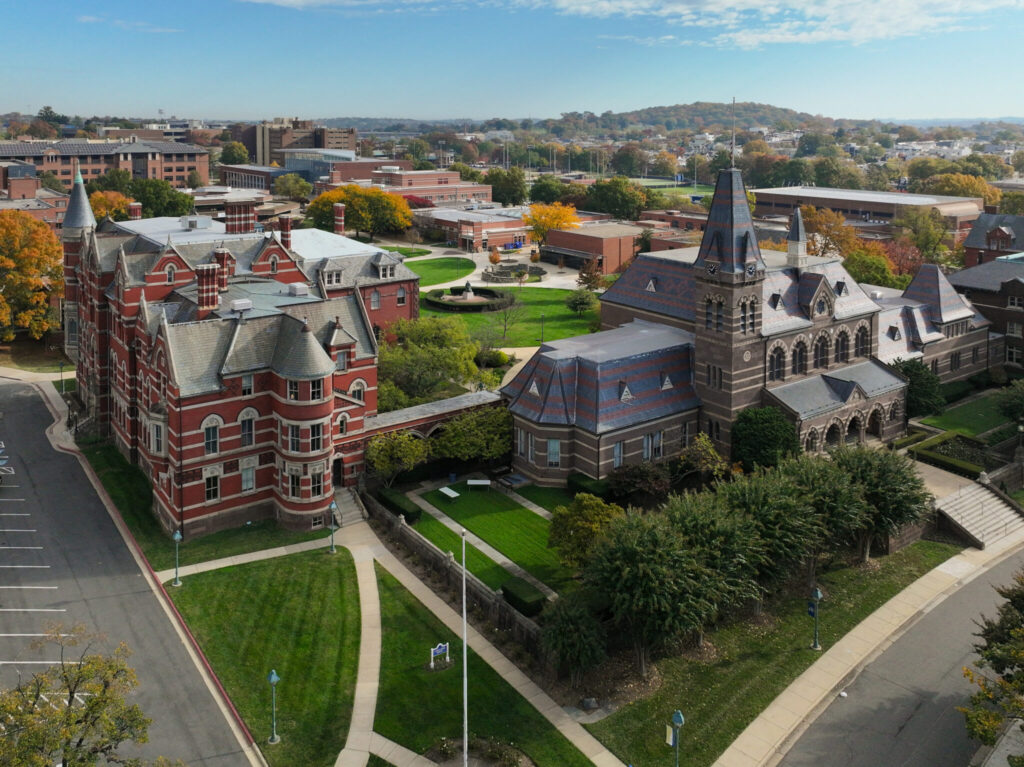
Gallaudet University is the world’s only university built specifically for deaf and hard of hearing students. Founded in 1864, President Abraham Lincoln signed legislation that allowed the institution to award college degrees. Today, Gallaudet has grown into a leading higher education institution with a unique bilingual approach. The campus creates an inclusive learning environment where American Sign Language (ASL) and English work together, perfectly matching the visually-centered deaf experience.
The Master of Social Work program at Gallaudet gets students ready for advanced work with deaf and hard of hearing populations. The MSW program started in 1989 and has earned a strong reputation for excellence in education and advocacy. Students can pursue both undergraduate and graduate degrees through the Department of Social Work. The MSW program gives professionals specialized knowledge and skills they need to serve deaf and hard of hearing communities.
Gallaudet’s social work education stands out because it focuses on deaf culture, strengthening communities, and accessibility. Students graduate with both general social work skills and specialized expertise to work with deaf and hard of hearing people of all types. This unique approach has helped Gallaudet’s MSW graduates become leaders in the United States and around the world.
The Department of Social Work has seven highly qualified and experienced faculty members and one professional staff member. They conduct research, work on community service projects, and share their findings at professional conferences. The department makes learning more enriching by bringing in guest speakers and hosting discussions with professional social workers from the Washington, D.C. area and beyond.
MSW graduates build careers in schools, healthcare agencies, family and child welfare organizations, mental health settings, disability organizations, and correctional facilities. Some provide clinical services while others focus on advocacy, administration, program development, community organizing, consultation, and research.
Gallaudet shows its steadfast dedication to diversity and inclusion through action. The university’s equal opportunity policy protects against discrimination based on race, color, sex, religion, national origin, sexual orientation, gender identity, age, disability, or veteran status. This protection covers everything in the Social Work Department, from faculty and staff to students and field instruction agencies.
The MSW program recently got approval from the Council on Social Work Education (CSWE) to offer a fully online graduate degree. This approval means the program meets high quality standards through peer review. Students complete high-quality internships that help them become licensed social workers, often leading to jobs in case management, community advocacy, substance abuse counseling, and vocational rehabilitation.
Gallaudet University’s MSW program continues to prepare professionals who make a real difference in the lives of deaf and hard of hearing people, their families, and communities worldwide through its specialized focus and dedication to excellence.
Programs offered
Gallaudet University’s Master of Social Work program has 61 credit hours that help students become skilled at working with deaf and hard of hearing populations. Students start with foundation courses and then move into specialized content about deaf and hard of hearing communities.
Students can choose from several enrollment options that fit their schedule. The program offers two-year, three-year, or advanced standing tracks. Students with a Bachelor of Social Work (BSW) from a CSWE-accredited program can take the advanced standing option if they apply within five years of graduating.
Foundation Curriculum
The first year gives students complete training in eight key areas: human behavior and social environment, social welfare policy and services, social work practice, research, field education, values and ethics, diversity, and populations at risk including social and economic justice. This foundation gives students the skills they need to work with clients of all backgrounds.
Students work at internship sites two eight-hour days each week during this phase. They complete about 500 hours of field experience along with their regular coursework by the end of their foundation year.
Advanced Curriculum
The advanced curriculum builds on earlier knowledge and develops expertise in working with deaf and hard of hearing populations. Students expand their professional skills and learn culturally responsive intervention approaches through focused coursework and hands-on field experience.
Students take part in intensive field placements during their final spring semester. They spend four eight-hour days each week at their placement sites, totaling 32 hours weekly or 512 hours per semester, while taking two online courses. Students graduate with 17 credits from field work (about 1,012 hours) and 44 course credits.
ASL Proficiency Requirements
Students must meet specific American Sign Language standards to serve deaf and hard of hearing clients effectively. They need an ASLPI rating of 2 before moving to the concentration phase. A rating of 2+ is required to graduate.
Students who haven’t reached the 2+ rating can submit other documentation. This includes their current proficiency level, three recommendation letters from supervisors or advisors, and proof they’re working to improve their skills.
Employment-Based Field Internships
Working professionals can complete their required field hours at their current social service organization. The program accepts these Employment-Based Field Internships as long as they meet the standards for social work education.
Career Preparation
The program prepares graduates to work in many settings:
- Schools and educational institutions
- Healthcare agencies
- Family and child welfare organizations
- Mental health settings
- Disability organizations
- Correctional facilities
- Senior services agencies
- Community advocacy organizations
The program uses a person-in-environment framework based on core social work values: service, human rights, social and economic justice, dignity and worth of the person, importance of human relationships, and integrity in professional practice. Students learn to foster strengths and abilities of individuals, families, groups, organizations, and communities, with special attention to deaf and hard of hearing populations globally.
Gallaudet University’s MSW program gives graduates specialized knowledge and cultural competency to serve deaf and hard of hearing communities in a variety of practice settings.
About the online program
Gallaudet University’s online Master of Social Work program comes with full Council on Social Work Education (CSWE) approval. Students experience a challenging yet adaptable educational journey that blends both live and self-paced learning formats to meet different learning styles without sacrificing quality.
Late afternoon live classes happen several times each week. Students also complete required coursework at their own pace. This mix lets you connect with teachers and classmates in live discussions while giving you freedom to finish assignments when it works best for you. Sign-fluent professors teach every class using a bi-language approach that makes learning accessible to everyone.
The program includes “Social Work Beyond the Classroom,” a free monthly online clinical seminar. These extra sessions are a great way to get professional growth through exposure to current practices and new developments in social work.
Field education is essential to your learning journey. Your foundation year needs approximately 500 hours of field practicum experience. Most students spend two eight-hour days each week at internship sites. The advanced year steps up this hands-on training. Students put in about 512 hours during spring semester alone, working four eight-hour days weekly at their placement locations. You’ll graduate with roughly 1,012 hours of supervised field experience in a variety of settings.
ASL skills play a vital role in this online MSW program. Students must reach an ASLPI rating of 2 before moving to the concentration phase. A 2+ ASLPI rating becomes mandatory to graduate. The program helps students who need to improve through ASL classes and interactive activities.
This MSW program readies you to serve deaf and hard of hearing communities in many settings. Your career could span schools, healthcare agencies, family services, or mental health organizations. The program gives you specialized knowledge and cultural understanding to help these communities.
Questions about the program or monthly clinical seminar? Email the department. Look through the program requirements and think over how this flexible online format matches your career goals and life situation.
The MSW program stands among other online and hybrid graduate programs at Gallaudet, including Clinical Mental Health Counseling, Public Administration, and Education. You’ll benefit from a university that brings years of experience in delivering exceptional online education with a bilingual focus.
Accreditation
Gallaudet University’s Master of Social Work program has detailed accreditation credentials that showcase its quality assurance and professional recognition. The Middle States Commission on Higher Education (MSCHE) accredits the university, and the U.S. Department of Education recognizes it as a Title IV approved institution. This accreditation sets the foundation for all Gallaudet’s academic programs.
The university’s Department of Social Work has earned specialized accreditation from the Council on Social Work Education (CSWE) for its undergraduate and graduate programs. A rigorous peer review process confirms that the MSW program meets quality standards. The CSWE’s Commission on Accreditation is the only accrediting agency for social work education across the United States and its territories.
Students benefit directly from this accreditation. We focused on creating a program with enough resources to achieve its mission and goals. The Board of Accreditation has confirmed the program’s compliance with Educational Policy and Accreditation Standards. Your education will meet the highest standards in social work education.
The MSW program’s curriculum, learning outcomes, and syllabi align with CSWE Accreditation Standards. This alignment will give a program that stays true to CSWE’s educational policies and requirements.
CSWE accreditation matters a great deal. Graduates receive education that meets national competency standards and qualifies them for licensure. This credential shows a systematic process that protects consumers and serves public good through quality education.
Gallaudet University’s MSW graduates complete a program that prepares them to serve different cultures and communities with respect and responsibility. This accreditation proves graduates can think critically, solve problems, and support justice, equity, inclusion, and diversity – skills that define successful social work practice.
Admission Requirements
Gallaudet University’s MSW program offers a complete admissions process that identifies candidates ready for advanced social work practice with deaf and hard of hearing populations.
You’ll need to submit a complete application form and a non-refundable $75 application fee. Your academic record should show a minimum 3.0 GPA on a four-point scale from previous undergraduate and graduate work. The department may grant conditional admission for lower GPAs in some cases.
Essential Application Materials:
- Official transcripts showing bachelor’s degree completion from an accredited university
- Three recommendation letters from qualified evaluators of your graduate-level social work capacity
- A goals statement outlining your academic and career objectives
- A professional resume
- Social Work Essay (3-5 pages) about deaf and hard of hearing populations, with at least two APA-formatted references
ASL Proficiency Requirements
American Sign Language proficiency serves as the core of the program. You must demonstrate satisfactory ASL proficiency through an ASLPI scoring report or ASL Video Essay before admission. The program requires an ASLPI rating of 2 by the end of your foundation curriculum to advance to the concentration phase. A rating of 2+ becomes mandatory for graduation.
Students who don’t reach the required ASLPI ratings must create improvement plans with their advisors. These plans include ASL classes and interaction activities. Students who can’t achieve the 2+ graduation requirement must submit a portfolio with their current proficiency level and three recommendation letters from supervisors or advisors.
Advanced Standing Option
BSW holders from a CSWE-accredited program can qualify for advanced standing admission by meeting these requirements:
- Application within five years of BSW graduation
- ASLPI score of 2 or higher before admission
- Recommendation letter from BSW Program Director, Field Education Coordinator, or Field Supervisor
- Overall undergraduate GPA of 3.2 or higher
Admitted students must follow District of Columbia’s immunization laws and maintain health insurance coverage in the DC metropolitan area. The financial aid process runs separately from admissions. Make sure to explore scholarship and assistantship options through Gallaudet’s financial aid resources.
The Graduate Admissions Office must receive all completed applications by February 15.
Additional Information
Recent data shows that 78% of Gallaudet University’s MSW graduates are hired, while 22% choose to continue their education. The undergraduate statistics paint a similar picture – 70% find employment and 30% move on to graduate studies within their first year after graduation.
The job market looks bright for social workers. The field projects a 7% growth from 2023-2033, with professionals making an average of $58,380 annually. Social and community service managers can expect an 8% growth in the same timeframe, with average yearly earnings of $77,030.
Gallaudet’s network opens doors to valuable field experiences through internships. Students train at organizations like the Court Services and Offenders’ Supervision Agency, Deaf Abused Women’s Network, National Association of the Deaf, and Public Defender Service. Final-year students take their skills to schools for the deaf throughout the United States and abroad, with some heading to South Africa.
U.S. News and World Report ranks Gallaudet among the country’s “Best Value Schools”. Graduate students pay $10,377 per semester for 9-18 credits, or $1,153 for a single credit. Additional mandatory fees include health services ($271), student activities ($200), and technology ($212).
The university provides multiple financial aid options. Students can access federal aid through FAFSA, apply for scholarships, and find work opportunities on and off campus.