
Concordia University Wisconsin MSW
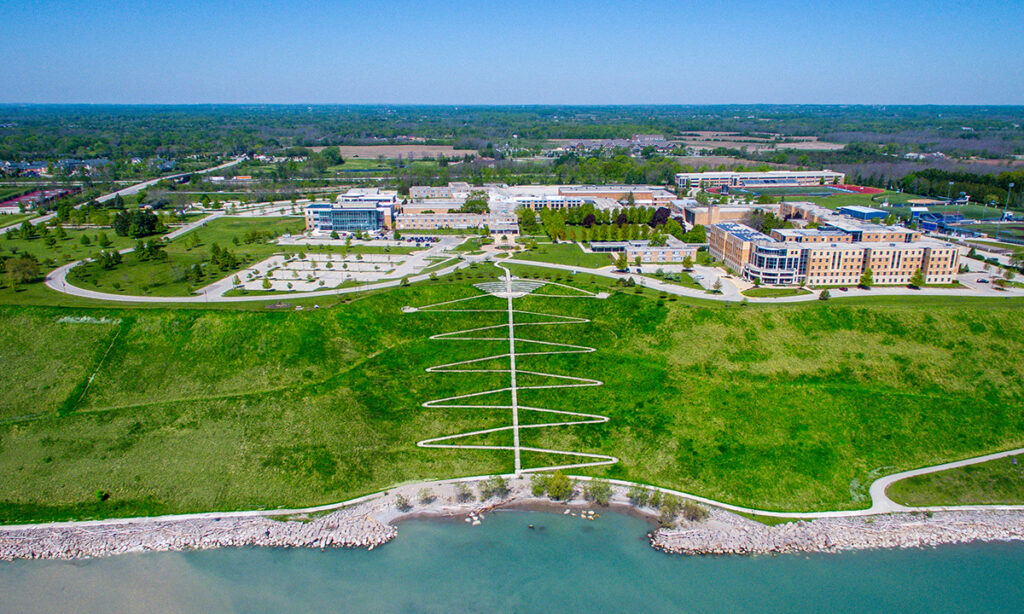
Concordia University Wisconsin (CUW) sits on the beautiful shores of Lake Michigan. The 200-acre campus in Mequon, Wisconsin lies just 20 minutes north of downtown Milwaukee. Students enjoy peaceful lakefront views while staying close to a major city’s opportunities. This perfect blend creates an ideal setting for both academic growth and career development.
The university’s story began in 1881 in downtown Milwaukee. The first class had just 13 students who met in Trinity Lutheran Church’s basement. Over the years, it grew into a university. The Lutheran Church-Missouri Synod made a crucial decision in 1982. They bought the former School Sisters of Notre Dame campus in Mequon and moved the college there in 1983. CUW reached another milestone in 1989 by becoming the first university in the 10-member Concordia University System.
CUW now operates as a private Lutheran university with six distinct schools: Arts and Sciences, Business, Education, Health Professions, Nursing, and Pharmacy. This structure helps deliver specialized education in a variety of fields while staying true to Lutheran values.
Lutheran higher education remains CUW’s cornerstone. The university shapes students “in mind, body, and spirit for service to Christ in the Church and the world”. This faith-based foundation runs through every aspect of campus life. About 40% of traditional students are Lutheran.
Students benefit from a close-knit learning environment with a 12:1 student-to-faculty ratio. The university serves 5,064 students total – 1,761 traditional undergraduates, 586 accelerated undergraduates, 179 high school dual credit students, and 2,538 graduate students.
Academic choices abound with more than 70 undergraduate majors and programs. Graduate options include doctoral degrees in pharmacy, physical therapy, educational leadership, business administration, and nursing practice. CUW runs Wisconsin’s largest MBA program. The university’s graduates thrive – 96% find jobs or continue their studies within six months after graduation.
The campus design features 3.5 miles of indoor walkways, known as “tunnels”. Students move easily between buildings whatever the weather. Campus life thrives with over 40 student organizations and 30 varsity-level athletic teams.
Safety remains a top priority at CUW. The university earned recognition as the “#1 safest campus in Wisconsin”. This secure environment lets students focus on their studies and prepare for successful careers in social work and other service-oriented professions.
Programs offered
Concordia University Wisconsin provides detailed social work education through its undergraduate and graduate programs. These programs prepare students to practice professionally in a variety of settings.
The Bachelor of Social Work (BSW) program comes in two formats that fit different student needs. Students coming straight from high school or transferring from other schools often choose the traditional BSW program with its on-campus, daytime classes. Working adults can pick the accelerated BSW program, which they can complete 100% online or attend classes at the Mequon or Ann Arbor campuses.
The Master of Social Work (MSW) program is the pinnacle of Concordia’s social work education. Students can complete this two-year graduate program full-time or part-time. The program welcomes students through two paths:
- Regular Standing MSW: Students with bachelor’s degrees in any field can finish this program in about two years full-time or 3-4 years part-time
- Advanced Standing MSW: BSW graduates from CSWE-accredited programs can complete their degree in just one year full-time or two years part-time
The MSW program’s Advanced Generalist specialization makes it unique. Graduates gain multi-faceted knowledge they can use at all practice levels. This knowledge opens doors to jobs in mental health services, criminal justice systems, community agencies, and administrative positions.
Students in the MSW program can take clinical licensure courses to prepare for the Wisconsin Licensed Clinical Social Worker (LCSW) examination. Licensed graduates work in clinical settings, courts, schools, outpatient facilities, or start their own therapy practices.
Field education plays a vital role in both programs. Senior BSW students complete about 400 clock hours of field instruction. Advanced Standing MSW students need 500 field hours, while Regular Standing students complete 900 hours.
The MSW program also offers special certificates to boost career opportunities. Students can earn an Interprofessional Education certificate or an Opioid and Substance Use Disorder certificate. Those interested in management can pursue a Graduate Certificate in Management that combines social work and business courses.
Both programs follow strict academic standards that match the Council on Social Work Education’s competencies. This ensures graduates are ready to handle the challenges of professional social work in a variety of settings.
About the online program
Concordia University Wisconsin’s MSW program became fully online and asynchronous after receiving approval from the Council on Social Work Education (CSWE) in September 2022. This change makes education more accessible to working professionals and students with family commitments who want to advance their careers without relocating or commuting.
The online MSW program’s benefit is flexibility, offering both full-time and part-time enrollment options. Students can balance their education with work and personal commitments. The program delivers coursework asynchronously so students complete assignments on their schedule, while maintaining the same academic standards as traditional campus programs.
Your educational background determines which of two program paths you’ll take. Students with any bachelor’s degree follow the Regular Standing track, completing 63 credit hours in two years full-time or 3-4 years part-time. Students with a BSW from a CSWE-accredited program qualify for Advanced Standing, needing only 36 credit hours – finished in one year full-time or two years part-time.
Field education plays a vital role in the online MSW experience. A field placement coordinator helps students find internship opportunities that line up with their career goals. Advanced Standing students complete 500 field hours, while Regular Standing students need 900 hours. These placements usually require 16 weekly hours in the field setting.
Graduates receive an Advanced Generalist specialization, giving them complete knowledge they can use in practice settings of all sizes. This broad preparation improves job prospects by giving students skills for both direct service and leadership roles. Students can also take clinical licensure courses to prepare for the Wisconsin Licensed Clinical Social Worker (LCSW) examination after meeting licensure requirements.
LCSW licensure lets professionals work in clinical settings, courts, schools, and outpatient facilities. The credential makes it possible to start a private therapy practice, run a mental health business, and bill independently for services. Students must complete a clinical field placement during their advanced generalist field experience to pursue this path.
The online MSW program blends academic excellence with practical flexibility, readying graduates for rewarding careers in social work’s expanding field.
Accreditation
CSWE accreditation is a vital quality marker for any social work program. The Master of Social Work (MSW) program at Concordia University Wisconsin MSW has full accreditation from the Council on Social Work Education (CSWE). CSWE is the premier accrediting body for social work education in the United States. This credential shows that the program meets professional standards and prepares graduates to practice social work effectively.
The program’s quality improvement experience spans many years. The MSW program started in 1978 and earned its full CSWE accreditation in February 2020. The accreditation benefits go back to include the first graduating class of August 2018. The program will keep its accredited status through June 2026. This gives future students confidence in the program’s stability and quality.
The MSW program got CSWE approval on September 12, 2022, to switch to a fully online asynchronous format. This approval proves that online learning meets the same quality standards as traditional classroom teaching. CSWE standards state that accreditation covers all approved teaching methods when the degree comes from that program. This means your online MSW from Concordia holds equal value to an on-campus degree.
Why CSWE Accreditation Matters
CSWE accreditation will affect your education and career opportunities directly. The process proves that Concordia’s curriculum, faculty, and resources meet the standards needed to train competent social workers. Your education will match current professional practice needs.
CSWE accreditation gives students these key benefits:
- Eligibility for licensure examinations in most states
- Qualification for Advanced Standing admission if pursuing further education
- Recognition by employers who require degrees from accredited programs
- Access to certain federal loans and scholarship opportunities
Concordia University Wisconsin also has institutional accreditation from the Higher Learning Commission. This proves the university’s educational quality and financial strength.
These dual accreditations show Concordia University Wisconsin MSW program’s dedication to high academic standards while preparing students for successful clinical social work careers.
Admission Requirements
Getting into Concordia University Wisconsin’s MSW program depends on your educational background. The program welcomes students through two different pathways that fit various needs.
To qualify for Advanced Standing, you must:
- Have a Bachelor of Social Work degree from a CSWE-accredited program earned in the last 7 years
- Have a 3.5 GPA in all social work courses or a 3.0 GPA plus one year of relevant experience
The Regular Standing pathway welcomes students who:
- Have earned a bachelor’s degree from an accredited college or university
- Have achieved a minimum 3.0 undergraduate GPA for full acceptance
Both paths share these application requirements:
- Complete the online application
- Submit a personal essay in APA format (1-2 pages) that explains why you want to pursue social work, your career goals, and how you’ll balance program demands
- Provide a current resume showing your education, work experience, volunteer activities, and community involvement
- Submit recommendation letters based on your pathway:
- Advanced Standing: three professional recommendations, ideally from your BSW advisor, a faculty member, and a social service agency supervisor
- Regular Standing: three professional recommendations, with at least one from an academic advisor/faculty member and one from a current/former supervisor
- Submit all official transcripts from any post-secondary schools you’ve attended
Students must complete a background check through the university’s designated provider before starting field education courses.
The priority application deadline is January 15, which waives the $250 application fee. The final deadline is June 1, and requires a $250 tuition deposit.
Regular Standing students need these prerequisite courses:
- Anatomy & Physiology or similar class
- Statistics (taken within 7 years)
- Life Span Development
Meeting these requirements puts you on track to join a program that prepares you for clinical social work practice in a variety of settings.
Tuition
Your MSW education at Concordia University Wisconsin needs smart financial planning. The Master of Social Work program costs $800.00 per credit. Your total investment depends on your path: 36 credits for Advanced Standing students or 63 credits for Regular Standing students.
Advanced Standing students pay approximately $28,800 for their degree, while Regular Standing students invest around $50,400. Concordia’s MSW program offers competitive pricing among private universities. Public institutions in Wisconsin charge less, with resident tuition between $275.00 and $401.00 per credit.
Smart financial planning makes this educational investment more manageable. Concordia offers several financial assistance options to qualified students. The university’s statistics show that 99.6% of traditional undergraduate students get some type of financial aid. Students receive an average award of $23,395.00. Graduate students can access scholarships, financial aid packages, and flexible payment plans.
Concordia’s “Uncommon Scholarships” stand out by offering $150.00 to $500.00 per three-credit course. These scholarships reduce costs and recognize student achievements. Financial aid decisions look at your financial need, field of study, academic performance, underrepresented minority status, and where you live.
Payment deadlines matter for MSW students. Semester-length courses (14-16 weeks) need payment by the first week’s end. Eight-week courses have different rules – payment is due by week one’s end for term 8A and week nine’s end for term 8B. Missing these deadlines might result in course removal.
Students can pay through various methods: out-of-pocket payments, financial aid, parent plus loans, alternative loans, the Transact payment plan, or university-approved outside aid.
Additional Information
Concordia University Wisconsin’s MSW students get many professional development opportunities alongside their academic studies. The program actively promotes membership in professional organizations such as the National Association of Social Workers (NASW) and the North American Association of Christians in Social Work (NACSW). Student rates make these valuable resources available, offering access to conferences, continuing education, and malpractice insurance at reduced costs.
Faith perspectives form a distinctive part of the MSW program’s curriculum. The program’s chair and professor of social work, Dr. Elizabeth Talbot, shares, “One of the nice things about a Christian University is that we can talk about our faith. We integrate the impact of Christianity on social work across the curriculum”. This faith-centered approach gives students a unique way to understand practice behaviors and client situations.
The social work profession offers diverse career paths at three practice levels: micro (working directly with individuals and families), macro (creating large-scale effect through policy and institutions), and mezzo (supporting groups, neighborhoods, and communities). Graduates can work in clinical settings, healthcare, schools, community organizations, and policy development.
Students can advance their careers using resources that help with education and career planning. They also have access to job boards where they can find job listings and internship opportunities.