
Clark Atlanta University MSW Program
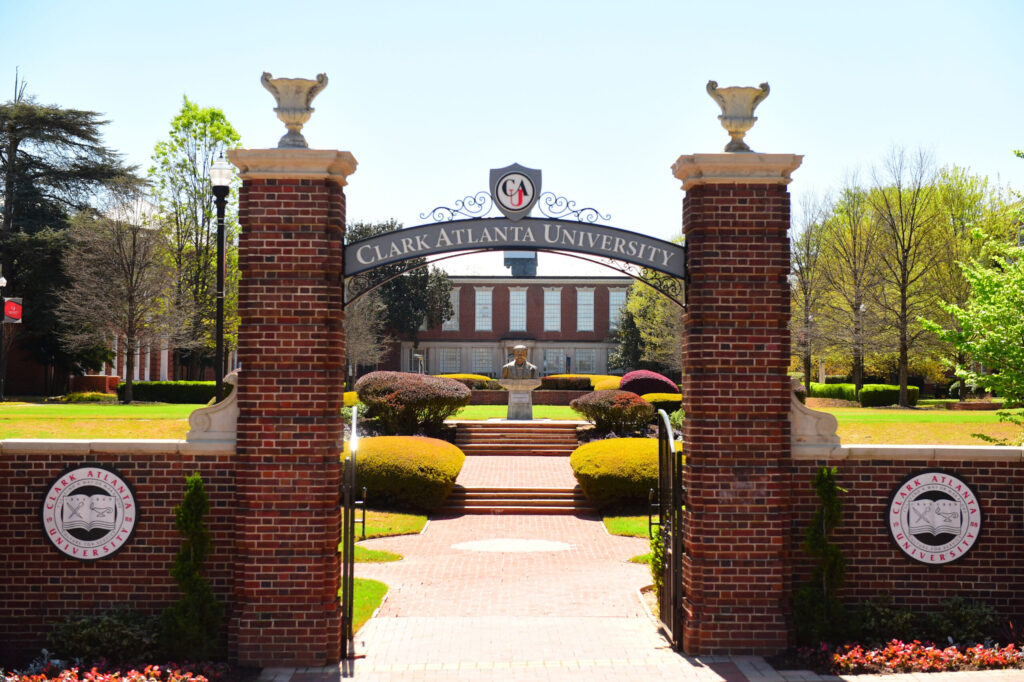
The Whitney M. Young, Jr. School of Social Work at Clark Atlanta University has built a remarkable legacy in social work education. This 103-year-old institution became the first accredited school of social work at a historically Black college or university (HBCU) and Georgia’s first such institution. The school joined the American Association of Schools of Social Work in 1928 and became a chartered member of the Council on Social Work Education in 1952. It has kept its accreditation since then.
Forrester Blanchard Washington, a visionary African American social worker, shaped the school’s rich heritage. He led the institution as its third Director from 1927-1954 and reshaped social welfare conditions in the South by creating an educational institution that trained African American social workers. His impact continues today, as shown by the school’s successful centennial celebration in October 2020.
Dr. Sebrena Jackson now leads the school at Clark Atlanta University—a private, Methodist, historically Black research university with “R2: Doctoral Universities – High research activity” classification. The university came into being in 1988 when Atlanta University (the first HBCU in the Southern US, founded 1865) merged with Clark College (founded 1869).
The school aims to create social work professionals, practitioners, and leaders who know how to tackle culturally diverse human and social issues at local, national, and international levels. Its vision focuses on delivering relevant social work programs, practice, and research that strengthen social work professionals who serve communities of all types.
This program stands out because it uses an Afrocentric, autonomous social work practice model to develop culturally competent practitioners. These professionals learn to work with African American children, families, and males within their family and community context. Students build on liberal arts foundations and learn humanistic values that prepare them to tackle social and economic injustice at multiple levels.
Clark Atlanta consistently ranks among the top HBCUs, securing the 21st position in U.S. News & World Report. The social work graduate program also maintains its position among the nation’s top 100 programs, showing its dedication to excellence.
The Whitney M. Young, Jr. School of Social Work offers bachelor’s, master’s, and doctoral degrees. It continues its century-old tradition of developing professionals who show strong social awareness and work to address poverty, social, economic, and environmental injustices while preserving African American heritage.
Programs offered
Clark Atlanta University’s MSW program features three different degree tracks that fit various student needs and schedules. Students can choose from the Two-Year Plan of Study, Three-Year Plan of Study, and Advanced Standing Plan of Study. Each track delivers detailed social work education with flexible completion options.
Students need to complete 59 total credit hours for both Two-Year and Three-Year options. These paths work best for students with bachelor’s degrees in fields outside social work. The Two-Year track runs full-time, while the Three-Year track lets students study part-time to balance work and personal life.
The Advanced Standing Plan needs 38 credit hours and serves students who have earned a Bachelor of Social Work (BSW) degree from a CSWE-accredited program. This faster track recognizes prior social work education and helps qualified students finish their MSW sooner. The plan also offers two teaching methods that suit different learning priorities.
Field education is a significant part of social work education for every student. The Two-Year and Three-Year students must finish 900 field education hours – 400 in the foundation year and 500 in the concentration year. Advanced Standing students complete 500 hours during their concentration year.
The program centers on two specialized practice areas that line up with today’s social work needs. Students pick either Child and Family specialization or Health/Mental Health specialization. Both options employ ecological and systems theories as their base while incorporating developmental and life-stage theories.
A well-laid-out curriculum shapes students into excellent direct service social work practitioners. Students develop stronger social awareness and become culturally skilled professionals who can tackle complex social issues in various settings.
The program includes three elective courses that let students customize their education. These courses help students gain deeper knowledge in their chosen areas of interest or professional focus.
Clark Atlanta University runs its MSW program mainly on campus, but it also provides online options as shown in program materials. This makes it one of five Georgia institutions offering CSWE-accredited MSW programs.
About the online program
Clark Atlanta University’s online education program represents a major step forward in their academic offerings. The Advanced Standing Plan of Study shines with its online delivery mode, making it available to more students. Clark Atlanta stands among only five institutions in Georgia that offer fully online MSW programs.
Students at Clark Atlanta University use Canvas as their Learning Management System (LMS). This dynamic and intuitive platform makes smooth educational experiences possible. The online MSW curriculum matches its campus-based version exactly. Students receive the same high-quality education whatever method they choose.
The online format comes with a great financial benefit. Students pay similar tuition rates whatever their location. This approach removes money-related obstacles that could stop qualified candidates from joining this prestigious program.
Working professionals find the flexibility of the online MSW program particularly valuable. Traditional programs have fixed schedules, but the online option adapts better to individual needs. Many students can keep their careers moving forward while they study, thanks to part-time options.
Virtual classrooms do more than just offer convenience. Students participate in online discussions, use digital resources, and learn together in virtual spaces. They also network with peers and professionals from different locations. This array of viewpoints improves the educational experience.
Clark Atlanta University shows its dedication to excellence in online education through quality checks. Teachers must complete tTEC certification before teaching online courses. This includes Canvas 101 and a 5-week online tTEC course. CITLE’s Online Instructional Technologists offer these certifications 4-6 times yearly to ensure teachers can deliver top-quality online education.
The university plans to grow its online graduate programs. Market trends show working professionals just need advanced education options. Weekend sessions at CAU and Summer Institutes help build strong communities despite the virtual nature of these programs.
Interested students can join Virtual Open Houses through Zoom to learn more.
Accreditation
Quality markers in social work education programs across the nation rely heavily on accreditation. The Whitney M. Young, Jr. School of Social Work has a full accreditation from the Council on Social Work Education (CSWE). This proves its dedication to strict educational standards.
Clark Atlanta University reached a milestone when its bachelor’s and master’s social work programs received reaffirmation of their CSWE accreditation for another eight years. This extension runs through June 2030. The Commission voted to approve this decision during its June 2022 meeting.
Dr. Jenny L. Jones, dean and professor at the school, sees this eight-year accreditation as recognition of their programs’ consistent excellence. The programs have managed to keep high performance, integrity, and quality standards. “It is a vote of confidence in the caliber of the programs for our graduates and the public they serve,” she noted.
The school’s accreditation story dates back to 1928 when it joined the American Association of Schools of Social Work. The accrediting body evolved into the Council on Social Work Education in 1952. The School became a chartered member and has managed to keep its accreditation since then.
Clark Atlanta University’s MSW program fits into a larger picture of quality assurance. The Southern Association of Colleges and Schools Commission on Colleges (SACSCOC) has accredited the university. This allows them to award undergraduate, graduate, and professional degrees along with certificate programs. Students can ask questions about institutional accreditation directly to SACSCOC at their Decatur, Georgia headquarters.
Students should know that CSWE accreditation covers all approved program locations and delivery methods. This applies when the degree comes from that program and social work classification remains intact. Students who graduate from Clark Atlanta University’s MSW program will get a credential that meets professional standards, whether they study on-campus or online.
Clark Atlanta University stands proudly among all but one of these seven Georgia universities with MSW programs that have full CSWE accreditation. Their status shows they meet or exceed national social work education standards. Graduates are really prepared for professional practice when they finish their studies.
Admission Requirements
Students looking to join Clark Atlanta University’s MSW program need to meet specific requirements to enter this prestigious social work education pathway. The program accepts about 75% of applicants [link_1], with 65 students chosen from 40 applications in recent cycles.
The first step requires submitting a complete graduate admissions application to the university. Domestic students pay a $40 application fee while international applicants pay $55. Students must provide official transcripts from all previous institutions. The university does not accept transcripts marked “issued to the student”.
The MSW program requires candidates to have a minimum undergraduate GPA of 3.0. The program has waived the GRE requirement for MSW applicants, which sets it apart from other graduate programs at the university.
Each applicant needs to submit a personal statement and three recommendation letters. Students who graduated more than two years ago can submit all three recommendations from employers or supervisors.
Students must complete prerequisite liberal arts requirements before starting their coursework. These requirements include 27 undergraduate credit hours: 3 credits in Human Biology, 21 credits in Humanities, and 3 credits in Mathematics. Students might receive conditional admission with liberal arts deficiencies but need to complete these courses while in the program.
Advanced Standing candidates should have a BSW degree from a CSWE-accredited program. International students must meet extra requirements, including minimum TOEFL scores of 500 paper/61 IBT.
The program follows CSWE educational policies and does not give academic credit for life or work experience. Students who want to start in spring should submit their complete applications with all documents by November 1.
The admissions team looks at several factors beyond GPA. They assess work experience, field preparation, and how well applicants’ academic goals match faculty research interests.
Tuition
Your MSW education cost at Clark Atlanta University depends on multiple factors. The university maintains clear pricing that adapts to different program formats and student needs.
MSW Online Tuition costs $1008.00 per credit hour for the 2024-2025 academic year. Students pay an additional MSW Online Course Fee of $70.00 per credit hour. The MSW Online Tuition will rise to $1068.00 per credit hour in 2025-2026, and the course fee will adjust to $74.00 per credit hour.
Graduate students should think over other mandatory fees that add to their education’s total cost. These fees help support vital university services and total $1157.00 per semester or $2314.00 annually for 2024-2025. These amounts will increase to $1236.00 per semester or $2472.00 annually the following year.
Clark Atlanta University’s total attendance cost goes beyond basic tuition and fees. The Office of Financial Aid creates standard budgets based on enrollment status that include books, supplies, living costs, transportation, and personal expenses. Notwithstanding that, your actual expenses might differ based on your lifestyle choices and living arrangements.
The good news is that financial help comes from many sources. Almost 98% of new students receive some type of financial aid. Students can get merit-based institutional scholarships that reward academic excellence and special talents. Need-based grants help close the gap between attendance costs and family resources. First-year students typically receive $10,094.00 in financial aid.
Scholarship recipients get an average award of $10,300.00. Federal grants help 72% of freshmen with an average of $5,199.00 per student. These numbers show the university’s steadfast dedication to making education available to more people.
The Free Application for Federal Student Aid (FAFSA) helps determine your financial aid eligibility. This form gives the university crucial information to assess your financial situation and find the right assistance options for you.
Additional Information
Clark Atlanta University’s MSW program boasts a remarkable 92% job placement rate. Students achieve this success through the program’s resilient career support services.
The Career and Professional Development office helps students throughout their academic experience. Students get one-on-one counseling sessions and help with résumés and cover letters. The office also runs workshops that teach interviewing skills, job-search strategies, and networking. Students can access these detailed support services at Wright Young Hall from 9:00 am to 5:00 pm, Monday through Friday.
Clark Atlanta goes beyond standard support with programs like the Financial Capability and Asset Building (FCAB) internship. This innovative program lets MSW students practice financial coaching while helping Atlanta’s Westside community, where 44% of adults live below the poverty line. Dean Jenny Jones explains, “This partnership provides our students with ground application of social work practice and its effect on the economic well-being of individuals and families”.
Graduates become part of a strong alumni network of about 40,000 members, expected to grow to 71,000 by 2075. The alumni relations structure has changed with an advisory council and expanded programs that better connect with the university’s growing global alumni base.