
Austin Peay State University MSW
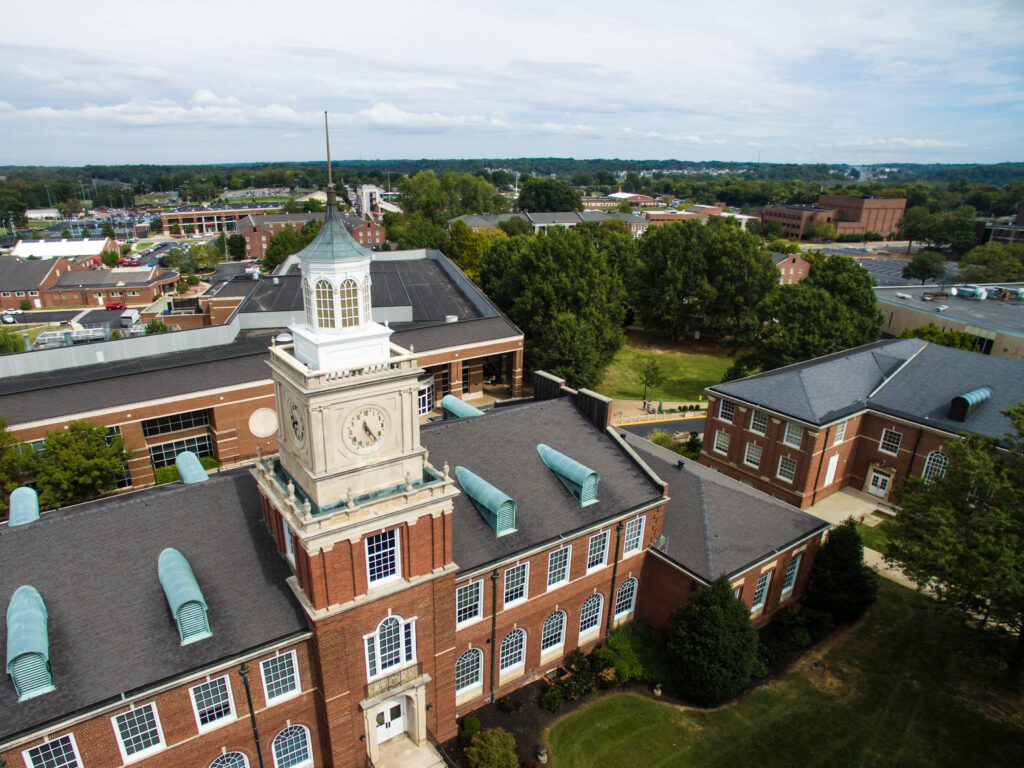
Austin Peay State University shines as an educational beacon in Clarksville, Tennessee, with its academic legacy reaching back almost 100 years. Founded in 1927, this public institution has grown from Austin Peay Normal School into a thriving university that serves more than 10,000 students.
The university’s urban campus spans 196 acres and gives students the perfect mix of educational opportunities with personal attention. APSU takes pride in delivering “the resources of a major university with a small college feel”. Students connect with their classmates and professors naturally here.
The campus’s prime location enhances every student’s educational experience. Money Magazine named Clarksville the #1 Best Place to Live in America in 2019. Students enjoy a lively community by the Cumberland River with outdoor activities, great restaurants, and local theater. Nashville sits just 45 minutes away, opening up even more cultural and career possibilities.
APSU has earned impressive spots in educational rankings. The university secured the #37 position among Regional Universities South and ranks #12 in Most Innovative Schools in the 2026 edition of Best Colleges. These rankings showcase APSU’s excellence in education and innovative teaching methods.
Student success thrives at APSU thanks to smaller class sizes and a student-faculty ratio of 14:1. This setup helps create the one-on-one communication that makes Austin Peay’s teaching approach unique. The university runs on a semester-based academic calendar that structures each student’s educational path.
The university’s governance changed substantially in 2016. The Tennessee General Assembly passed the FOCUS Act and created an institutional Board of Trustees for Austin Peay and five other universities that were previously under the Tennessee Board of Regents. The first Board of Trustees meeting took place on March 30, 2017, marking a fresh chapter in APSU’s leadership.
APSU keeps growing impressively as Tennessee’s fastest-growing public university. The university stands out as Tennessee’s top pick for military-affiliated students, showing its commitment to inclusive education.
APSU’s Social Work Department offers fully accredited BSW and MSW programs. The department boasts a diverse faculty from three countries and various US states—each holding advanced degrees in social work or related fields. Students get hands-on experience and theoretical knowledge through simulated interactions in the department’s clinical lab.
Programs offered
Austin Peay State University’s Master of Social Work program has two enrollment paths based on your education background. Students with any bachelor’s degree can take the Regular Standing program that needs 60 credit hours. Those with a BSW from a CSWE-accredited institution can choose the Advanced Standing option with 30 credit hours. The Regular Standing path accepts students with any bachelor’s degree and a 2.75 minimum GPA. Advanced Standing needs candidates to have a social work GPA of at least 3.0.
The MSW program lets you pick between two specialized concentrations. The Advanced Generalist Concentration helps you work at all practice levels—micro (individuals), mezzo (families and groups), and macro (agencies and communities). This flexible path gives you broad professional training options. The Trauma Focused Concentration gives you specialized skills to help veterans, active-duty service members, and military families. You’ll learn key skills in trauma recovery, interpersonal violence, military social work, children’s mental health, and substance use disorder treatment.
Students learn through hands-on practice and theory. They participate in guided role play, simulations, and community volunteering from the start. The department’s clinical lab helps students learn through video-recorded simulated social worker-client interactions.
Field education is at the heart of the MSW curriculum. Regular Standing students must complete two field placements: a 6-credit, 400-hour foundation placement and an 8-credit, 500-hour concentration placement. Advanced Standing students only need the 500-hour concentration placement. Students in the Trauma Focused Concentration must complete all field hours in approved trauma-focused agencies.
APSU’s MSW program uses a hybrid learning model that mixes online coursework with classroom teaching. Some courses are fully online, while others combine weekly in-class sessions with distance learning. The program also offers tests to skip three foundation courses: Human Behavior and the Social Environment (SW 6010), Research I (SW 6020), and Social Welfare Policy and Services (SW 6030).
The MSW program starts taking applications online each October with a February 1 deadline. Applications are accepted until all spots are filled. Students usually hear back about admission before April 27.
About the online program
APSU’s MSW program shines through its dual delivery options that fit different student needs. Since its CSWE accreditation in 2019, APSU gives students a choice between a hybrid option with 50% face-to-face evening classes and 50% online, or a fully online path. Students who choose the online route join synchronous Zoom classes, and recorded sessions are available for those with military duties, family commitments, or location constraints.
APSU’s membership in the State Authorization Reciprocity Agreement (SARA) lets students outside Tennessee take distance education courses from any SARA state. This makes the program available to more students, which shows in the university’s 75% online major offerings.
Online courses give you freedom to choose when and where to study, but they aren’t self-paced. Professors set specific deadlines for assignments and tests, and some courses need you to join online discussions at set times. Each three-credit course needs at least nine hours of work per week, with some courses needing more time if they have heavy reading or research.
Students use the D2L platform to access course materials and work with instructors and classmates. The 100% online format means logging in multiple times each week to watch lectures, take part in discussions, and submit work through the dropbox system. Professors are easy to reach by email, phone, or scheduled meetings.
Online students get full support services. Academic advising, library services, and other student resources are just a click away. For proctored exams, you’ll work with your professors to make arrangements, and online proctoring might be an option if allowed.
The best part of this format is choosing when to learn the required material. Communication happens differently than in regular classrooms. These courses need self-motivation and personal responsibility. While the learning style is different, online students cover the same material and meet similar course goals as on-campus students, which keeps educational quality high across all formats.
Accreditation
Quality social work education depends on credibility. The Austin Peay State University MSW program stands at the vanguard of this field with its full accreditation from the Council on Social Work Education (CSWE). This recognition ensures the program meets strict educational standards that employers and licensing boards accept nationwide.
APSU’s MSW program will keep its CSWE accreditation through October 2029. Students can feel confident about the program’s stability. The validation covers both BSW and MSW levels at APSU Social Work.
The program’s accreditation story shows APSU’s dedication to excellence in social work education. Fall 2009 marked the start of MSW Program’s candidacy as a joint initiative with Middle Tennessee State University and Tennessee State University. Students entered the complete 60-hour program that same fall. APSU launched its own MSW program in fall 2021, a milestone in the university’s progress.
The program received complete validation in 2019. CSWE accredited both the seated and 100% online programs. This dual recognition proves equal quality exists in both learning formats, whatever path students choose.
APSU belongs to an elite group of six Tennessee programs with CSWE accreditation. This credential represents the highest standard in social work education. Other distinguished institutions include the University of Memphis, The University of Tennessee-Knoxville, and East Tennessee State University.
Advanced Standing students benefit from this accreditation. Students must graduate with a bachelor’s degree in social work from a CSWE-accredited college or university to qualify for Advanced Standing admission. APSU’s consistent accreditation creates a smooth path from undergraduate to graduate studies.
The BSW program’s history proves APSU’s excellence. The program earned candidacy status in 1986, original accreditation in 1989, and renewed its credentials in 1993, 2003, 2010, and 2020. This strong foundation supports the MSW program’s growing reputation.
Admission Requirements
The Austin Peay State University MSW program requires applicants to complete a two-step process. Students must submit their application to the College of Graduate Studies and then provide the MSW Program Application with supporting documents.
Your program track choice determines the specific application requirements. The Regular Standing track (60 credit hours) needs:
- A bachelor’s degree from an accredited college or university with liberal arts coursework
- Cumulative GPA of 2.75 or higher
- Three professional reference letters using the Social Work Letter of Reference Form
- Official transcripts from all colleges attended
- Application fee of $45 for domestic students or $55 for international students
- Verification of lawful presence in the United States (license or approved document)
The Advanced Standing track (30 credit hours) requires:
- BSW degree from a CSWE-accredited program
- Cumulative social work GPA of 3.0 or higher
- Plus all other documentation required for Regular Standing applicants
APSU’s program stands out because it doesn’t require GRE scores from MSW applicants. This makes the program more available compared to other Tennessee MSW programs.
The application process follows a clear timeline. Online applications start in October each year, with February 1 set as the priority deadline. The university reviews applications submitted by this date first but continues accepting them until they fill all positions. The admissions committee begins reviewing complete applications in February, and most applicants receive their decisions by late April.
The committee might review applications for conditional admission if spaces remain after the February 1 deadline. However, they won’t accept conditional admissions if all spots fill up during the initial review.
Students can monitor their application status through a personal portal using their application credentials. This portal lets them upload any additional required documents.
Tuition
The MSW degree at Austin Peay State University comes with specific costs you should know about to plan your educational experience. Graduate tuition at APSU costs $512 per credit hour if you’re an in-state student taking 1-10 hours each semester. Out-of-state students pay $800 per credit hour ($512 in-state rate plus $288 out-of-state fee).
Students who take more than 10 credit hours in a semester get a great deal. APSU reduces the rate to $104 per credit hour after the first 10 credits. Out-of-state students’ additional fees max out at $2,880 per semester, and they also get the reduced in-state rate for extra credits.
The summer terms work differently. Students pay the full rate for each credit hour, no matter how many hours they take. This becomes important when you plan intensive summer studies in your MSW program.
Students need to budget for extra costs beyond tuition. Clarksville Campus students pay program service fees while Fort Campbell Campus students pay technology access fees. Online courses, structured learning assistance, and other components might need special course fees.
Full-time graduate students’ total cost of attendance (COA) varies based on where they live:
- In-state students living with parents: $17,474.40
- In-state students living on campus: $25,734.40
- In-state students living off campus: $27,372.40
- Out-of-state students living with parents: $20,930.40
- Out-of-state students living on campus: $29,190.40
- Out-of-state students living off campus: $30,824.40
These numbers include everything from tuition and fees to housing, food, books, transportation, and personal expenses.
APSU’s website features a Net Price Calculator that creates tailored estimates based on your situation. You can complete this tool in under five minutes and see your costs broken down by month, year, or entire college career.
Your total tuition will depend on whether you choose the Regular Standing (60 credit hours) or Advanced Standing (30 credit hours) option, based on your educational background.
Additional Information
Austin Peay State University’s MSW program goes beyond academic excellence. Students get access to a wide range of services that boost their educational journey. The program offers discounted childcare, access to the Foy Fitness Center, and free health and counseling services. Students can join various organizations and get travel funding through the Learning Opportunities Center for academic activities.
The Office of Career Success Center helps students move smoothly from academics to their professional careers. Current students and alumni can use their detailed services without any cost. These include job searches, internship placement, interview prep, and help with salary negotiations. Students also get access to Handshake, which lists both local and national job openings.
APSU’s MSW graduates earn a median salary of $41,995. This amount is nowhere near the national median of $51,347 for social work master’s degree holders. Recent graduation statistics show that 85% of MSW graduates were women and 54% were white.
The program features field education with placements in a variety of agencies. Students need to complete 900 hours through two internship experiences. People already working in social settings can opt for employment-based internships if they can arrange new learning opportunities. The program’s clinical simulation lab and practical experiences prepare students for rewarding careers. They can work in schools, mental health centers, hospitals, child welfare agencies, and home health settings.