
Western Kentucky University MSW
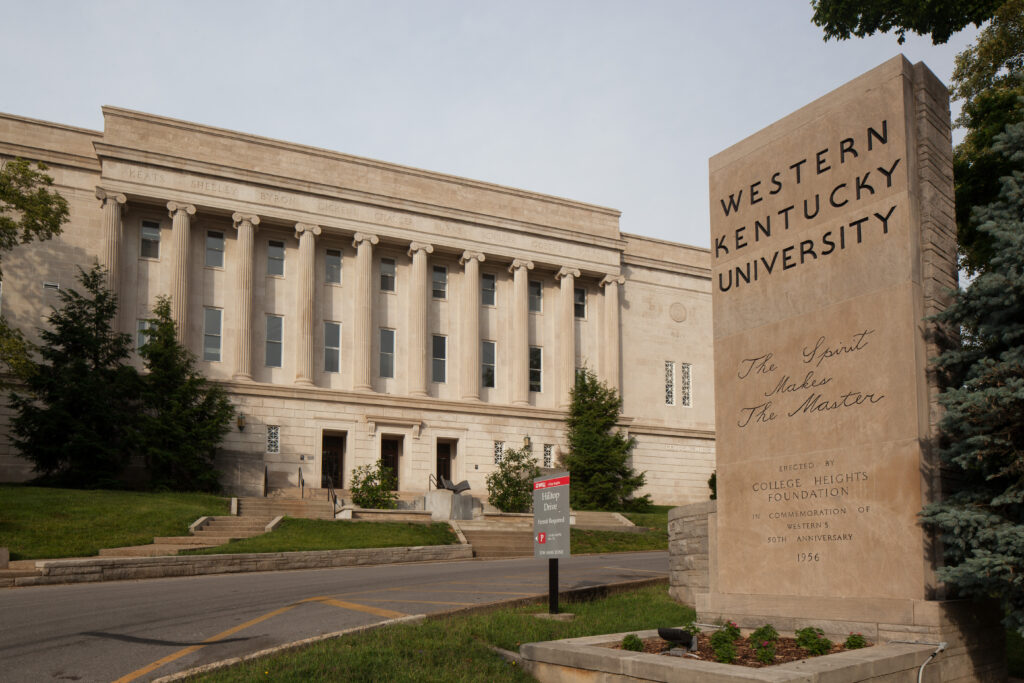
Western Kentucky University shines as a prominent institution for social work education in Bowling Green, Kentucky. This exceptional destination helps students advance their social work education and achieve remarkable post-graduation outcomes. The MSW program awarded degrees to 53 students in 2022, which made it the #174 most popular school nationwide for social work master’s degrees.
The university’s impressive employment record makes it stand out. WKU’s MSW graduates step into the workforce ready to succeed. Their specialized education reflects in their starting salaries, with graduates earning a median of $44,263. This figure sits below the national average of $51,347 for social work master’s graduates.
Student diversity enriches the university’s environment. Recent data shows the master’s program has 14% men and 86% women. The graduating classes consist of 84% white students, while students from African American and Hispanic communities make up the remaining 16%.
WKU’s MSW program follows a clear mission: “To educate and prepare students for professional social work practice to meet the needs of increasingly diverse rural populations”. The program’s unique focus on Kentucky’s rural communities sets it apart. Students become skilled at working in small cities, towns, and rural areas where social services remain scarce.
Cultural competency lies at the heart of the program’s educational philosophy. Students learn through hands-on experiences and targeted coursework to understand diverse populations’ unique challenges in rural settings. The university measures this growth using specific tools like Lum’s Cultural Awareness Inventory.
Program Coordinator Erin T. Warfel leads the department. The university maintains high academic standards under this leadership. Students must pass a detailed Practice Readiness Exam (PRE) before graduation. This exam helps graduates prepare for professional licensure and ensures their readiness for effective practice.
The Council on Social Work Education (CSWE) has granted full accreditation to the university’s MSW program. This recognition confirms the program’s steadfast dedication to professional standards and gives students confidence in their education’s quality.
Programs offered
Western Kentucky University has two MSW program concentrations that match students’ educational backgrounds and career goals. These programs help social workers practice in rural communities of all sizes throughout Kentucky and beyond.
The Traditional Program concentration needs 60 semester hours for students with baccalaureate degrees in any field. Students can complete this detailed curriculum full-time in two years or part-time in three to four years. The program builds knowledge from basic concepts to advanced practice skills. Students take 15 required courses and 9 credit hours of electives.
The Advanced Standing Program concentration welcomes students who earned a Bachelor of Social Work (BSW) from a CSWE-accredited program in the last seven years. This faster option needs only 30 credit hours, so qualified students can get their MSW in much less time. Students in this concentration must keep a minimum 3.0 GPA in their undergraduate studies. Those with GPAs between 2.75-2.99 might qualify after an interview.
WKU lets students choose learning formats that work best for them:
- Hybrid format: Face-to-face classes meet only on Tuesdays or Thursdays at the Bowling Green main campus
- Online format: Classes run via Zoom on Tuesdays or Thursdays, making the program available to students whatever their location
Both programs conclude with SWRK 661 (Advanced Generalist Field Practicum II) as a capstone experience that brings together everything learned. Students must also pass a comprehensive Practice Readiness Exam before graduation.
The MSW program prepares practitioners to work in rural communities, especially in Kentucky’s small cities, towns, and rural areas. This training helps graduates work well with advocacy groups, schools, churches, mental health hospitals, and community organizations in rural settings.
Full-time students can finish the Advanced Standing Program in one year, while part-time students usually take two years. The Traditional Program takes two years for full-time students and three to four years for part-time students.
WKU also offers graduate certificates in School Social Work and Trauma and Resilience. These certificates are a great way to get specialized skills in high-demand areas. They work well with the MSW degree and help graduates find work in specialized practice settings.
About the online program
WKU’s online Master of Social Work offers the same high-quality education as their campus program. Students can enjoy more flexibility with this fully online format that doesn’t require any campus visits.
Students meet online through Zoom on either Tuesdays or Thursdays. This setup lets them interact with their professors and classmates in real time while studying from anywhere. The program uses a cohort system where students take classes together and build strong professional connections with their peers.
The program’s focus on rural social work makes it unique. Students learn to address specific challenges faced by small towns and rural communities across Kentucky and beyond. Graduates gain valuable skills to work in areas where social services are often hard to find.
The online MSW opens doors to several career paths including:
- Mental health and substance abuse social workers
- Child, family, and school social workers
- Healthcare social workers
- Social and community service managers
- Probation officers and correctional treatment specialists
- Marriage and family therapists
Part-time students can finish the 60-credit Traditional Program in three years. The Advanced Standing Program takes one year full-time or two years part-time to complete its 30 credits. Every student must complete field experience that blends theory with hands-on skills.
Online students must meet the same admission criteria and academic standards as campus students. They need to pass the Practice Readiness Exam before graduating, which ensures they match the competency levels of traditional students.
The program’s quality shows in its numbers – 97% of students recommend it. This impressive rating shows how well WKU delivers excellent education in any format.
Students develop both practical skills and theoretical knowledge they can use at different levels – from one-on-one counseling to organizing community programs. This broad approach helps graduates tackle complex social issues, especially in rural areas where they need to be versatile.
Accreditation
The Master of Social Work program at Western Kentucky University has full accreditation from the Council on Social Work Education (CSWE), a vital credential in social work education. Your degree will meet recognized professional standards nationwide and align with CSWE guidelines.
Getting CSWE accreditation marks a major milestone for any social work program. This recognition proves that your education meets strict professional standards. WKU’s MSW program has managed to keep this status consistently, showing its steadfast dedication to quality social work education.
The CSWE’s 2022 Educational Policy and Accreditation Standards underpin this accreditation. The Commission on Accreditation and Commission on Educational Policy developed these detailed standards together. These standards are the foundations of WKU MSW’s curriculum. The program’s coursework must implement nine specific competencies to meet these requirements.
A CSWE-accredited MSW degree from Western Kentucky University means more than just institutional recognition. This degree should prepare you for licensure in your state. In spite of that, each state has its own licensure requirements that might need more than your simple coursework. The U.S. Department of Defense now works to create an interstate licensure compact for social workers. This compact would let professionals move their licenses across state lines more easily.
Western Kentucky University’s institutional accreditation comes from the Southern Association of Colleges and Schools Commission on Colleges (SACSCOC). This regional accreditation lets WKU award degrees from associate to doctorate level. You can ask SACSCOC questions in writing, by phone, or through their website.
WKU’s Center for Innovative Teaching and Learning’s Quality Assurance Program oversees online education quality. Based on the nationally recognized Anthology Exemplary Course program and WKU Online Quality Teaching Standards, this program ensures high-quality online learning that matches traditional classroom education.
WKU’s social work department has grown remarkably in the last two decades. The MSW program’s CSWE accreditation plays a key role in this growth and the program’s continued success.
Admission Requirements
WKU’s MSW program sets specific admission criteria that change based on your chosen concentration. The university upholds strict standards to help students succeed in their program.
Students who want to join the Traditional Program (60 credit hours) need an undergraduate degree with a minimum 2.75 GPA. Students with lower GPAs can apply through an Alternate Admissions process. They must submit a petition that explains their academic history and shows their ability to handle graduate-level work. The petition should explain why your situation deserves special review beyond the standard GPA requirement.
The Advanced Standing Program (30 credit hours) needs more specific qualifications:
- BSW from a CSWE-accredited program within the previous seven years
- Minimum 3.0 undergraduate GPA (GPAs between 2.75-2.99 might qualify with an interview)
- Successful completion of at least 400 hours of field instruction
- Completion of specific undergraduate social work courses with grades of “C” or better
Both programs share basic application requirements. Students must submit two separate applications – one to WKU Graduate Studies and another to the Department of Social Work. A complete application package needs:
- Goal statement video responding to specific questions
- Two to three-page writing sample about challenges in working with specific populations
- Current resume
- Three recommendations (academic, professional, or field site)
Students must show a liberal arts background with at least 30 hours of coursework in social sciences, humanities, natural sciences, communications, or mathematics[213]. Each liberal arts course requires a final grade of “C” or higher.
The program accepts applications until specific deadlines: April 1 for fall admission (both programs) and November 1 for spring admission (Traditional Program only). Application fees cost $65 for domestic students and $95 for international students.
Some candidates might receive an interview invitation after submitting their applications. Advanced Standing applicants with GPAs between 2.75-2.99 must complete this interview. The admissions committee might ask other candidates for interviews based on their discretion.
WKU looks for MSW candidates who show academic readiness, professional potential, and fit well with the program’s rural social work focus. This thorough application process helps find students who will excel in graduate-level social work education.
Tuition
Your MSW education at Western Kentucky University needs smart financial planning. The tuition rates at WKU change based on where you live and how you take your classes.
WKU’s graduate tuition works on a credit-hour basis for the 2024-2025 academic year. Kentucky residents pay $607 per credit hour, while non-resident domestic students pay $917 per credit hour. International students pay a bit more at $953 per credit hour. Some groups get better rates – military veterans and their families pay resident rates, active military members get a special $250 per credit hour rate, and Kentucky P-12 educators might qualify for a reduced $350 per credit hour rate.
Students who take all their courses online pay $707 per credit hour, no matter where they live. The total cost depends on your program – Traditional MSW needs 60 credit hours while Advanced Standing requires 30 credit hours.
Your budget should include more than just tuition. Students who live on campus spend $3,558 to $4,890 yearly on meals and $5,632 to $8,740 on housing. Books and supplies cost about $1,000 each year.
WKU makes paying for school easier with several options. Nelnet Campus Commerce offers interest-free monthly payment plans. You can spread your payments across 2-5 months each semester for a $45 enrollment fee. You can also pay by credit/debit cards (with a convenience fee), bank transfers, checks, or use Flywire for international payments.
Money help comes through federal grants, loans, and scholarships. Fill out the Free Application for Federal Student Aid (FAFSA) – 90% of students who apply get some kind of help. More funding options include the Go Higher Grant if you’re over 24 and the Community Services Block Grant Scholarship.
Additional Information
WKU goes beyond classroom learning to give MSW students resources that boost their trip toward becoming professionals. Student success means more than just meeting academic requirements.
Field education is the substance of professional social work training. The Council on Social Work Education calls it the “signature pedagogy” of social work education. Students work with social service agencies under experienced Field Instructors’ supervision. This hands-on experience lets them use their theoretical knowledge in real-life settings. Students can find an alphabetized list of intern job descriptions from potential agencies.
WKU helps students build their careers through active job posting services on multiple platforms. The department posts job openings on social media instead of using a static webpage. Students who follow @WKUSocialWork on Facebook, LinkedIn, Instagram, and Twitter get instant job alerts. The Advising and Career Development Center’s Handshake tool helps students discover employment opportunities and career fair details.
MSW students’ leadership skills grow through the Graduate Student Social Work (GSSW) organization’s community service projects. Students have helped with disaster relief, food pantry support, and holiday assistance programs. This student-run group gives great networking chances and practical experience.
Students never miss learning opportunities thanks to WKU’s technology support. Those who need broadband or laptop help can check out equipment and get IT support at no cost. This all-encompassing approach to student resources has led to WKU’s impressive 94% graduate employment rate. Students graduate ready for a successful social work career.