
MSW at Valdosta State University
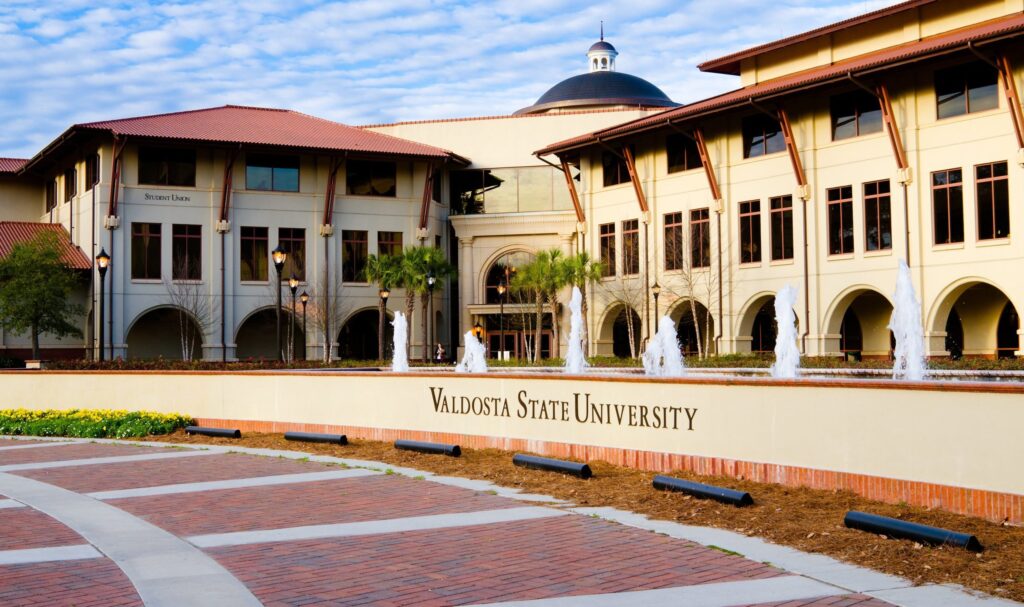
Valdosta State University (VSU) is a leading regional educational institution in Georgia with a 110-year-old legacy dating back to 1906. The university opened its doors in 1913 as a women’s normal college and has grown into a complete university that serves more than 10,500 students. Today, VSU’s academic programs range from associate degrees to doctoral studies.
The university’s main campus sits in Valdosta, Georgia, and its educational influence reaches across 41 counties. This coverage represents about 31% of Georgia’s land area. Students can access VSU’s programs at satellite locations in Moody Air Force Base. The university also works closely with several area colleges and military bases.
VSU’s Department of Human Services runs the Master of Social Work (MSW) program. The department has built a strong reputation by preparing qualified social work professionals through its complete, accredited curriculum. The MSW program has grown steadily and now is one of the university’s top graduate programs.
VSU plays a vital role in boosting the regional economy. During the 2010 fiscal year, the university created an economic impact of approximately $537 million and generated about 5,400 jobs in the Valdosta metropolitan area. Studies reveal that VSU’s direct and indirect influence led to 5,055 jobs and created an annual labor income of $208.70 million for the Valdosta Metropolitan Area in 2010-2011.
The university’s workforce includes 1,302 full-time and 526 part-time staff members. VSU ranks among the top 10 employers in the Valdosta Metropolitan Statistical Area, which shows its key role in the local economy.
Working professionals looking to pursue an MSW will find a supportive academic environment at VSU. The university became a regional institution in 1993, marking a turning point in its growth. Since then, VSU has raised its admission standards and almost eliminated remedial studies programs, which shows its dedication to academic excellence.
Faculty exchanges happen worldwide through VSU’s active international program. This gives students a global outlook they need for today’s social work practice. Such international exposure enhances the MSW program’s goal to prepare students for advanced professional work in different settings.
Programs offered
Valdosta State University’s Department of Human Services offers a Master of Social Work (MSW) program that works well for busy professionals. Students learn everything they need for multi-level social work practice through the program’s Advanced Generalist specialization.
The MSW program fits different schedules and needs. Students can choose between a traditional 2-year full-time program or a 3-year hybrid format. Recent BSW graduates might qualify for the Advanced Standing option that takes just one year of full-time study to complete.
Many working professionals and students who live far from campus prefer the hybrid format. This option requires attendance at five weekend sessions each semester, with classes on Friday evenings and Saturdays. Students complete their remaining coursework online, which gives them flexibility without compromising quality.
The traditional program requires 60 credit hours. Students with BSW degrees from CSWE-accredited programs earned in the last five years need only 33 credit hours through the Advanced Standing track. Both paths include hands-on field experience through practicum placements. Traditional students spend 1,000 hours in two year-long practicums, while Advanced Standing students complete 540 hours.
Students learn the Advanced Generalist practice model that gives them the knowledge, values, ethics, and skills to work with individuals, families, organizations, and communities. This training prepares graduates for jobs in schools, hospitals, mental health facilities, residential treatment centers, child welfare agencies, and hospice care.
The program includes specialized electives in social work with older adults, child and family settings, trauma-informed child welfare, health settings, substance use, loss and bereavement, school social work, grant writing, and spirituality in social work. Students can gain extra experience through department programs like “My Friend’s House,” which creates safe spaces for people with Alzheimer’s disease and dementia.
MSW graduates typically earn $5,000-$10,000 more than before, and most recover their educational costs within two years of graduating.
About the online program
Valdosta State University’s MSW program has offered groundbreaking online education since 2003. The program uses an innovative hybrid teaching model that gives you both flexibility and academic excellence. You can pursue advanced social work education without giving up your job or moving closer to campus.
Students experience a mix of in-person learning and self-paced online coursework. Each semester brings five intensive weekend sessions that start Friday afternoons and end Saturday evenings. You complete the rest of your studies online through the university’s digital learning platform. This setup works great for full-time professionals and students who live far from the Valdosta campus.
Your MSW experience includes vital field education components. The program requires two year-long practicum and seminar experiences that add up to 1,000 hours of supervised practice. These agency placements happen alongside your coursework, which helps you apply what you learn to real-life situations. Most traditional students spend 16-18 hours each week at their field placements.
Students move through the program as a group, which encourages professional relationships that last beyond graduation. This setup creates a supportive learning community even though most work happens online.
The Department of Human Services delivers a competency-based curriculum that meets all Council on Social Work Education (CSWE) standards. Students learn practical skills and develop the knowledge, values, ethics needed to work effectively with diverse populations.
Students can choose from several enrollment paths:
- Traditional 2-year full-time path
- More flexible 3-year part-time option
- Accelerated 1-year Advanced Standing track (for recent BSW graduates)
The biggest difference between VSU’s hybrid MSW and fully online programs elsewhere lies in the face-to-face weekend intensives. Students get the convenience of online learning plus the valuable networking and interpersonal connections of traditional classroom education.
VSU understands what today’s students need. The program combines academic excellence with practical flexibility and has managed to keep strong enrollment and high completion rates among working professionals who want career advancement without leaving their jobs.
Accreditation
Accreditation plays a key role in social work education. Students looking for an MSW program should make it their top priority. The Master of Social Work program at Valdosta State University has full accreditation from the Council on Social Work Education (CSWE). CSWE is the only organization in the country that endorses social work education programs.
This recognition shows that VSU’s MSW program meets tough professional standards in its curriculum. CSWE accreditation will give a solid foundation in both theory and hands-on experience through field training. Yes, it is mandatory for MSW students to complete 900 hours of field education in their graduate programs. This gives students a complete practical learning experience.
Valdosta State University also has regional accreditation from the Southern Association of Colleges and Schools Commission on Colleges (SACSCOC). CSWE accreditation matters most for social work students because it directly affects their career options after graduation.
A CSWE-accredited degree opens up several career opportunities:
- Licensure Eligibility – You can take state licensure exams after graduating from an accredited program. Most clinical practices need this.
- Employment Recognition – Employers in Georgia and across the country value degrees from CSWE-accredited programs. Many social work jobs require this.
- Quality Standards – Your program meets national benchmarks for education quality and practical experience.
- Exam Readiness – You’ll be better prepared for the Association of Social Work Board (ASWB) examination needed for professional licensure.
Working professionals who choose online/hybrid programs should know that accredited online MSW programs follow similar standards as on-campus programs. Whatever format you pick, you’ll get an education that meets strict professional standards.
VSU’s Department of Human Services shows its steadfast dedication to excellence through regular self-evaluation. The program creates and uses a complete evaluation plan each year that looks at multiple assessment levels. This method helps the program fine-tune its teaching approach and boost student outcomes.
VSU’s commitment to quality means MSW graduates enter their careers ready for advanced professional practice. They get credentials the field respects and stand prepared for licensure and career growth.
Admission Requirements
The admission process to Valdosta State University MSW Programs is straightforward and works well for busy professionals. Students need to plan ahead for application deadlines. Regular applications must reach the Graduate School by February 14 each year. Advanced Standing applicants should submit their materials by January 14. Late applications might still get a spot if space allows, though acceptance isn’t guaranteed.
Your first step is completing the Online Graduate Application on VSU’s Graduate School portal and paying the application fee. You’ll also need these key documents:
- Official transcripts from your degree-granting institution and any graduate coursework attempted
- A detailed MSW Supplemental Application (including written goal statement)
- Three letters of recommendation
- Resume that shows your relevant experience
Academic performance plays a big role in the selection process. Your last two years of undergraduate major should show a minimum 3.0 grade-point average, along with an overall undergraduate GPA of at least 2.50. Graduate coursework requires a minimum 3.0 GPA if you want it counted toward admission.
Good news for working professionals – VSU MSW program dropped its entrance exam requirement in 2020. You won’t need GRE or MAT scores anymore. This change makes the program more available to everyone.
Advanced Standing candidates face additional requirements. Your BSW degree must come from a CSWE-accredited program earned in the last five years[174]. Two of your recommendations must be from undergraduate BSW faculty members. The third one should come from your BSW field instructor with your final field evaluation.
A liberal arts foundation in your undergraduate degree is essential. You need grades of ‘C’ or better in humanities (6 hours), mathematics (3 hours), and social sciences (6 hours). Courses in human development, behavioral science, or human biology would help, though they’re not required.
VSU follows professional ethics strictly. Life experience or previous work experience won’t count for academic credit, whatever its connection to social work practice.
Tuition
Your MSW degree’s financial investment is a vital step in planning your education. Valdosta State University’s MSW program has a well-laid-out tuition schedule that changes based on where you live, how many courses you take, and how you attend classes.
The Fall 2024 semester costs for in-state MSW students who take a full load (12+ credit hours) amount to $3,224 in tuition plus $818 in mandatory fees, which totals $4,042. Out-of-state students pay nowhere near these rates – their tuition plus fees reaches $12,724, with tuition at $11,906. These mandatory fees cover health services, activities, athletics, facilities, and technology access.
Online learning comes with its own pricing structure. MSW online courses cost $270 per credit hour for in-state students. This rate stays the same whatever number of credits you take, since online tuition assessment has no credit hour cap.
A full picture of your finances helps you make the right decision. A full-time in-state student’s total cost per semester, including housing, meals, and books, runs about $8,835. Out-of-state students should expect to pay around $17,517 per semester. The annual cost for two semesters comes to $17,670 for in-state and $35,034 for out-of-state students.
MSW students can access several financial aid options:
- Graduate assistantships cover most tuition/fees and provide a small stipend when you work about 14 hours weekly on campus
- Title IV-E funding supports students who pursue careers in child welfare services, requiring internship and future employment with Georgia Division of Family and Children Services
- Military benefits through the Post-9/11 GI Bill® pay tuition based on the highest in-state rate
The investment view shows MSW graduates typically earn $5,000-$10,000 more annually and recover their educational costs within one to two years of employment.
The Board of Regents approves tuition rates each school year, which may change based on their policy. The university’s financial services website remains your best source for current information.
Additional Information
Valdosta State University’s MSW program provides more than just classroom education – it opens doors to professional growth. The Graduate Social Work Organization (GSWO) helps you create vital professional networks and lets you take part in program governance. GSWO members can work on service projects, reach out to communities, and run social media campaigns that boost their professional presence.
MSW graduates enjoy excellent job prospects. They find success in clinical practice, leadership roles, macro practice, research, and jobs in public, private, and government agencies. Career paths include case management, child welfare, mental health, medical social work, school settings, and substance use counseling.
You might qualify for work-site placement if your current job meets specific CSWE requirements. Notwithstanding that, your agency must provide MSW supervision and let you step away from regular duties during practicum hours. Traditional students need 940 hours of field experience, while advanced standing students complete 540 hours.
There’s another reason Valdosta State stands out – “My Friend’s House,” a program that creates safe spaces if you have Alzheimer’s disease and dementia. This program gives students hands-on experience with vulnerable populations.
The university requires students to complete their field work within VSU’s 41-county service region. Think over this geographical limit as you plan your educational trip.