
University of Houston MSW
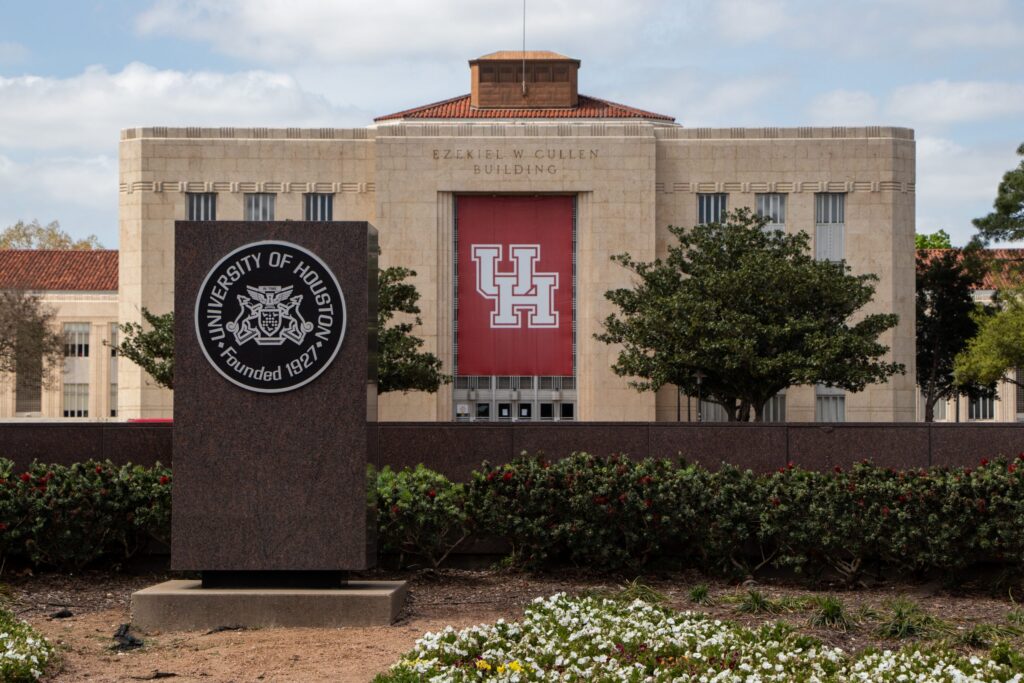
The University of Houston Graduate College of Social Work (GCSW) is essential to social work education in Texas. The Texas Legislature founded it in 1967 with $150,000, and the college started with just seven faculty members teaching twenty-six students. The program began in a World War II Quonset Hut and has grown remarkably over the past five decades.
What started as a small program has now become a nationally recognized graduate social work institution. The MSW program has had its accreditation from the Council on Social Work Education since 1970. Today, the college has its own four-story building on campus with thirty-two full-time faculty members and about twenty adjunct professors.
GCSW ranks among the nation’s top social work programs. The 2019 U.S. News & World Report placed it at No. 24 among master’s degree programs in social work. Dean Alan Dettlaff said at the time, “Our latest ranking is evidence of everything our faculty, staff, students and alumni do every day to realize our vision of achieving social, racial, economic and political justice”.
The program has grown exponentially since its early days. Today, about 550 students study in the MSW program while 40 pursue their PhD. More than 6,000 MSW alumni work to improve their clients’ lives, develop fair social policies, and champion equality for everyone.
The GCSW community shows remarkable diversity:
- 56% of students come from ethnic minority backgrounds
- 20 different languages echo through the college halls
- 42% of the GCSW community speaks multiple languages
The college’s mission shapes its foundation: “to educate professionals for social work practice, research, and leadership” while advocating “for innovative, collaborative, inclusive, and humane policies and solutions that promote social, economic, and political justice”. This mission fuels the college’s goal to achieve justice – social, racial, economic, and political – locally and globally.
Distinguished scholars have taught at GCSW, including Pulitzer prize nominees and a 1997 Nobel Peace prize winner. GCSW became the only social work program worldwide with a Nobel laureate on its faculty.
Five research centers strengthen the college’s impact. These centers focus on immigration, child and family innovation, drug and social policy, health equity, and international social work education. They support 32 active research projects that tackle complex social issues. Students can also gain global experience through practicum placements and travel courses that expand their world view.
Programs offered
The University of Houston MSW program has multiple pathways that match student needs and career goals. The GCSW currently offers two main options: students can take the Full Program with 51 semester credit hours or choose the Advanced Standing option with 34 semester credit hours if they already have BSW degrees.
Students can pick from three enrollment models based on their lifestyle and priorities. The Face to Face model features daytime classes at the main UH campus. We designed this for full-time students who can finish the program in two calendar years. The Hybrid model combines online learning with face-to-face sessions on one or two Saturdays each month at the UH Sugar Land campus. This works great for working professionals who need flexibility. The Hybrid model heads over to UH Sugar Land campus. The Online model gives maximum flexibility through asynchronous courses. Students can join from anywhere in the country.
Academic standards stay high across all enrollment options. Students can take up to 15 semester credit hours during fall and spring semesters, while summer enrollment tops out at 6 credit hours.
The program starts with a 15-credit hour foundation (generalist practice). Students learn critical thinking skills with a focus on social, economic, and political justice. After these foundation courses, students choose one of two specialized practice areas:
- Clinical Practice requires five specialized courses:
- Critical Clinical Case Formulations and Diagnostics
- Individuals: Advanced Clinical Practice
- Families: Advanced Clinical Practice
- Groups: Advanced Clinical Practice
- Clinical Social Work Praxis: Student Directed Inquiries
- Macro Practice requires five courses:
- Social Work Practice in Organizations
- Social Work Leadership
- Social Work Practice in Communities
- Social Work Practice for Policy Change
- Program Planning & Evaluation
Practicum experiences are the foundations of MSW education. Full program students need 900 clock hours of field experience, while Advanced Standing students complete 500 clock hours. Face-to-face students can finish the Advanced Standing option in one year full-time. Hybrid and Online Advanced Standing students usually take two years part-time.
The GCSW curriculum will give a solid foundation in Social Welfare Policy Analysis and Confronting Oppression and Injustice, whatever their concentration. Students can also customize their learning through electives based on their career interests and professional goals.
The program structure balances core professional skills with specialized knowledge. This prepares graduates to work in a variety of roles – from clinical settings to community organizations and administrative positions.
About the online program
The University of Houston’s 100% online MSW program provides quality education without campus commutes. This program is perfect for self-motivated learners who need flexible schedules. Students focus on Clinical Practice with an emphasis on Health and Behavioral Health.
You’ll join a cohort of approximately 25 students who move through the curriculum together. This structure helps you build supportive professional relationships with classmates that improve the learning environment. Students create a network of support throughout their educational experience. Many students say these virtual connections become lasting professional relationships after graduation.
The program balances flexibility with academic excellence through structured learning. Students must meet firm deadlines and due dates for assignments. The online format has:
- Asynchronous learning where you access course materials at convenient times
- Possible synchronous elements like faculty office hours or occasional live meetings
- Interactive group assignments through video conferencing technology
- About 6-8 hours of coursework weekly per 3-credit course
Students start with a 15-semester-credit foundation across two semesters that focuses on generalist practice and social justice principles. Full program students complete 63 semester credit hours over three years. Advanced Standing students with accredited BSW degrees finish 38 credit hours in two years.
Field education requirements are similar to on-campus programs. MSW students must complete at least 900 hours of practicum experience. Full program students complete two practicums: 420 hours in year one and 480 hours in year two. Advanced Standing students complete 720 hours total. The Practicum Education Office helps you find qualified agencies in your area.
Students need a computer with video/audio capabilities and reliable internet connection. Most courses support mobile access through tablets or smartphones. The university provides detailed technical support, starting with Canvas training during orientation.
The University of Houston follows National Council for State Authorization Reciprocity Agreements (NC-SARA) guidelines. The online MSW is available in most—but not all—states. U.S. students and those on military bases abroad can enroll, but other international students cannot join the program.
Accreditation
Accreditation is a vital measure to review MSW programs. Social work students need to understand this aspect to ensure their education meets industry standards and supports their career goals.
The University of Houston’s MSW program has full accreditation from the Council on Social Work Education (CSWE). This accreditation does more than provide formal recognition—it verifies the program’s professional standards. UH has managed to keep this prestigious CSWE accreditation since 1970. This achievement marks over 50 years of excellence in education.
The Southern Association of Colleges and Schools Commission on Colleges has also accredited the university. This combination of accreditations will give quality assurance at both institutional and program levels.
CSWE accreditation brings several key benefits. You need to graduate from a CSWE-accredited program to get your social work license. Without this accreditation, you can’t get professional licensing—which limits your career options. CSWE accreditation becomes non-negotiable when choosing an MSW program.
The Council treats online and campus-based programs equally. They review all programs against similar rigorous standards. Your online MSW from University of Houston carries the same professional value as the campus version.
The accreditation process reviews curriculum quality, faculty credentials, learning outcomes, and field education requirements. Programs must show how they prepare students through academic coursework and supervised field experiences.
Employers know that CSWE-accredited programs provide standardized professional training. One source states, “Accreditation should be your first question when looking for a school, and if it does not have that, you should keep looking”.
Your financial aid options also depend on accreditation. Students at non-accredited schools usually can’t get federal financial assistance.
University of Houston’s online MSW students should check their state licensing board’s requirements. Rules may vary between states despite CSWE accreditation’s importance everywhere.
Admission Requirements
The University of Houston MSW program has strict admission criteria that applicants need to follow carefully. Students with strong academic backgrounds and a clear commitment to social justice principles face tough competition in this program.
Qualified candidates must hold a bachelor’s degree from an accredited college or university with coursework that shows a solid liberal arts foundation. Your undergraduate studies should cover humanities, arts, social sciences, and biological sciences.
A grade point average of 3.0 on a 4.0 scale is a vital requirement for both overall undergraduate work and the final 60 credit hours[182]. Students with GPAs below 3.0 might still qualify for conditional admission[182].
Your application package must include:
- 2-3 recommendation letters from people who know your graduate education potential and professional practice abilities[182]. BSW program faculty should write at least one reference letter for Advanced Standing applicants[182]
- A personal narrative statement that describes your social work interest and dedication to justice[182]
- A detailed resume showing your educational background, relevant experience, and activities[191]
- Official transcripts from every institution you’ve attended[191]
The University of Houston MSW program stands out from many graduate programs because it doesn’t require GRE scores. In stark comparison to this, some outdated sources might suggest otherwise. The application requires a $50 fee for domestic applicants and $80 for international students[191].
International students must meet additional requirements, particularly for English language skills. These applicants need to submit TOEFL, IELTS, or Duolingo scores to prove their English proficiency[191].
Application deadlines vary by program type. Face-to-face program applications must reach by February 1 for fall admission, while hybrid and online programs accept applications until March 1. Advanced Standing face-to-face applicants should submit by January 1 for early consideration.
The MSW Admissions Committee reviews completed applications and sends accepted students their orientation details with the admission letter.
Tuition
Your education investment at the University of Houston MSW program requires careful financial planning. The program’s tuition and fees depend on your department, residence status, graduate level, and course selection.
The university’s Calculator for Tuition and Fees helps you plan your finances accurately. This online tool generates custom estimates based on your enrollment hours and major. You’ll need to consider college fees, course fees, and other expenses like parking beyond simple tuition and university fees.
Graduate tuition at public universities costs $12,394 annually on average, while nonprofit private graduate schools typically charge $26,621 per year. Total MSW program costs range from under $40,000 to $89,000. The University of Houston stands out as a cost-effective choice in this price spectrum.
Program format plays a key role in determining costs. Students who choose online and hybrid MSW programs pay extra distance education fees on top of regular tuition. Your total “cost of attendance” combines both tuition and mandatory fees.
Students can access financial support when they enroll in at least 5 credit hours per semester. The university provides multiple funding options through scholarships, assistantships, grants, work-study positions, and loans.
Doctoral students might qualify for the Graduate Tuition Fellowship that covers in-state tuition and mandatory fees for full-time students. Texas resident graduate students can apply for the Graduate School Fund based on financial need. This fund offers maximum awards between $1,675 and $2,500 per long term, depending on credit hours.
Additional Information
The University of Houston MSW program offers complete support that extends well beyond your educational experience. The GCSW Alumni and Career Services office creates a lasting professional connection between graduates and the social work community.
You’ll become part of a powerful network of more than 6,000 GCSW alumni who create meaningful changes in the field. This community gives you access to:
- Tailored resume reviews and job search assistance
- Exclusive social work job postings through an online job board
- Networking events with professionals in your specialty area
- Licensing information and preparation sessions
- Interviewing skills training and job placement support
The program connects with over 200 social service agencies in the Greater Houston area and beyond. These practicum sites help students apply classroom theory, build professional skills, and work in real-life service delivery under qualified supervision.
The college’s academic excellence stems in part from its research focus. Faculty members specialize in various areas:
- Trauma-informed policy and practice
- Immigration and psychological trauma
- Health disparities among marginalized populations
- Child welfare and family services
The GCSW also provides continuing education through its Racial Justice and Liberatory Practice Series. This program examines historical and contemporary contexts of racism and oppression from systemic viewpoints. Students earn 12 CEUs after completing these courses, which supports their professional growth.
The program combines practical experience with theoretical knowledge. This approach prepares students to tackle complex social challenges at local and global levels with meaningful results.