
Tuskegee University MSW
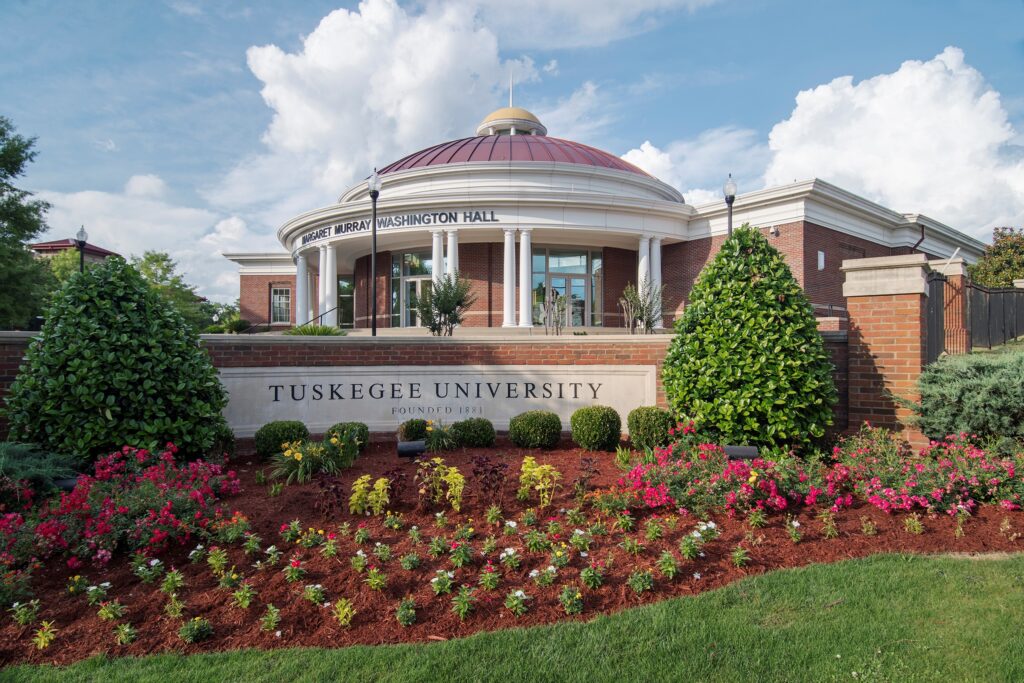
Founded on July 4, 1881, Tuskegee University is a prestigious private, historically Black land-grant university in Tuskegee, Alabama. The institution started as a normal school for teachers and has grown into a complete university with a rich legacy that spans over 140 years.
The campus showcases Black excellence in architecture and design. Robert Robinson Taylor, MIT’s first African American graduate, created it with David Williston, the first professionally trained African American landscape architect. The National Park Service recognized its historical value by naming it the Tuskegee Institute National Historic Site in 1974. This made it the first Black college to receive such an honor.
Tuskegee University’s rural campus covers 5,200 acres. The space houses academic facilities, research centers, and student activities. About 2,570 students call it home (as of fall 2022). This number includes 2,100 undergraduates and 215 postgraduates who benefit from individual attention from faculty.
The university’s academic programs are extensive:
- 43 bachelor’s degree programs
- 17 master’s degree programs
- 5 doctoral degree programs, including the Doctor of Veterinary Medicine
Tuskegee University holds the #3 HBCU rank in the nation, which shows its academic excellence. The university’s $157 million endowment (as of 2021) supports its educational goals and student services.
The university has several colleges and schools. These include Agriculture, Arts and Sciences, Business, Engineering, and Veterinary Medicine. Specialized schools like Architecture, Education, and Nursing and Allied Health round out the offerings. The Social Work Department sits within the College of Arts and Sciences and offers both undergraduate and graduate programs.
Notable African American figures have shaped the university’s story. Booker T. Washington founded it, while scientist George Washington Carver and the famous Tuskegee Airmen of World War II added to its legacy. Their leadership continues to inspire MSW students and others.
Student life thrives with over 100 organizations. The “Golden Tigers” compete in various sports. Tuskegee University stands out as the only HBCU that offers ROTC programs for all military branches, including the Space Force. This gives students unique paths for growth and career preparation.
MSW program applicants will find Tuskegee’s commitment to excellence, service, and social justice reflected in its social work program.
Programs offered
Tuskegee University’s Social Work Department sits within the College of Arts and Sciences. The department prepares students for meaningful careers serving diverse populations through its undergraduate and graduate programs. Students can choose from more than 60 academic programs, and the social work programs exemplify Tuskegee’s excellence as the #3 ranked HBCU in the nation.
The Bachelor of Arts in Social Work (BSW) program builds a resilient foundation for entry-level generalist practice. Students learn skills needed for direct employment and graduate studies. The BSW program shapes competent practitioners who champion social and economic justice while improving human well-being for clients of all types. Most courses happen in person, though students can complete some general education or elective courses online. The program has earned continuous accreditation from the Council on Social Work Education (CSWE) since 1974.
Tuskegee’s online Master of Social Work (MSW) program takes graduate social work education further with three specialized concentration paths:
- Child Welfare Social Work Practice – Works with children, youth, and families
- Behavioral Health Social Work Practice – Focuses on mental health assessment and treatment
- Healthcare Social Work Practice – Prepares students for roles in hospitals, hospice, and various healthcare settings
Each specialization combines required practice courses with elective options that help students align their education with career goals. The curriculum blends advanced clinical concepts with trauma-informed approaches, especially when serving vulnerable populations like communities of color and immigrant communities.
Students choose between full-time and part-time study options. Full-time students take 9-15 credits per term, while part-time students enroll in 3-9 credits. Qualified BSW graduates can opt for Advanced Standing status to skip foundational coursework.
Tuskegee’s graduate academic portfolio extends beyond social work. The university offers several Master of Science programs, the Doctor of Veterinary Medicine professional degree, and doctoral programs. Tuskegee stands out among HBCU MSW programs through its specialized curriculum and unique status as the only HBCU with ROTC programs for all military branches, including the Space Force. This gives social work students extra opportunities for leadership development.
About the online program
Tuskegee University’s online Master of Social Work program offers specialized training to prepare students for advanced generalist practice with traumatized children, families, communities of color, and other vulnerable populations. The program gives you complete knowledge and practical experience you need to work with clients from different backgrounds in various settings.
The online MSW program aims to prepare a new generation of social workers who fight for social and environmental justice for vulnerable communities throughout Alabama and nationwide. More importantly, students develop global social awareness and graduate with exceptional leadership abilities, practice skills, ethics, and proficiency with research and technology.
The program features a clinical focus and trauma-informed curriculum with three key specialization areas:
- Child Welfare Social Work Practice
- Behavioral Health Social Work Practice
- Healthcare Social Work Practice
You can customize your education path to align with your professional goals while developing trauma-informed practice skills.
The online program works toward eight main goals:
- Creating ethical, empathetic, and culturally competent professionals ready to work with diverse individuals and communities
- Incorporating innovative technology into the curriculum
- Getting students ready to deliver telemental health services
- Teaching evidence-based trauma interventions
- Readying students for global social work practice
- Creating research and field study opportunities
- Building foundations for lifelong learning and professional development
- Preparing advanced generalist practitioners to work in smaller, rural communities
The program’s distinguished faculty includes licensed social work professionals with extensive domestic and international experience. These experts bring diverse knowledge in trauma-informed practice, mental health, child welfare, healthcare settings, data science, and global social work practice.
Students graduate with technical, scientific, and professional abilities that are rigorously developed and focused on public service with integrity and excellence. The program emphasizes values that prioritize client strengths, actively oppose oppression, and support social, economic, and environmental justice.
Online students benefit from flexible learning that fits around their work schedules while still participating in complete field experiences. The program combines virtual coursework with skills labs and field placements to develop practical competencies alongside theoretical knowledge. This approach makes Tuskegee University’s MSW program especially valuable if you have professional commitments or live in rural areas where advanced social work education might be hard to access.
Accreditation
Academic quality and professional recognition in social work education programs depend heavily on accreditation. Tuskegee University has institutional accreditation from the Southern Association of Colleges and Schools Commission on Colleges (SACSCOC). This accreditation allows the university to award baccalaureate, master’s, and doctoral degrees. All Tuskegee’s academic programs build their specialized credentials on this foundation.
Tuskegee University’s Department of Social Work has managed to keep continuous accreditation from the Council on Social Work Education (CSWE) since 1974. This 48-year-old accreditation status sets Tuskegee apart among HBCU MSW programs and shows its dedication to professional standards.
CSWE is the accrediting body for social work programs. This nonprofit national association represents more than 2,500 individual members and numerous graduate and undergraduate professional social work education programs. The Council for Higher Education Accreditation (CHEA) recognizes CSWE, which started in 1952, as the only accrediting agency for social work education in the United States. This recognition adds substantial credibility to Tuskegee’s social work credentials.
Students looking at social work programs will get an education that meets professional standards through CSWE accreditation. The Commission on Accreditation previously reaffirmed the Social Work baccalaureate program’s accreditation for eight years until October 2018. The program continues its standing through subsequent reaccreditation.
The Department of Social Work at Tuskegee University belongs to the Association of Baccalaureate Program Directors. This voluntary association, which started in 1975, represents about 800 members including BSW program directors, faculty, field coordinators, and practitioners interested in BSW education.
Tuskegee University’s achievements extend beyond social work accreditations. The university stands alone as the only private, historically Black university with four engineering programs nationally accredited by the Accreditation Board of Engineering and Technology (ABET). Tuskegee’s Chemistry program is one of just nine university chemistry departments in Alabama that received American Chemical Society approval. It remains the only Alabama HBCU with this distinction.
Tuskegee University’s reliable accreditation profile shows quality education in all disciplines. The MSW program benefits from both institutional support and program-specific recognition that students need for professional licensure and career growth.
Admission Requirements
Tuskegee University’s MSW program has a clear application process to select candidates ready for graduate social work education. Students should plan ahead since application processing takes about 90 days.
Regular Admission Requirements:
- A baccalaureate or professional degree from an accredited college or university
- Cumulative GPA of 3.00 based on a 4.00 scale for all previous work
- For BSW graduates specifically, a reduced minimum CGPA of 2.6 may be accepted
- 123 undergraduate liberal arts credits (and for BSW program graduates, completion of 48 social work credits)
- Official transcripts from all institutions attended
- Personal statement
- Two letters of recommendation
- Resume
- $73.00 application fee
The Tuskegee University MSW program doesn’t require Graduate Record Examination (GRE) scores for admission. This makes it different from other graduate programs that need minimum GRE scores of 540 (old scale) or 156 (new scale).
International students need to meet these additional requirements:
- ETS/WES original scores for transcript evaluation
- TOEFL minimum score of 500 on paper-based test (or equivalent 61 on Internet-based test, 173 on computer-based test)
- Financial Affidavit of Support with supporting bank letter
Students can submit applications throughout the year, with April 1 as a common deadline. The Graduate School handles all MSW program applications.
Students who are learning about HBCU MSW programs will find that Tuskegee’s requirements line up with industry standards. The GRE waiver adds flexibility for applicants. The Graduate School’s website has the application, and students should submit all supporting documents through proper channels to ensure quick processing.
Tuition
Money matters are vital when choosing an MSW program. Tuskegee University’s graduate program costs $21,906 for the 2024-2025 academic year. Mandatory fees add $4,322, which brings the detailed tuition and fees to $26,228. These rates make Tuskegee’s MSW program one of the most budget-friendly options among HBCU MSW programs.
Part-time students pay $1,470 per credit hour for graduate courses (up to 7 hours). Full-time graduate students (8-15 hours) pay the complete rate. Students who take more than 15 hours must pay $696 for each additional credit hour.
Students need to plan for extra costs beyond tuition. Books and supplies cost $1,903 per year. The university requires a $1,600 health insurance fee that students must pay. The total yearly cost reaches approximately $46,894 for on-campus students and $47,910 for those living off-campus.
Tuskegee University helps students manage these costs through many financial support options. Students should start by completing the Free Application for Federal Student Aid (FAFSA) with Tuskegee’s federal school code: 001050. The university offers merit-based awards and need-based assistance through various scholarship opportunities.
The Office of Financial Aid gives out many scholarships each year from the university’s colleges and departments. Many corporations, alumni clubs, and organizations have set up endowed scholarships at the university.
New applicants should know that financial aid advisors or the Bursar Office must refer students for these scholarships based on financial need or merit. Financial Aid Counselors can help students explore federal options including grants, loans, and work-study opportunities.
Tuskegee’s tuition structure stands out among Alabama institutions. The university charges the same rate for both in-state and out-of-state students. This policy differs from The University of Alabama’s approach, which charges $12,180 for in-state and $34,172 for out-of-state students.
Additional Information
Tuskegee University MSW students have access to resources that go well beyond their classroom learning. The university’s library gives students specialized research guides that include electronic databases, online journals, and other digital resources. These tools are specifically created to help social work students, faculty, and researchers.
Your career outlook as a Tuskegee MSW graduate looks bright, especially in a state facing major social challenges. Alabama’s poverty rate stands at 18%, and the state’s mental illness rate of 19.34% is higher than the national average of 18.19%. Healthcare social workers are in high demand with a 4.4% yearly growth rate. The financial rewards are attractive too. Social workers in Alabama earn about $64,360 per year ($30.94 hourly), and job opportunities are expected to grow by 12% by 2030.
The university’s Career Center plays a vital role in turning academic achievements into career success. The center helps students connect with employers through campus job fairs and recruiter visits. This support system works well – 80% of graduates land full-time jobs within six months after graduation.
The campus experience at Tuskegee is exceptional. The 5,000-acre campus features more than 100 major buildings. Students also get access to unique educational resources like the George Washington Carver Museum and Tuskegee Archives – features you won’t find at other HBCU MSW programs.