
East Carolina University MSW Program
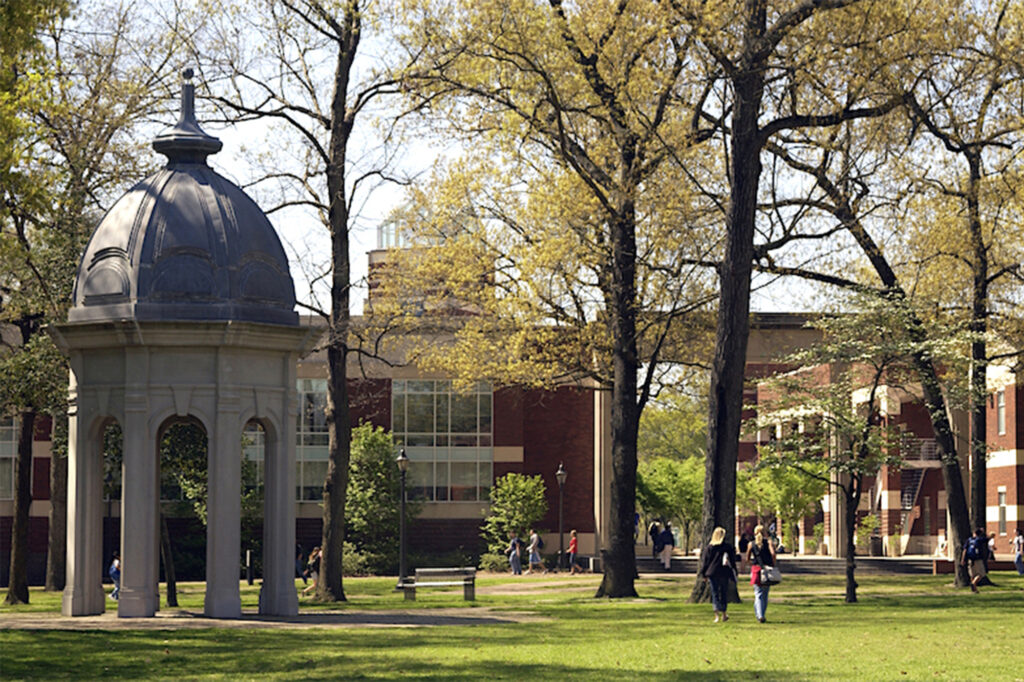
East Carolina University’s School of Social Work excels in social work education. Students receive personal attention in an ever-changing learning environment. The school’s Master of Social Work program creates ethical social workers who serve communities effectively in rural and urban areas.
The ECU MSW program builds on professional values. Students work with people, families, groups, organizations, and communities from different backgrounds. The program enables graduates to help clients both in their communities and worldwide. This approach shows the school’s dedication to creating practitioners with strong ethical principles.
The ECU MSW program uses a relationship-based view that builds on the traditional person-in-environment framework. This unique approach helps students become leaders who can:
- Help clients heal and stay well
- Support social, economic, and environmental justice
- Value cultural importance while respecting relationships
- Find new ways to solve problems
Real-world experience sets the ECU MSW program apart. Students spend half their time working in field agencies to prepare for advanced careers. Faculty members stay involved in each student’s growth and remain available for guidance.
ECU-trained social workers build careers in schools, hospitals, mental health clinics, senior centers, private practices, prisons, corporations, and many public and private agencies. Social work ranks among the fastest-growing careers in the United States. Employment will grow 6% from 2024 to 2034—faster than other occupations.
East Carolina University developed its MSW program following the Council on Social Work Education (CSWE) Educational Policy and Accreditation Standards. This recognition proves the curriculum meets national standards for social work education.
Students learn through a mix of classroom study and fieldwork, building on liberal arts principles. The program teaches essential knowledge, skills, values, and processes needed to become a professional social worker. Key areas include:
- At-risk populations
- Diversity, equity, and inclusion
- Social, economic, racial, and environmental justice
- Human behavior and social environment
- Social welfare policy and services
- Practice-informed research
The ECU School of Social Work prepares graduates who make real differences in people’s lives. They uphold the highest standards and values of their profession through this complete educational approach.
Programs offered
East Carolina University gives students two complete social work degree options that align with their career goals. The Bachelor of Social Work (BSW) program gets students ready for entry-level generalist practice and builds a strong foundation for graduate study. This campus-based program has managed to keep continuous accreditation by the Council on Social Work Education (CSWE) since 1974. This makes it one of America’s oldest accredited programs.
The Master of Social Work (MSW) program at ECU stands out with three flexible program formats that fit different student needs:
- Regular Track MSW: Students complete this 60-semester hour program in two years of full-time study, split between generalist and specialized practice.
- Advanced Standing MSW: BSW graduates from CSWE-accredited programs can finish this accelerated 42-semester hour option in just one calendar year.
- Part-Time MSW: Students can choose either regular or advanced standing options online, completing their degree in three years.
ECU lets students pick between two ways to learn based on their priorities. Students who want the full-time MSW experience can study on campus in Greenville, NC. Those who need more flexibility can take part-time programs entirely online, combining Saturday live sessions with self-paced learning.
Field education is the heart of ECU’s social work education. BSW students spend their final semester doing 448 hours of field work, with 32 hours each week in real-world settings. MSW students also get extensive field experience – 18 semester hours for regular path students and 12 semester hours for advanced standing students.
The MSW program teaches students to take a relational point of view in advanced professional practice, leadership, and service delivery innovation. Students in the regular path start with core courses about human behavior, social welfare policy, and basic practice skills. They then move on to specialized courses. Advanced standing students jump right into specialized courses after a brief introduction.
ECU social work graduates find exciting careers in human service settings. They work as case managers, counselors, behavioral health providers, child welfare workers, family service providers, adult protective service workers, correctional officers, medical social workers, geriatric specialists, community organizers, and policymakers.
The ECU MSW program is one of 13 CSWE-accredited MSW programs in North Carolina. It offers a focused concentration in clinical-community social work that students can customize through elective courses.
About the online program
ECU’s online MSW program gives working professionals exceptional flexibility to pursue advanced social work education. Students can complete this part-time program entirely online through a well-designed mix of learning formats. The program combines Saturday synchronous courses with self-paced coursework. This creates a perfect balance for students who need to manage their work and personal lives.
Students can choose between regular and advanced standing options through the fully online format. Both options take three years to complete. This timeline lets students keep their current jobs while they work toward their degree. The program welcomes North Carolina residents and students from neighboring states. A select number of students from other parts of the United States can also join the program.
Field education plays a vital role in ECU’s online MSW experience. Students must meet the same field requirements as campus-based students, even in the virtual setting. Students in the regular pathway need to complete 1,032 field education hours. Advanced standing students must complete 672 hours. Qualified students might get approval to do their practicum at their current workplace. This helps them balance their career growth with education.
The online MSW curriculum matches the campus program’s focus on clinical-community social work. Students learn through a relationship-based point of view that builds advanced professional practice, leadership skills, and innovative service approaches. This approach shows steadfast dedication to economic and social justice principles. It prepares graduates to tackle complex social challenges.
ECU’s online MSW program is one of several quality virtual options in North Carolina. Independent education researchers found that these online programs help students advance their careers without leaving their jobs. This can lead to a 25% salary increase. The program shines because of its structured yet flexible approach. It combines convenient online learning with field internships in students’ local communities.
Online students receive the same personal attention that makes ECU’s social work education special. Faculty members stay available and invested in each student’s professional growth throughout the program. This supportive environment ensures that remote learners get the same quality education as on-campus students while enjoying the benefits of virtual learning.
Accreditation
ECU’s MSW program maintains exceptional quality through strict accreditation standards. The Master of Social Work degree at ECU holds full accreditation from the Council on Social Work Education (CSWE). This recognition shows the program’s dedication to educational excellence and professional standards.
CSWE accreditation uses a systematic peer-review process. The process balances similar outcome requirements while letting institutions distinguish themselves based on their unique context. ECU’s program meets national standards and keeps its unique approach to social work education.
ECU’s Master of Social Work program meets professional licensure requirements in all continental United States. Students can feel confident their degree will be recognized whatever state they choose to practice in after graduation.
The university’s Bachelor of Social Work program showcases a rich legacy of excellence. The program has maintained continuous CSWE accreditation since 1974, making it one of America’s oldest accredited programs. Both ECU’s undergraduate and graduate programs follow CSWE’s competency-based educational framework. This framework ensures training meets strict national standards.
CSWE-accredited programs like ECU’s must meet high standards. These programs educate students to become respectful and responsible social workers in a variety of cultures and communities. Social work education’s core mission focuses on building and sustaining healthy communities that contribute to public good.
CSWE accreditation guarantees ECU’s program has clear, achievable goals that match social work practice expectations. Students receive quality education that prepares them to think critically, solve problems, and support justice, equity, inclusion, and diversity.
Accreditation’s value becomes clear when compared to non-accredited options. Degree and accreditation mills can mislead students about program quality. These mills often lead to credentials that employers, institutions, or licensing boards might not recognize. ECU’s CSWE accreditation protects students’ investment in their professional future.
CSWE’s Board of Accreditation receives recognition from the Council on Higher Education Accreditation (CHEA). This recognition verifies its credibility to review social work programs based on established standards.
Admission Requirements
ECU’s MSW program has strict academic standards and a clear application process. The program carefully reviews your academic background and personal qualifications before making admission decisions.
You’ll need a bachelor’s degree from an accredited college or university with a minimum cumulative GPA of 3.0 on a 4.0 scale. Your last 30 semester hours must also show at least a 3.0 GPA. The program doesn’t give credit for life experience or previous work experience.
Your chosen pathway determines the admission process. Students seeking Advanced Standing must have earned their BSW from a CSWE-accredited program in the last seven years. This fast-track option builds on your social work background. Regular MSW students can have any bachelor’s degree that meets the GPA requirements.
Every applicant needs professional references and must write a detailed personal statement. Your statement should show why you’re interested in social work and highlight your writing skills. Make sure you understand the NASW Code of Ethics since it plays a key role in admissions.
The program follows these important deadlines:
- January 15: Priority deadline for program entrance
- February 1: Fall MSW admission priority deadline
- October 1: Spring MSW admission deadline
The program accepts applications until all spots are filled. Your chances improve significantly when you submit by the priority deadline.
After you complete your application, the Graduate School sends it to the program. An admissions committee reviews your materials and makes recommendations to the Graduate School. They base their decisions on your potential for graduate-level work and available space in the program.
International students must prove their English proficiency or finish ECU’s Language Academy’s Intensive English Program. Some programs might not require entrance exams like the MAT or GRE.
Tuition
The tuition structure and fees at East Carolina University’s MSW program vary based on your enrollment type. Online MSW students have different costs than on-campus students, and we based these differences on residency status and program charges.
Graduate students in the online MSW program face varying costs. North Carolina residents pay $304.84 per credit hour, which has tuition ($277.06), distance education technology fee ($23.78), campus security fee ($3.33), and graduation fee ($0.67). Non-resident graduate students’ costs reach $1,071.84 per credit hour for these same components. The university caps credit hour billing at 9 credit hours each semester.
The MS of Social Work program requires students to pay an extra $45.00 per credit hour as program-specific tuition. This fee helps support the program’s specialized resources and faculty expertise.
Graduate students should look beyond just tuition and fees when calculating total costs. Graduate resident distance education students’ estimated tuition and fees amount to $5,496.00 for the 2025-26 academic year. Non-resident graduate distance education students should expect costs around $19,302.00.
ECU’s online students can choose optional fees. Distance education students must pay only mandatory fees that cover campus security, education and technology, and Student Government. Students can also choose to pay university fees or student health services fees to access campus programs, recreation centers, athletic event tickets, or Student Health Services.
Students who want optional fees must email OLAOAIBusiness@edu.edu at least five days before classes begin. Your email should include your Banner ID, name, and which optional fees you want added.
The university’s Cost of Attendance (COA) calculation helps with financial planning. This complete picture has tuition and fees plus estimated costs for room and board, books and supplies, transportation, loan fees, and personal expenses. Understanding these total costs helps you prepare better for your graduate education investment.
Additional Information
ECU’s social work graduates achieve remarkable career success. Nearly 90% of them land jobs or pursue higher education within six months after graduating. Social work is one of America’s fastest-growing careers. Job opportunities should grow 12% between 2020 and 2030 – outpacing most other fields.
Social workers make up the largest group of mental health service providers in the country. ECU graduates find rewarding roles in various parts of community life:
- Schools and hospitals
- Mental health clinics and senior centers
- Private practices and elected offices
- Prisons, military, and corporations
- Public and private agencies serving individuals and families in need
Their detailed training prepares healthcare social workers in North Carolina well. Job growth should reach 16.6% through 2032, with yearly salaries ranging from $52,000 to $68,000.
Field education serves as the core of ECU’s social work training. Students in the regular pathway complete 1,032 hours of field education, while advanced standing students need 672 hours. ECU’s records show a 76% placement rate in 2018, with career success reaching 99.3%.
The sort of thing I love about an ECU social work education is watching families reach their goals and heal from trauma. A graduate put it perfectly: “Being able to see families achieve the goals they set has been the most rewarding experience”.