
Master’s in Social Work at UW-Whitewater
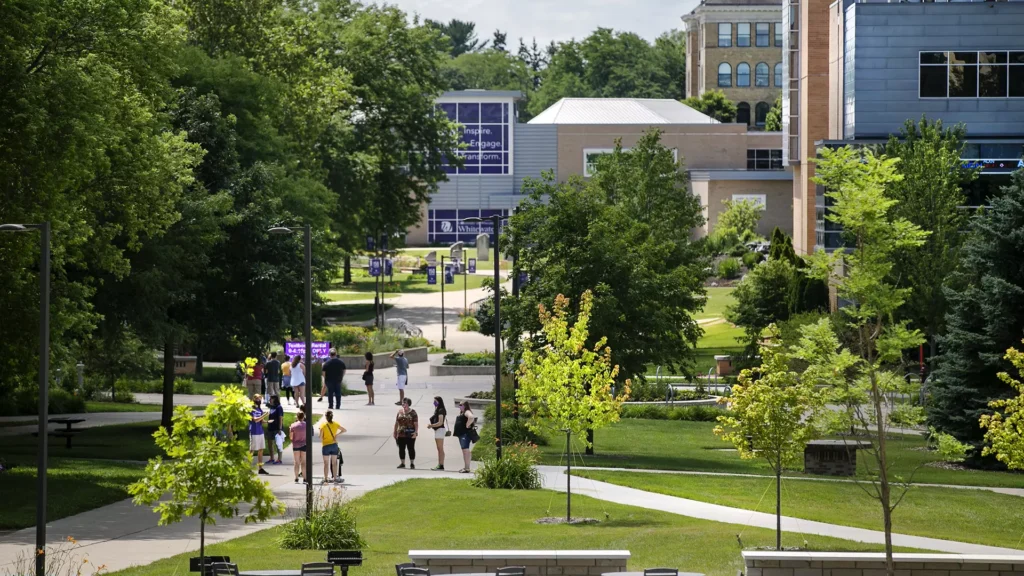
The University of Wisconsin-Whitewater has led social work education since it started the major in 1971. The program began in the Department of Sociology-Anthropology, became its own area in 1973, and grew into a department by 1975. The program has managed to keep continuous accreditation from the Council on Social Work Education (CSWE) since 1974, showing its dedication to excellence in education.
UW-Whitewater’s location in southern Wisconsin puts you close to major cities. Madison and Milwaukee are just an hour away, while Chicago is a two-hour drive. This perfect spot creates mutually beneficial alliances with regional organizations that provide internship placements and jobs after graduation.
Core social work values shape the UW-Whitewater MSW program. These include service, social justice, human dignity, relationship importance, integrity, and competence. The program champions human rights, scientific inquiry, and builds on people’s strengths in its teaching approach. Students come from all walks of life—over 180 learners bring different racial and ethnic backgrounds, ages, genders, religions, abilities, and sexual orientations to the department.
Social work graduates have excellent job prospects. The U.S. Bureau of Labor Statistics projects a 7% growth in social work jobs between 2023 and 2033. The program’s success shows in the numbers – 96% of recent Social Work bachelor’s graduates work in their field or study further within a year of finishing. Social workers earn a median salary of $61,330 yearly, making it a rewarding career choice.
The MSW program shapes you into an advanced generalist practitioner—like a general practitioner in medicine. You’ll get detailed knowledge and skills to tackle various social problems. This training develops your advanced practice, intervention, and evaluation abilities to work in local, regional, and national settings.
The program wants to create skilled professionals who help vulnerable populations make positive changes. The department’s mission focuses on developing social workers who can handle human and community challenges that affect quality of life while promoting social, racial, economic, and environmental justice.
Since 2022, students can choose between a fully online MSW program or traditional face-to-face classes. Both options carry the same CSWE accreditation and high standards, whatever way you decide to earn your degree.
Programs offered
UW-Whitewater’s MSW program gives you multiple ways to achieve your educational and career goals. The department offers two main program structures that fit different educational backgrounds and professional needs.
Students without a bachelor’s degree in social work can take the traditional MSW program with a complete curriculum of 56 credits. If you have a BSW from a CSWE-accredited program, you might qualify for the Advanced Standing option. This simplified 32-credit program recognizes your previous social work education. Your qualification depends on getting a B grade or better in core social work courses from your undergraduate program.
The university made a big move in 2022 by launching a fully online MSW program option. You can now complete all your coursework online. The only time you’ll need to be physically present is during your field internship. The online program has the same benefits as on-campus learning. You’ll get access to library resources, technology support, and student organizations like the Social Work Student Organization and Phi Alpha Honor Society.
The program’s Advanced Generalist approach gets you ready to work in a variety of settings. This flexible framework gives you the skills to work as a clinician, group facilitator, supervisor, researcher, and someone who supports positive change. UW-Whitewater excels with its focus areas in:
- Physical disabilities
- Military social work
- Addictions
Your MSW studies can be even stronger with one or more graduate certificates:
- Gerontology: Learn about aging-related issues and services
- School Social Work: Required if you want School Social Work licensure
- Substance Abuse Counseling: Gets you ready for substance abuse treatment settings
These certificates help you meet state licensure requirements in specialized areas. After finishing either the School Social Work or Substance Abuse Counseling certificate, you can apply for state licensure as a School Social Worker or Substance Abuse Counselor-In-Training.
The core curriculum has advanced courses in Social Work Psychopathology, Advanced Social Welfare Policy Analysis, and Research and Program Implementation. You can also choose from many electives that cover specialized topics like bereavement, trauma-informed care, LGBTQ populations, and Alzheimer’s disease.
Social work jobs look promising with 6% employment growth expected between 2024 and 2034. This means UW-Whitewater’s MSW program puts you in a great position for careers in clinical mental health, substance use treatment, school social work, and community advocacy.
About the online program
Launched in 2022, the online UW-Whitewater MSW program lets you advance your social work career without traditional classroom attendance. Your online degree carries the same professional weight and recognition as the face-to-face format because it maintains similar academic standards.
The program delivers coursework in two ways. Asynchronous classes give you freedom to complete assignments and watch lectures when it suits you. Some courses need your attendance during specific evening sessions in a synchronous format. This mix of approaches creates a balance between flexibility and structured learning. Working professionals can attend face-to-face and synchronous virtual classes Tuesday through Thursday evenings, which fits well with daytime work schedules.
The virtual learning setup still includes mandatory field internships in person. You’ll spend 12-16 hours each week during regular business hours (Monday through Friday) getting hands-on training. Field placements play a vital role in your professional growth, whatever program format you choose.
The online program provides a complete student support system. Yes, it is worth noting that virtual students get the same benefits as those on campus, including full access to:
- Library and technology resources
- Student organization participation (Social Work Student Organization and Phi Alpha Honor Society)
- Support services through the Center for Students with Disabilities
- Assistance from the Dean of Students office
Canvas serves as the learning management system for online content delivery. Your courses might include pre-recorded lectures, readings, interactive discussion boards, and various tests. Each instructor creates their own unique online environment, which leads to learning experiences of all types across the curriculum.
Some students find online education particularly helpful. The absence of fixed classroom times gives you schedule flexibility and location freedom—you can work on assignments wherever you like. All the same, this format needs strong self-discipline and good organization. Students who find time management or technology challenging might prefer traditional formats.
This new delivery option shows Wisconsin’s steadfast dedication to available higher education and social welfare progress. The UW-Whitewater MSW online program serves both city centers and rural communities throughout the region by removing location barriers. Students learn practical, community-based approaches that work well in Wisconsin’s various settings, preparing them for licensure requirements and complete field experiences.
Accreditation
Quality educational programs need accreditation to show they meet high standards of excellence. The UW-Whitewater MSW program has full accreditation from the Council on Social Work Education (CSWE). This credential applies to both traditional face-to-face and online program formats. Your degree meets national professional standards whatever delivery method you choose.
CSWE accreditation is the gold standard for social work education in the United States. The Council for Higher Education Accreditation recognizes CSWE as the only accrediting agency for social work education nationwide. An MSW from a CSWE-accredited program ensures your degree meets professional standards that employers recognize across the country.
UW-Whitewater’s institutional accreditation comes from the North Central Association of Colleges and Schools, The Higher Learning Commission. This regional accreditation plays a key role if you want to transfer credits or continue your education after your MSW.
The Social Work Department at UW-Whitewater follows CSWE assessment guidelines strictly. Every CSWE program tracks and reports student learning outcomes based on specific competencies within accreditation standards. Students must show mastery of these competencies – skills all social workers need during professional training. The program sets measurement targets, and scores above these targets prove mastery of specific competencies.
Wisconsin has six universities with CSWE-accredited MSW programs:
- Concordia University Wisconsin
- University of Wisconsin-Green Bay
- University of Wisconsin-Madison
- University of Wisconsin-Milwaukee
- University of Wisconsin-Oshkosh
- University of Wisconsin-Whitewater
CSWE accreditation offers several practical benefits. It lets you take state licensing exams and qualify for specific jobs. The accreditation verifies your credentials for graduate school admission. You can join professional organizations like the National Association of Social Workers and get certified in specialized practice areas. Many social work career paths would be out of reach without this vital credential.
International students can get their degrees evaluated through CSWE’s International Social Work Degree Recognition and Evaluation Service (ISWDRES). This service checks if international social work credentials match CSWE-accredited degrees in the United States.
Admission Requirements
The UW-Whitewater MSW program has a unique admission approach. Your academic background and professional potential matter more than standardized test scores.
These core requirements will determine your eligibility for the MSW program:
- Bachelor’s degree from a regionally accredited 4-year college or university
- Minimum 2.75 GPA on a 4.0 scale (lower GPAs might qualify with probationary status)
- A grade of C or better in a 200-level or higher statistics course
- Personal statement and resume submission
- Three positive references, with requirements based on your graduation timeline
Recent graduates from the last five years need specific references. One must come from an academic instructor, another from either academic or professional source, and a third can be academic, professional, or personal. Students who graduated more than five years ago need two academic or professional references and one additional reference from any category except family members.
BSW graduates from CSWE-accredited programs can take advantage of an advanced standing option. This path requires a 3.0 GPA minimum in all core social work courses. International students seeking advanced standing must have their degree recognized through CSWE’s International Social Work Degree Recognition and Evaluation Services.
The School Social Work certificate program has higher standards. Students need a 3.0 GPA minimum for all undergraduate coursework, including transfer credits. The program does not accept students on probationary status.
A background check happens after admission but before field placement. School social work applicants must complete this during the application process. Submit your application through the School of Graduate Studies online system by the deadline. You can finish any prerequisite courses at UW-Whitewater the term before starting the MSW program.
Tuition
UW-Whitewater’s MSW degree provides better value than regional competitors. Wisconsin residents who enroll as graduate students pay $5,531.33 per semester for full-time studies, or $614.60 per credit part-time. Students from outside the state pay $11,061.38 per semester full-time or $1,229.05 per credit.
The annual in-state graduate tuition of $9,307 makes UW-Whitewater one of Wisconsin’s most affordable options. Other Wisconsin MSW programs cost more: UW-Oshkosh charges $9,260, UW-Green Bay $9,571, UW-Madison $12,175, and UW-Milwaukee $12,220.
Students can reduce their educational costs through several financial support options:
- Graduate assistantships that pay $11,200 yearly (20 hours weekly) for 2025-26
- Fee remission benefits that eligible assistants receive when funds allow
- Health, dental, and life insurance benefits for students with two-thirds assistantship awards
- Federal and state financial aid through FAFSA application
The university waives non-resident tuition costs for qualified graduate assistants who receive two-thirds awards. Students who get spring semester fee remissions might also qualify for summer session out-of-state tuition waivers.
Online MSW students pay different rates than on-campus learners. These rates include extra technology fees along with regular tuition, though specific costs vary between programs.
UW-Whitewater’s financial services office provides detailed program costs that vary based on residency, course selection, and delivery method. The university stands out as the most budget-friendly option in the UW System. This makes the MSW degree a smart investment that will advance your career without breaking the bank.
Additional Information
Field experience forms the foundation of UW-Whitewater’s MSW education. Students complete a required field internship with 12-16 hours per week during standard business hours (Monday through Friday). The in-depth practicum takes place under an approved agency field instructor’s supervision and a faculty field liaison’s academic guidance.
UW-Whitewater delivers outstanding career outcomes for its graduates. Recent surveys show 94% of MSW degree holders were hired within one year of graduation, based on the 2022 and 2023 graduating classes. Career opportunities exist in a variety of settings like mental health counseling, substance use treatment, school social work, and medical social work.
The program’s graduates have landed positions at respected organizations. United Community Center of Milwaukee, Forward Learning Youth and Young Adults, Wisconsin Rapids Public Schools, and Dane County Department of Human Services have hired recent alumni. These successes highlight the growing need for mental health services throughout Wisconsin and nationwide.
UW-Whitewater’s commitment to hands-on training is exceptional. The University Health and Counseling Services has trained master’s interns in counseling, psychology, and social work for decades. This program, which is decades old, gives students ground application experience in individual and group counseling, crisis intervention, outreach, and consultation. Expert professionals from multiple disciplines provide supervision.
The program’s main goal is to support your educational trip, help you meet your goals, and help you secure a better financial future. Social work employment will grow 6% through 2034. Your MSW from UW-Whitewater gives you an advantage in this expanding job market.