
University of St. Thomas MSW
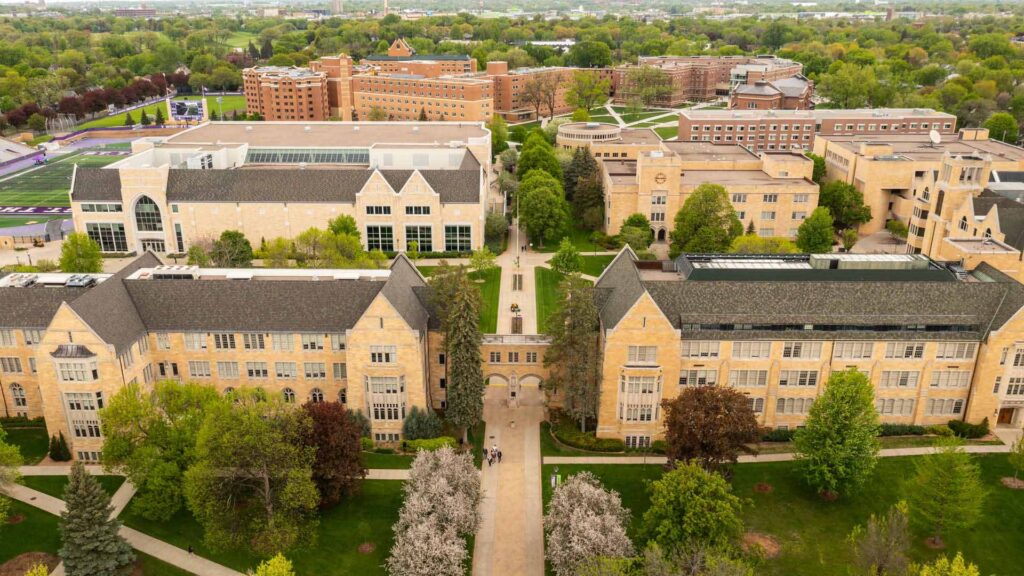
The University of St. Thomas School of Social Work has been a leader in social work education for 50 years since 1975 celebrating its 50th anniversary. The school boasts more than 3,500 graduates and maintains a vast professional network of undergraduate and graduate-level alumni that creates lasting connections for students.
The St Thomas MSW program’s exceptional faculty makes it unique. Licensed clinicians make up 90% of instructors who actively practice. They bring their real-life expertise straight to the classroom. These faculty members have earned recognition as scholars, researchers, and practitioners who dedicate themselves to community work and student mentoring. Their roles as both educators and practicing clinicians help students learn from professionals who know today’s social work landscape.
This 35-year-old program connects students with over 2,500 clinically prepared MSW alumni and more than 200 clinical field partners. Many of these partners hire program graduates. These strategic collaborations are a great way to get practical experience through shared clinical supervision.
The program’s accreditation history shows its quality education standards. The Council on Social Work Education (CSWE) first accredited the joint social work program with St. Catherine University in 1975. The St. Thomas BA in Social Work and Master of Social Work programs received independent accreditation in 2019 after ending this partnership. The St. Thomas MSW program now holds full CSWE accreditation, granted in March 2024 and valid through 2032.
The school offers individual-specific experiences through:
- Resources of a large school with personal attention
- Student-focused approaches common in smaller schools
- Faculty mentoring to help develop your professional identity
The school prioritizes understanding structural roots of social problems. Students learn to work with individuals, groups, families, and communities within broader programs, policies, and systems through clinical training. The curriculum teaches whole-person care through intersectionality and social justice – everything in modern social work practice.
Programs offered
The St Thomas MSW program provides flexible pathways that align with your educational background and career goals. Students from different academic backgrounds can choose between two main program tracks:
Advanced Standing (AS) welcomes students who have bachelor’s degrees in social work from CSWE-accredited programs. Students need to complete 38 credits and 600 hours of field practicum.
Regular Standing (RS) welcomes students with bachelor’s degrees in any field except social work. This track needs 56 credits and 1,000 hours of field practicum experience.
Students can choose from several completion options that fit their schedules:
- Advanced Standing Options: You can pick one-year (full-time), two-year (part-time), three-year (part-time), or hybrid two-year formats
- Regular Standing Options: You can choose two-year (full-time), three-year (part-time), four-year (part-time), or hybrid three-year formats
Every student gets complete training in clinical social work practice. On top of that, you can shape your education through Areas of Emphasis programs and become an expert in critical, emerging practice areas. These specialized tracks include:
Area of Emphasis in Aging (AEA) helps you improve the quality of life for older adults while supporting their families and communities through gerontological social work.
Area of Emphasis in Practice with People of Immigrant and Refugee Backgrounds (AEIR) helps you build specialized experience with immigrant and refugee populations.
Both emphasis programs give you $1,000 in tuition remission. You’ll take specialized courses, get leadership opportunities, participate in targeted field placements, and network with professionals in these areas.
The program offers innovative dual-degree options. The new MSW/LADC pathway lets you complete requirements for both MSW and Licensed Alcohol and Drug Counselor credentials in the same timeframe. You’ll take two extra courses and complete 280 additional fieldwork hours, opening career opportunities in substance use and behavioral disorders.
The JD/MSW dual degree combines humanitarian and legal education. This combination gives you the tools to create systemic change and protect vulnerable populations.
The program offers flexible scheduling. Campus classes run Monday through Thursday during late afternoons and evenings. Hybrid courses deliver content online with three Saturday campus sessions each semester. All campus learning happens at the St. Paul location, making the program available to working professionals.
You’ll graduate ready for licensure with strong clinical skills, cultural responsiveness, and knowing how to evaluate clinical interventions, whatever track you choose.
About the online program
St. Thomas MSW program’s hybrid learning format offers the best of both worlds. Busy professionals can earn advanced social work credentials without disrupting their lives. The online courses adapt to adult learners’ needs. You can complete your degree while keeping your career and personal commitments intact. This adaptable structure lets you balance your current responsibilities with educational advancement.
Expert faculty members who teach on-campus deliver engaging online coursework. They bring their clinical expertise right to your digital classroom. The virtual learning experience matches the quality of traditional instruction. The online platform helps you connect with peers from different locations and builds your professional network beyond your local area.
Hybrid courses blend online learning with just three Saturday campus sessions each semester. This setup reduces travel time but preserves valuable face-to-face interactions with professors and classmates. Working professionals benefit from this balance between digital convenience and in-person connections.
Catholic values spread through the online program and shape future social workers. Students gain professional expertise alongside ethical leadership qualities. The curriculum views whole-person care through a social justice lens—principles that work in both virtual and physical classrooms.
The online program helps you develop essential leadership traits. You’ll gain knowledge, confidence, and ethical decision-making skills. These qualities prepare you for management roles in social service agencies, healthcare facilities, and community organizations.
Your experiences outside the classroom substantially contribute to your growth as a social worker. The online format lets you apply theoretical concepts in ground settings immediately. This creates a continuous loop between academic learning and practical application.
Whether you choose hybrid or fully online options, you’ll get the same thorough education and personal attention that sets the University of St. Thomas MSW apart from other programs.
Field education is essential to the St Thomas MSW experience. Students get hands-on training that connects classroom theory with professional practice. The program places students with experienced clinical social workers who mentor them throughout their learning experience.
The St Thomas MSW program’s strength comes from its extensive network of mutually beneficial alliances. The program works with over 200 clinical field partners in a variety of settings:
- Healthcare facilities (hospitals, clinics, mental health centers)
- Community-based organizations
- Government agencies
- School systems
- Addiction treatment centers
These partnerships help students find placements that line up with their career goals and interests. Many field partners often hire program graduates, which creates direct paths to jobs.
The program’s academic requirements include substantial field hours based on your track. Advanced Standing students complete 600 hours of supervised field practicum. Regular Standing students need 1,000 hours. This deep immersion gives students a detailed view of the profession’s daily realities and challenges.
Site supervisors and faculty liaisons work together to support students’ growth. They help connect classroom concepts with real-life practice. Their ongoing feedback and guidance are a great way to get professional development support.
The St Thomas MSW program builds clinical skills step by step. Students start with basic skills and move on to complex interventions and assessments. By graduation time, they feel confident in their clinical abilities in settings of all types.
The program carefully selects field sites that match its mission. Students learn to address structural inequities while serving diverse populations. This focus on social justice and ethical practice shapes every field experience.
The program’s detailed field education approach works well. An impressive 93% of graduates land jobs in their chosen areas of practice. They step into the workforce with solid experience, professional networks, and strong clinical skills.
Accreditation
The Council on Social Work Education’s (CSWE) accreditation is a vital quality indicator for social work programs. The University of St. Thomas MSW program has earned full accreditation from CSWE, which leads social work education accreditation in the United States. CSWE granted this prestigious recognition in March 2024 and scheduled the next review for 2032.
St. Thomas MSW program’s journey toward independent accreditation showcases its dedication to academic excellence through organizational changes. The school’s records show St. Thomas and St. Catherine University ran a joint CSWE-accredited social work program from 1990 to 2019. After ending this partnership, St. Thomas earned separate accreditation for its Bachelor’s and Master’s social work programs in 2019.
CSWE accreditation brings significant benefits to students. Your degree will meet nationally recognized social work education standards. Most employers look for CSWE-accredited degrees, and you’ll need one to qualify for licensure.
The accreditation process thoroughly evaluates curriculum quality, faculty credentials, available resources, and student achievements. Programs must prove they prepare students well through classroom learning and field education.
CSWE sets different standards for undergraduate and graduate curricula. Bachelor’s programs teach generalist practice skills, while Master’s programs like St. Thomas MSW offer advanced training in research, professional leadership, social work supervision, and specialized practice areas.
St. Thomas MSW program’s accreditation runs through 2032, which shows its ongoing dedication to educational excellence. This ten-year accreditation gives future students confidence in the program’s stability and quality.
Students who choose St. Thomas MSW program get an education that aligns with professional standards. This preparation paves the way for licensure and career growth in social work.
Admission Requirements
The St. Thomas MSW program offers a simple application process without unnecessary complications. The program stands out from other graduate programs as it needs no GRE requirements and no prerequisite courses.
A bachelor’s degree from a regionally accredited institution forms the basic academic requirement. The St. Thomas MSW program prefers a 3.0 GPA but takes a all-encompassing approach when reviewing applications with lower GPAs. Students who enter with GPAs below 3.0 must maintain a 3.0 or higher during their first 12 credits to move past provisional status.
Your application needs several key components. Official transcripts from all your previous academic institutions must be submitted. Your current employment details should be included, though detailed documentation is needed only for your latest position. A detailed resume should clearly separate your paid work from volunteer experiences.
You’ll need two professional recommendations. These should come from people who can evaluate your graduate social work education readiness. The program accepts academic, professional, or community references but not personal ones.
The personal statement is a vital part of your application. You’ll need to discuss your social work interests, professional goals, and how you plan to work with anti-racism, diversity, equity, and inclusion practices.
The program offers an optional special circumstances statement to help place in context your academic background. This statement proves particularly helpful if you’re from a non-social work background, switching careers, or if your past grades don’t show your current academic abilities.
Tuition
A graduate social work degree is a significant financial investment. St Thomas MSW program keeps tuition rates competitive and makes fee structures clear so you can plan your finances better.
The St Thomas MSW program tuition stands at $875 per credit for the 2025-2026 academic year. Your total investment depends on your program track:
- Advanced standing students complete 38 total credits
- Regular standing students complete 56 total credits
Students should budget for some extra fees. Those with six or more credits pay a $135 technology fee and an $82 health fee each term. The program charges a $159 field experience fee for field seminar courses (GRSW 505, 506, 607, 608). A student support services fee of $15 per semester applies universally.
The St Thomas MSW program stands out among graduate programs with its $0 application fee. The School of Social Work provides great financial support, giving more than $350,000 in scholarships and grant awards yearly to new graduate students.
Students can get financial aid that covers direct costs (tuition and fees) and indirect expenses (housing, food, books, transportation, and personal expenses). Many students create a solid financial plan by combining scholarships, grants, and federal student loans.
The university makes payment simple with options like student loans, online banking, and credit card payments. Students who want detailed financial guidance should reach out to the Graduate Financial Aid office to explore their support options.
Additional Information
The University of St Thomas MSW program’s success rates showcase an impressive story. Their graduates achieve a 96% employment rate when they seek jobs related to their major or career. This achievement comes from the program’s detailed career preparation and strategic collaborations with industry partners.
Job market projections paint a bright picture. Social work employment nationwide should grow 6% from 2024-2034. Minnesota expects 5-6% growth between 2022-2032. The program’s graduates find jobs in a variety of settings because they don’t rely solely on large organizations for employment.
St Thomas’s Career Services helps students connect with employers through a hybrid recruiting approach. Students can access approximately 5,100 job and internship postings each month. The reliable support system boosts career success rates. 90% of top public Minnesota companies actively seek St Thomas students.
The program’s value extends beyond job statistics. A national survey reveals that 93.9% of social work graduates recommend the degree to their peers. Additionally, 90.4% say they’re happy with their new positions.