
University of Northern Iowa MSW Program
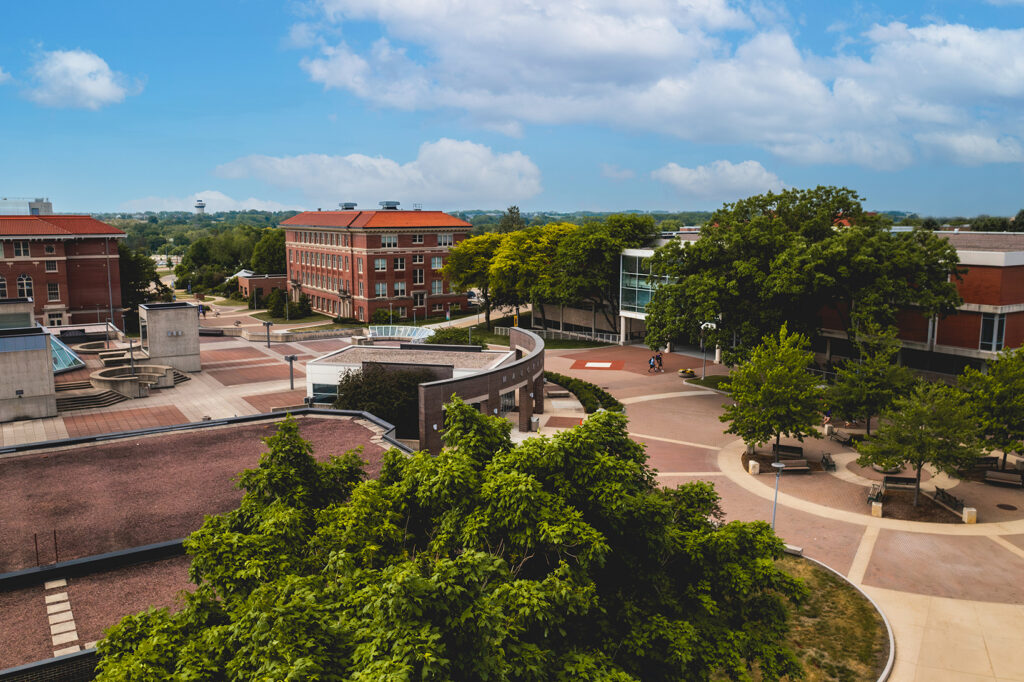
UNI’s Department of Social Work is essential to social work education in Iowa. The department’s programs at both undergraduate and graduate levels have full accreditation from the Council on Social Work Education (CSWE). Their MSW program has managed to keep its CSWE accreditation, which ensures graduates meet national standards for professional practice.
UNI’s Master of Social Work program stands out with its Trauma-Informed Care specialization. Research on stress, adversity, and oppression’s effects on people has built this specialization since 2014. This program is the only trauma-informed care specialization MSW available in Iowa.
The MSW program’s mission gives students a trauma-informed foundation to prepare them for advanced practice and leadership. Students collaborate with faculty to create environments that boost human potential and growth. Their learning environment builds on systems and strength points of view that support culturally competent practice, human rights, and social and economic justice.
Students learn skills to identify, review, and tackle personal, social, and systemic conditions that cause trauma using evidence-informed interventions. This method values people’s dignity and worth while promoting human relationships and multicultural responsiveness.
Faculty members bring extensive experience from clinical and agency settings. They conduct active research in mental health, trauma, and other relevant fields. On top of that, students get chances to work closely with faculty members on departmental and research projects.
UNI’s MSW program’s excellence shows in its 93% licensure pass rate. This is a big deal as it means that the national average of 74%. Such results prove the program’s success in preparing students for their professional careers.
Students gain practical experience through field placements at local, state, national, and international sites. Strong connections throughout Cedar Valley and across the state open doors to valuable hands-on learning opportunities.
MSW graduates can pursue various career paths, including:
- Positions in substance abuse agencies and mental health facilities
- Work in domestic violence shelters, schools, hospitals, and prisons
- Leadership roles in the field
- Providing trauma-specific therapy to various client systems
The advanced generalist curriculum prepares students for work in any discipline of social work practice—micro, mezzo, and macro. Small cohort sizes ensure tailored attention, mentoring, and meaningful connections between students and faculty.
Programs offered
UNI’s Master of Social Work program is distinctive with its advanced generalist education and specialty focus in Trauma-Informed Care – making it the only such specialization in Iowa. The university gives students three program tracks based on their educational background and priorities:
- Advanced Standing (on-campus): Students with a bachelor’s degree in social work from a CSWE-accredited program can complete this track. The program runs full-time across three semesters with part-time options. Each summer brings new cohorts with classes scheduled one day weekly.
- Advanced Standing (distance education): This online version matches the on-campus track’s requirements and timeline. Students need a CSWE-accredited bachelor’s in social work to qualify.
- Foundation (distance education): This track serves students without a social work undergraduate degree. Students study part-time over ten semesters. New cohorts start every two years in January. Classes meet twice weekly through Zoom from 6-9 p.m. Central Time.
The trauma-informed curriculum teaches you to spot, assess, and tackle trauma-causing conditions at individual, family, organizational, and community levels using evidence-informed interventions. Students learn to uphold human dignity, advocate for rights, promote social justice, and respond to multicultural needs.
A UNI MSW degree opens many career paths. Graduates can provide therapy services and pursue non-clinical roles in advocacy, program development, agency administration, and policy-making. Students get hands-on experience through field placements at local, state, national, and international sites.
Graduates excel in roles at substance abuse agencies, mental health facilities, domestic violence shelters, schools, hospitals, and prisons. The program’s 93% licensure pass rate beats the national average of 74%. This success rate helps graduates approach the Licensed Master’s level Social Worker (LMSW) exam with confidence.
Part-time students have seven years to finish all program requirements. Small cohorts let faculty members share their clinical expertise and research experience while providing personal mentoring.
About the online program
UNI delivers its online MSW program through Blackboard, a modern learning management system, along with Zoom video conferencing. Students who cannot commute to campus will find this format provides the right mix of flexibility and participation while maintaining high educational standards.
Students without a CSWE-accredited social work bachelor’s degree can join the Foundation track. Classes meet Tuesday and/or Thursday evenings from 6 to 9 p.m. (CST) through interactive video sessions. The Advanced Standing track comes with flexible scheduling options. Full-time students meet online for a full weekday, while part-time students attend one evening weekly. Some courses run asynchronously.
Students must complete a practicum/internship requirement that takes 15-16 hours weekly over two semesters. These field placements run during regular business hours from 8 a.m. to 5 p.m. on weekdays. Human services professionals might complete their internship at their workplace. This arrangement works when internship duties and supervision differ from their current job responsibilities.
Students receive complete support throughout their educational experience. Each online student gets:
- A dedicated Enrollment Contact and Program Coordinator
- Customized academic advising
- Support from Financial Aid, Career Services and Rod Library staff
- Academic support and tutoring opportunities from the Learning Center
- Access to student accessibility services
- Technical support assistance
The online MSW program maintains similar standards and workload expectations as the on-campus version. Students should prepare for a challenging educational experience that needs dedication and hard work. The program uses a cohort model where students take courses together. This approach encourages a supportive learning community in the digital world.
The University of Northern Iowa currently restricts its online MSW program to residents of Iowa and neighboring states (Missouri, Nebraska, Kansas, Oklahoma, Arkansas, Tennessee, Kentucky, and Illinois) because of licensing requirements. Prospective students should check their residency eligibility before applying.
The University of Northern Iowa’s online MSW program, like its on-campus counterpart, holds full accreditation from the Council on Social Work Education (CSWE). This ensures graduates meet national standards for professional social work practice.
Accreditation
Quality assurance in social work education programs relies heavily on accreditation. The University of Northern Iowa’s Master of Social Work program has full accreditation from the Council on Social Work Education (CSWE). This recognition applies to both campus-based and online formats since CSWE accreditation covers all approved locations and delivery methods for degrees from accredited programs.
The CSWE’s peer-review process strikes a balance between maintaining comparable outcomes and letting programs create their unique identity based on context. This full picture protects consumers and maintains public good through quality education. Your choice of UNI’s MSW program puts you among 347 CSWE-accredited master’s programs nationwide as of June 2025.
This accreditation brings significant benefits to you as a student. Your education will meet the highest standards needed for quality social work education. Every graduate gains the same core skills and knowledge as other social work students in the United States. Employers and licensing boards will recognize your degree as meeting professional standards.
CHEA (Council on Higher Education Accreditation) recognizes the CSWE’s Board of Accreditation. This recognition tells the public that CSWE can effectively review social work programs based on CHEA’s standards.
Your career opportunities after graduation will benefit directly from UNI’s CSWE accreditation:
- You can take the Licensed Master of Social Work (LMSW) exam
- Your license typically transfers easily between states
- The program meets all Iowa’s licensure requirements (other states may vary)
Iowa only licenses social workers from CSWE-accredited programs. Advanced Standing in the MSW program only accepts students with undergraduate degrees from CSWE-accredited programs.
UNI’s accreditation status shows its curriculum matches the vision of “a well-educated social work profession equipped to promote health, well-being, and justice for all people in a diverse society”. The program’s high licensure pass rates and focus on graduate success in various practice settings prove its steadfast dedication to excellence.
Admission Requirements
The University of Northern Iowa MSW program uses a detailed two-stage evaluation process for admission. Applicants must meet several basic requirements at the start.
Students need a bachelor’s degree from a regionally accredited college or university. The program expects a minimum undergraduate GPA of 3.00 on a 4.00 scale from both Foundation and Advanced Standing applicants. The Graduate Admissions Committee might look at just the final 60 semester hours’ GPA or use six or more semester hours of graduate work instead (minimum grade of B and overall GPA of 3.25).
Students must show statistical competence by passing a statistics course with at least a C grade. This requirement doesn’t need completion before admission but must be finished within the student’s first semester if admitted provisionally.
A complete application package requires:
- Online graduate application form
- Detailed resume showing education and work/volunteer experiences
- Personal statement
- Two references (one from a college-level instructor addressing academic abilities, one professional)
- Official transcripts from all colleges attended
- $60.00 application fee (UNI graduates don’t pay this fee)
The program’s reference requirements are unique. References only need to fill out the rating form without additional letters. Applications with references from high school teachers, personal friends, therapists, or relatives will be denied automatically.
Selected applicants join group interviews on Zoom after the original review to discuss their interest, motivation, and program fit. The final evaluation combines GPA (40%), related experience (20%), and personal statement (40%).
Admission decisions include full admission, provisional admission, waitlist placement, or denial. Students might receive provisional status due to missing statistics requirements or academic concerns, with specific conditions they must meet for full admission.
Advanced Standing admission needs a bachelor’s degree in social work from a CSWE-accredited program. Advanced Standing’s full-time program starts each summer, and applications must arrive by December 1.
International students must meet extra requirements. They need TOEFL (79), IELTS (6.5), or Duolingo (105) scores for full admission. Their degrees must go through CSWE’s international degree review.
GRE scores can strengthen applications, particularly the analytic writing score. Full-time students can apply for graduate tuition scholarships and assistantships. These benefits require full-time status and aren’t available to provisionally admitted students.
Tuition
The University of Northern Iowa’s MSW degree provides great value when compared to programs across the country. Students in the Foundation MSW program will pay a total estimated cost of $36,337.00 based on 2025-2026 tuition rates. The program charges the same tuition rates to all students whatever their location, which makes this degree affordable.
Students pay their tuition over several terms. A student taking 8 credits in Spring 2026 would pay $4,688.00 in tuition and $138.00 in technology fees, which adds up to $4,826.00. Most other terms need 6 credits and cost about $3,600.00 with fees included.
The College of Social and Behavioral Sciences charges full-time graduate students (9+ credit hours) $5,115.00 per semester for Iowa residents and $10,966.00 for non-residents. Each semester adds $686.00 in mandatory fees. Part-time students pay based on their credit hours – a 5-credit course costs Iowa residents $2,845.00 plus $515.00 in fees.
Students should also plan for these additional costs:
- Books and supplies (around $800.00 per year)
- Personal expenses ($1,804.00)
- Transportation ($770.00)
- Average loan fees ($154.00)
Students should know that tuition rates usually go up each year. The Iowa Board of Regents decides on changes every spring and implements them in fall.
The Department of Social Work and other campus departments offer Graduate Assistantships that provide stipends and in-state tuition benefits. These positions require 10-20 hours of work per week. The Graduate College also offers some Tuition Scholarships to full-time students. Students must take at least 9 graduate credit hours each semester to qualify for these opportunities. Applications must reach by February 1 for the next academic year.
Additional Information
The University of Northern Iowa MSW program will give a solid support system beyond your regular coursework. You’ll have access to a dedicated team that helps with everything in your graduate experience. The support has individual-specific academic advising, financial aid guidance, career services, and library resources.
Field education is the substance of MSW training. Students spend about 15-16 hours each week in practicum experience through two semesters. Agency partners need students to be available on weekdays between 8 a.m. and 5 p.m. Human service employees can complete their internships at their workplace if their duties and supervision are different from their regular job.
The program uses Blackboard learning management system and Zoom video conferencing. Foundation classes usually meet Tuesday and/or Thursday evenings from 6-9 p.m. (CST). Advanced Standing schedules change based on whether you choose full-time or part-time status.
The program meets Iowa licensure requirements, though these requirements differ by state. You can find specific licensing details on the Association of Social Work Boards (ASWB) website. Many students take their Master’s Social Worker licensing exam close to graduation.
UNI’s Student Social Work Association welcomes graduate students and is a great way to get professional insights and help community initiatives. Building connections with your peers will improve your MSW experience and prepare you better for shared professional practice.