
University of Southern Maine MSW
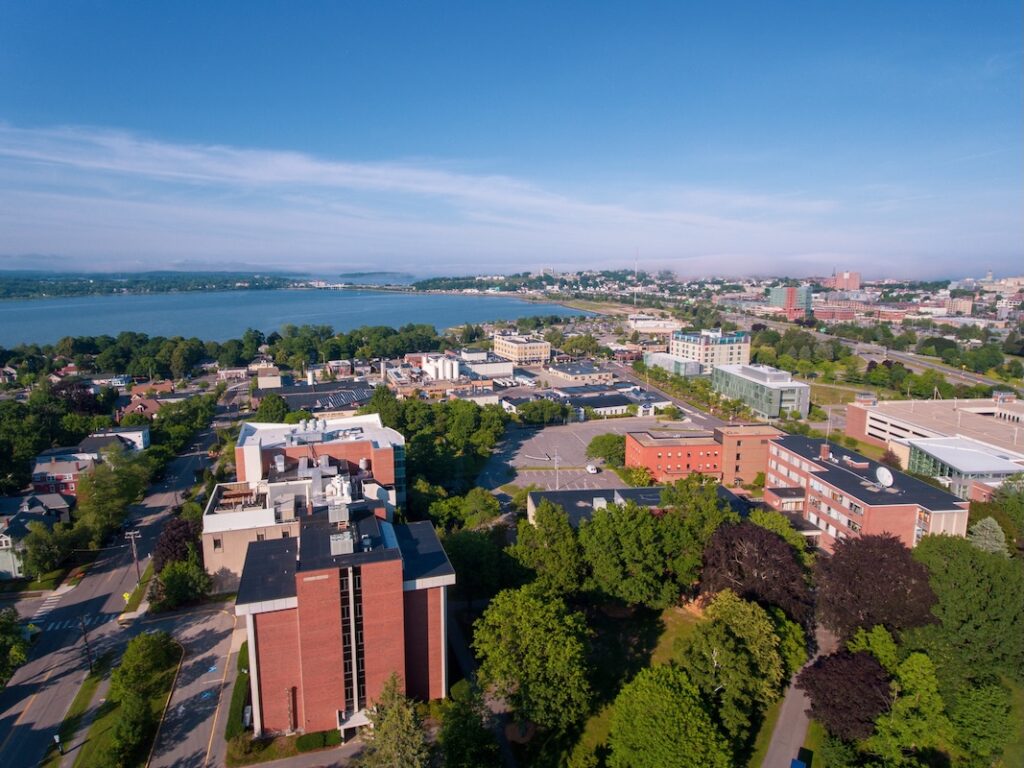
The University of Southern Maine’s School of Social Work excels at educating social workers who respond to cultural needs and focus on people’s strengths. The school builds its foundation on social justice and community involvement. Students learn to work directly with different populations in many settings.
USM’s social work education focuses on advocacy and well-being for everyone. The school develops and shares social work knowledge and skills that match professional values and ethics. The program shows deep dedication to helping underserved populations. Graduates can create dynamic solutions for personal, relationship, and system-wide challenges.
USM’s Master of Social Work program started in 1974. The program has managed to keep its accreditation from the Council on Social Work Education (CSWE) since 1976. This accreditation plays a vital role for students who want professional licenses after graduation.
The school’s faculty members are PhD-trained social work scholars with expertise in practice, theory, research, and policy. They advance social work knowledge through research and scholarship. They also seek external funding to support program activities. Their scholarly work directly shapes practice, policy, and social service delivery.
Students learn in cohorts that create a strong sense of community. This approach will give you professional connections and lasting friendships during your studies. You’ll gain academic knowledge and build a supportive network of peers who share similar challenges and opportunities.
Many MSW programs make students choose specific tracks, but USM prepares you for all types of social work practice. The program gives you complete knowledge and skills to work with different populations, from individual cases to large-scale projects.
The curriculum emphasizes:
- Preparation for competent, ethical, and culturally informed social work practice
- Dynamic, integrated competency-based learning
- Opportunities to demonstrate mastery of social work knowledge, skills, and values
- Professional social work identity development
- Critical inquiry and civic participation
The MSW program focuses on social justice and teaches students anti-oppressive practice approaches. This reflects the school’s mission to promote healthy human development and create strategies that address unfair social conditions.
Programs offered
The University of Southern Maine’s Master of Social Work degree adapts to your background and life situation with multiple program paths. Students can choose from three MSW options that vary in time commitment and format.
The Standard MSW Program is 61 credit hours and comes in two formats:
- Two-Year Standard: This full-time path includes 12-15 credits (four to five classes) each Fall and Spring semester. Classes meet once a week in three-hour blocks between 9:00 a.m. and 8:00 p.m. on the Portland campus. Students complete two field placements: a 400-hour internship (14-16 hours weekly) followed by a 500-hour internship (18-20 hours weekly).
- Four-Year Standard: This lighter schedule option helps maintain a better work-life balance with 5-9 credits (two to three classes) each semester. The same in-person class format and field requirements apply, making it perfect for working professionals.
Students looking for flexibility with online learning can choose the Three-Year Low-Residency MSW Program. This 61-credit path features:
- Mostly self-paced online learning
- Manageable course load of 5-9 credits each Fall, Spring, and Summer semester
- Two field internships matching the Standard program requirements
- Brief on-campus meetings (two Fridays per semester)
Recent BSW graduates can take advantage of Advanced Standing options:
- One-Year Advanced Standing: This quick-paced 33-credit program needs a full course load of 12-15 credits in Fall and Spring semesters, with one 500-hour field internship (18-20 hours weekly).
- Two-Year Advanced Standing: Students can spread their 33-credit requirement over more semesters with a lighter course load of 5-9 credits each term.
The program’s cohort model creates a supportive community that stays with you throughout your studies. You’ll learn about human rights, social justice, helping individuals and families solve problems, social welfare policy, addictions, community development, trauma, forensics, aging, health, grant writing, human sexuality, and school social work.
Field education is a vital part of every program option. Standard MSW students complete both generalist and specialized placements totaling 900 hours, while Advanced Standing students finish one 500-hour specialized placement. These internships are a great way to get real-life experience under professional supervision within USM’s network of partner agencies.
USM’s MSW program combines thorough academic preparation with hands-on field experience. You can achieve your social work career goals whatever your starting point or life circumstances might be.
About the online program
USM’s Low-Residency MSW program combines online and in-person learning to give students a flexible education experience. Students can keep their jobs and family commitments while earning their social work degree over three years.
You’ll work with course materials and complete assignments online at your own pace. The program requires visits to the Portland campus two to three Fridays each semester. These campus visits are scheduled well ahead of time so you can plan around your commitments. These face-to-face sessions help build connections with teachers and classmates while strengthening your learning community.
The online MSW curriculum matches the regular program exactly. It maintains full accreditation from the Council on Social Work Education (CSWE). You’ll get the same quality education and professional recognition as students in traditional programs.
Students take two courses each semester during summer, fall, and spring terms. This steady pace lets you complete all 61 credits in three years. New groups of students start every other year, with the next class beginning Fall 2026.
Field work plays a key role in your MSW experience. You’ll complete two internships – first a 400-hour placement needing 14-16 weekly hours, then a 500-hour placement requiring 18-20 hours per week. These hands-on experiences usually happen during business hours, so you might need some flexibility at work during internship periods.
The program uses a cohort model that creates a supportive learning environment. You’ll build lasting professional relationships with classmates who understand your challenges. This setup helps you work closely with professors and fellow students throughout your educational experience.
A typical week includes:
- Online course materials when it works for you
- Readings and assignments on your schedule
- Online discussions with classmates
- Field placement attendance
- Occasional Friday campus sessions (two to three per semester)
Students with a BSW can choose the Advanced Standing option. This path needs 46 credits over two years instead of 63 credits in three years. It starts with summer “bridge” courses to prepare you for advanced work.
The Low-Residency MSW program delivers the same high-quality education as traditional formats. It gives working professionals and those with family commitments the flexibility they need to succeed.
Accreditation
Quality and legitimacy in social work education depend heavily on accreditation. The University of Southern Maine MSW program’s CSWE (Council on Social Work Education) accreditation shows it meets strict national standards in social work education.
CSWE accreditation represents the highest standard for social work programs in the United States. Programs with this credential meet national benchmarks and follow competency-based education policies. Yes, it is more than just prestige – you’ll need a degree from a CSWE-accredited program to get licensed in any state.
The University of Southern Maine MSW program has managed to keep its CSWE accreditation since 2003. The program started in 2001 and completed the mandatory two-year review period that all new programs must pass. The BSW and MSW programs achieved a major milestone with their reaccreditation until October 2029. This eight-year period proves the program’s steady quality and educational excellence.
Maine has three CSWE-accredited MSW programs. These are at the University of Maine, University of New England, and University of Southern Maine. Two universities – including USM – let you complete the program fully online. This gives you flexibility while keeping the accreditation intact.
BSW graduates who want to pursue Advanced Standing should know that accreditation matters. The program accepts only students with degrees from CSWE-accredited BSW programs. This rule shows how accreditation matters at every level of social work education.
Field education is the core of social work training, and CSWE accreditation regulates it carefully. CSWE Educational Policy and Accreditation Standards require students to complete at least 900 field education hours. This requirement ensures graduates have enough supervised practice experience.
CSWE accreditation should lead your MSW program search. The University of Southern Maine MSW program’s long history of accreditation shows its steadfast dedication to high educational standards. Graduates can apply for licenses right after finishing the program. This accredited program gives you knowledge, skills, and the credentials you need to practice in any state.
Admission Requirements
The University of Southern Maine MSW program has a competitive admission process with specific requirements. You’ll need a bachelor’s degree from an accredited college or university with a 3.0 GPA in your last 60 credit hours of coursework. Your personal statement should explain any academic challenges if your undergraduate GPA falls below this requirement.
November 15 marks the application deadline for fall enrollment. The School of Social Work Admissions Committee reviews applications after this date. Two faculty members independently evaluate each application based on multiple criteria.
Your application package must include:
- A completed online application with application fee
- Official transcripts from all institutions where you obtained a bachelor’s degree or higher
- A personal statement (maximum 750 words) that covers your interest in social work, career goals, understanding of diversity and oppression, and social issues that matter to you
- Three letters of recommendation from qualified references who can assess your readiness for graduate study
Your reference letters should come from professionals or educators who know your work ethic, character, and academic abilities. Family members, friends, or therapists don’t qualify as references.
International students must submit official TOEFL or IELTS scores with their application materials.
Advanced Standing candidates face additional requirements. Your BSW should be from a CSWE-accredited university earned within the last five years. You need a minimum 3.0 GPA in your last 60 course hours and a 3.5 GPA in your social work program with no “C” grades. The MSW admissions review committee must also accept your application.
Students can learn about the program before applying by taking up to six credits as non-matriculated students. This path lets you experience the program through introductory courses like SWO 501 (Foundations of Justice in Social Work Practice) and SWO 504 (Social Welfare Policy I).
Tuition
Understanding the financial commitment is crucial when you pursue an MSW education. The University of Southern Maine stands out as a public institution that offers more affordable education options compared to many private universities.
Your MSW program tuition at USM depends on three factors: residency status, program delivery format, and credit hours. The program uses Differential Level 1 pricing in the university’s tuition structure for graduate social work students.
MSW students taking in-person or blended courses pay the following rates per credit hour:
- In-state and Canadian residents: $475.00 plus $99.00 in mandatory fees, totaling $574.00 per credit hour
- Out-of-state students: $1,435.00 plus $99.00 in mandatory fees, totaling $1,534.00 per credit hour
- NEBHE Tuition Break Program participants: $808.00 plus $99.00 in mandatory fees, totaling $907.00 per credit hour
Students enrolled in fully online MSW courses pay uniform e-tuition rates whatever their residency:
- All students (in-state, out-of-state, Canadian): $526.00 plus $99.00 in mandatory fees, totaling $625.00 per credit hour
The mandatory fees consist of an $89.00 Comprehensive Fee and a $10.00 Technology Fee per credit hour. These fees support educational services, student services, and the university’s reliable technology infrastructure.
The university’s financial assistance program is extensive. Students who file a FAFSA have a 92% chance of receiving financial aid offers. The aid packages are impressive – 91% include scholarships, grants, waivers, and/or work-study opportunities. USM’s yearly grant and scholarship awards exceed $30 million, and undergraduate students receive average financial aid packages of more than $14,000 annually.
Students from Connecticut, Massachusetts, New Hampshire, Rhode Island, and Vermont might qualify for reduced tuition through the NEBHE Tuition Break Program. This regional program makes the MSW more available to New England students.
The total program costs vary significantly. The 61-credit Standard MSW costs approximately $35,000 for in-state students before financial aid. The 33-credit Advanced Standing option costs about $19,000. Out-of-state students should expect higher rates unless they choose the online program with its uniform e-tuition rate.
Additional Information
The University of Southern Maine MSW program provides extensive support systems that go beyond regular academics. Students have direct access to faculty, staff, and peers who are dedicated to creating positive learning experiences throughout their educational trip.
Students build strong connections through year-round events and activities planned by the School of Social Work Student Organization. The school’s monthly social calendar helps students stay connected and engaged with the program.
Students can take advantage of these valuable resources:
- Academic Support: Social Work Textbook Lending Library, Disability Services Center, Learning Commons, and detailed library resources
- Financial Assistance: Student Financial Services and scholarship opportunities beyond standard financial aid
- Career Development: University Career Hub, Job & Internship Board, and Graduate Assistantship opportunities
- Wellness Services: University Counseling Services, Health Services, Sullivan Recreation Complex, and Oakhurst Campus Food Pantry
Students who want to explore the program can take up to six credits (two courses) before submitting a formal application. Courses like SWO 501 (Foundations of Justice) and SWO 504 (Social Welfare Policy I) are open to non-matriculated students when space permits.
The program’s flexibility helps students balance their work and education effectively. Students with full-time jobs can choose options with reduced course loads (Two-Year Advanced Standing, Four-Year Standard, or Low-Residency).