
University of New Hampshire MSW
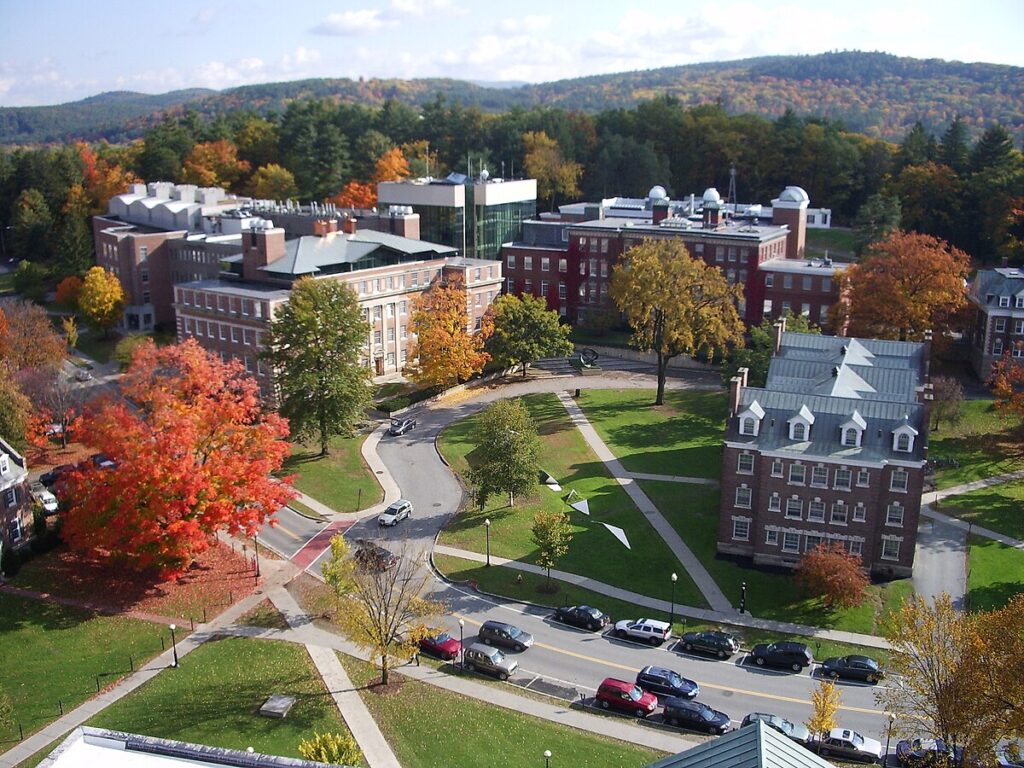
The University of New Hampshire’s Department of Social Work leads the way in social work education. The Council on Social Work Education (CSWE) has fully accredited both undergraduate and graduate programs. The New England Association of Schools and Colleges, Inc. has also granted regional accreditation, proving its institutional quality right.
The department prepares students to contribute meaningfully through programs that cover social welfare policy, social work practice, human behavior in social environment, research, and field education. UNH stands out because of its focus on strengths and models that give individuals, families, communities, and organizations the ability to reach their full potential.
The Master of Social Work program showcases this philosophy through its Advanced Generalist approach. Students learn versatile skills that work well in social work settings of all sizes. The program lets students specialize through electives in key areas including:
- Health and mental health
- Addictions and substance abuse
- Children, youth, and families
- Working with people with disabilities
Students who choose the UNH MSW program learn from passionate, full-time faculty members who excel in their practice areas and show steadfast dedication to social justice principles. The results speak for themselves because nearly 100% of undergraduate graduates find meaningful jobs or continue their education soon after finishing the program.
The UNH MSW program fits different student schedules perfectly. Students can attend classes at the Durham campus or complete their degree online in 28 months. Students with BSW degrees earned in the last five years can take the Advanced Standing option to finish faster in both formats.
Field education serves as the substance of UNH’s social work experience. Graduate students complete two field placements that add up to 1,240 hours of supervised practice. Undergraduate students get hands-on experience through a 40-hour human service requirement and a 450-hour internship. This practical training gives students real skills and professional connections along with their theoretical knowledge.
Small class sizes and low faculty-to-student ratios create an environment where mentorship thrives. This focused approach to education shows why UNH’s social work programs rank among the country’s best while meeting CSWE’s strict accreditation standards.
Programs offered
UNH’s MSW program gives you multiple ways to earn your degree based on your unique circumstances and career goals. You can pursue advanced social work education through different program formats that work with your location and schedule.
The Durham Campus Program gives you a traditional on-campus experience that takes two years full-time or three to four years part-time. Your first-year courses run Monday through Wednesday, with Thursday and Friday open for internships. Second-year courses are scheduled on Wednesday and Thursday, letting you use Monday, Tuesday, and Friday for field experiences. New students join this program once a year in fall.
The UNH MSW online program lets you earn your degree remotely in 28 months without campus visits. Students can join this flexible option three times yearly (fall, spring, and summer). You’ll attend weekly synchronous evening classes on Mondays or Wednesdays and complete required internships at agencies in your local community.
The Advanced Standing option recognizes prior learning and cuts down program duration substantially. Students with CSWE-accredited BSW degrees from the last five years can choose this accelerated path on-campus (summer admission) or online (fall admission). You’ll need just 35 credits to graduate instead of the standard 62.
The department’s Accelerated Master’s pathway lets qualified UNH undergraduates start MSW coursework during their bachelor’s degree. Students need a minimum 3.2 GPA and at least 90 undergraduate credits before taking graduate courses.
Every MSW student completes a detailed curriculum. Standard MSW candidates must complete 62 credit hours of 800 or 900-level courses and two two-semester internships totaling 1,240 hours of supervised practice. The curriculum includes required courses and gives you a chance to take three elective courses in specialized areas.
The program’s Advanced Generalist approach helps you work with individuals, families, and organizations in settings of all types. You can customize your education through electives focused on:
- Health and mental health
- Addictions and substance abuse
- Children, youth, and families
- Disabilities
- Self-designed field of practice
This curriculum structure gives you broad-based competencies and specialized knowledge that match your career goals.
About the online program
UNH’s online MSW program gives you a complete graduate social work education without needing to visit campus. Students complete the program in 28 months through courses we delivered mostly at your own pace. You can finish readings, discussion boards, and assignments on your schedule while meeting set deadlines.
New students can start their journey in fall, spring, or summer—letting you begin when it works best. The program needs 62 credit hours of 800 or 900-level courses, though advanced standing students take 35 credits. Most courses are mandatory, but you’ll get a chance to pick three electives. One elective must come from Department of Social Work offerings.
Field education is a vital part of the online program. Your training includes two internships at agencies in your local community, totaling 1,240 hours of supervised practice. The internship follows this structure:
- First internship: Two days (16 hours) weekly for four terms
- Second internship: Three days (24 hours) weekly for four terms
The Social Work Department’s field office helps you find suitable internship sites. These hands-on experiences are a great way to get learning by putting theories, research, values, and practice skills to ground use.
Most coursework happens at your pace, but some parts need live participation. Internship seminars and practice classes have weekly online meetings on Monday or Wednesday evenings. These live sessions help create shared learning between instructors and fellow students.
Students move through the program together in cohorts, building a supportive learning community. With three cohorts starting each year, you can adjust your pace if needed.
BSW graduates can take the Advanced Standing online option—a faster 16-month path needing just 35 credits. Eligibility requires graduation within the last five years from a CSWE-accredited program with a minimum 3.2 GPA.
The program builds strong foundations in cultural competence, social justice, and research-based practice. These core principles help you become skilled at advanced intervention with clients from all backgrounds in social work settings of all types.
Accreditation
Accreditation is a vital factor to evaluate any social work program. The University of New Hampshire’s social work programs have kept exemplary credentials. The UNH MSW program is fully accredited by the Council on Social Work Education (CSWE), and it meets strict professional standards needed for quality social work education.
The accreditation covers all program formats. The UNH MSW online program has the same CSWE accreditation as its campus-based version. Distance learners get an education that follows similar professional standards. UNH also has regional accreditation from the New England Association of Schools and Colleges, Inc., which proves the institution’s academic quality.
These credentials play a crucial role. CSWE accreditation is the gold standard for social work education nationwide. Students benefit from this accreditation in several ways:
Licensure Eligibility – Most states need graduation from a CSWE-accredited program for social work licensure. UNH’s accreditation status lets graduates take licensing exams in any state, which gives them career flexibility.
Quality Assurance – The Department of Social Work meets strict academic standards to keep its CSWE accreditation. This quality control helps your education stay current with changing professional requirements.
Professional Recognition – Employers value degrees from CSWE-accredited institutions. Many make accreditation a must for employment.
UNH’s dedication to accreditation goes back many years. The MSW program has kept CSWE accreditation since 1973, showing nearly five decades of educational excellence. The undergraduate program has been CSWE-accredited since 1996. This makes UNH New Hampshire’s leading institution for social work education.
The department stays committed to excellence in both undergraduate and graduate programs as CSWE recommends. This focus on quality pervades the whole curriculum. Your education meets professional standards whether you choose traditional on-campus, online, or advanced standing programs.
New Hampshire has just two CSWE-accredited MSW programs, both at the University of New Hampshire. The university’s ability to maintain accreditation shows its remarkable achievement in the state’s higher education world.
Admission Requirements
The UNH MSW program has specific requirements you’ll just need to meet before admission. Your cumulative GPA should be at least 3.2. The admission timeline is different based on your chosen format – summer intake at Durham campus and fall semester for online students.
You’ll just need to submit your completed application with a $65 fee. The program requires official transcripts from every post-secondary school you attended. UNH will automatically retrieve your transcript if you attended the university after September 1991.
Your application should include three recommendation letters. These letters should showcase your skills, with at least one focusing on your social work-related employment experience. A detailed double-spaced essay (4-5 pages) must address these four key questions:
- Your personal experiences influencing your choice of social work
- A current social issue that interests you and how you want to make a difference
- Discussion of two examples of societal oppression and their effect on social work
- Your personal attributes that will help you handle program demands
The application package must include your current resume showing your education, work history, and volunteer activities. The department requires graduation from an accredited undergraduate institution with a broad liberal arts background.
Advanced Standing applicants must have a Bachelor’s degree from a CSWE-accredited Social Work program. They should maintain a 3.2 cumulative GPA or 3.3 Social Work major GPA. Students must complete this coursework within five years of MSW matriculation.
Students applying to the Accelerated Master’s program must finish 90 undergraduate credits before starting graduate courses. The program offers optimized application steps with fewer requirements.
International students must submit TOEFL or IELTS scores unless English is their first language. Students who claim in-state residency must provide a Proof of Residence Form after acceptance.
The program strongly recommends two years of full-time social services experience, though it’s not mandatory.
Tuition
Students need to think about tuition costs when comparing UNH’s MSW program with other options. The 2024/2025 academic year costs for New Hampshire residents are $7,260 per semester, totaling $14,520 annually for full-time enrollment (9-16 credits). Students from other states pay $14,250 per semester, which adds up to $28,500 annually. NH residents’ per-credit cost is $800, while out-of-state students pay $1,400 per credit hour.
The online MSW program has a different pricing structure. NH residents pay $800 per credit, and out-of-state students pay $880 per credit. This offers substantial savings for non-resident students compared to on-campus rates. While online students don’t pay regular campus fees, they do pay a technology fee based on their credit load: $117 for 9-16 credits, $58.50 for 5-8 credits, or $29.25 for 0-4 credits.
Students can access financial support through several options. UNH ranks as the #7 best value public university in the United States. About 88% of first-time students receive some form of aid or scholarship, with average annual awards reaching $12,400. The Title IV-E Project helps eligible MSW students focused on child welfare by covering full in-state tuition plus a $300 stipend.
Fulbright-funded graduate students qualify for in-state tuition rates, with a scholarship covering the out-of-state difference. Government employees studying at UNH enjoy the same benefit.
Graduate students taking fewer than 9 credits pay a $20 registration fee. UNH’s Student Health Benefits Plan is available to all students but can be waived with proof of other coverage. F1 or J1 visa holders must enroll in UNH’s health insurance plan.
Additional Information
UNH MSW graduates have excellent career prospects beyond their academic journey. The job outlook for social work professionals looks promising, with a 7% growth projection from 2022-2032 – outpacing most other occupations. UNH’s MSW graduates earn a median salary of $53,279, and this is a big deal as it means that they make 7% more than the national average.
The program’s success shows in its graduates’ achievements. A recent MSW student landed a school counselor role before graduation after completing internships at substance use treatment programs and working with a Rapid Response Team at a mental health center. Students can also improve their qualifications through additional certifications like the Trauma-Informed Policy and Practice Graduate Certificate Program.
Students have plenty of opportunities to participate through campus groups. The Students of Social Work (SOSW) helps connect peers with professionals at volunteer and educational events. Professional networking expands through memberships in Phi Alpha (the social work honor society) and the Graduate Student Senate.
Students receive strong support through UNH’s services:
- Psychological and Counseling Services for mental health needs
- Health & Wellness for physical health management
- Center for Academic Resources for academic support
- Student Accessibility Services for accommodation needs
The program’s demographics show diverse representation. Women make up 88% of recent MSW graduates while men account for 12%, with about 9% coming from racial-ethnic minority backgrounds.
Qualified undergraduate social work majors can take advantage of the Accelerated Master’s option. This pathway lets them take graduate courses during their senior year, creating uninterrupted progress between degrees.
UNH MSW graduates consistently find meaningful roles across schools, hospitals, and community agencies, thanks to the program’s detailed support system and career-focused approach.