
University of New England MSW Program Insights
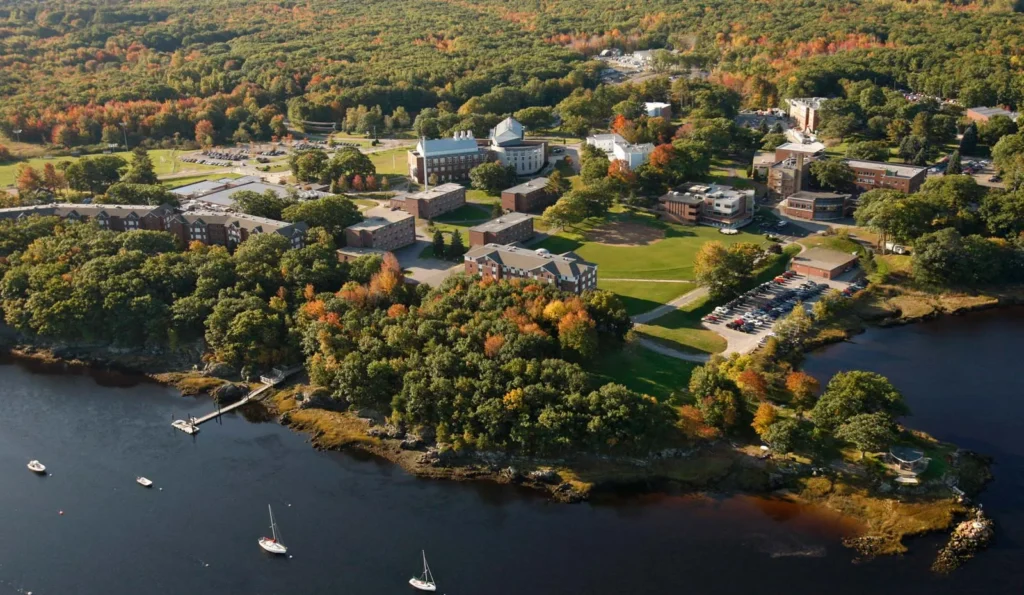
The University of New England School of Social Work leads the way in social work education. The school equips ethical social workers through a Person-in-Environment framework that values global viewpoints and human diversity.
UNE graduates have amazing career opportunities, especially when you have regional organizations in mind. The program’s reliable network of mutually beneficial alliances with local employers helps many students get jobs right at their field placement sites after graduation. This unique experience comes from the program’s excellent regional reputation and strong field placement connections.
You’ll be ready for advanced professional practice through scientific research and strong clinical skills development. The program wants to create graduates who shine as skilled clinicians and become drivers of positive community change. On top of that, the curriculum champions anti-oppressive social work practice that focuses on social justice, human rights, and economic and environmental equity for everyone.
An MSW from UNE helps you develop these important skills:
- Understanding how systems affect human development through a Person-in-Environment lens
- Creating strengths-based viewpoints while working with individuals, families, groups, and communities
- Learning about social, cultural, political, economic, and environmental factors that shape social policies
- Getting knowledge and skills for various social work interventions that align with professional ethics
The University of New England’s MSW program has full accreditation from the Council on Social Work Education (CSWE), America’s only accrediting body for social work education. UNE has also earned recognition as one of the best schools to get a master’s degree in social work online.
UNE’s social work graduates find meaningful careers in almost every major societal institution. The program’s Integrated Clinical Practice Specialization really prepares you for any social work path – whether you want to work in schools, hospitals, private health institutions, prisons, community centers, or rehabilitation clinics. This full preparation explains why employers consistently seek UNE MSW graduates for their skills, ethics, and excellent preparation.
Programs offered
The University of New England’s Master of Social Work program gives you flexible pathways that match your career goals and educational background. This MSW degree will prepare you to work with individuals, families, groups, organizations, and communities in various settings.
UNE’s MSW program comes with two distinct tracks:
Traditional Track: Students with a bachelor’s degree in any field other than social work can choose this complete 60-credit program that has:
- Six start dates annually
- 20 courses total
- Two practicums (400 hours in generalist curriculum and 500 hours in specialization curriculum)
- Completion possible in 3-4 years
Advanced Standing Track: Students who have a Bachelor of Social Work (BSW) from a CSWE-accredited program can take this accelerated 30-credit pathway that features:
- Six enrollment periods yearly
- 11 courses total
- One 500-hour specialization practicum
- Completion possible in as few as 16 months
Each track’s curriculum is different. Traditional students start with generalist courses that build integrated social work views before moving to specialization courses. These foundation courses include Anti-Oppression Social Work Practice, Human Behavior and the Social Environment, Social Work Research, Community Engaged Research, Social Work with Substance Use Disorders, Social Work Policy and Advocacy, and various practice courses.
The MSW program lets you focus your education in several areas:
- Trauma-Informed Practice: Learn trauma theory, neurobiology of complex trauma, and evidence-informed practice
- School Social Work: Develop therapeutic skills to work with children, adolescents, and caregivers in school settings
- Medical Social Work: Get ready for healthcare settings with coursework in psychopharmacology plus grief and loss
- Substance Use: Learn strength-based, trauma-responsive approaches for co-occurring disorders
- Advanced Clinical Practice: Build strong clinical skills through three therapeutic interventions
- LGBTQIA+ Social Work: Learn specialized knowledge to work with diverse populations
These focus areas fit into the MSW degree curriculum within the required credit structure. The program also offers great flexibility with 100% online coursework taught by dynamic faculty who are practitioners, researchers, and educators [72].
Students get hands-on experience through practicums to apply their coursework in ground settings, learn about local resources, improve clinical skills, and build professional networks.
About the online program
UNE’s online Master of Social Work program provides a unique educational experience that students can complete without visiting campus. The program works well for professionals who want to balance their education with work and family life through flexible learning.
The online MSW program at UNE stands out with these key features:
- 100% online and asynchronous format – Students complete coursework on their schedule without mandatory login times
- CSWE-accredited curriculum – The program meets the same rigorous standards as traditional programs
- Personalized support – Students receive one-on-one guidance to secure field placements
- Cohort model – Students progress with the same group of peers and build strong professional relationships
The program’s structure lets Traditional track students complete foundational courses from a general view first, then move to specialization courses. Advanced Standing students begin with specialization content right away.
The curriculum builds on the National Association of Social Workers (NASW) Code of Ethics. It includes person-in-environment, anti-oppressive, and antiracist frameworks. Students develop practical skills and critical thinking through this approach.
Field education plays an important part in the online program. UNE gives students the ability to choose their field placements instead of just matching them to agencies. Students can find placements that fit both their preferred agency type and location. A full-time faculty member serves as a field planner and supports students throughout their practicum experience.
Students access course materials 24/7 through user-friendly learning management systems. The same expert faculty teach both online and on-campus courses, which maintains quality whatever the delivery method.
State licensing requirements vary across locations. UNE’s program aligns with Maine’s social work licensing requirements. The school suggests students research requirements for their intended state of practice.
Career outlook
UNE’s MSW program gives graduates more than just academic credentials. Students gain a complete skill set that makes employers eager to hire them in various social work settings. The program blends theoretical knowledge with hands-on experience to prepare students who can drive positive change.
UNE MSW graduates stand out because they know how to apply academic concepts to real-life situations. The program’s rigorous curriculum helps students develop critical thinking skills and evidence-based approaches to tackle complex social issues. Employers actively seek UNE graduates because they can contribute meaningfully from their first day at work.
The Clinical Practice Specialization gives students advanced intervention techniques they can use with people from all backgrounds and settings. This versatility opens up many career paths in social work. Many UNE alumni say the program’s focus on adaptable clinical skills has substantially improved their career flexibility and market value.
Students find abundant networking opportunities throughout their studies. Building relationships with peers, faculty, and field supervisors often leads to job offers after graduation. Many alumni credit these connections for helping them land their first jobs.
Progressive employers value UNE’s dedication to social justice and anti-oppressive practice. Organizations look for social workers who combine clinical expertise with a deep understanding of systemic inequities – exactly what UNE helps its students develop.
Field education plays a vital role in making graduates employable. Students work at carefully chosen placement sites that match their career goals and gain targeted experience in their specialty areas. This personalized approach means students graduate with relevant experience already on their resumes.
UNE graduates consistently show strong professional ethics, cultural competence, and dedication to continuous learning. Employers consider these qualities essential in today’s social work environment. These vital attributes explain why social work organizations continue to seek out UNE MSW graduates.
Accreditation
Quality assurance in social work education programs across the United States depends heavily on accreditation. The Council on Social Work Education (CSWE) remains the only accrediting agency the Council for Higher Education Accreditation recognizes. This recognition highlights CSWE’s crucial role in setting educational standards nationwide.
The University of New England’s MSW program has managed to keep its CSWE accreditation since 1990. The program went through a detailed reaccreditation process and secured approval for another eight-year period. This long-running accreditation shows UNE’s steadfast dedication to educational excellence.
CSWE accreditation brings several key benefits to students:
- Students get consistent program outcomes across accredited institutions
- The curriculum covers all core social work knowledge areas
- Students qualify for professional licensure
- Programs meet strict educational standards
The accreditation process demands thorough evaluation. Programs must complete an in-depth self-study that shows how they meet CSWE’s Educational Policy and Accreditation Standards (EPAS). A peer evaluator then visits the site to meet administration, faculty, and students to verify program quality.
UNE carefully maps all MSW program courses to CSWE competencies, which gives students complete coverage of required knowledge areas. This mapping shows that students learn everything in professional social work practice.
CSWE standards place field education at the heart of social work education as its “signature pedagogy”. Students blend their classroom theory with practical application through well-structured field experiences.
CSWE accreditation matters especially to students in UNE’s Advanced Standing track. Students must have a BSW from a CSWE-accredited institution to join this accelerated program. This requirement means all students start with the same foundation of social work knowledge.
The accreditation covers all UNE program formats, including the online MSW option. Programs keep their accreditation status regardless of delivery method as long as the degree comes from the accredited program.
Admission Requirements
The University of New England MSW program has specific admission requirements based on your chosen track. Your application goes through a comprehensive review that looks at more than just your academic performance.
Students pursuing the Traditional Track need a bachelor’s degree from a regionally accredited institution. The admissions committee likes to see at least a 3.0 GPA, though there’s no strict minimum requirement. Good news – you won’t need GRE scores for this program.
Advanced Standing Track students must meet these extra requirements:
- A CSWE-accredited BSW degree earned in the last seven years
- Proven human services experience under MSW supervision
- Grades of “B” or better in courses matching UNE’s foundation curriculum
The admissions team might offer Traditional Track enrollment to Advanced Standing applicants who need more grounding in social work fundamentals.
Here’s what you’ll need for your application:
- An account in the Online Application Portal
- Professional statements about your social work interest, views on social inclusion, time management, and explanations for any GPA below 3.0
- A current resume/CV showing your professional and volunteer work
- Two recommendation forms, ideally from supervisors
- Field evaluations and verified field hours (Advanced Standing only)
- Official transcripts sent straight to UNE
- A $40 non-refundable application fee
You’ll need a computer that meets technical requirements and reliable internet access. Basic computer skills are essential to handle the online learning platform. Your application materials stay valid for 12 months after UNE receives them.
Tuition
The University of New England’s online MSW program costs $975 per credit hour. This rate stays the same for both Traditional and Advanced Standing tracks. UNE usually raises tuition by 2-4% each year.
Traditional track students need to complete 64 credits, and Advanced Standing students must finish 30 credits. Students get $350 each semester for textbooks and materials as part of their financial aid package. The school refunds this amount to students who accept the full financial package when the semester begins.
Financial aid comes in two terms (A and B) per semester. Students typically take six credits each semester, though some may start with 12 credits to speed things up. You’ll need six or more credits per semester to be considered a full-time student.
Students can set up an interest-free Tuition Payment Plan through Sallie Mae to make monthly payments more manageable.
Campus-based MSW students pay a bit more at $1050 per credit hour. They also pay a yearly $760 General Services Fee and $50 Malpractice Insurance fee. Online students pay less per credit hour but get the same quality education.
Additional Information
UNE’s MSW program provides exceptional support through dedicated faculty and career resources that go beyond standard academic curriculum. Program leadership includes experienced professionals like Jennifer O’Neil, Ph.D., M.S.W., LCSW, who leads as Director of Graduate Programs Online. Faculty members combine their roles as practitioners, researchers, and educators while holding appointments in other UNE colleges or maintaining affiliations with respected institutions.
UNE MSW graduates enjoy bright career prospects. The employment outlook for social workers shows a projected increase of 15% over the next decade, which is a big deal as it means that it surpasses average growth rates for other occupations. You’ll be ready to apply for licensure and take professional licensing exams after graduation. The program’s graduates achieve an impressive 81% pass rate on licensure exams.
Students receive complete support services throughout their academic journey. Dedicated enrollment counselors and student support specialists help with everything from textbooks to registration, starting from enrollment through graduation. Students complete two 560-hour placements under qualified field instructors’ supervision, which creates a tailored educational experience.
The program lets students pursue specialized knowledge through independent study options of 1-3 credits with faculty sponsorship and proper approvals. UNE’s steadfast dedication continues after graduation with alumni services that help build lasting connections between the university and fellow graduates.