
Temple University MSW Options
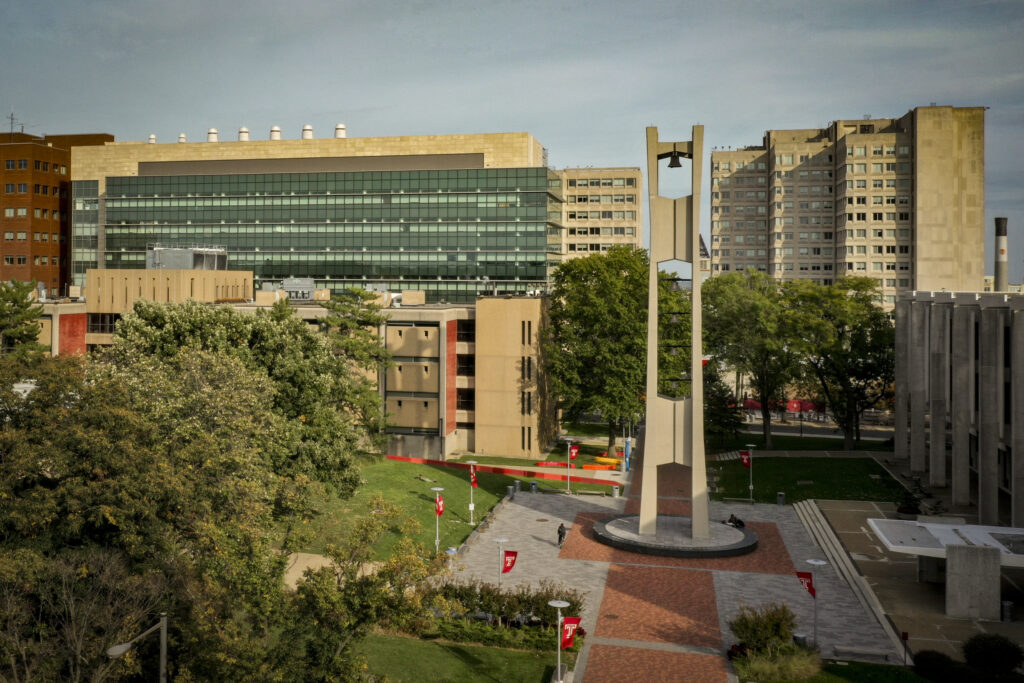
The School of Social Work serves as the foundation of social justice education within Temple University’s College of Public Health. The school started in 1969 as the School of Social Administration and saw its first Master of Social Work class graduate in 1971. The institution became the School of Social Work in 2009 and later joined the College of Health Professions, which evolved into the College of Public Health in 2015.
Temple University’s School of Social Work ranks among the nation’s top social work programs, ranking No. 46 in the 2023 edition of U.S. News & World Report. This achievement puts it in the top 20% of all ranked social work schools and programs nationwide, with an impressive climb of 13 spots from its previous position.
The school’s mission aims to eliminate social, political, and economic injustices that affect poor and oppressed populations while improving everyone’s quality of life. This dedication shows through action-focused education, evidence-based research strategies, and public service that shares knowledge with broader communities.
The Temple University MSW program’s faculty members are nationally recognized experts in a variety of specializations. Their expertise spans aging, children and families, disability, incarceration, LGBTQ health, mental health, and substance abuse. These educators encourage societal change through their integrated approach to social work education.
Student diversity stands out as one of the program’s strengths. Students come from various ethnic, geographic, and socioeconomic backgrounds, which substantially enriches classroom discussions in both theory and practice courses.
The school’s Social Service Annex (SS Annex), launched in 2020, equips students who need supportive services. This initiative provides prevention-focused and support services to Temple students and the surrounding community.
Temple University MSW program’s students can join several professional and support organizations:
- Alpha Delta Mu National Social Work Honor Society
- Social Work Student Collective
- School of Social Work Alumni Association
- Student chapters of national organizations like the National Association of Social Workers
- Identity-focused groups such as Latino Social Work Organization and Pride in Social Work
The Council on Social Work Education accredits both the Bachelor of Social Work and Master of Social Work programs, confirming their educational quality and graduate qualifications.
Programs offered
Temple University’s College of Public Health provides social work education that fits your career goals and lifestyle. Their Master of Social Work (MSW) program serves as the core of graduate studies and gives you exceptional flexibility through multiple formats and specializations.
Your academic background determines which of two MSW tracks you’ll take. Students with any bachelor’s degree can enroll in the Regular Entry MSW, which requires 60 credits. The Advanced Standing MSW needs only 34.5 credits if you have earned a BSW in the last five years from a CSWE-accredited institution.
The MSW program fits your schedule with several timeline options:
- Regular Entry full-time: Two years to complete (15 credits per term)
- Regular Entry part-time: Three to four years (6-9 credits per term) with summer sessions
- Advanced Standing full-time: 12-month program starting in summer
- Advanced Standing part-time: 18-month program beginning in summer
Temple’s MSW program stands out because it lets you arrange your concentration based on your career goals:
Clinical Practice with Individuals and Families – This path helps you become a clinical therapist who works with individuals, families and groups in outpatient or inpatient settings. Your career options include case management, hospital discharge planning, and private practice.
Macro Practice in Organizations, Communities and Policy Arenas – This concentration builds your leadership skills for nonprofit and governmental agencies, community organizing, or policy work. You’ll learn management techniques and ways to create systemic change in organizations of all types.
The program also offers exciting dual degree options. The MSW-MPH combination prepares you to tackle health-related community issues. Full-time students finish in three years, while part-time students take four years. You can also pursue a JD-MSW degree through a partnership with the Beasley School of Law.
The Online MSW program delivers the same quality education as on-campus classes with the same expert faculty. This part-time option keeps classes small with 15-20 students per course and takes three to four years to complete. Students gain field experience in their local communities under the guidance of Temple’s fieldwork advisors.
The Council on Social Work Education (CSWE) accredits all MSW programs, which ensures graduates meet professional standards.
About the online program
Temple University’s online MSW program gives working professionals a flexible way to earn their degree while managing career and family commitments. You can complete your degree in three to four years through this part-time program without putting your life on hold.
Students get the same quality education online as they would on campus. The program features the same expert faculty who teach on-campus courses. Small class sizes of 15 to 20 students create an excellent student-to-faculty ratio that lets you connect meaningfully with classmates and professors. This close-knit learning environment helps build strong relationships even in the virtual setting.
The online MSW blends different learning approaches effectively. Students take part in live streaming classes with web conferences, chat rooms, and video meetings. They also work through self-paced components like discussion boards and independent assignments. This mix gives you both live interaction and schedule flexibility.
Students must complete 60 total credits and 1050 hours of field practicum experience (450 foundation level hours plus 600 advanced level hours). The program requires a brief three-day residency in Philadelphia during the second year that focuses on field placement and practice courses. Temple’s expert fieldwork advisors help you complete most field experiences in your local community.
The program makes online students full members of the Temple Social Work community. You’ll have access to the university’s libraries, writing center, and career center. Professors are available outside class hours for both online and in-person meetings. The program’s CSWE accreditation lets graduates take the Association of Social Work Boards (ASWB) licensing exam, so you’ll earn the same professional credentials as on-campus students.
The online MSW program offers a dual degree option for students interested in broader studies. The MSW-MPH (Master of Public Health) combination can be completed entirely online, letting you gain expertise in both social work and public health while learning remotely.
Accreditation
The Master of Social Work program at Temple University has full accreditation from the Council on Social Work Education (CSWE). This accreditation serves as a key marker of educational excellence and professional recognition. CSWE verifies that the curriculum meets professional standards and follows best practices.
Students gain significant practical advantages from this CSWE accreditation. Temple University’s MSW program graduates can take the Association of Social Work Boards (ASWB) licensure examination. This qualification paves the way for professional licensure and career growth in social work.
Temple’s program stands among Pennsylvania’s most respected educational institutions. The University of Pennsylvania, home to one of the nation’s oldest and most prestigious social work programs, also holds CSWE accreditation. The University of Pittsburgh’s 100-year-old School of Social Work shares this accreditation status with Temple.
Temple University’s School of Social Work has earned accreditation from both CSWE and the Council on Education for Public Health (CEPH). This dual recognition proves the program’s academic excellence. The college is one of two CEPH-accredited public health schools in Philadelphia and one of three in Pennsylvania. This achievement shows Temple’s dedication to high educational standards in health-related fields.
CSWE accreditation guarantees that online and on-campus MSW students receive similar quality education and professional recognition. The accreditation covers all approved program locations and delivery methods when the degree comes from the accredited program with its social work curriculum designation. Students who study online get the same credentials and career opportunities as those who attend campus classes.
The Council on Social Work Education reviews accredited programs regularly to maintain quality. Programs can be Fully Accredited, Accredited (Conditional), or Accredited (Withdrawal in Progress). Temple’s full accreditation status shows it meets all CSWE standards consistently.
Temple’s decades-old accreditation history gives MSW students confidence in their education’s value and their future career prospects in social work.
Admission Requirements
Temple University’s MSW program has specific academic requirements that depend on your chosen program track. The requirements differ based on whether you apply for Regular Entry or Advanced Standing status.
Regular Entry MSW applicants need a bachelor’s degree with a broad liberal arts foundation from an accredited undergraduate institution. You don’t need a Bachelor of Social Work, but you must have a minimum GPA of 3.0 or higher. Advanced Standing applicants should complete their Bachelor of Social Work from a CSWE-accredited program within the last five years. They need a minimum 3.25 GPA both overall and in their major.
Here are the key application deadlines:
- Fall Regular Entry: June 1 for domestic applicants, April 15 for international applicants
- Spring Regular Entry (part-time students only): November 1
- Summer Advanced Standing: April 1
You should apply early since scholarship opportunities are given on a rolling basis.
Submit your application through the Sophas Express System. Your application package needs:
- Three letters of reference from appropriate sources (faculty or professionals who know your academic competence or professional work experience)
- Official transcripts from every college and university attended
- A statement of professional plans and goals showing your motivation to pursue graduate study in social work
- Current professional resume
Advanced Standing applicants should get one of their three required letters from a BSW program faculty member. You also need to submit your senior field placement’s final evaluation.
Students whose native language isn’t English have additional requirements. They need a TOEFL score of at least 79 on the iBT. Degrees completed outside the United States require a WES evaluation.
The program requires all incoming students to have a laptop that meets specific hardware requirements. Laptops are part of the curriculum and help students access specialized software and tools in and outside class.
The MSW program at Temple has competitive admission standards. Apply early and make sure all supporting documents reach before the deadlines. Temple University keeps all application materials and won’t copy, forward, or return them.
Tuition
The Temple University MSW program’s cost is a crucial factor in your decision-making process. The program offers different tuition rates that depend on where you live and how you take your classes.
Temple University’s on-campus MSW program at the time of 2025-2026 charges Pennsylvania residents $1148.00 per credit. Students from other states pay $1577.00 per credit. The online MSW program costs $1180.00 per credit whatever your residency status. This rate shows a small increase from last year’s $1138.00 per credit.
Students must pay a University Services Fee each semester. This mandatory fee supports academic technology, campus activities, facility upkeep, and health services. The amount varies by your course load:
- 9+ credits: $528.00 (Fall/Spring) or $266.00 (Summer)
- 0-8.9 credits: $378.00 (Fall/Spring) or $200.00 (Summer)
- 0-4.9 credits: $193.00 (Fall/Spring) or $120.00 (Summer)
Temple provides two payment plans during fall and spring semesters. Students who don’t pay their balance by the due date automatically enter the Deferred Payment Plan with a $50.00 non-refundable fee per semester. The Temple Installment Payment Plan (TIPP) lets you spread payments over ten months starting in May for an annual fee of $80.00.
Temple’s steadfast dedication to affordable education gives MSW students access to several financial support options. The total program cost depends on your track – full-time Regular Entry students need 60 credits, while Advanced Standing students complete 34.5 credits.
New graduate students pay a one-time $85.00 matriculation fee. International students have an extra $175.00 fee each fall and spring semester.
A Pennsylvania resident’s investment in the complete 60-credit on-campus program would be around $68,880 plus applicable fees.
Additional Information
Temple University’s MSW graduates build careers in community healthcare, public policy, mental health counseling, and related fields. Their degree opens doors to positions like therapist, program director, and community organizer.
Students gain practical experience through field placements at 500 local organizations. These placements are a great way to get hands-on experience and apply classroom learning in practical settings.
Temple’s student support services help students thrive. The Social Service Annex provides a quiet space where students can relax, get peer consultations, connect with resources, and enjoy light refreshments. The center organizes monthly events that focus on health, well-being, and career development.
Students must meet these compliance requirements before field placement:
- Immunization verification for MMR, Varicella, and Hepatitis B
- COVID-19 vaccination documentation
- TB screening and physical examination
- Purchase of access to the EXXAT-APPROVE compliance module
Students need to complete national criminal background checks, Pennsylvania Act 33/34 clearances, and FBI fingerprinting. These requirements could affect placement options and potential licensure.
Graduates qualify to take the Association of Social Work Boards licensure examination, which is required in 51 U.S. states and territories.