
Stony Brook University MSW
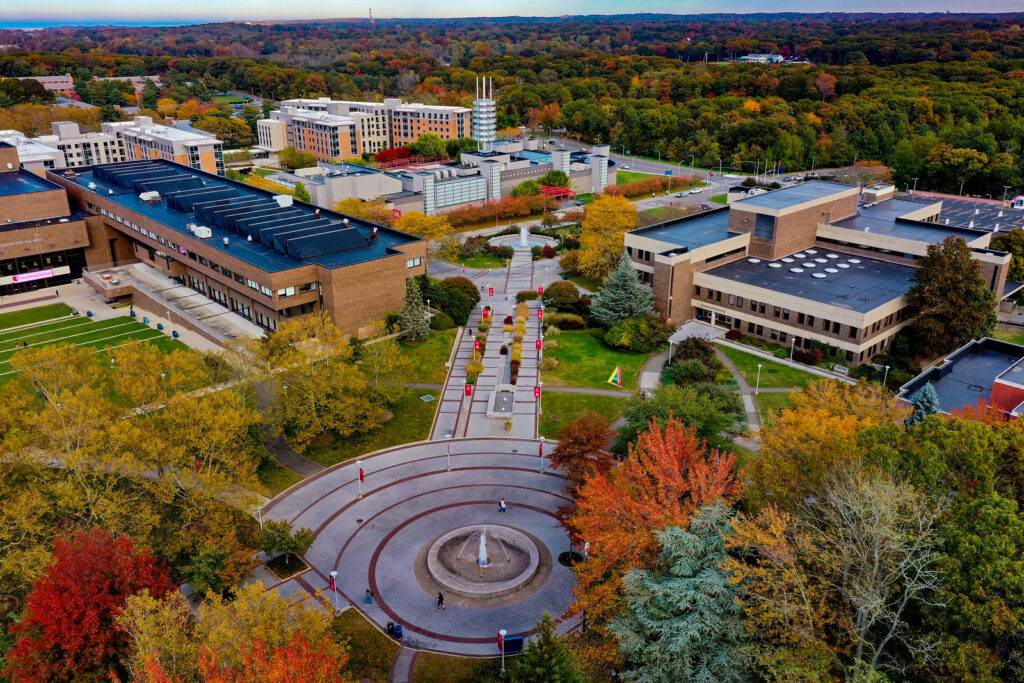
Stony Brook University’s Health Sciences Center houses six health sciences schools, including the School of Social Welfare. This setup creates a dynamic environment that runs on collaboration. The school, 65 years old, has earned its reputation by preparing students for professional social welfare practice.
The school’s mission centers on building an equitable society. Its values rest on human dignity, inclusiveness, diversity, and social justice. Students learn community advocacy skills and therapeutic intervention techniques through a person-in-environment view. The curriculum focuses on individual and group enablement to drive personal and social change.
Stony Brook’s social work programs stand out by offering detailed student preparation at multiple educational levels. The Bachelor of Science degree in social work (BSW) targets entry-level professional practice. The Master of Social Work (MSW) degree helps students become skilled at advanced practice with specialization options. The doctoral (PhD) program prepares future educators, researchers, and policy analysts through policy research.
The Council on Social Work Education accredits both BSW and MSW programs. The New York State Education Department recognizes the MSW program for meeting LMSW and LCSW license examination requirements. This recognition has helped the program rank #8 among New York’s Social Work Schools.
The program’s success shows in its numbers. MSW students complete their degrees 95% of the time, while BSW students achieve a 98% completion rate. A recent MSW graduate survey revealed even more impressive results. About 90% of graduates found social work positions, and 85% started working within three months after graduation.
The school’s connection to Stony Brook University’s Health Sciences Center, University Hospital, and New York metropolitan area agencies creates unmatched opportunities for learning and hands-on experience. This blend of academic excellence and real-life application continues drawing aspiring social workers from everywhere.
Programs offered
Stony Brook University’s Master of Social Work degree comes with multiple paths that fit different schedules and career goals. The MSW program gives students the flexibility they need while providing specialized training for future social work professionals.
Students can choose from three enrollment options. The Full-Time MSW takes two years, while the Part-Time MSW spans three years. Students with a CSWE-accredited BSW degree from the last five years can take the Advanced Standing option and finish in just one year. The Advanced Standing program also lets you spread your coursework over 1.5 to 2 years if you need a lighter schedule.
Students can earn their MSW at several locations. The program runs at Stony Brook University’s main campus on Long Island, with additional sites in Manhattan and Southampton. There’s also a fully online option. The online program accepts students who can complete their practicum within Long Island and New York City’s Five Boroughs.
The MSW curriculum starts with a generalist foundation year that combines coursework and practicum education. Students then move to advanced social work practice in their second year. The program requires you to pick one of these three specializations:
- Community, Policy, and Political Social Action (CPPSA)
- Families, Youth, and Transition to Adulthood (FYT)
- Integrated Health: Physical, Psychological, and Social Well Being (IH)
Students can pursue any of these specializations at both the Long Island Campus and Manhattan extension site.
The School of Social Welfare also pairs the MSW with other graduate degrees. These dual degree options include:
- MSW/MA: Social Work and Medical Humanities, Compassionate Care and Bioethics
- MSW/MPH: Social Work and Public Health
- MSW/JD: Social Work and Law (in partnership with Touro Law School)
Students interested in these dual-degree programs must meet admission requirements for each degree and submit two separate applications.
Stony Brook’s MSW program prepares students for advanced generalist social work practice in many professional roles. Graduates work directly with individuals, families, groups, and communities. They analyze, develop, implement, manage, and evaluate human services, health policies and programs. This thorough preparation helps students make real changes in various social work settings after graduation.
About the online program
Stony Brook’s online MSW program brings the classroom to your doorstep. Students get the same high-quality education as on-campus students with the flexibility to fit their busy schedules. Students can choose between a two-year full-time track and a three-year part-time option.
Working professionals can now participate in coursework at their preferred times – early morning or late at night. All the same, students stay connected to the Stony Brook community through virtual classroom sessions and shared learning opportunities that promote lasting professional relationships.
The online MSW program currently limits applications to candidates who can meet practicum requirements within specific areas. These areas include Long Island and New York City’s Five Boroughs (Manhattan, Brooklyn, Queens, The Bronx, and Staten Island). Both online tracks now accept applications only from candidates who can meet their practicum requirements within New York State.
Students find significant value in choosing the online option. Stony Brook’s online program tuition and fees are nearly 15% lower than public universities’ national average and 50% lower than for-profit institutions.
The online MSW program offers more than just cost savings. Its complete curriculum prepares students for advanced social work practice. Students learn theoretical knowledge and practical skills to work at administrative levels or provide direct service. Students who graduate qualify to register for both LMSW and LCSW license examinations, as the program meets all academic requirements set by the New York State Education Department.
The program’s interdisciplinary learning thrives in the online format. Students access resources through the Health Sciences Center, the university, and community agencies across the New York metropolitan area.
The online MSW program demands dedication and self-discipline. Yet its flexibility makes advanced social work education available to students who might otherwise miss this opportunity. Students looking for academic excellence and scheduling flexibility, while staying connected to a vibrant learning community, should think about Stony Brook’s online MSW program.
Accreditation
The Stony Brook University School of Social Welfare is a beacon of quality in academic programs. Since its founding in 1970, the school has managed to keep an outstanding record of excellence. The program’s quality speaks for itself – it has continuously accredited by the Council on Social Work Education (CSWE) since 1973. This represents over five decades of delivering top-tier education.
Students at both undergraduate and graduate levels benefit from this prestigious accreditation. The CSWE officially accredits the BSW and MSW programs. This ensures every student receives education that meets national professional practice standards. The accreditation covers all approved program locations and delivery methods, including online options, provided the degree comes from the accredited program.
The New York State Education Department has given its official stamp of approval to Stony Brook’s MSW program curriculum. Graduates can sit for both the Licensed Master Social Worker (LMSW) and Licensed Clinical Social Worker (LCSW) license examinations. Your Stony Brook MSW degree opens a direct path to professional licensure without extra academic requirements.
CSWE’s accreditation process puts programs through rigorous testing. They evaluate everything from curriculum to faculty qualifications and student outcomes. The CSWE, America’s official social work education accreditor, has established core competencies that shape curriculum development in all accredited programs. These standards ensure your Stony Brook education lines up with current professional best practices.
CSWE accreditation includes several possible statuses. These range from Pre-Candidacy through Candidacy to full Accreditation. Stony Brook’s MSW program holds full Accreditation status, showing it meets all CSWE standards completely.
Stony Brook’s MSW program curriculum meets New York State’s educational requirements for licensure. However, it’s worth mentioning that the university hasn’t determined licensure requirements for other states or territories. Students planning to practice outside New York should check specific requirements in their target location.
The Stony Brook MSW program’s nearly fifty-year accreditation history shows its steadfast dedication to educational excellence. The program’s commitment to professional standards and student success makes it one of the region’s most respected social work programs.
Admission Requirements
Stony Brook MSW program accepts new students only during the Fall semester. The program does not offer Spring admission options.
The application process requires a $100 non-refundable fee, though you might qualify for a fee waiver. You need a bachelor’s degree from an accredited institution with a minimum 2.5 GPA, though 2.8 is preferred. Advanced Standing candidates must have earned their BSW from a CSWE-accredited program in the last five years with a minimum 3.0 GPA.
Here’s what you need to submit:
- Unofficial transcripts from all colleges attended (including courses taken during high school)
- A personal essay that shows your grasp of the profession and readiness for graduate social work education
- Three letters of recommendation from professors, employers, supervisors, or healthcare professionals
- Current resume
Note that the program doesn’t require prerequisite courses or GRE scores. Advanced Standing applicants must also submit the Advanced Standing Practicum Evaluation Form available in the application.
The Admissions Committee might ask for interviews based on their judgment. The School of Social Welfare tries to alert you about missing materials after submission. The responsibility to ensure a complete application remains yours.
Competition for admission runs high, with the program accepting 43% of MSW applicants. The program boasts strong outcomes – 95% of enrolled students complete their degree requirements. MSW graduates show impressive success rates. A recent survey revealed that 90% found work in social work, and 85% landed positions within three months after graduation.
Students interested in dual-degree programs (MSW/MA, MSW/MPH, or MSW/JD) must meet requirements for both degrees and submit separate applications. Just select your preferred dual-degree option on the MSW application for consideration in both programs.
Tuition
Stony Brook University’s MSW program stands out as one of the most affordable options in the New York region. The program proudly offers the lowest tuition rates among Social Work programs in Long Island and New York City.
Your tuition costs for the 2025-2026 academic year will depend on where you live. New York State residents pay $6,540.00 per semester for full-time tuition (12 credits), plus additional fees. The cost rises by a lot for out-of-state students to $12,130.00 per semester for the same credit load. Students who attend part-time are charged per credit – NY residents pay $545.00 while non-residents pay $1,011.00 per credit.
Your budget should include these mandatory fees that support campus services:
- Activity Fee: $45.00
- College Fee: $11.45-$137.50 (varies by credit load)
- Academic Excellence & Success Fee: $31.25-$312.50
- Technology Fee: $47.74-$477.38
- Transportation Fee: $23.15-$231.50
- Lifetime Career Development Fee: $2.76-$27.63
The university bills all full-time students for Required Student Health Insurance at $2,389.74 per semester. Students who have other coverage can request a waiver. Different health insurance requirements and rates apply to international students.
Students can access financial help through several channels. The university awards graduate tuition scholarships that cover partial or full tuition for eligible students. Master’s students with full stipend support receive full tuition scholarships at in-state rates, while partial stipend support leads to pro-rated tuition scholarships.
The university recommends early submission of the Free Application for Federal Student Aid (FAFSA), as some scholarships consider financial need. Awarded scholarships become part of your complete financial aid package and can help with any costs tied to your Stony Brook education.
These tuition and fee rates may change through official action of the SUNY Board of Trustees.
Additional Information
The Stony Brook MSW program offers valuable practical experience through its well-laid-out practicum education component. Students learn hands-on skills that encourage the development and ground application of professional social work values, skills, and ethics. The school’s practicum faculty approves placement agencies where students gain from supervisory relationships with instructors.
Students can choose practicum placements in a variety of settings. These include addiction services, advocacy organizations, aging services, child welfare agencies, healthcare facilities, higher education institutions, housing services, justice system agencies, libraries, mental health clinics, political organizations, racial justice initiatives, schools, and sexual/gender health organizations.
The program thrives on collaborative efforts with the Health Sciences Center, Stony Brook University Hospital, and community agencies throughout New York City. Students get exceptional opportunities to grow professionally.
The program’s faculty expertise includes a wide range of specializations. More than 30 full-time professors hold advanced degrees and extensive field experience. First-Lieutenant Cheyenne Monroe-Backus showcases graduate success after being selected for a competitive Air Force Clinical Social Work Internship following her MSW completion. Dr. Claire Green-Forde, another notable graduate, led as Director of Behavioral Health Services for NYC Department of Probation.
The active Alumni Board helps graduates with networking, career development and maintains strong connections with the School of Social Welfare community.