
Inside Salem State University’s MSW Program
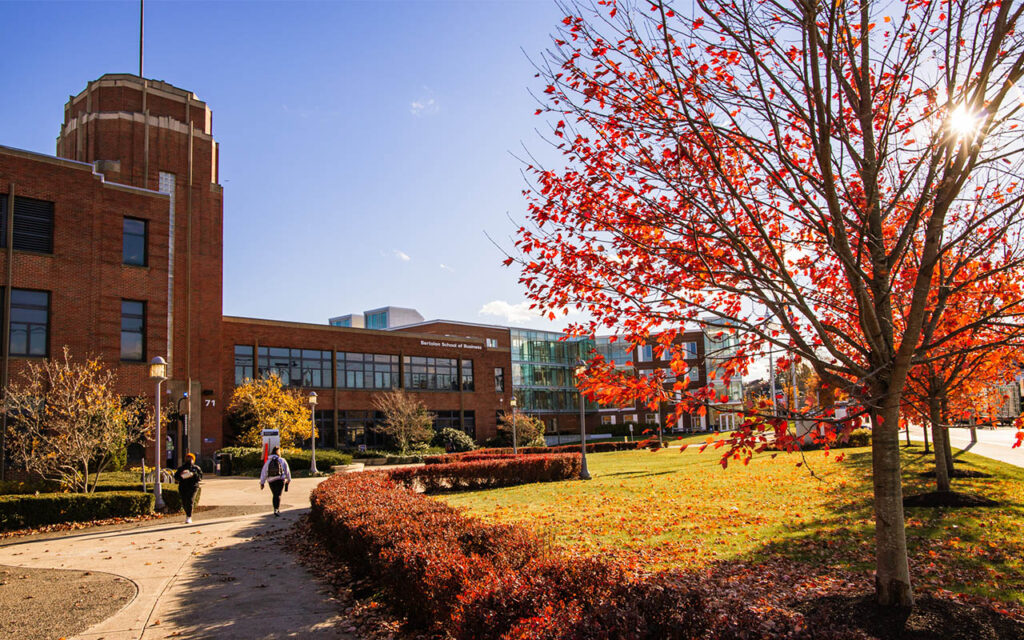
Salem State University, the oldest and largest institute of higher education on Massachusetts’ North Shore, opened its doors in 1854 as Salem Normal School. The school’s original mission was simple – to prepare “young ladies who wish to prepare themselves for teaching”. The campus stayed on Broad Street until 1871 when renovations helped accommodate more students. By 1896, the growing school moved to a bigger campus in South Salem.
The university now stretches across 115 acres with four distinct sites within a mile of each other: North Campus, Central Campus, South Campus, and the O’Keefe Athletic Center. Students enjoy a prime spot just 15 miles north of Boston and a mile from downtown Salem. This location lets them easily explore the city’s rich culture, from the Peabody Essex Museum to the historic sites tied to Nathaniel Hawthorne.
The university takes pride in being the only member of the Massachusetts public higher education system with a graduate program in social work. US News and World Report ranks the School of Social Work among the nation’s top 100 social work programs. It is the highest-ranked public program in Massachusetts.
Leadership comes from an 11-person board of trustees. The governor appoints nine trustees to five-year terms that can be renewed once. The Alumni Association elects one alumni trustee for a single five-year term, and students elect one trustee for a year. John D. Keenan became the university’s 14th president in 2017.
Fall 2023 numbers show 6,239 students at Salem State – 4,853 undergraduates and 1,396 graduate students. Students benefit from a close-knit 12:1 student-to-faculty ratio. The campus community is rich in diversity, with 44.1% of first-year students being persons of color.
The School of Social Work’s modern home at 287 Lafayette Street in Salem offers cutting-edge classrooms, study areas, and welcoming common spaces. Students have easy access to the newly updated Frederick E. Berry Library and Learning Commons and the Harold E. and Marilyn J. Gassett Fitness and Recreation Center.
The university has six academic units, with the MSW program sitting within the Maguire Meservey College of Health and Human Services. The New England Commission of Higher Education’s accreditation ensures high academic standards and institutional integrity.
Programs offered
Salem State University’s Master of Social Work (MSW) program offers multiple pathways that fit different student needs. The program excels with its specialized focus on integrating health and behavioral health practice. Graduates make the most important contributions in healthcare systems that address both physical and behavioral health.
Students can complete the MSW program in several ways. A full-time study path takes two years, while an extended program allows completion in up to four years. This extended option helps students who need to balance work or family responsibilities with their studies.
Students with a Bachelor of Social Work (BSW) can take advantage of Salem State’s Advanced Standing option to get their MSW faster. The Fall Start Program also gives flexible completion times to students starting in September.
Salem State’s Online MSW Program is a three-year part-time option that gives students maximum flexibility. Students in this program must:
- Take courses during spring, summer, and fall semesters
- Join weekly virtual courses, usually on Wednesdays at 5 PM and 7 PM
- Complete two required practicum experiences in Massachusetts
- Attend up to two in-person meetings each year to promote community connections
The MSW coursework lets students customize their education through practice and theory sequence classes focused on specific populations. Students can build their skills with electives that interest them, such as Trauma Informed Practice, Substance Abuse, Death and Bereavement, Disability Policy, Working with Military Families, and Social Work Practice with Immigrant and Refugee Families.
Practicum experiences are the foundation of the program. Salem State has built strong partnerships with agencies in Greater Boston, the North Shore, Merrimack Valley, and throughout Massachusetts. Students can complete internships during the academic year (16-20 hours weekly from September through May) or as summer block internships (32-40 hours weekly from mid-May through August). Your current workplace might qualify to fulfill at least one practicum requirement if it meets specific criteria.
The MSW curriculum prepares students to work directly with individuals, families, groups, and organizations. The program meets today’s workforce needs in a variety of settings. Evening and online course options make the program accessible to more students.
About the online program
Salem State University’s online MSW program offers a flexible way to earn your degree while managing work and personal life. Students can complete this part-time program in three years with easy access to quality education and professional growth opportunities.
The online MSW holds the same high standards as the on-campus program but comes with a structure that works well for remote students. Classes run during spring, summer, and fall semesters, with virtual sessions scheduled on Wednesday evenings at 5 PM and 7 PM. This regular schedule helps students plan their work and family time around their studies.
The program’s curriculum matches Salem State’s mission to encourage transformative learning experiences that help graduates become leaders who drive social change and justice. Of course, the program focuses on integrated health and behavioral health specialization, which includes several important areas:
- A combined approach that looks at micro, mezzo, and macro systems
- Practice, policy, research, and field education that blend together
- A complete understanding of physical, mental, and behavioral health
Students must complete two practicum experiences in Massachusetts alongside their online classes. These real-world learning opportunities help build professional skills. On top of that, students need to attend up to two in-person meetings each year to build community connections and grow their professional network.
The university works hard to make the program accessible to working professionals. While they offer more evening and online courses for flexibility, they can’t guarantee students will complete everything online or during evening hours.
Students who need more time can take up to four years to finish, especially when they have multiple responsibilities. This shows how the university supports different student needs while keeping academic standards high.
The online MSW program builds on the same solid foundation as the traditional program. Students learn based on the behavioral health guidelines described by the U.S. Substance Abuse and Mental Health Services Administration (SAMHSA). This prepares graduates to tackle today’s social work challenges effectively.
Accreditation
Quality assurance is a vital factor in choosing a graduate program. Salem State University’s MSW program has earned full accreditation from the Council on Social Work Education (CSWE). Your degree will be nationally recognized because it meets strict standards for social work education, which boosts your employability and professional credibility.
Salem State’s MSW Program has carved a unique place in Massachusetts educational history. The program made history in 1991 by becoming Massachusetts’ first CSWE-accredited MSW degree program in public higher education. It was also the state’s first program with an advanced generalist view. The graduating class of 1989 received this accreditation retroactively, which recognized their academic achievements properly.
The program has managed to keep its accreditation status consistently. Both BSW and MSW programs received their latest full accreditation in June 2010. This recognition proves the lasting quality and relevance of social work education at Salem State.
Salem State follows the CSWE’s 2015 Educational Policy and Accreditation Standards (EPAS). The School of Social Work uses an Assessment Task Force (ATF) that includes members from BSW and MSW programs. This team created an embedded assessment system to promote ongoing quality improvement across the school.
The program evaluates student performance through multiple methods:
- Field instructors evaluate students’ practical performance
- Students assess their own competencies
- Each measure uses a 3.00 standard
- Faculty members want to achieve an 80% success rate
Salem State University has earned accreditation from the New England Commission of Higher Education (NECHE). This university-wide recognition confirms that Salem State meets quality standards through detailed peer reviews.
Choosing Salem State’s MSW program means selecting an education that has showed its steadfast dedication to academic excellence. The program meets professional standards verified by respected accrediting organizations. This makes your degree accessible to more people and valued throughout the social work field.
Admission Requirements
Salem State University’s MSW program looks for candidates who show strong potential to succeed in social work education. The program has several requirements you need to meet. You’ll need to submit a complete application package with a non-refundable $50 application fee.
The academic requirements include:
- A bachelor’s degree from an accredited college or university
- A broad liberal arts background with solid preparation in social/behavioral sciences
- A minimum 3.0 GPA on a 4.0 scale
- Official transcripts from schools where you earned degrees/certificates or completed 60+ credits
The program assesses applications with GPAs below 3.0 individually. Students with lower GPAs might want to add GRE or MAT scores to strengthen their applications.
Your application needs two references from undergraduate/graduate professors or supervisors. These can come from your work, internships, or volunteer experiences in human services. Your professional statement plays a vital role in your application. Take time to craft this document well since it showcases your critical thinking and writing abilities.
Make sure to include your resume with the application. Previous work or volunteer experience in social services makes your application stronger, though it’s not required. You might need to interview as part of the assessment process.
International students have extra steps to complete. Students from schools outside the United States must provide transcript evaluations from approved agencies. They also need to prove their English proficiency where applicable.
Advanced Standing applicants need these additional materials:
- A BSW or social welfare degree from an accredited institution earned within 5 years of application
- One recommendation from a social work faculty member or work supervisor
- Final BSW Practicum Evaluation from senior year field placement
International students seeking advanced standing must show their degree matches accredited baccalaureate degrees through the International Social Work Degree Recognition and Evaluation Service.
The program accepts applications for spring, summer, and fall terms. Rolling admissions continue until about one month before each semester starts. Most applicants hear back within 3-4 weeks after completing their application.
Tuition
The cost of a Master of Social Work degree needs careful financial planning. Salem State University groups its graduate tuition by price, and the MSW program sits in Price Group 2. In-state students will pay $529.70 per credit for the 2025-26 academic year. This amount breaks down to $140 for tuition, $370.20 for course fees, and a $19.50 capital improvement fee. Students from out of state pay $627.60 per credit, with a higher base tuition of $230.
A standard 9-credit semester costs in-state graduate students about $9,534.60 per year. Out-of-state students pay around $11,296.80. Your specific program and credit load might change these numbers.
MSW program’s additional expenses need consideration. Field placement fees range from $100 to $250 per course. Lab fees ($25-$500) and clinical fees ($15-$100) might apply based on your course choices.
Salem State makes graduate education affordable. Many students finish their degree with minimal debt. The university’s financial support options include:
- Graduate assistantships with monthly stipends for 10 hours of weekly work and tuition benefits (except directed studies, arranged courses, and thesis courses)
- Student Success Coach roles that come with tuition benefits and valuable campus work experience
- Full-time Commonwealth of Massachusetts employees get 50% off their tuition
These opportunities deserve your attention during educational planning. Salem State’s website features an interactive worksheet to help you calculate total attendance costs.
The listed charges might change with yearly adjustments. The university’s financial aid office can give you current tuition information and guide you through funding options right now.
Additional Information
Salem State University’s MSW program graduates enjoy significant career advantages. Recent data shows their median salary reaches $59,851, which is a big deal as it means that the national median of $51,347 for social work master’s degree holders. The university’s bachelor’s level social work graduates also earn well at $45,450, higher than the national average of $37,334.
Social work careers show remarkable growth potential. Several specialties will grow by 20 percent or more in the next decade. These growing fields include:
- Mental health counseling
- Healthcare social work
- Substance abuse and behavioral disorders
- Marriage and family therapy
The university celebrates its successful graduates through the annual Outstanding Social Worker Alumni Award that recognizes their exceptional professional contributions. The Friends of the School of Social Work helps alumni stay connected through networking events and professional growth opportunities.
Students receive detailed support throughout their academic journey. They can access career services to build resumes and practice interview skills. The Center for Academic Excellence provides tutoring and mentoring support. Nurse practitioners and mental health professionals staff the counseling and health services.
Salem State understands unexpected financial hardships. The university’s Emergency Fund helps students who face job loss, medical expenses, or housing/food insecurities. Students can also access the university’s food pantry when they need immediate assistance.
The university’s MSW program demonstrates steadfast dedication to equity and social justice. The core team participates in equity-focused trainings and inclusive excellence initiatives. These values spread through the curriculum and campus culture, preparing students to work ethically and effectively in social work practice.