
Montclair State University MSW
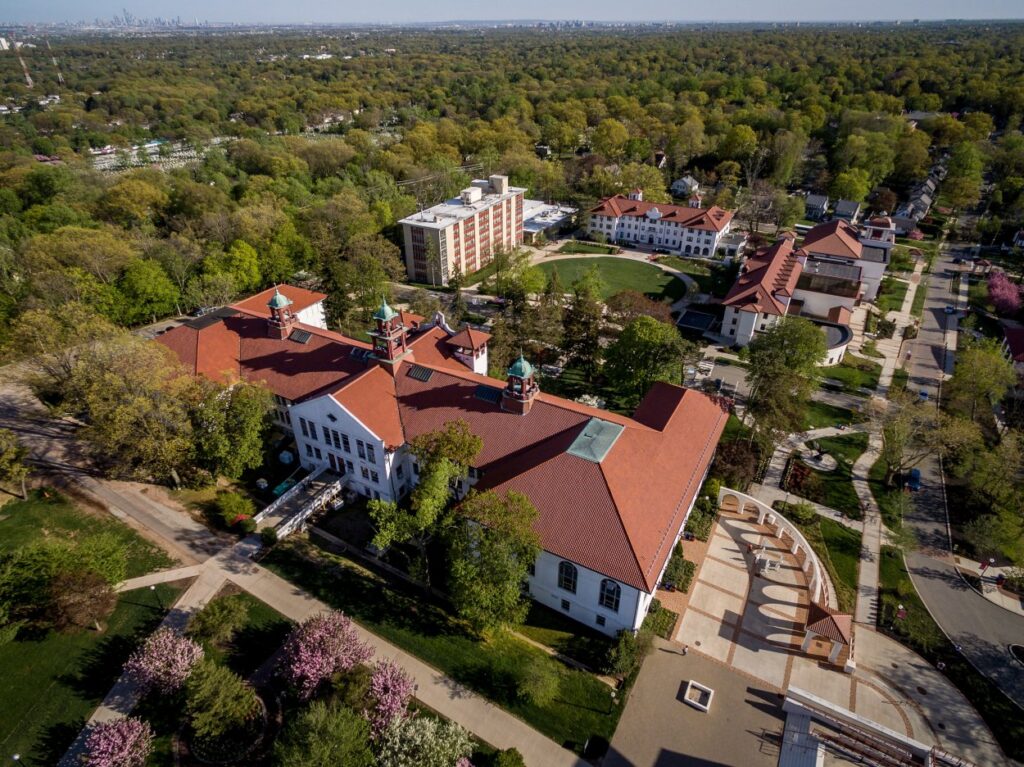
Montclair State University is New Jersey’s second largest institution of higher learning. Its story began in 1908 as the New Jersey State Normal School. The institution has changed substantially over the last several years. What started as a teacher training institution now offers more than 300 programs through 14 colleges and schools at all degree levels.
The main campus sits on 252 acres spread across the New Jersey communities of Montclair, Little Falls, Clifton, and Bloomfield. Students enjoy excellent accessibility with two train stations connected directly to campus. The Montclair Heights station serves the south end while the Montclair State University station connects to the northwest end.
National recognition and academic standing continue to grow for the university. The U.S. News & World Report 2026 Best Colleges rankings places Montclair State at ranked #158 among national universities. The institution ranks #9 nationally among universities for social mobility and ties for fifth among public institutions. These rankings show how well the university helps economically disadvantaged students graduate and achieve the American Dream.
President Jonathan Koppell’s leadership has brought record-breaking success to the university. The entering class size has grown larger for three consecutive years, pushing total enrollment to its highest point ever. Today, 23,546 students call Montclair State home – 18,062 undergraduates and 4,508 graduate students. Students benefit from individual attention with a 17:1 student-to-faculty ratio and average class sizes of 24 students.
The university’s student population reflects its steadfast dedication to diversity. More than half the students identify as underrepresented minorities. Montclair State holds the distinction of being New Jersey’s largest Hispanic-Serving Institution, educating more Latinx students than any other state university. This diverse community thrives, with graduation rates exceeding state and national measures.
Global presence has grown remarkably at the university. International enrollment jumped from nearly 300 students in fall 2020 to almost 1,000 in 2024. Students now represent 75 different countries, showcasing Montclair’s worldwide appeal.
Prospective students find an 88% acceptance rate and exceptional value at Montclair State University. Forbes recognizes it among the 25 Best Buy Colleges in the Northeast. The university achieves a 46% four-year graduation rate and ranks seventh among national universities for graduation rate performance in 2022.
Programs offered
Montclair State University’s Master of Social Work program gives students the skills they need to practice social work ethically, with cultural competence and evidence-based methods. We focused on developing leaders who work with children, youth, and families in a variety of communities. The program comes in multiple flexible formats that fit different student needs.
Students who choose on-campus learning have these attendance options:
- Full-time Day Cohort: Classes meet Tuesdays and Fridays (8 a.m. to 4:45 p.m.), taking 2 years to finish
- Full-time Evening Cohort: Classes meet Mondays (5:20 p.m. to 8:05 p.m.) and Tuesdays/Thursdays (5:20 p.m. to 11 p.m.)
- Part-time Options: Extended 3-year or 4-year completion tracks
The university launched a fully online MSW option that works great for busy professionals. This 60-credit program takes 3 years to complete with both live and self-paced coursework. Live online sessions happen Mondays and/or Wednesdays from 6 p.m. to 8:45 p.m..
Students who earned their Bachelor’s in Social Work from a CSWE-accredited institution within the last 5 years can qualify for Advanced Standing status. This lets them complete their MSW in just one year.
Whatever format you choose, the MSW is a 60-credit program that uses a unique cohort model. Students move through their courses together, which encourages strong bonds with classmates and faculty. The program combines classroom learning with hands-on experience at human service agencies.
The CSWE fully accredits the on-campus MSW program, and the online version is working toward accreditation. Both formats share the same focus on Children, Youth and Families. This prepares graduates to work in mental health clinics, schools, hospitals, community centers, government agencies, and private practice.
Small class sizes and regular faculty interaction create an ideal setting for deep learning. Students gain real-world experience through supervised practicums at mental health centers, schools, hospitals, child welfare agencies, and correctional facilities. Online students complete two in-person practicums during regular business hours.
Graduates can pursue New Jersey licensure as Social Workers, Clinical Social Workers, or certified School Social Workers.
About the online program
The online MSW at Montclair State University lets working professionals advance their social work education without putting their careers on hold. Students get the same high standards as the campus program in a format that works with their busy schedules.
Students can finish this 60-credit curriculum in three years by taking classes year-round during fall, spring, and summer terms. The program blends live and self-paced learning to give students maximum scheduling freedom while keeping them connected. Live Zoom sessions happen Monday and/or Wednesday evenings from 6:00 to 8:45 p.m. Students complete other coursework whenever it suits them best.
The online program matches its campus counterpart. It focuses on Children, Youth and Families and teaches students to help diverse groups through culturally-responsive methods. The program builds key skills in:
- Communication and critical thinking
- Empathy and ethical decision-making
- Culturally-responsive assessment and intervention
Students can shape their education through elective courses. These classes help build extra skills that match their career goals, like school social work, trauma-informed practice, and forensic interviewing of children.
The program combines online learning with hands-on experience. Students complete two in-person practicums during business hours at places like:
- Mental health centers
- Non-profit agencies
- School settings
- Hospitals
Canvas, Montclair’s easy-to-use learning platform, delivers all online coursework. Students also get full support through the Online Programs Student Center, IT Service Desk with tier II technical help, online tutoring at the Center for Academic Success & Tutoring (CAST), and writing help from the Center for Writing Excellence.
Montclair’s campus MSW program has full Council on Social Work Education accreditation. The online program is working toward CSWE accreditation. The Spring 2026 cohort welcomes applications now – a perfect time to take your social work career further.
Accreditation
Montclair State University’s Master of Social Work program reached a major milestone in 2020. The program earned full accreditation from the Council on Social Work Education (CSWE) during its third year. This prestigious recognition makes it one of just seven CSWE-accredited MSW programs in New Jersey and puts it among 288 such programs across the country.
Students must complete a multi-year evaluation to earn accreditation. Programs need to meet specific standards throughout the candidacy period. Montclair State achieved this milestone sooner than expected, even as the pandemic created challenges. The program showed it met CSWE’s 2015 Educational Policy and Accreditation Standards. Their curriculum addresses the unique needs of communities their graduates will serve.
What CSWE Accreditation Means for Students
Students and graduates benefit significantly from this credential:
- They can pursue various levels of professional licensure in New Jersey
- Graduates prove themselves as qualified professionals ready to provide ethical and effective social work practice
- Their education meets national standards for social work practice
- They gain boosted professional credibility during job searches
“Accreditation ensures that graduates of the MSW program are qualified professionals who provide ethical and effective social work practice often to vulnerable and marginalized members of society,” explains Lynette Reitz, associate professor and MSW program director.
What Accreditation Means for Faculty and Program
CSWE accreditation raises the program’s status in several ways:
- Faculty can apply for federal grant funding for their research
- The program receives greater recognition within the social work education community
- Community agency partnerships grow stronger
Keep in mind that the on-campus MSW program holds full CSWE accreditation. The newer online program actively seeks this same designation. In spite of that, both programs maintain similar curriculum standards and learning outcomes.
Montclair State’s broader institutional accreditation comes through the Commission on Higher Education of the Middle States Association of Colleges and Schools. This recognition confirms the university’s standards meet national endorsements across programs. It also provides a framework to assess quality continuously.
The program’s quick rise to accreditation highlights the social work faculty’s steadfast dedication. Their commitment prepares students to work effectively with children, youth, and families.
Admission Requirements
Getting into the Montclair State University MSW program means meeting several criteria that are designed to help students succeed. The admissions team looks at each candidate’s complete profile. They assess both academic achievements and personal qualities needed to become a successful social worker.
You need a bachelor’s degree from an accredited institution with a recommended minimum GPA of 3.0. The admission committee takes a complete look at applications. They sometimes accept students with lower GPAs who show strong potential in other areas. Your academic record is just one part of what makes you a good candidate.
You’ll need these supporting materials to show you’re ready for graduate-level social work education:
- Two letters of recommendation from professors, employers, or supervisors who know your academic abilities or professional capabilities
- A personal statement that clearly shows your educational and professional goals
- A current resume (use the program faculty’s format example)
- Official transcripts from all colleges you’ve attended
The MSW program at Montclair State University doesn’t require GRE scores. This makes the program available to qualified candidates whatever their test scores might be.
Students with BSW degrees from CSWE-accredited programs who want Advanced Standing status need to submit extra materials:
- A final field evaluation from your BSW program that shows your performance ratings in CSWE social work competencies (with student name, school name, agency/placement site name, performance ratings, and proper signatures)
- An assessment and recommendation from your previous social work program director
Students with ongoing field placements can submit a midterm evaluation at first. They’ll need to provide the final evaluation before enrollment.
The faculty might ask for an interview as part of their assessment. This gives you a chance to explain more about your application and show the interpersonal skills that social workers need.
The application follows Montclair State University’s standard graduate admission steps. You’ll create an account in the application portal and submit all required documents by the deadlines. The MSW admission committee reviews applications and makes final decisions based on your complete application package.
Tuition
Montclair State University’s MSW program stands out with its affordable pricing structure. At $619.78 per credit (plus $35.60 in mandatory fees), students can complete the 60-credit degree for about $39,322.80. This makes it one of the most budget-friendly graduate social work programs in New Jersey.
The university keeps its online MSW program costs competitive. Unlike other schools that charge extra for online classes, Montclair State maintains reasonable rates for students who learn remotely.
Financial aid is a vital part of making the MSW program available to qualified candidates. Students at Montclair get great news about financial support – over 76% receive some form of aid that helps cut down their educational costs. This is a big deal as it means that many graduates end up with $10,000 less debt than the national average.
Graduate students can tap into several scholarship opportunities:
- The Albert Wang Dissertation Award gives students a $2,265 tuition break in spring semester
- Students can receive up to $8,000 from the Vivien L. Kwiatek Scholarship based on financial need
- Future teachers can get up to $2,500 through the Mary Bondon Graduate Scholarship
First-generation college students might qualify for an extra $1,000 to help with their education costs. Students from minority backgrounds who study healthcare management can also find targeted financial support.
Students should file their FAFSA applications early to get the most federal aid possible. The financial aid office helps students find all possible funding sources to reduce their out-of-pocket costs.
International students pay slightly more than domestic students, but Montclair State’s rates remain competitive with other schools in the region. The New Jersey Dream Act opens up in-state tuition rates to undocumented residents.
Additional Information
The success of Montclair State University’s MSW experience lies in its practicum education. Students must complete 900 hours of supervised field practice. This hands-on training blends classroom knowledge with ground experience in social work settings of all types. Students in their first year (generalist practice) dedicate about 15 hours weekly to reach 400 hours. Students in specialized year and advanced standing programs spend roughly 18 hours weekly to complete 500 hours.
Montclair’s mutually beneficial alliances with agencies throughout New Jersey provide students with placement opportunities. Students can work in a variety of settings such as mental health facilities, behavioral health centers, child welfare organizations, community-based practices, domestic violence prevention programs, and schools. These practical experiences are a great way to get career preparation.
Montclair’s program stands out because of its supportive structure. Students benefit from a small cohort model that ensures individual attention. Each student collaborates with a practicum instructor who provides weekly supervision and a practicum liaison who tracks their progress.
MSW graduates become part of a powerful network of over 150,000 alumni across all 50 states and more than 75 countries. You should be encouraged that career prospects continue to grow. The Bureau of Labor Statistics shows social work employment growth at 6% (2024-2034), and this is important as it means that it is greater than the average for all occupations. Graduates often become mental health counselors, family therapists, case managers, addiction counselors, healthcare social workers, school social workers, community organizers, and child advocates.