
Master of Social Work at Marywood University
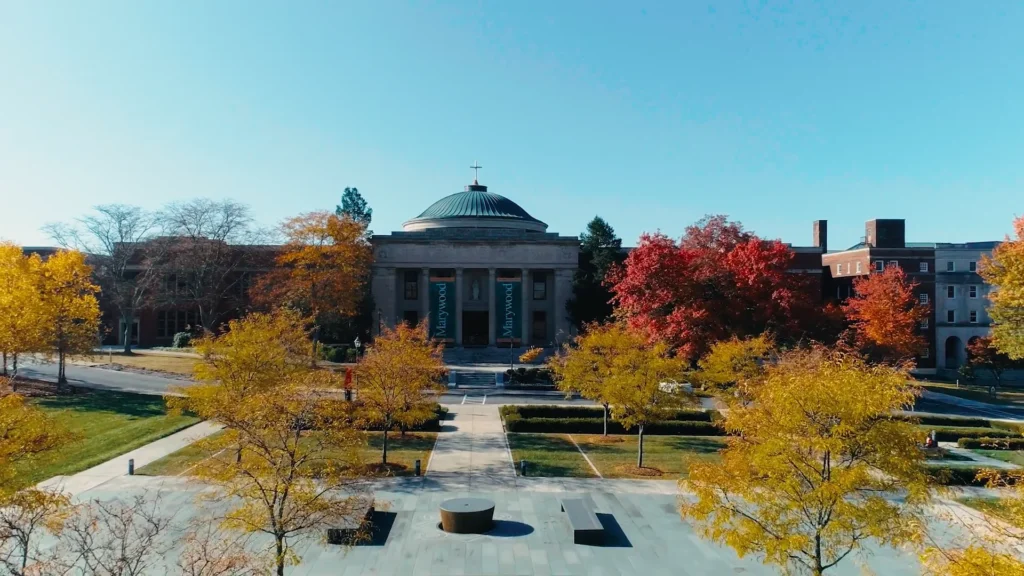
106 years old, Marywood University blazed trails as Pennsylvania’s first Catholic college for women and Northeastern Pennsylvania’s pioneer women’s college. The university sits on a lively 115-acre campus in Scranton, Pennsylvania. This private Catholic institution grew into a university that stands out for academic excellence, community spirit, and service to others.
Students thrive in small classes with a 12:1 student-faculty ratio. Professors know their students by name, which makes asking for help much easier. With classes of fewer than 20 students making up 57% of all courses, students get more chances to join discussions and receive personal attention.
Marywood University got impressive rankings that showcase its dedication to quality education:
- #14 Best Value School in the 2026 U.S. News & World Report’s Best Colleges rankings
- #29 Best College for Veterans in the Regional Universities North category
- #61 in Best Regional Universities North
- #88 in Top Performers on Social Mobility
The 2025 Niche College Rankings placed Marywood at #40 for Best Colleges for Architecture in America and #5 for Best Catholic Colleges in Pennsylvania.
The university’s community consists of 2,531 students – 1,834 undergraduates and 697 graduate students. Women make up 64.4% of undergraduate students, while men account for 35.6%. The student population breaks down to 76% White, 13% Hispanic, 3% Black, 3% Asian, and 3% representing two or more races.
Making education affordable remains crucial at Marywood, with 99% of new students getting financial aid. The university’s all-encompassing approach to education shows in its structure of four colleges and specialized schools, like the School of Social Work.
The institution became Marywood University in 1997 and kept growing its academic programs. Today, exceptional faculty members teach more than 80 undergraduate, graduate, and doctoral degree programs. Students can also choose from 24 varsity sports, creating a rich campus life.
The campus nestles in a historic residential neighborhood at the Pocono Mountains’ foothills. Students can enjoy outdoor activities while staying within driving reach of major northeastern cities. New York and Philadelphia are just 2 hours away, Washington D.C. is 4 hours away, and Boston takes 5 hours to reach.
Programs offered
Marywood University’s Master of Social Work (MSW) program has managed to keep continuous accreditation by the Council on Social Work Education (CSWE) since 1969. Students can complete this 60-credit program in two years with full-time study or three years part-time.
The program’s curriculum splits into two main parts: generalist foundation curriculum and generalist specialization courses. Students build broad social work skills first and then move on to specialized knowledge as they advance.
The generalist foundation has 11 core courses (33 credits) that cover:
- Social Work Practice (including individual, group, and community work)
- Human Behavior and Social Environment
- Social Work Research
- Social Welfare Policy
- Field Education Experience
Students then take six generalist specialization courses (20 credits) that build on their foundation knowledge. This helps them develop advanced practice skills. The final part lets students pick from many electives about specialized intervention methods and new social welfare issues.
Field education plays a vital role in the MSW experience. Students participate in shared, inter-professional learning with qualified supervisors. The program requires 920 total field hours—440 hours in generalist foundation placement and 480 hours in specialized practice placement.
The program offers several options based on student backgrounds and career goals. Students with a BSW from a CSWE-accredited program might qualify for advanced standing status. This could apply up to 21 credits toward their MSW degree. It speeds up completion time by a lot, making it attractive for qualified students.
Students can also choose from these dual degree options:
- MSW/M.P.A. (Master of Public Administration)
- MSW/M.H.S.A. (Master in Health Services Administration)
- MSW/Master in Clinical Counseling
- MSW/Master in Divinity
The university offers Home and School Visitor Certification. Dedicated students can earn both BSW and MSW degrees through an accelerated five-year program, which will give a boost to their career options.
The MSW curriculum focuses on ethical, culturally responsive practice based on Catholic identity’s core values, respect, service, and excellence. The program enables students to help marginalized populations, especially when you have an intersectional perspective.
About the online program
Marywood University’s online Master of Social Work program shares the same values and curriculum as its campus-based version, with added benefits through digital delivery. The program builds on Catholic identity, respect, service, and excellence to prepare you for ethical, culturally responsive, and evidence-informed professional practice.
Students enjoy remarkable flexibility with Marywood’s online learning approach. You can work on your coursework during evenings, lunch breaks, or any time that fits your schedule. This self-paced structure lets you adjust your study time during busy periods without falling behind.
The online MSW program breaks down geographical barriers to quality education. You can access Marywood’s respected curriculum from any location, whether you live in a city or rural area, without moving expenses. Students learn in a global environment and connect with classmates and instructors from different regions, which adds depth to the educational experience.
The curriculum flows as one integrated whole, with each semester building on previous knowledge. Students progress naturally from generalist content to advanced specialized knowledge. Key themes running throughout include:
- Ecological point of view
- Social work values and ethics
- Appreciation of diversity
- Social and economic justice
- Strengths point of view
- Professional use of self
- Systematic mode of asking
- Populations at risk
Small class sizes in Marywood’s online MSW program encourage meaningful connections between faculty and students. Professors take time to understand your strengths and career goals, offering personalized guidance. Faculty bring valuable industry connections that improve your networking opportunities and share insights based on current job market trends.
Students participate through dynamic discussions, collaborative projects, and share different points of view in an interactive learning environment. The 60-credit program helps you develop specialized skills that employers value, and you can complete your degree in two years (full-time) or three years (part-time).
Field education plays a vital role in both online and on-campus formats. Students complete 920 total field hours (440 in generalist foundation placement and 480 in specialized practice placement), connecting classroom theory with ground application under qualified supervision.
Accreditation
Marywood University’s social work education quality and credibility stand on solid accreditation foundations. The School of Social Work’s Master’s and Baccalaureate degree programs are fully accredited by the Council on Social Work Education (CSWE). This professional recognition serves as the gold standard in social work education that ensures your degree meets national standards to prepare for professional practice.
The MSW program at Marywood has an impressive accreditation history. The program completed its accreditation review in 2024, earning an eight-year term until 2032. This steadfast dedication to meeting strict educational standards shows the program’s excellence in social work education. Graduates gain the knowledge, values, and skills they need because the School of Social Work consistently follows CSWE standards.
Marywood University’s credentials extend beyond program-specific accreditation. The Middle States Association of Colleges and Schools (Commission on Higher Education) and Pennsylvania’s Department of Education have granted institutional accreditation. This status will give a clear measure that the university’s academic programs and administrative functions meet quality standards.
CSWE accreditation reviews social work programs based on curriculum design, educational outcomes, and program effectiveness. Students in Marywood’s MSW program receive several key benefits: state licensure eligibility, qualification for federal programs and jobs, and easier paths to advanced degrees.
Marywood’s 54-year old MSW program stands among Pennsylvania’s CSWE-accredited institutions. The university has built a legacy of excellence in social work education. The curriculum and teaching methods have evolved with professional standards, showing the university’s adaptability.
Students who choose Marywood’s MSW program enter an environment that shows sustained quality through multiple accreditation cycles. This continuous external validation proves the program knows how to prepare you for today’s social work challenges in settings of all types with diverse populations.
Admission Requirements
Marywood University’s MSW program looks for candidates who show promise in graduate-level social work education. The admission team will assess your academic history, work experience, and readiness to take on advanced studies.
You need a bachelor’s degree from a regionally accredited college or university to qualify for the MSW program. Marywood prefers applicants who managed to keep a “B” average in their undergraduate studies. This shows you can handle graduate-level academic work. The university uses rolling admissions, but you need to watch specific application deadlines based on when you want to start.
Here’s what you need for your application:
- Completed online application with the non-refundable application fee of $50
- Official transcripts of all previous academic work
- Two letters of recommendation from people who know your educational background
- Personal statement
- Resume or curriculum vitae
- Copy of passport (for international applicants)
The advanced standing status speeds up the program, but it’s only available to students with a BSW from a CSWE-accredited program. Your transcript review might give you up to 21 credits toward the generalist year of the MSW curriculum. You’ll need a minimum grade of “B” in each relevant undergraduate course to qualify.
Once you start your studies, you must meet candidacy requirements to stay on track for graduation. The program tracks several metrics. You need a minimum 3.0 GPA after finishing 12 credits (9 credits for full-time advanced standing students). Your field education performance matters just as much – you must show the skills outlined in your Learning Agreement.
The School of Social Work Director will send you a formal letter if you don’t meet candidacy requirements. This might lead to an Academic Review meeting and could result in program dismissal or academic probation.
You can take independent study courses after completing one year of full-time study (or equivalent part-time coursework) in the MSW program. You’ll need a 3.50 quality point average to qualify, and there are limits on the number of independent study courses.
Make sure you submit all documents by the deadline. Missing documents can delay your admission decision.
Tuition
The MSW degree at Marywood University comes with financial commitments you need to plan carefully. The Master of Social Work program costs $650 per credit for the 2025-26 academic year, which is by a lot lower than what other graduate programs charge.
Marywood provides several financial assistance options to help you manage these costs as a matriculated MSW student. The university’s graduate scholarships can only be used for tuition during Fall and Spring semesters. Financial aid is available to 99% of Marywood’s full-time students.
Graduate assistantships provide great funding benefits. Students with assistantships must take at least 6 graduate credits each semester. Full-time assistants receive tuition remission for 4.5 credits in fall and spring semesters. Part-time assistants get 2.25 credits of tuition remission per semester.
Federal funding options can help cover additional costs. The Federal Direct Unsubsidized Loan program lets graduate students enrolled in at least three credits borrow up to $20,500 yearly. Students can also use the Federal Direct Graduate PLUS Loan program to cover any remaining costs between their attendance expenses and other financial aid.
The Free Application for Federal Student Aid (FAFSA) opens doors to both university and federal funding. You must complete this application to receive any financial aid at Marywood.
Marywood recovers institutional funds proportionally if you withdraw from courses mid-semester. The same applies when you resign from an assistantship position during the academic year.
Additional Information
Field education is the foundation of the Marywood MSW experience that bridges classroom theory with ground practice. Students complete 920 field hours—440 hours in generalist placement and 480 hours in specialized practice. BSW graduates with advanced standing status need to complete only the 480 specialized practice hours.
The Field Education Office makes shared work with students to select appropriate settings that match their interests and accessibility needs. Students can find placement opportunities throughout Pennsylvania, upstate New York, and New Jersey. Working professionals can opt for employer-based placements after a review by the Field Education Office.
Students must fulfill these setting-specific requirements before starting any field placement:
- Background checks (State Police, FBI, child abuse clearances)
- Current health exams and immunization records
- Possible drug screenings
Students are responsible for the costs associated with completing these requirements.
Students become eligible for independent study after completing one year of full-time study (or part-time equivalent) with a minimum 3.50 GPA. Non-advanced-standing students can take up to two independent study courses, while advanced-standing students can take only one.
The National Association of Social Workers (NASW) Code of Ethics guides student conduct during professional preparation. The Academic and Professional Standards Review Committee may meet to review and recommend appropriate actions if academic or professional performance concerns arise.