
Marist University MSW
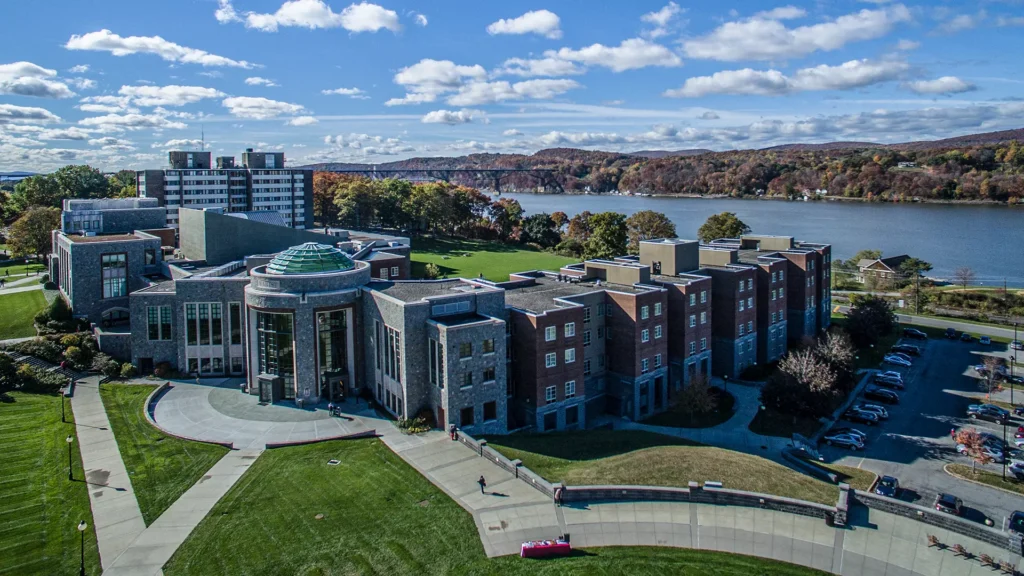
Marist University sits in Poughkeepsie, New York. Students thrive both academically and professionally in this supportive environment. This private not-for-profit institution blends suburban convenience with outstanding educational outcomes, especially when you have graduate programs like the Master of Social Work.
Marist’s student success rates stand above its peer institutions. Their graduates achieve remarkable results – 95.4% find employment or enter graduate school within six months of graduation. Social Work students show equally impressive outcomes, with 93% securing jobs in the same timeframe. These placement rates showcase Marist’s educational quality and career preparation.
Recent surveys paint a clear picture of Marist’s excellence. Students rate their experience highly – 94% are satisfied with academics, while 96% praise the academic services. The university’s student services earn a 94% satisfaction rate, which shows their all-encompassing approach to supporting your educational trip.
Your path to success at Marist begins on day one. The Center for Career Services gives you detailed resources to help shape and refine your career plans. Faculty members work closely with the center and deepen their commitment to alumni connections. This prepares you to succeed in the global workplace.
Marist’s graduate community has about 918 students – 63% women and 37% men. The student body brings together 26.4% racial-ethnic minorities and 2.2% international students, creating a rich learning environment. Most students embrace online learning, with 66.9% taking at least one online class and 59.1% studying exclusively online.
The university has earned several prestigious awards:
- Ranked #1 in the nation for study abroad programs
- Named among the top 10 “Best Colleges for Your Money” by Kiplinger’s Money Magazine
- Recognized among “Colleges That Most Create Futures” by The Princeton Review
- Ranked 4th best academic school in the Regional Universities-North category by U.S. News and World Report
- Ranked 5th for top innovative schools
Small classroom settings at Marist let dedicated faculty provide well-rounded education rooted in liberal arts. The university believes great education happens when students and faculty cooperate. This includes hands-on experiences from internships to study abroad programs and leadership development initiatives.
Marist’s detailed approach prepares you beyond your first job. You’ll be ready for lasting career success in your chosen field.
Programs offered
Marist University’s Master of Social Work (MSW) program gives you two paths to choose from based on your education and career goals. You can complete the entire program online without compromising on academic quality or professional training.
Students without a BSW can join the Two-Year MSW Degree program. This option needs 64 credits and 1,100 hours of clinical internship training. Your journey starts with foundation courses and moves on to specialized training in trauma-informed practice. New groups of students begin their studies in June each year.
The Advanced Standing option might be right for you if you have a Bachelor’s degree in Social Work from a CSWE-accredited program with at least a 3.0 GPA. This fast-track program needs 32 credits and 650 hours of clinical internship training. Students start in June and can finish in just one year. This makes it the quickest way for experienced social workers to get advanced credentials.
Both programs focus on trauma-informed care. You’ll learn how to build stronger, more caring communities through proven methods. The courses look at how trauma affects people and teach you the newest intervention strategies. Every MSW student learns to work with individuals, families, groups, organizations, and communities that have faced trauma.
Your practicum experience plays a vital role in the MSW program. Students work with the practicum office to find placements in their local communities. You might work in child welfare/protection, criminal justice, family counseling, hospitals, macro-placements, nursing facilities, schools, or substance misuse programs. This hands-on work helps you apply what you’ve learned in class to real situations.
The Council on Social Work Education’s (CSWE) Board of Accreditation has granted candidacy status to Marist’s MSW program. This applies to all program options, locations, and ways of teaching. You can trust that the program meets professional standards.
Marist also offers a CSWE-accredited Bachelor’s degree in Social Work. This program values service-learning and community work. Students take part in projects that raise awareness or help organize communities. Senior students spend a full year in a Practicum Education Internship that matches their interests and career goals.
About the online program
Marist University’s online Master of Social Work (MSW) program offers a unique digital learning experience that doesn’t compromise quality. Students can save 30% compared to on-campus options while getting the same high-quality education. This makes advanced social work education more available and budget-friendly.
Students get the university’s signature hands-on approach through innovative digital teaching methods. One-on-one advisement, role-play scenarios, and real-life simulations help develop significant practical skills in the distance format. This detailed online experience really prepares you for ground-level social work practice.
The learning environment blends both asynchronous and synchronous elements. Brightspace, Marist’s learning management system, handles coursework assignments and grading. Students need good internet service and a computer. Weekly 1.25-hour afternoon/evening Zoom sessions in Practicum Seminar courses help students connect with faculty and classmates in the online format.
Experienced social workers who actively practice in the field teach the courses and bring professional insights to students. Students learn to connect theory with practice and prepare for modern social work challenges. Faculty members share their point of view and create enriching internship partnerships. These partnerships build general knowledge and expand skills through trauma-informed clinical approaches.
The curriculum focuses on evidence-based practices in trauma-informed care. Students learn about trauma’s effects on people’s lives and study the neuroscience of trauma. The program teaches ethical and effective ways to work with child, adolescent, and adult trauma victims. This prepares practitioners to provide compassionate and effective care.
The practicum office helps students find fieldwork placements in their communities. Students can work in settings like child welfare, criminal justice, family counseling, hospitals, nursing facilities, schools, and substance misuse programs. Two-Year Degree students complete 1,100 hours – two days weekly in year one, three days in year two. Advanced Standing students complete 650 hours over three days per week.
Marist’s MSW program arranges its curriculum to meet federal professional licensure regulations. The Association of Social Work Boards database shows that most U.S. states and territories accept the curriculum without extra requirements. This gives graduates an easy path to professional practice nationwide.
Accreditation
Program quality at any academic institution depends heavily on accreditation. Marist University’s MSW program has earned both institutional and program-specific credentials that showcase its educational excellence and professional standing.
Marist holds accreditation from the Middle States Commission on Higher Education (MSCHE). The university received this recognition in 1964, and MSCHE reaffirmed it in 2023. This recognition shows Marist’s dedication to maintaining high educational standards in all its programs.
The university has built a strong reputation in social work education. The Council on Social Work Education (CSWE) first accredited Marist’s undergraduate Social Work program in 1981. The program has met every accreditation standard during its regular reviews. The BS in Social Work program now holds full CSWE accreditation and will undergo its next review in 2027.
MSW students should know why accreditation matters. CSWE leads social work education in the United States and sets quality standards as the main accrediting organization. Its recognition matters because CSWE-accredited programs help graduates meet all educational requirements they need for licensure.
Students must complete 900 practicum education hours to graduate from accredited MSW programs. Students with a Bachelor’s in Social Work degree might qualify for Advanced Standing status. This status allows their previous 400 practicum hours to count toward the total. Marist’s thorough vetting system makes sure learning goals, performance evaluations, and supervision match the accrediting body’s program requirements.
CSWE accreditation covers all approved program locations and delivery methods, including online formats. This quality assurance approach helps graduates achieve high success rates on state licensing exams at both entry level (LMSW) and advanced clinical level (LCSW).
Marist University’s MSW program follows these accreditation standards closely. Accredited programs go through regular reviews to maintain their high standards. Students can trust their education meets professional standards and prepares them for licensure requirements in all 50 states.
Admission Requirements
Getting into Marist University’s MSW program requires meeting specific criteria that help identify promising social work students. The application process is simple but gives a full picture of each candidate.
Students from all academic backgrounds can apply to Marist’s MSW program. The standard two-year program doesn’t require a bachelor’s degree in social work. Students need relevant coursework in liberal arts, humanities, philosophy, or social and behavioral sciences from an accredited college or university.
The Advanced Standing program has more specific requirements. Students must have earned a Bachelor’s degree in Social Work from a CSWE-accredited program with at least a 3.0 GPA. BSW graduates who qualify can finish their MSW in just one year.
Here’s what you need to apply:
- 0 minimum undergraduate GPA
- Recommendation letters
- Interview if selected
- High school transcript
- College prep courses
Marist makes the admission process easier. The program doesn’t require GRE scores. The university reviews applications as they come in through their rolling admission system. This means you’ll hear back sooner, but remember all applications must be in by April 15th.
Selected candidates get interview invitations. The university sends admission decisions by email within a week after the interview. This quick response helps students plan their future education better.
Transfer students can bring up to nine credits from other accredited MSW programs. International students need to score at least 550 (paper) or 80 (internet-based) on TOEFL, or 6.5 on IELTS.
Recent statistics show Marist accepted 56 out of 100 applicants. The university’s detailed evaluation looks at academic readiness, professional potential, and commitment to social work values. This process helps maintain high educational standards while creating diverse groups of future social work professionals.
Tuition
Getting a graduate degree needs smart financial planning. Marist University’s MSW program tuition costs $17,200 for the 2024-2025 academic year. This amount balances quality education and affordability for future social work professionals.
Students pay about $950 per credit hour. Marist’s pricing stays competitive among New York State MSW programs. Other programs range from $11,398 at CUNY Hunter College to $51,194 at Columbia University. This places Marist in the mid-range category for graduate social work education.
Students should think over expenses beyond tuition. The total cost includes books and supplies ($2,425 yearly), housing costs ($18,460 for on-campus or $20,220 for off-campus), and personal expenses. The complete annual cost reaches $40,220 for on-campus students or $42,545 for off-campus residents.
Marist helps students through several MSW-specific scholarships. Students with GPAs of 3.5 or higher can receive $2,000-$5,750 through the Graduate Scholars Award. Those with GPAs between 3.2-3.49 might qualify for $1,200-$3,450 through the Graduate Academic Award. Marist alumni get special scholarship options through dedicated funding.
Fall semester bills become available in mid-July and payments are due in early August. Spring billing starts mid-December with January deadlines. Students must check their tuition statements through their myMarist account.
Marist University values graduate education as a vital investment. The Office of Student Financial Services helps make education available to qualified candidates. Nearly 90% of students receive some type of financial help.
Students can download Marist’s Graduate Affordability Guide or talk directly with the Office of Student Financial Services about financial aid, graduate scholarships, merit aid, and private loans.
Additional Information
Marist social work students have access to outstanding career development resources beyond their academic work. Students work closely with faculty mentors, meet visiting alumni, and take part in panel discussions with local social workers. They also join professional development programs that address today’s social work challenges.
The program’s graduates choose from several career paths. Many graduates land roles at local organizations like the Center for Child Abuse Prevention, Children’s Home of Poughkeepsie, Astor Early Intervention Services, New Horizons, and Orange County Safe Homes.
Other graduates choose service programs such as AmeriCorps, City Year, Peace Corps, and Fulbright Scholarships. A recent graduate now works on a community-based economic development project in Arizona through AmeriCorps.
Marist’s Alumni-Student Network, powered by PeopleGrove, makes shared connections between current students and alumni possible through mentorship, networking, and job shadowing. Students can get career advice, resume feedback, and learn about industry trends from experienced professionals on this platform.