
Columbia MSW Program
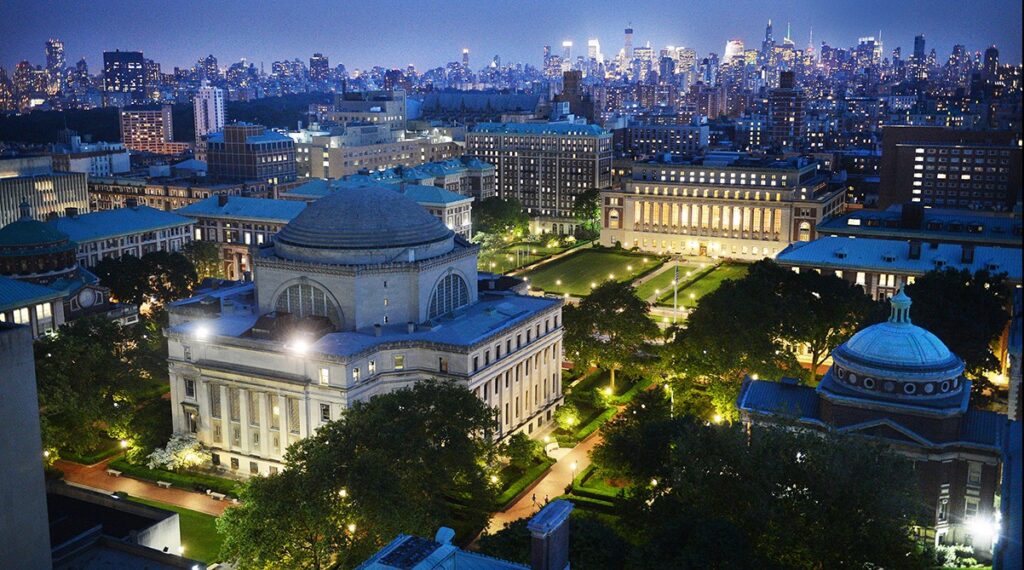
Columbia’s prestigious social work program dates back to 1898, making it the oldest school of social work in the United States. The Charity Organization Society of New York started it as a summer school where volunteers learned more about the people they helped. This small start built the foundation for what would become one of the world’s leading institutions for social work education.
The school’s name changed as the profession grew. Known first as the New York School of Philanthropy, it became the New York School of Social Work in 1917. The name Columbia University School of Social Work came in 1963. The school had academic ties with Columbia University from the start but officially joined in 1940. It became part of the Columbia University Corporation in 1959.
The school shaped modern social work significantly. Its faculty included nationally and internationally known scholars who transformed the profession through their work. Many core elements of today’s social work education started here, including psychiatric social work, child guidance bureaus, research programs, required field work, and doctoral programs.
Today, 1,093 students study under 36 full-time faculty members and 233 part-time instructors. The school received $15 million in external research funding in 2022, showing its strong commitment to advancing social work through research.
Columbia School of Social Work blends rigorous academic theory with ground practice. Students learn to help citizens and communities in New York City, across the nation, and worldwide. The program gives students core social work knowledge while they develop expertise in their chosen areas.
The school launched an award-winning online Master of Science in Social Work in 2015, and hundreds of U.S. students have graduated since. Students take classes from Columbia’s top faculty and complete their practicum at agencies near their homes.
From its modest start to its current role as a leader in social work education, Columbia School of Social Work proves the lasting value of professional social work training and its ability to tackle modern social challenges.
Programs offered
Columbia University’s Master of Science in Social Work (MSSW) program stands out with the most degree options among social work schools. Students at any career stage can find a suitable path, whether they’re fresh graduates or seasoned professionals.
The online MSSW program comes with six unique paths: Two-Year, Advanced Standing, Part-Time, Part-Time to Full-Time (Extended), One-Year Residency for Working Professionals (Reduced Residency), and Transfer. Each path meets specific student needs. To cite an instance, working students can take the Part-Time path while getting the same credits and practicum hours as full-time students. The Part-Time to Full-Time path lets students start slow and finish their degree in three to four years by ramping up their course load later.
The traditional standing track needs 60 course credits and 1,200 hours of field practicum. BSW holders can take the Advanced Standing track with 33 credit hours and 600 hours of field education. Students with two years of full-time direct practice experience can choose the Reduced Residency track, which requires 900 hours of field education.
Columbia’s MSSW program shines with its specialization options. Students pick one of four method specializations:
- Advanced Clinical Practice (ACP) – Developing clinical skills with families, individuals, and groups
- Integrated Practice and Programming (IPP) – Spanning individual and community practice levels
- Policy Practice (POL) – Focusing on policy analysis, advocacy, and research
- Leadership, Management, and Entrepreneurship for Social Justice (LME) – Developing organizational management skills
Students also select from seven fields of practice: Aging; Contemporary Social Issues; Family, Youth, and Children’s Services; Health, Mental Health, and Disabilities; International Social Welfare and Services to Immigrants and Refugees; School-Based and School-Linked Services; and World of Work.
The university partners with other Columbia graduate schools and affiliates to offer ten dual degree programs. Students can combine their MSSW with Business Administration (MBA), Public Health (MPH), Law (JD), or International Affairs (MIA). These dual-degree programs usually save about a year of study since they need fewer credits for each degree.
The School also offers three minors: Advocacy in the Criminal Legal System, International Social Welfare, and Social Welfare Policy. This complete program lineup helps Columbia create social work leaders ready to tackle complex social challenges in various fields.
About the online program
Columbia’s online Master of Science in Social Work blends academic excellence with flexible distance learning. This award-winning program delivers the same quality as its on-campus counterpart. Students learn through Adobe Connect’s live sessions and Canvas learning management system’s self-paced modules.
“The greatest benefit of graduating from the Online Option is my knowledge of technology. Being an online student is like getting a dual degree in your major and in media,” says Patricia M. Desert, a Columbia MSSW graduate. Her words highlight how students become skilled at both social work and digital tools.
Students in the traditional track complete 60 course credits with 1,200 hours of field practicum. They can finish in two years full-time or four years part-time. BSW holders can take the advanced standing track with 33 credit hours and 600 field education hours in one year. The Reduced Residency track needs 900 field hours instead of 1,200. This option works best if you have at least two years of full-time direct practice experience.
Online students can specialize in one of four concentrations:
- Advanced Clinical Social Work Practice – Preparing for direct practice with individuals, families, and groups
- Advanced Generalist Practice and Programming – Developing skills for both individual and community-level work
- Policy Practice – Focusing on policy analysis, advocacy, and research
- Social Enterprise Administration – Preparing for mezzo and macro-level management roles
The PROP framework grounds the curriculum by getting into power, race, oppression, and privilege in society and social work practice. Students learn how anti-Black racism and white supremacy exist within systems and institutions. This knowledge strengthens their ability to challenge dominant structures while promoting anti-oppressive practices.
Columbia’s rich academic community welcomes online students fully. They join events with influential scholars, work on research with the school’s 16 research centers, and take part in nearly 30 student caucuses. The Practicum Education Department helps students find placement opportunities close to home.
Students spend 21 hours each week in their practicum, usually across three days. This hands-on experience brings theoretical concepts to life through practical skill development.
Accreditation
Columbia’s Master of Science in Social Work program’s quality assurance is a vital marker through accreditation. The MSSW degree features a progressive course sequence that meets the standards set by the Council on Social Work Education (CSWE), the school’s accrediting body. CSWE’s specialized accreditation verifies Columbia’s social work programs’ educational quality.
CSWE fully accredits every MSSW pathway at Columbia. This accreditation will give graduates the educational requirements they need for entry-level licensing in jurisdictions of all types. Students can complete their degree through any approved program location or delivery method, including the online MSSW option, as long as the program grants the degree and lists it as social work.
Columbia University also holds institutional accreditation from the Middle States Commission on Higher Education (MSCHE). The U.S. Secretary of Education officially recognizes MSCHE to conduct accreditation activities for higher education institutions throughout the United States. These activities include distance education and direct assessment programs.
Students get great benefits from the dual accreditation of Columbia’s social work program. University-level accreditation allows students to access federal financial aid, including grants and loans. The CSWE accreditation means your degree meets social work licensure educational requirements in states and jurisdictions of all types.
Regular evaluations of Columbia’s curriculum, faculty qualifications, and educational outcomes form part of the accreditation process. Social work students benefit from this oversight as it lines up their education with professional standards in foundational documents like the NASW Code of Ethics.
CSWE accreditation proves most important because it shows how the curriculum prepares graduates to demonstrate core social work competencies. Columbia’s School of Social Work maintains its leadership position in social work education through this rigorous accreditation process. Students benefit from these established quality standards throughout their professional careers.
Admission Requirements
Columbia’s prestigious Master of Science in Social Work program has specific admission requirements. Candidates need a bachelor’s degree from an accredited institution. They should show their dedication to social work through internships or meaningful life experiences.
The application package must include these materials:
- Online application with a $75 application fee
- Official transcripts from all post-secondary institutions attended
- Detailed resume showing professional and volunteer experience
- 2-3 essay responses to program-specific prompts
- Two letters of recommendation from professional or academic references
Students who graduated in the last five years must include at least one academic reference. Those who graduated earlier should try to include an academic reference if possible. The school doesn’t accept personal references or letters from professionals who had a client relationship with applicants.
International students need specific English test scores. These include a combined TOEFL score of 100 or higher, IELTS Band of 7.0 or higher, or Duolingo English Test score of 130 or higher. The MSSW program doesn’t require GRE scores.
Different program pathways have different deadlines. Spring applicants to the 16-Month residential program should apply by September. Part-Time (online only), Part-Time to Full-Time, and One Year Residency pathways have until October 31. Fall admission has three deadlines: December 1 (priority), February 15 (second deadline), and April 1 (final deadline).
Advanced Standing applicants need to submit extra documents. These include a practicum evaluation form and a complete list of BSW courses with descriptions and grades. Transfer applicants must also provide a practicum evaluation form and details about their previous MSW coursework.
The school offers application fee waivers to several groups. These include veterans, AmeriCorps alumni, Peace Corps volunteers, Teach for America participants, McNair Scholars, and HEOP/EOP program members. Students should submit fee waiver requests before completing their application.
Tuition
Students need careful financial planning when considering Columbia’s MSW program. The program’s cost depends on your chosen pathway and how you enroll.
The Two-Year online program’s total tuition reaches $58,148.00 for full-time students. Each fall and spring semester costs $29,074.00. Advanced Standing students pay a higher total of $69,272.00, which includes an extra summer session at $11,124.00. Students who choose the Part-Time to Full-Time (Extended) online pathway pay $23,256.00 yearly, with each semester costing $11,628.00.
Columbia’s pricing structure works on a tiered system. Two-Year and Advanced Standing students pay a flat rate during fall and spring terms when taking 10.5-19 credits. Students with fewer credits pay $1,782.00 per credit. This per-credit rate will increase to $2,025.00 in the 2025-2026 academic year.
Columbia’s financial support is substantial. The school gave institutional aid to 90% of eligible FAFSA filers in 2024-2025. Full-time students who show financial need can receive scholarships ranging from $5,000.00 to $20,000.00. Students who maintain eligibility requirements usually keep these awards for their second year.
Columbia’s Cost of Attendance (COA) includes several components beyond tuition:
- Tuition and fees
- Housing and food
- Books and supplies
- Personal expenses
- Transportation/commuting costs
The Financial Aid Office creates yearly budget estimates that match each program’s specific needs. Part-time students can get financial aid packages, including need-based institutional funding when available.
Columbia gives students more options through competitive awards and fellowships as they enter their Specialized Year. The New York City Community Scholarship is a chance for three CUNY graduates to receive full-tuition awards each fall term.
Additional Information
Columbia’s MSW program goes beyond classroom learning to provide excellent support resources that boost your educational experience. The Office of Career and Leadership Management helps students with customized coaching, educational programs, and employer connections during their studies and after they graduate. Your graduation automatically makes you a member of the CSSW Alumni Association. This connects you to a powerful network of more than 18,000 working professionals worldwide.
The Social Work Library is a cornerstone of academic resources with its collection of over 75,000 volumes. This makes it one of the world’s leading social work collections. Students also benefit from the CSSW Writing Center’s help with program-related writing tasks. The Office of Computing and Instructional Technology takes care of computers, printers, and classroom technology needs.
Columbia ensures online students get complete technical support. Students can access CourseWorks (Canvas), Zoom Pro accounts, and various educational platforms. Each student gets 2,500 black and white prints per term.
The school currently runs 16 research centers and almost 30 student caucuses. These are open to all students, whatever their location. Graduates keep lifetime visiting and reading privileges at all Columbia University Libraries. They also maintain access to Career Connect, the school’s exclusive job board. Alumni can take LCSW-approved courses each semester, and full-semester completions earn 45 New York State CEUs.