
Boston University Social Work Masters
Boston University School of Social Work (BUSSW) began its legacy in 1918 as part of BU School of Religious and Social Work. The school has grown into one of America’s leading social work education centers and consistently ranks among top programs nationwide.
BUSSW holds an exceptional academic position with a #10 ranking in U.S. News & World Report’s “America’s Best Graduate Schools” for two consecutive years since 2020. This recognition puts BUSSW in the top 4% of 298 graduate social work schools ranked by U.S. News from 2022-2024. Dean Jorge Delva states, “This honor, out of 262 social work graduate programs, is once again proof of the important and inspiring work our BUSSW community does to improve the lives of some of the most vulnerable populations in the world”.
The school’s success goes beyond rankings. Students achieve a remarkable 91% pass rate for the social work master’s level licensing exam. They complete over 300,000 hours in the field, which gives them great hands-on training before graduation.
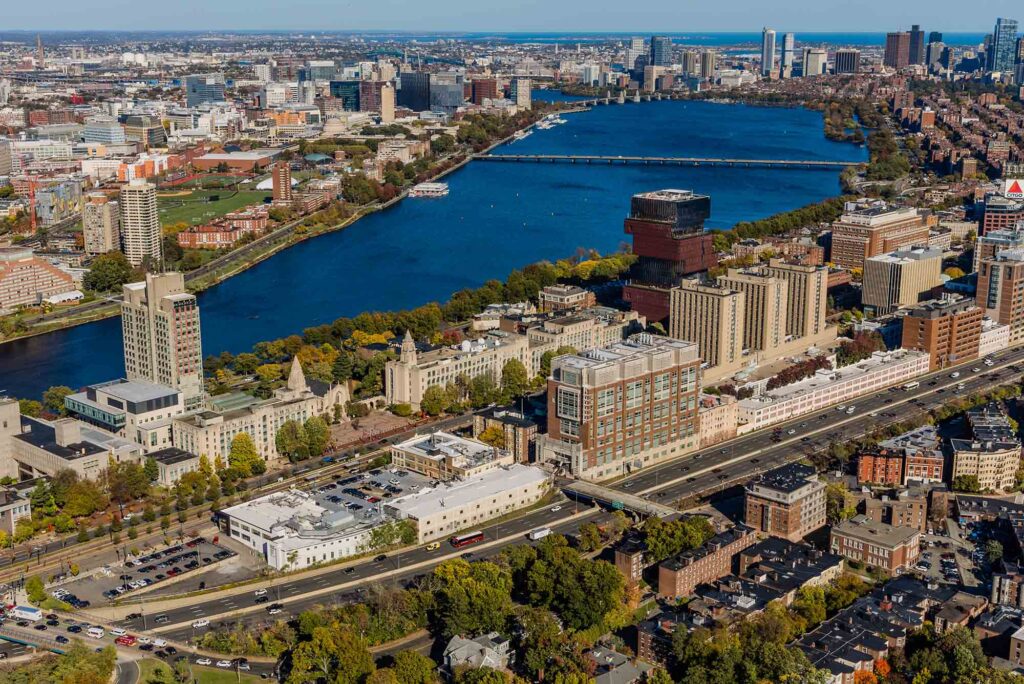
BUSSW’s home is on Boston University’s beautiful Charles River Campus in “a charming limestone building overlooking tree-lined Bay State Road”. Students benefit from this prime spot in Boston—a hub for education, healthcare, and nonprofits.
The school’s size creates an ideal learning setting with 851 students enrolled in 2024. An 11:1 student-to-faculty ratio will give a personal touch to your educational trip. Graduates join a strong network of more than 10,000 global alumni, which offers great professional connections.
BUSSW’s mission aims “to develop dynamic and diverse social work practitioners, leaders, and scholars through rigorous teaching, innovative research, and transformative community engagement”. The school shows its steadfast dedication to social justice through its strategic plan to become “a global model in social, economic, racial, gender, and climate justice transformation”.
The school hosts three nationally-recognized research centers/institutes. Faculty members conduct innovative research in a variety of social work domains. This research environment keeps your education pioneering in social work practice and theory.
BUSSW’s reputation shines through its academic programs, expert faculty, and strategic collaborations. These elements work together to prepare you for a rewarding social work career.
Programs offered
Boston University’s Master of Social Work (MSW) program gives students multiple ways to earn their degree based on their needs and career goals. Students can choose from three different program formats that best fit their situation.
The On-Campus Program at the Charles River Campus comes with full-time and part-time options. Full-time students can complete their degree in two years. They take 27 credits in coursework and 6 in field education during their foundation year. The advanced year requires 24 credits in coursework and 8 in field education. Part-time students can finish in three years with summer classes or four years without them.
The Online Program delivers the same quality curriculum but in a flexible, part-time format that works well for working professionals. Students learn through self-paced modules and virtual Live Classroom sessions. Most courses last seven weeks and are taken one after another. Students can gain hands-on experience close to home through a national network of over 2000 field agencies.
The Worcester Hybrid Program blends in-person and online learning for part-time students. Students attend weekly classes (Tuesdays, 4-9pm) at the Worcester campus during semesters 1-4. Semesters 5-9 feature online evening sessions.
Students can major in either Clinical Practice or Macro Practice regardless of their program format. Clinical Practice majors can also minor in Macro Practice if they choose. The Clinical major teaches students to assess, diagnose, and treat mental and behavioral challenges. The Macro major focuses on community organizing, human services leadership, advocacy, and program development.
BU’s program has three track options:
- Traditional Track: 65 credits with two field internships
- Advanced Standing: 40-43 credits for students with recent CSWE-accredited undergraduate social work degrees
- Human Service Experience (HSE): 65 credits with one field internship for students with at least two years of supervised human services experience
Students can specialize in one of four areas:
- Aging
- Behavioral Health
- Children, Youth and Families
- Trauma, Violence and Justice
Students interested in interdisciplinary training can pursue dual degrees with Public Health (MSW/MPH), Education (MSW/EdM or EdD), or Theology (MSW/MTS, MDiv, or DMin). Certificate programs in family therapy, behavioral medicine, or human service management are also available.
Every program option maintains BU’s high academic standards while adapting to students’ professional backgrounds and career goals.
About the online program
BU’s online Master of Social Work program sets itself apart with a groundbreaking approach to distance education. The program started as one of the first fully online social work graduate programs nationwide. Students can live and work anywhere in the United States while earning their degree from a top-ranked institution.
The curriculum matches the on-campus experience but gives working professionals more flexibility. Students take courses in sequence, with most lasting seven weeks. The first year typically involves one course at a time (two courses per semester). Later years combine two courses per semester with field internships. Students can complete the part-time online program in 6–9 consecutive semesters, depending on their track.
BU’s social work masters online program excels at combining self-paced learning with interactive elements. Each course has:
- Self-paced components with online lectures, simulations, videos, interactive animations, and discussion boards
- Weekly Live Classroom sessions on Sunday or Monday evenings lasting 1-1.5 hours
- Field internships near your location
Small class sizes limit groups to 15 students, which ensures personal attention from faculty. Students access their coursework through a user-friendly web-based learning portal at any time.
Field education remains essential to the learning experience for online students. BU’s Field Education team places students throughout the United States. They work with each student to find suitable field placement options nearby, using their network of 2000+ field agencies across the country.
Students receive complete support beyond their academic work. A dedicated student services administrator helps guide each student toward academic and professional goals. The program features group advising sessions and an ongoing interactive professional development seminar to prepare students for field experience, job searches, and career growth.
The online program stays true to BU’s core social work curriculum. It emphasizes diversity, ethics, populations-at-risk, and social and economic justice in foundation and advanced courses. Clinical majors become license-eligible in their state after graduation, ready to take leadership roles in social work settings of all types.
Accreditation
At the time of choosing social work graduate programs, accreditation is a vital indicator of educational quality and professional recognition. Boston University School of Social Work’s (BUSSW) accreditation status demonstrates its steadfast dedication to excellence in social work education.
BUSSW has full accreditation from the Council on Social Work Education (CSWE). CSWE is the only accrediting organization for social work programs in the United States. This prestigious designation shows that the program meets or surpasses rigorous quality criteria through an extensive peer-review process. This means employers and licensing boards nationwide acknowledge the validity and caliber of your BUSSW education.
CSWE accreditation matters beyond institutional reputation. This credential represents public trust and accountability in a variety of social work settings. Students can be confident that their program delivers education centered on everything in social work competencies needed for professional practice.
Boston University also holds institutional accreditation from the New England Commission of Higher Education (NECHE), previously called NEASC. NECHE is one of six prominent accrediting agencies. This dual accreditation highlights the university’s overall academic excellence.
CSWE’s accreditation process takes a comprehensive approach. The process includes program self-studies, site visits, and review by the CSWE Board of Accreditation to verify compliance with educational policies and standards. Programs must show alignment with core values including “justice, dignity and worth of a person, human relations, integrity, and competence”.
A CSWE-accredited program provides several concrete benefits:
- Qualification for employment opportunities that specifically require CSWE-accredited degrees
- Eligibility for state licensure exams and credentials, as most states require graduation from CSWE-accredited programs
- Assurance that your education incorporates ongoing quality improvement
- Preparation for ethical, competent practice based on scientific inquiry and best practices
CSWE-accredited programs go through reaffirmation of their accreditation every eight years. This ensures continuous quality improvement and adherence to evolving professional standards. Programs utilize data-driven decision-making to boost their curriculum and student outcomes throughout this cycle.
Yes, it is worth noting that Boston University’s MSW program meets academic degree requirements for various state licensing credentials. This includes specific requirements for Nebraska’s Provisional Mental Health Practitioner license with Provisional Certification as a Master Social Worker. Such credential recognition shows how BUSSW’s accredited status aids professional mobility across state lines.
Admission Requirements
Boston University’s social work masters program has specific qualification requirements. Students must have a baccalaureate degree from a regionally accredited college or university to qualify. Current students can also apply if they will complete their degree before starting MSW studies.
The program tracks have different GPA requirements. Traditional and Human Service Experience tracks don’t specify a minimum GPA. Advanced Standing applicants need to maintain at least a 3.0 GPA on a 4.0 scale. The program takes an all-encompassing approach to evaluate applications beyond academic performance.
You’ll need to submit these documents:
- Personal statement (3-4 double-spaced pages)
- Current résumé/CV
- Three letters of recommendation
- Official transcripts from all previous undergraduate and graduate institutions
- Non-refundable $95 application fee
Recommendation letters should come from specific sources. Current students should get one from a faculty member or advisor. Working professionals should get them from their supervisors. The program doesn’t accept references from family members, personal friends, therapists, or employees.
Advanced Standing applicants face additional requirements. Your BSW should be no more than six years old when you enter the program. You must provide either a final field evaluation after graduation or a mid-year evaluation if you’re still enrolled.
Human Service Experience track candidates need at least two years of supervised, direct human or social service experience. They must submit an employment verification form. The person who completes this form should also provide one of your recommendation letters.
International students who speak English as a second language must submit TOEFL, IELTS, or Duolingo scores. Unlike many MSW programs, Boston University School of Social Work doesn’t require GRE scores.
The program allows applications to only one campus per application cycle. Rejected applicants must wait one year before applying to any BUSSW campus or program. The school recommends using a Gmail account for your application to receive all communications reliably.
Tuition
Students need thorough financial planning for their MSW education at Boston University. Full-time students who enroll in 12-18 credits per semester will pay $40,352 in annual tuition during the 2025-2026 academic year. Each semester includes a graduate student services fee of $219 and a health and wellness fee of $282.
Program format determines part-time tuition rates. Students at the Charles River Campus in Boston pay $1,261 per credit. The Off-Campus Program costs less at $800 per credit. Online Program students pay $998 per credit. The Worcester Hybrid Program has a special payment structure – students pay the off-campus rate ($800/credit) for the first four semesters and switch to the online rate ($998/credit) for semesters 5-9. A student services fee of $75 per semester applies to all part-time students.
BU School of Social Work helps students with significant financial support. Full-time students can receive merit-based scholarships that cover up to full tuition. Part-time students might get up to $5,000. Named scholarship funds give students more options, with awards between $800 and $14,000 for the 2025-2026 academic year.
Students can access Federal Work-Study and Federal Direct Unsubsidized Loans. Special scholarships target specific groups of students. City Year AmeriCorps members and alumni can receive 50-100% tuition scholarships.
Students should plan for costs beyond tuition. The 2024-2025 figures suggest budgeting $1,489 for books and supplies, $15,450 for housing and food, and $4,412 for incidental expenses. Full-time students can expect total costs around $61,695.
Part-time students often use employer tuition reimbursement programs or veterans benefits. Boston University meets 100% of showed financial need for eligible first-year domestic students.
Additional Information
Field education is the foundation of Boston University’s social work masters program. Students apply their classroom knowledge through practicum internships in ground settings. These internships take up two to three days each week and give students hands-on training. BUSSW partners with more than 800 social work organizations across the country. This means students can find placements in a variety of settings whether they choose the Charles River, Worcester Hybrid, or Online Program.
The dedicated BUSSW team helps students with their field placements right from the start. Second-year students looking for advanced mental health training can find specialized placements at the Albert and Jessie Danielsen Institute. Students can also intern at clinics of all types, including Adult Outpatient Psychiatry, Child/Adolescent Outpatient Psychiatry, and Psychiatry Emergency Services.
The Social Work Career Center supports students throughout their academic trip. Students get access to career materials, international practice contacts, and networking opportunities through the Career Advisory Network. The center runs workshops on resume writing, interviewing, and career planning throughout the year.
A Boston University MSW opens many doors. The numbers speak for themselves – 95% of graduates find employment shortly after finishing. Many work as substance use counselors, outpatient clinicians, in-home therapists, college counseling social workers, and clinical directors. Some take on macro-level positions such as chief of staff in local government, union organizers, or clinical directors.
This is a big deal as it means that graduates join a network of more than 10,000 alumni who lead organizations in nonprofit, government, and education sectors worldwide.