
Fordham University MSW: Your Guide to Admission Requirements & Program Options
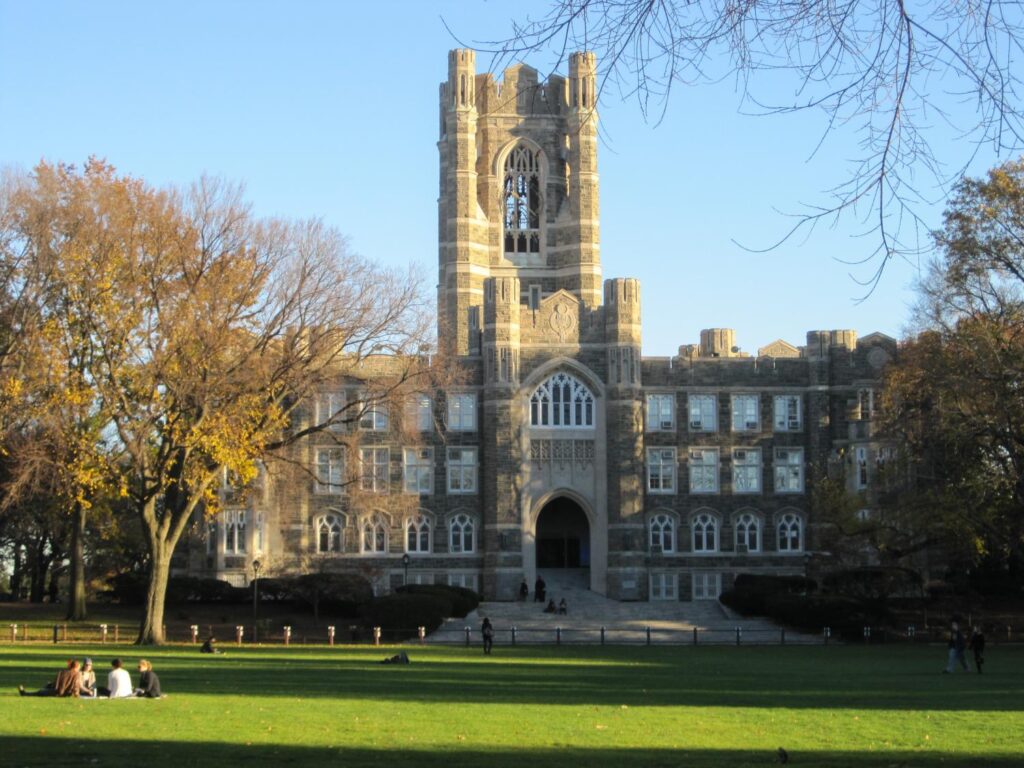
Founded in 1916, Fordham University’s Graduate School of Social Service (GSS) ranks among the oldest and largest social work schools in the United States. The school’s story began in lower Manhattan. GSS opened its doors as the School of Sociology and Social Service on November 6, 1916, from the 8th floor of the iconic Woolworth Building. Father Terence Shealy S.J., the school’s first dean, launched a two-year program that blended classroom lectures with hands-on field experiences.
Fordham GSS showed remarkable growth as years passed. The school found a dedicated home in 1942 when it moved to a five-story building in Murray Hill. The next big move came in February 1969 when GSS settled into the Leon Lowenstein Center at Fordham’s Lincoln Center campus. Students beyond Manhattan needed better access to education, so the program expanded to Westchester in 1976. It started at Marymount College in Tarrytown before moving to a permanent 62,500 square foot facility in West Harrison in 2008.
The school welcomed change and progress through the decades. GSS improved its teaching approach in 2014 by offering a hybrid learning model. Students could now mix online courses with in-person classes. This progress led to fully online programs, making Fordham’s social work education available to students whatever their location.
Dean Debra McPhee leads GSS today across three New York locations:
- Lincoln Center campus in Manhattan
- Westchester campus in West Harrison
- Long Island through collaboration with Molloy University
Students can pick the setting that matches their priorities—an urban environment, suburban area, or online study convenience.
Fordham’s Graduate School of Social Service earned top honors for academic excellence. U.S. News & World Report placed the school 28th among 319 social work programs nationwide in 2024. This ranking puts GSS in the top 10 percent of all social work programs in the country. Such recognition highlights the school’s success in preparing social workers to work effectively in all practice areas.
GSS fosters a diverse learning community that champions human rights and social justice. The faculty includes experts from every corner of social work. Many nationally recognized scholars actively shape research, theory, and policy planning.
Built on Jesuit educational values and social justice principles, GSS prepares professionals who strive to build societies free from poverty, inequity, violence, and oppression.
Programs offered
Fordham University’s Master of Social Work (MSW) program ranks in the top 10 percent of social work programs nationwide, according to U.S. News & World Report. This prestigious program combines traditional values with state-of-the-art theory and practice. Students learn to work effectively in all areas of social work throughout their careers.
The 62-credit MSW program at Fordham consists of 48 credits of classwork and 14 credits of fieldwork experience. Students progress through two distinct phases: a 31-credit Generalist Phase with foundational coursework and a 31-credit Specialist Phase that aligns with specific career interests.
The Specialist Phase lets students choose courses from four specialized domains:
- Individuals and Families
- Organizations and Communities
- Evaluation
- Policy Practice and Advocacy
The program offers Specialized Practice Certificates in Health and Crisis & Resilience. Students who choose the Health certificate prepare themselves for healthcare settings of all types. The Crisis & Resilience certificate equips students to help individuals and communities affected by traumatic events such as natural disasters or terrorism.
Students can choose from several study options that fit their schedule:
- Full-time study (complete in two academic years)
- Part-time study (complete in three to four years)
- Advanced Standing option (for BSW graduates to complete in as few as nine months, saving over $30,000)
- Hybrid format through collaboration with Molloy University that blends face-to-face and online classes
- Fully online program
The MSW has detailed field education requirements that total 900 hours—450 in each phase. On-campus students complete these internships from September to May, spending 16-21 hours per week under experienced social workers’ supervision.
Students can complete their coursework in just one day per week on campus, regardless of full-time or part-time status. Every program option features a future-focused curriculum that provides tools and skills based on theory and ethics. This preparation helps students succeed in micro, macro, or mezzo environments.
Fordham’s Graduate School of Social Service builds a complete educational pathway for social work professionals. The school offers a Bachelor of Arts in Social Work (BASW) and a Ph.D. in Social Work program alongside the MSW.
About the online program
Fordham’s online MSW program blends flexibility with academic excellence. Students can start in fall, spring, or summer. The academic term splits into two eight-week sessions. This setup helps students balance their coursework with field education better. Full-time students take two courses in each eight-week session during the semester.
Students experience a mix of learning styles in the program. Weekly interactive live sessions connect you with professors and classmates. You can also work through self-paced content that fits your schedule. This mix gives you the best of shared learning and independent study.
Traditional MSW students without a BSW can complete the 62-credit online curriculum in 16 months full-time or 24 to 32 months part-time. Students with a BSW can graduate in eight months full-time or 16 months part-time through Advanced Standing. Both paths prepare students for state licensure after graduation.
Students can also choose Fordham’s hybrid MSW option on Long Island through collaboration with Molloy University. Classes alternate between Molloy’s campus and online courses. Students get remote learning benefits while staying connected to campus life. This hybrid option offers full-time, part-time, and Advanced Standing plans with fall and spring starts.
Online students receive complete support during their academic trip:
- Expert faculty lead weekly live classes
- Small groups meet for peer discussions
- Mobile app lets you learn anywhere
- Technical support runs 24/7
- Field education stays close to home
A team of specialists supports students throughout the program:
- Admissions counselors help with applications
- Academic advisers guide course selection
- Placement specialists find local training sites
- Field advisers give professional feedback
- Student services advisers support your overall progress
The online format works well for students with personal commitments. A student shared, “The flexibility of Fordham’s online MSW program really appealed to me at that time, and I have been able to balance my personal life, a part-time job, and my Fordham education throughout my degree”. This accessibility helps students in remote areas get quality social work education.
Accreditation
The Fordham University MSW program has full accreditation from the Council on Social Work Education (CSWE). This recognition covers not just the master’s program but also Fordham’s Bachelor’s and Ph.D. in Social Work programs. CSWE accreditation is a quality marker that proves the program meets national standards for social work education.
Students in the Fordham MSW program receive education that shapes them into “highly competent, integrated practitioners with the tools to succeed in every setting”. Faculty members assess students’ mastery of nine core competencies set by CSWE’s Educational Policy and Accreditation Standards. These competencies form the foundation of practice that social workers develop during their training.
Fordham University also maintains accreditation through the Middle States Commission on Higher Education (MSCHE). The commission reviews the university’s performance every eight years. This institutional accreditation works alongside CSWE recognition to deliver quality education.
The benefits of an accredited program reach way beyond the reach and influence of simple recognition. Students can only receive federal financial aid at accredited institutions. Most accredited schools accept transfer credits from other accredited institutions, which protects academic mobility. Your future career prospects look better too, as employers prefer graduates from accredited institutions because they demonstrate quality education.
The Fordham MSW program follows strict guidelines to assess student competencies. The school expects 80% of students to achieve minimum scores in all competency measures. Students must score at least a 3 (“Competent”) on all items that measure each particular skill.
This assessment data serves two purposes. The Council receives reports for compliance, and Fordham makes use of information to “continuously review and improve our program and learning environment”. This creates a feedback loop that keeps the program current, effective and aligned with professional standards.
Admission Requirements
The Fordham University MSW program looks at more than just grades when admitting students. They want “highly capable and dedicated students who are committed to the profession’s values and ethics”. The admission team reviews each application carefully.
Simple Requirements
You need these qualifications to join the Fordham University MSW program:
- A bachelor’s degree from a regionally accredited college or university
- 18 undergraduate credits in liberal arts content
- Values compatible with the social work mission
You don’t need to take the GRE for this program.
Application Process
Your application package must include:
- Completed online application
- Personal statement addressing specific prompts in APA format
- Official transcripts from all institutions where you earned 6+ credits
- One letter of recommendation (from employers, professors, or approved volunteer coordinators)
- Current résumé/CV
- $60 application fee
Application Deadlines
You can start the program at different times throughout the year. Here are the deadlines:
For Spring (On Campus & Hybrid):
- Priority deadline: November 1
- Final deadline: December 1
For Spring (Online):
- Full-time deadline: November 1
- Part-time deadline: December 1
For Summer (Online Only):
- Full-time deadline: February 1
- Part-time deadline: March 1
For Fall (All Campuses):
- Priority deadline: February 1
- Final deadline: April 1
The program might still accept your application after these deadlines if space remains. But you won’t get priority for merit scholarships.
Advanced Standing Applicants
BSW graduates could finish their MSW in just nine months and save over $30,000 through Advanced Standing. Along with regular application materials, you’ll need to submit your BSW program’s Final or Mid-Year Field Evaluation.
International Applicants
International students must meet these extra requirements:
- Transcript evaluations from a NACES member organization
- English language proficiency testing (minimum IELTS: 7.0; TOEFL: 100 IBT)
- Completed Affidavit of Support form
International students can only join the on-campus program at Manhattan or Westchester campuses. They must begin in Fall term and follow the 2-Year Full-Time study plan.
You’ll get your admission decision by email within four weeks after completing your application.
Tuition
Students pursuing a Fordham University MSW should understand the financial components that make up their educational expenses. The 2025-2026 academic year sets tuition at $1,098 per credit. A complete MSW program needs 62 credits, making the total tuition approximately $68,076 for traditional students and $34,038 for Advanced Standing students.
Mandatory fees apply to every student enrolled in the program. The general fee ranges from $130-260 per term, while the technology access fee spans $356-712. Students must also pay a field placement insurance fee of $35-70 and a one-time Tevera fee of $220. Your study plan and enrollment status determine the exact amounts.
The program’s financial structure varies based on your completion timeline:
Students attending full-time on campus can expect to pay around $35,300 for their first year and $35,080 for their second year. Part-time students who choose the three-year plan would spend approximately $14,368 in year one, $21,904 in year two, and $35,080 in their final year.
Online MSW students pay the same credit rates. A student following the four-term plan would spend about $17,760 during their first term and $17,540 for each term after that.
Graduate students enrolled in more than five credits per semester must have health insurance. The charges come to $1,805 for fall term and $3,189 for spring term. All the same, students with alternative insurance coverage can waive this fee through the Student Health Services Office.
Fordham helps offset costs with merit-based scholarships awarded at admission without extra applications. On top of that, partner organization employees receive special discounts. The Jewish Board staff and certain educational institution employees get a 20% discount, while select New York Departments of Social Services employees receive $800 off per 3-credit class.
Students looking for payment flexibility can use Fordham’s monthly payment plan through Nelnet. This plan charges no interest, though enrollment fees range from $75 to $110 based on the chosen payment schedule.
Additional Information
Fordham University’s MSW program provides great resources to improve your educational journey beyond regular coursework. The Graduate School of Social Service (GSS) Career Center helps students and alumni with personalized career planning, networking strategies, interview preparation, and resume development.
The university has over 200 student organizations where you can make a difference. The Social Work Society lets you participate with community organizations and connect with field professionals. Students learn about social work’s applications in hospitals, schools, and community nonprofits through this club.
GSS’s Student Resource Hub gives you access to academic advisors, writing support, and tech services. You’ll find detailed calendars, policies, and forms through Field Education resources that support your internship journey.
Your Fordham connection stays strong after graduation. The “Forever Fordham” website connects you to an alumni directory, events, and lifetime email services.
Licensed social workers can take detailed continuing education courses from qualified professionals at Fordham GSS. The school’s NYSED-approved status helps you meet your licensure requirements throughout your career.
These additional resources show Fordham’s integrated approach to social work education that prepares students for success after graduation.